What the Ø63.5 Conveyor Idler Is
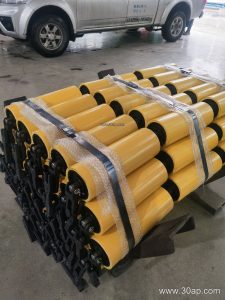
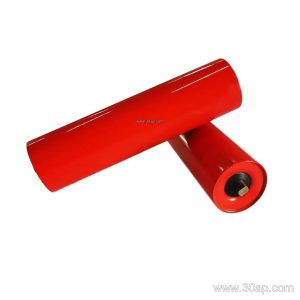
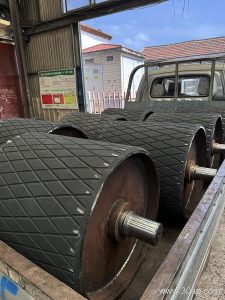
The Ø63.5 conveyor idler is a small-diameter carrying roller built around a 63.5 mm shell. In practice this is the 2.5 inch size that many light and medium belt conveyors use on the carrying side, and sometimes on the return side where the belt is narrow and the load is moderate. It is an idler roller, not a pulley: it supports and trains the conveyor belt, while the drive, tail and bend pulleys handle power transmission and direction changes. Those pulley types are separate components and are not interchangeable with a carrying roller.
Because the shell is compact, this size suits frames where mounting height is limited and where a smaller roll gap is wanted under the belt. It appears in quarry feed lines, sand and aggregate plants, small cement packing circuits, and coal handling sections that run narrower belts.
How the Roller Is Put Together
A typical Ø63.5 idler uses a steel tube shell, pressed end caps, a through shaft, and a pair of deep-groove ball bearings. Common bearing selections in this size range include 6204 and 6205, though the bearing is chosen from load, speed and seal design rather than from roller diameter alone. Seals are usually a combination of a labyrinth cap and a lip seal, with grease retained for life in sealed-for-life versions.
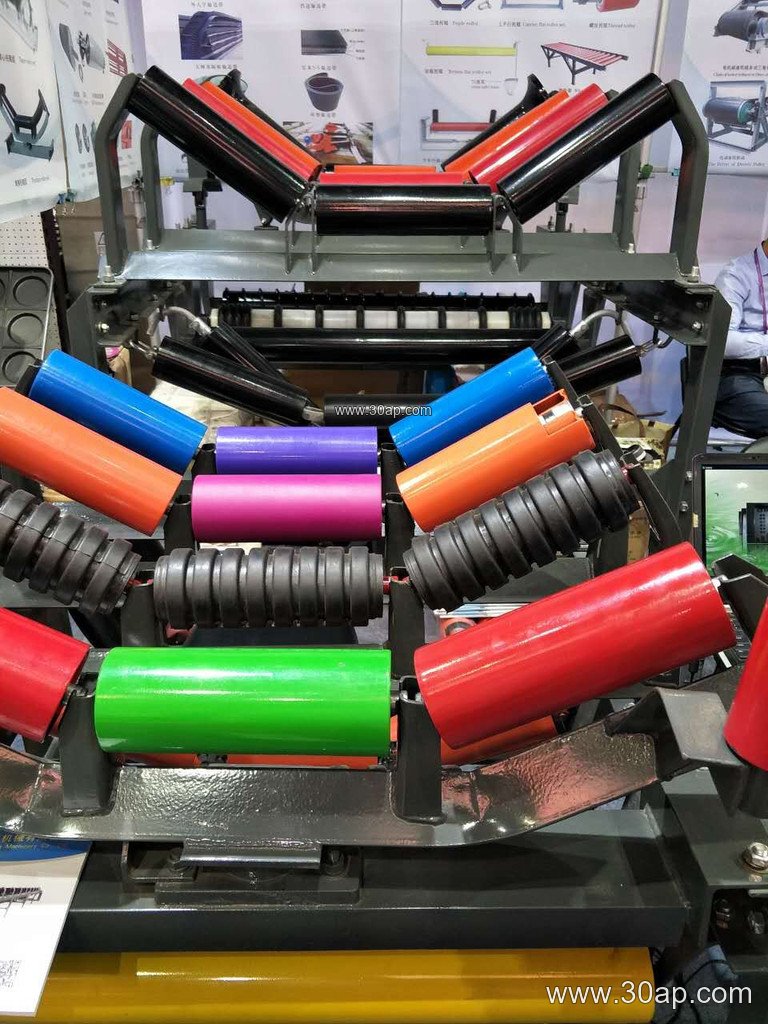
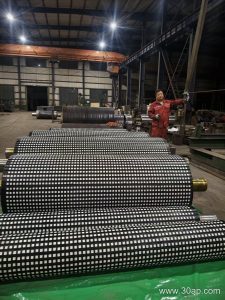
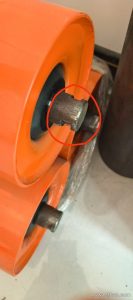
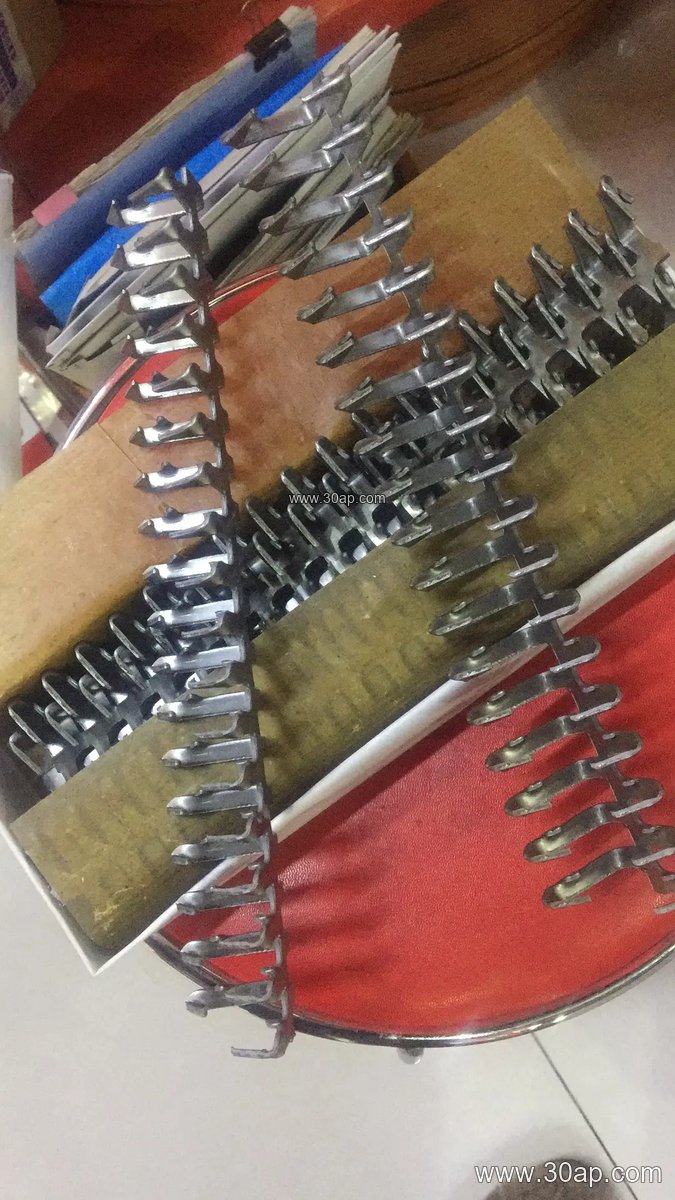
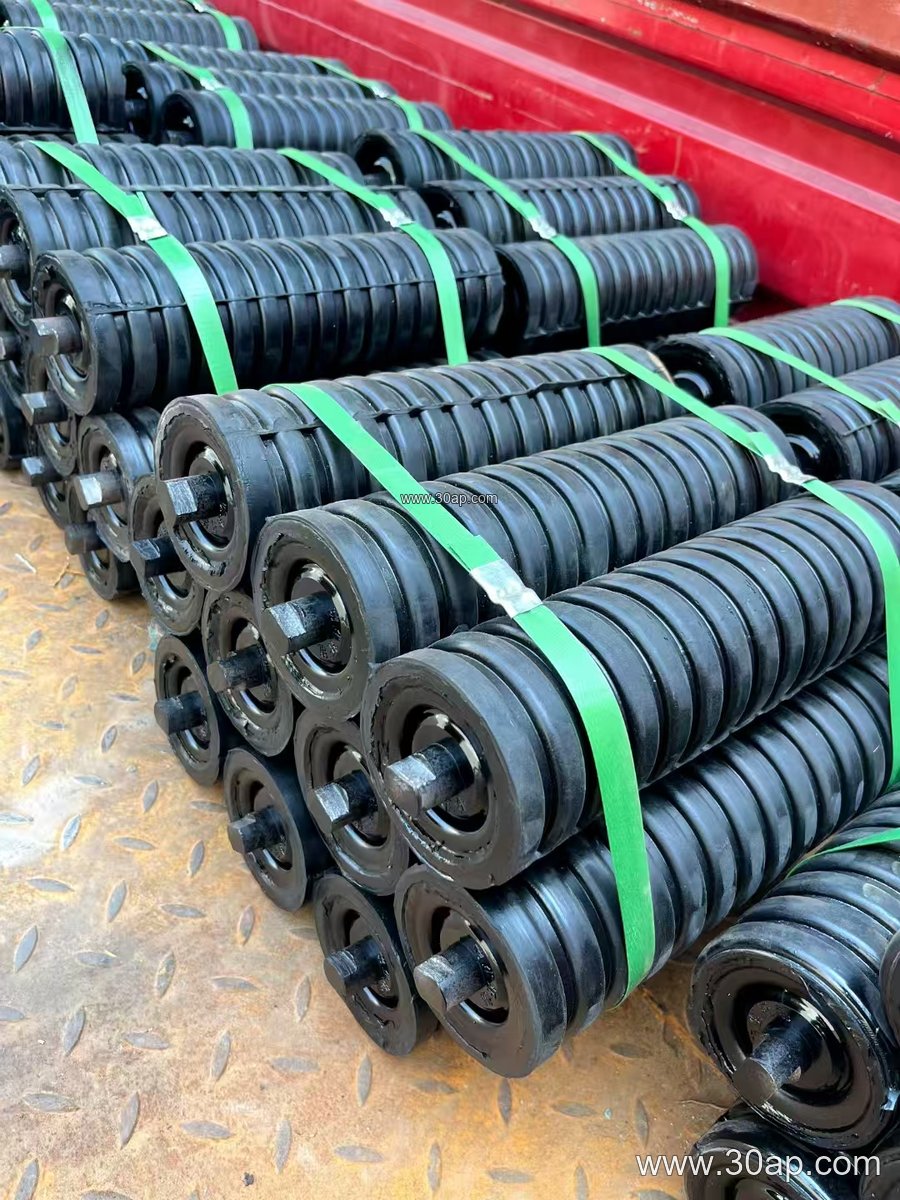
Surface options vary with the duty. Plain steel is the baseline. Rubber rings are added on impact or noise-sensitive sections, nylon shells reduce weight in clean duty, and ceramic lagging is used where abrasive carryback wears plain steel quickly. Shaft ends are usually milled flats that drop into the conveyor bracket slots, so the bracket style and slot spacing must match the shaft before ordering.
Common Reference Dimensions
The figures below are reference values, not a fixed catalogue promise. Roller length changes with belt width, trough angle and idler group form.
- Shell diameter: Ø63.5 mm
- Belt widths often paired with this size: B400, B500, B650, B800
- Trough angles: 20°, 30°, 35°
- Typical roller length for a three-roll trough set: about 200 mm at B500, 250 mm at B650, 315 mm at B800
- Bearing options: 6204, 6205
Side rollers and the centre roller in a three-roll set can differ in length, so the length of one roller should not be assumed from belt width alone. Shaft diameter is set by the frame and load case, not by the shell size.
Where It Fits on the Conveyor
On the carrying run, Ø63.5 rollers are most often arranged as a two-roll or three-roll trough set. A 30° trough is a common compromise between belt capacity and belt stress on narrow lines; 20° is gentler on thin belts, and 35° gives a deeper trough where material must be contained. Training rollers in this diameter are used on short lines where belt wander is a nuisance but loads are not heavy.
On the return run, the same shell size can serve as a flat return roller or as part of a V-return set. Return rollers see different loading from carrying rollers, so the seal and shell thickness are usually specified separately. In a coal preparation plant or a small power plant coal yard, this size keeps the return strand supported without adding much height to the frame.
Impact zones are the exception. Under a crusher discharge or a transfer chute, a buffer roller with rubber rings is normally preferred over a plain Ø63.5 roller, because the cushioning reduces shell denting and belt damage.
Matching the Belt and the Duty
The roller works with whatever belt the conveyor carries. A rubber conveyor belt on a short aggregate line behaves differently from an EP conveyor belt running at higher tension, and a heavy-duty mining conveyor belt on a wide frame will usually call for a larger roller diameter. On narrow belts, though, a 63.5 mm shell is a sensible match for a fabric core conveyor belt or a multi-ply fabric core conveyor belt where the belt is flexible and the idler spacing is close.
Where the material is hot, an abrasion resistant conveyor belt may be paired with standard rollers, but heat resistant conveyor belt service needs attention to bearing grease and seal choice. In underground coal mining, a flame retardant conveyor belt is standard, and the roller’s seal and grease should suit the dusty, damp environment. Quarry and ore lines handling abrasive rock often prefer rubber-ring or ceramic-faced rollers in the impact and dirty sections.
Selection Checklist for Buyers
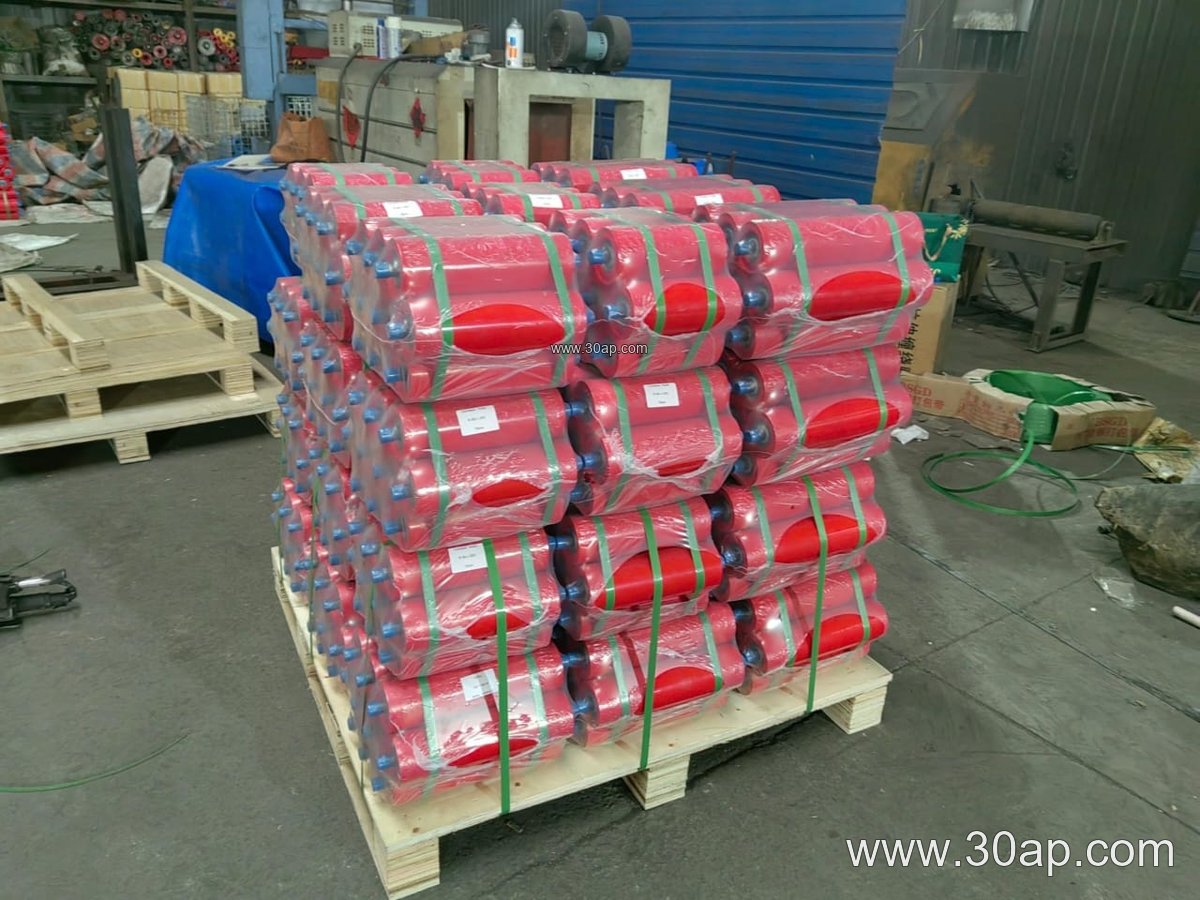
- Confirm belt width and trough angle before fixing roller length.
- State the shaft end shape and the bracket slot size.
- Give the load per roller and the belt speed, not just the diameter.
- Say whether the position is carrying, return, impact or training.
- Ask for the seal type and bearing number in writing.
Installation and Maintenance Notes
Alignment matters more than roller brand on small-diameter sets. A frame that is out of square will make even a good Ø63.5 idler run hot and wear the belt edge. Check that all rollers in a group sit at the same height, that the bracket bolts are tight, and that the belt does not rub the frame.
Seized rollers usually show as a polished shell, a hot bearing cap, or a belt that tracks to one side. Replacing a single roller in a trough set is acceptable, but mixing old and new rollers in one group can cause uneven support. Keep a small stock of the common lengths used on each line so a failed roller does not stop the shift.
For a complete replacement plan, the roller should be ordered together with the correct conveyor bracket, and the drive, tail and bend pulleys checked at the same time, since belt tracking problems are sometimes traced to a pulley rather than to the idlers.