What a Thermal Power Plant Conveyor Pulley Does
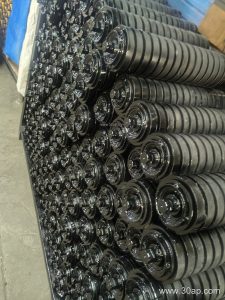
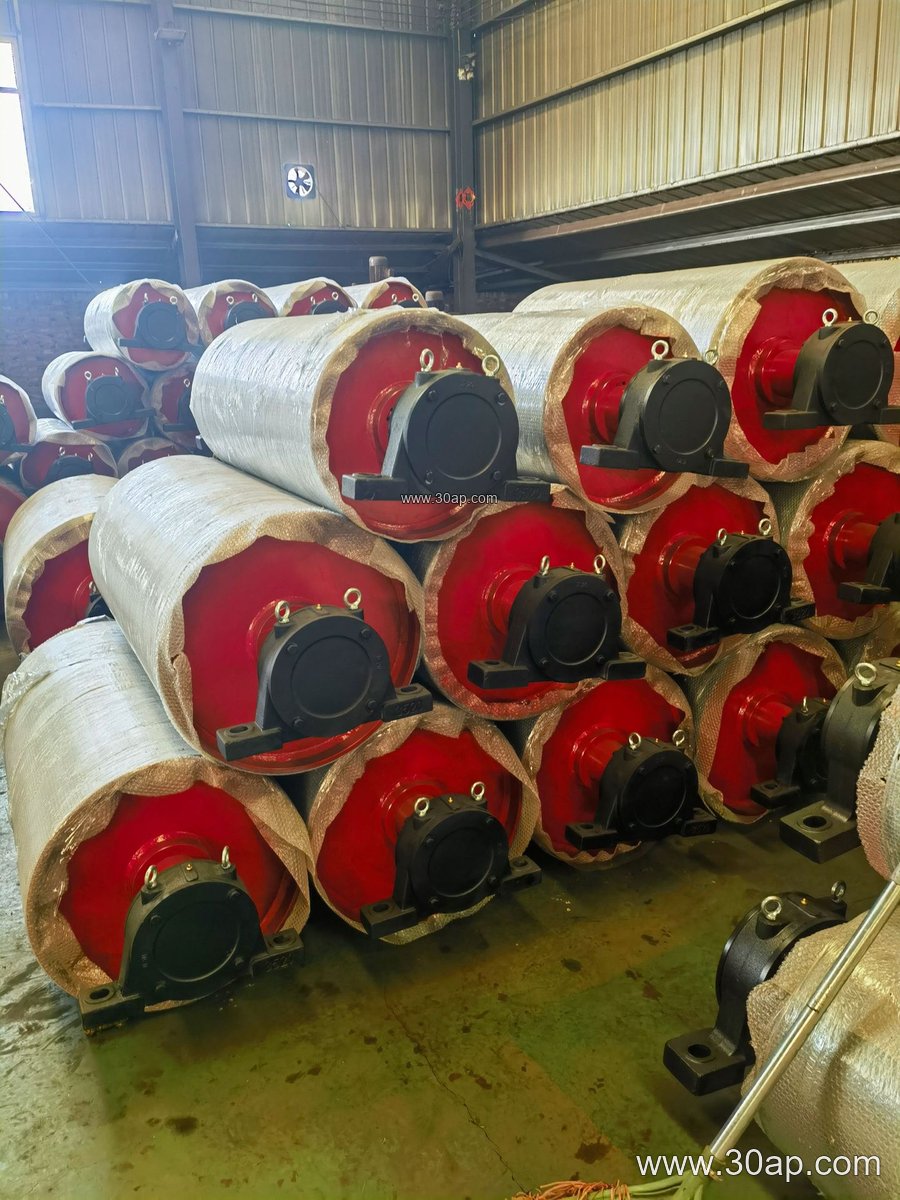
In a coal-fired power station, the coal handling system moves fuel from stockpile or wagon tippler to the boiler bunkers. The thermal power plant conveyor pulley is the rotating component that drives the conveyor belt, changes its direction, or maintains tension. Unlike a simple idler roller that only supports the belt, a pulley transmits power or redirects the belt path. Drive pulleys at the head end pull the belt; tail pulleys at the loading point redirect it; bend pulleys in the take-up zone adjust wrap angle. Each subtype has a distinct role, and they are not interchangeable.
Construction and Surface Options
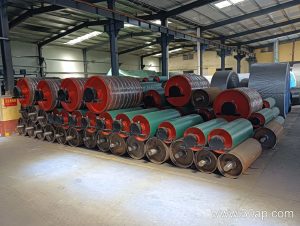
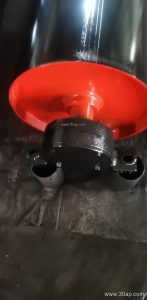
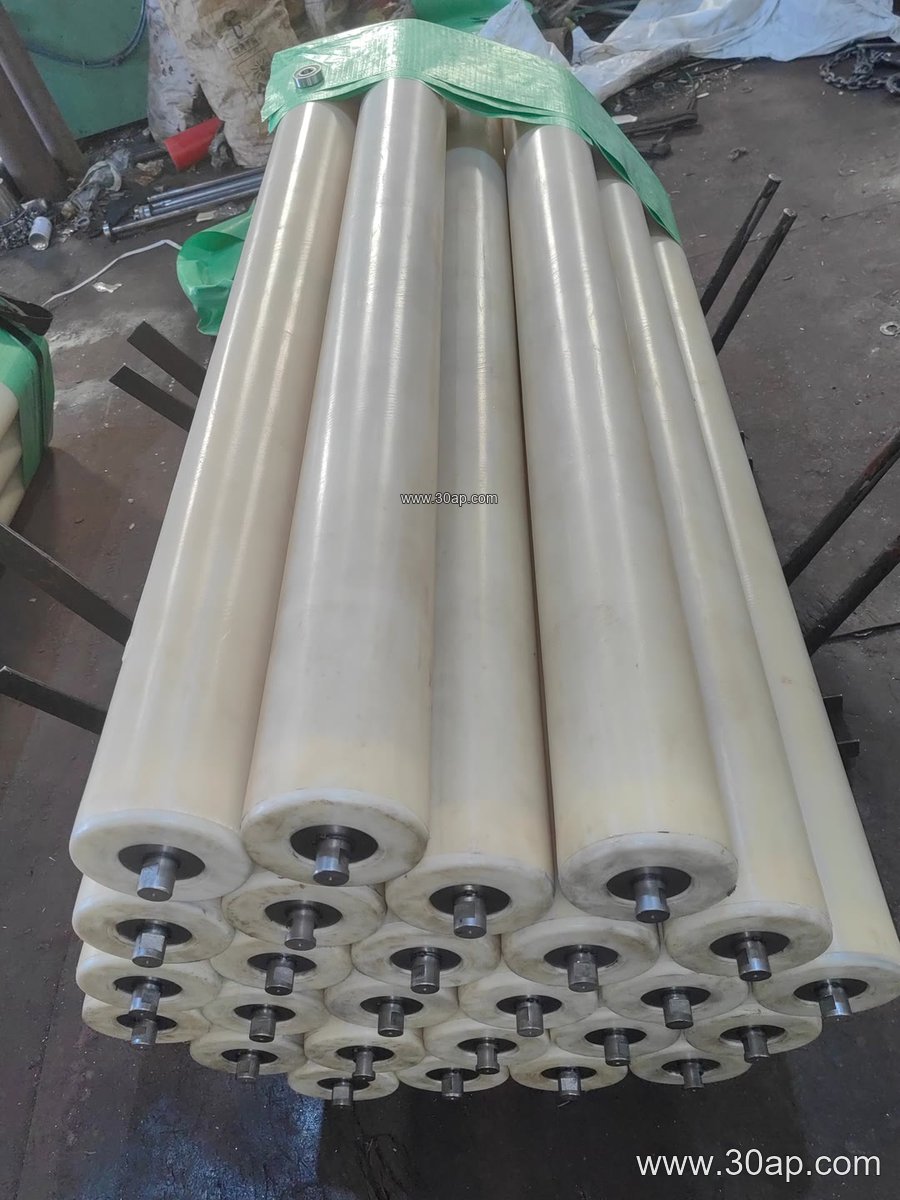
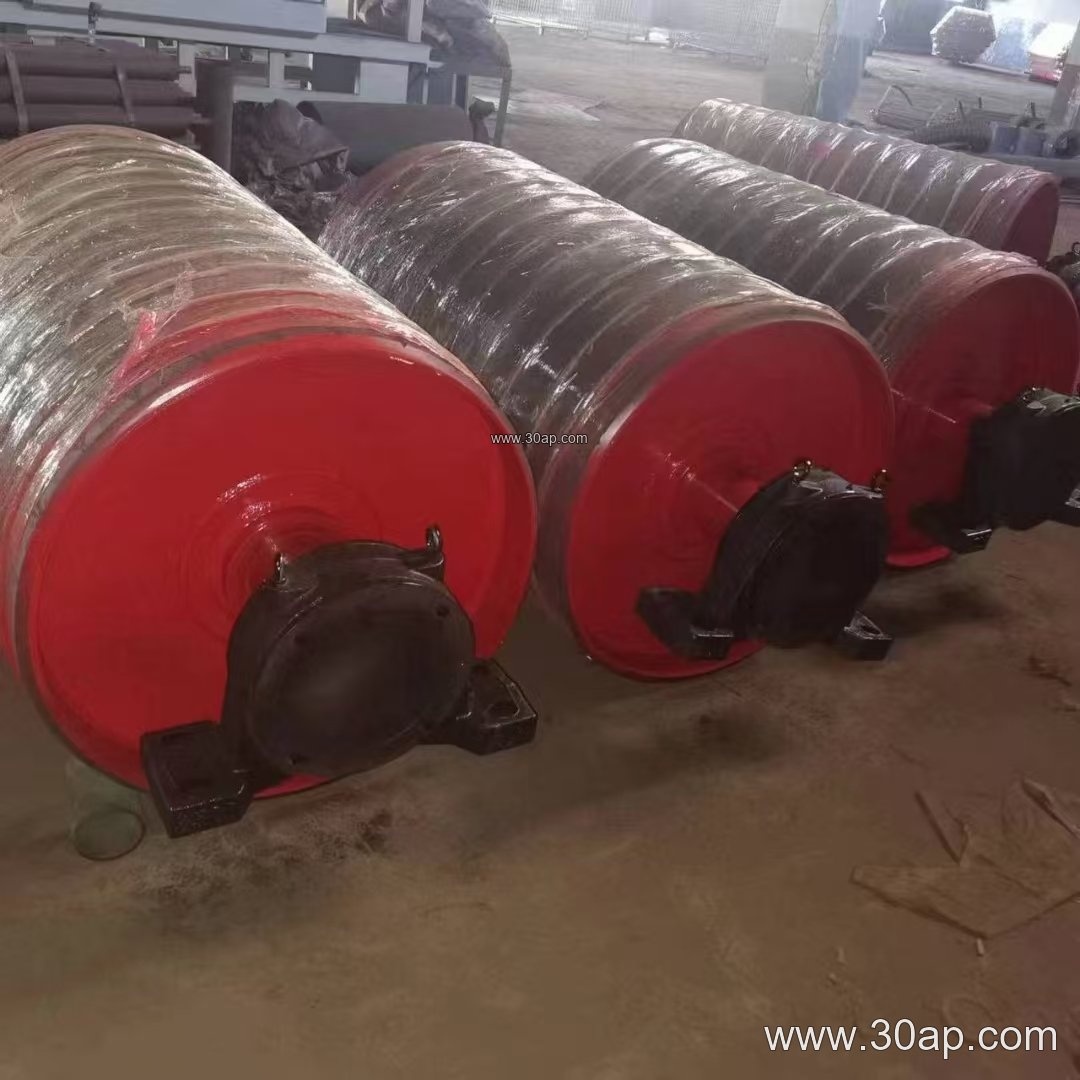
A typical pulley body is a welded steel drum with a shaft, hub, and bearing housings. The drum face may be plain, lagged with rubber, or covered with ceramic tiles for grip. Common surface forms include plain, cast rubber, cold-bonded rubber, hot-vulcanized rubber, diamond grooving, herringbone grooving, ceramic lagging, and flat rubber. Lagging thickness often ranges from 8 mm to 20 mm depending on torque and belt slip risk. The pulley face width is usually wider than the belt: for example, a B1200 belt may use a pulley face around 1400 mm. Diameter selection depends on belt tension, wrap angle, and shaft load, not on belt width alone. A B800 conveyor might use a Ø500 drive pulley, while a B1400 system could use Ø800 or larger. Shaft diameter is determined by torque and bending load, commonly Ø50 to Ø200 mm, and should never be guessed from belt width.
Where It Fits in the Coal Handling Line
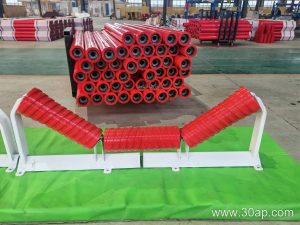
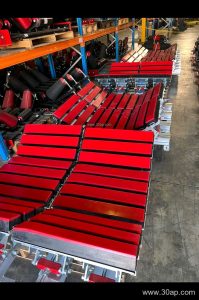
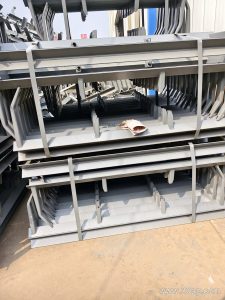
Thermal power plant conveyor pulleys appear at the head drive, tail take-up, and bend stations. In the coal yard, a drive pulley with diamond lagging grips the belt as it lifts coal to the crusher house. A bend pulley near the take-up counterweight keeps proper belt wrap. The belt itself may be a flame retardant conveyor belt or a heat resistant conveyor belt if it passes near hot ash areas, but the pulley must match the belt’s tension and speed. Downstream, a conveyor pulley works with conveyor brackets and idler rollers to keep the belt aligned. In a limestone or gypsum handling line, an abrasion resistant conveyor belt may run over a plain tail pulley with a rubber lagged face for longer wear life.
Common Sizes and Combinations
Pulley sizes are project-specific. The table below shows common reference combinations, not mandatory matches.
| Belt Width | Typical Pulley Face Width | Common Pulley Diameter Range |
|---|---|---|
| B650 | ~750 mm | Ø250–Ø500 |
| B800 | ~950 mm | Ø315–Ø630 |
| B1000 | ~1150 mm | Ø400–Ø800 |
| B1200 | ~1400 mm | Ø500–Ø1000 |
| B1400 | ~1600 mm | Ø630–Ø1250 |
| B1600 | ~1800 mm | Ø800–Ø1400 |
For example, a B1200 × Ø1000 drive pulley may be paired with an EP conveyor belt in a coal yard, while a B800 × Ø500 bend pulley might serve a shorter transfer point. Always confirm shaft diameter by torque calculation.
Buyer Checklist
- Confirm the pulley’s duty: drive, tail, bend, take-up, or snub. Do not substitute one for another.
- Specify lagging type and thickness based on slip and wear. Ceramic lagging suits high-torque drives; plain face suits light reverse running.
- Match belt width to face width with adequate margin, and verify shaft size from load data.
- Check compatibility with the conveyor belt, idler roller, and conveyor bracket layout.
- For coal service, consider flame retardant and anti-static belt properties alongside pulley grounding.
Regular inspection of lagging wear, bearing temperature, and shaft alignment extends pulley life. In a power plant, a seized tail pulley can misalign the belt and spill coal, so maintenance schedules should include pulley face and bearing checks. For more on related components, visit example.com/conveyor-pulley or example.com/thermal-power-plant-conveyor-pulley.