What a Mining Idler Does on the Line
A mining idler is the rotating support that carries the conveyor belt and its load along the structure. In a quarry, an iron ore plant or a coal handling system, these rollers are the parts that touch the belt most often, so their condition shapes power draw, belt life and spillage. The idler roller is not a pulley: drive, tail and bend pulleys transmit motion and change belt direction, while idlers simply support and guide. Keeping that distinction clear helps when ordering spares for a crushing circuit or a wash plant.
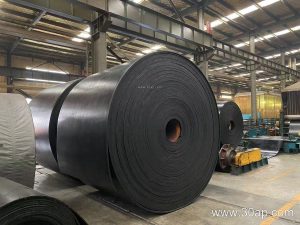
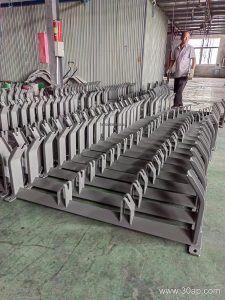
The idler works together with the conveyor bracket that fixes it to the frame, and with the conveyor belt itself. A well-matched set of rollers keeps the belt tracking straight, reduces vibration at transfer points and limits wear on the carcass of a heavy-duty mining conveyor belt.
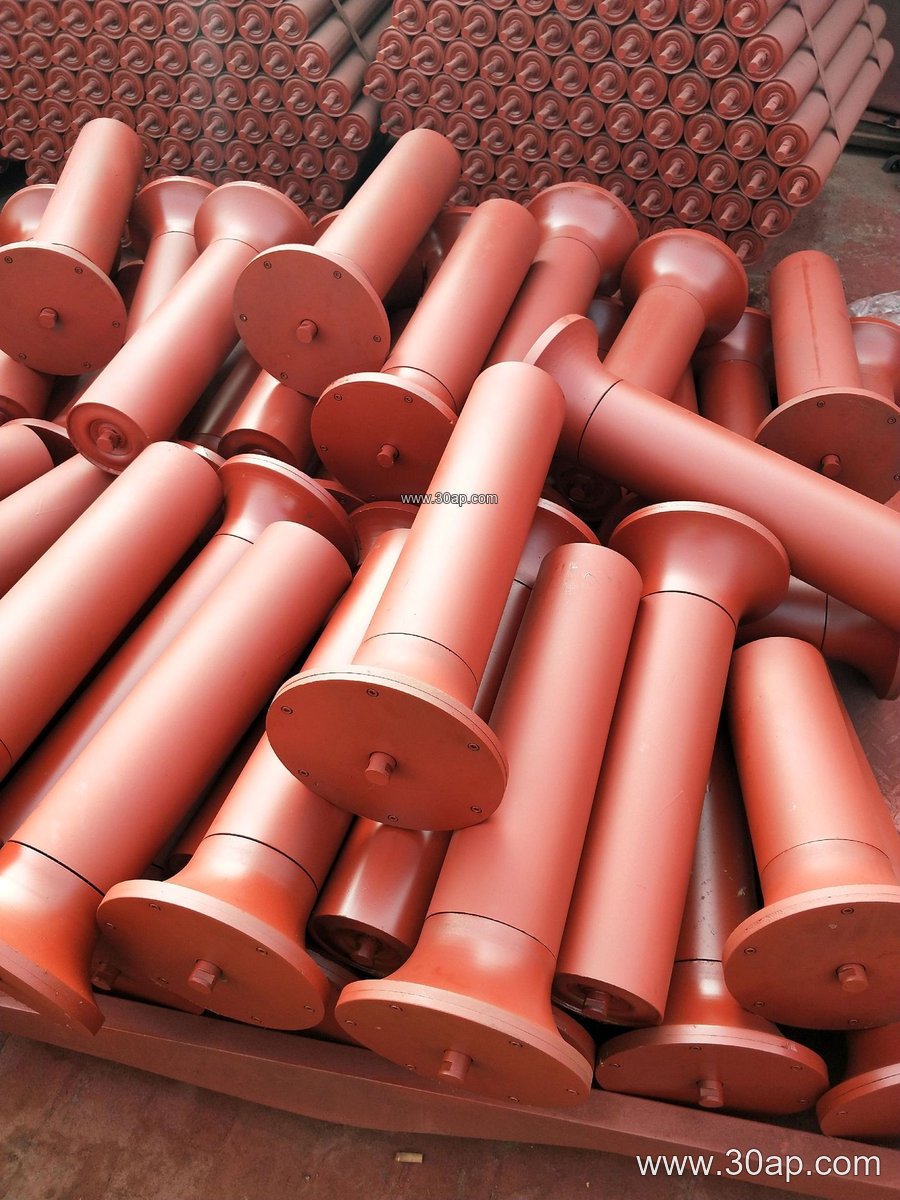
How the Roller Is Put Together
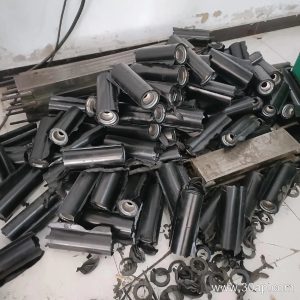
A typical unit has a steel tube shell, a shaft, sealed bearings at each end and bearing housings pressed into the tube. Common shell materials include plain steel, nylon and ceramic-coated tube, and rubber rings are added for impact positions. Sealing is the detail that matters most underground or in wet, dusty plants: labyrinth seals and grease-filled housings keep fine grit away from the bearing races.
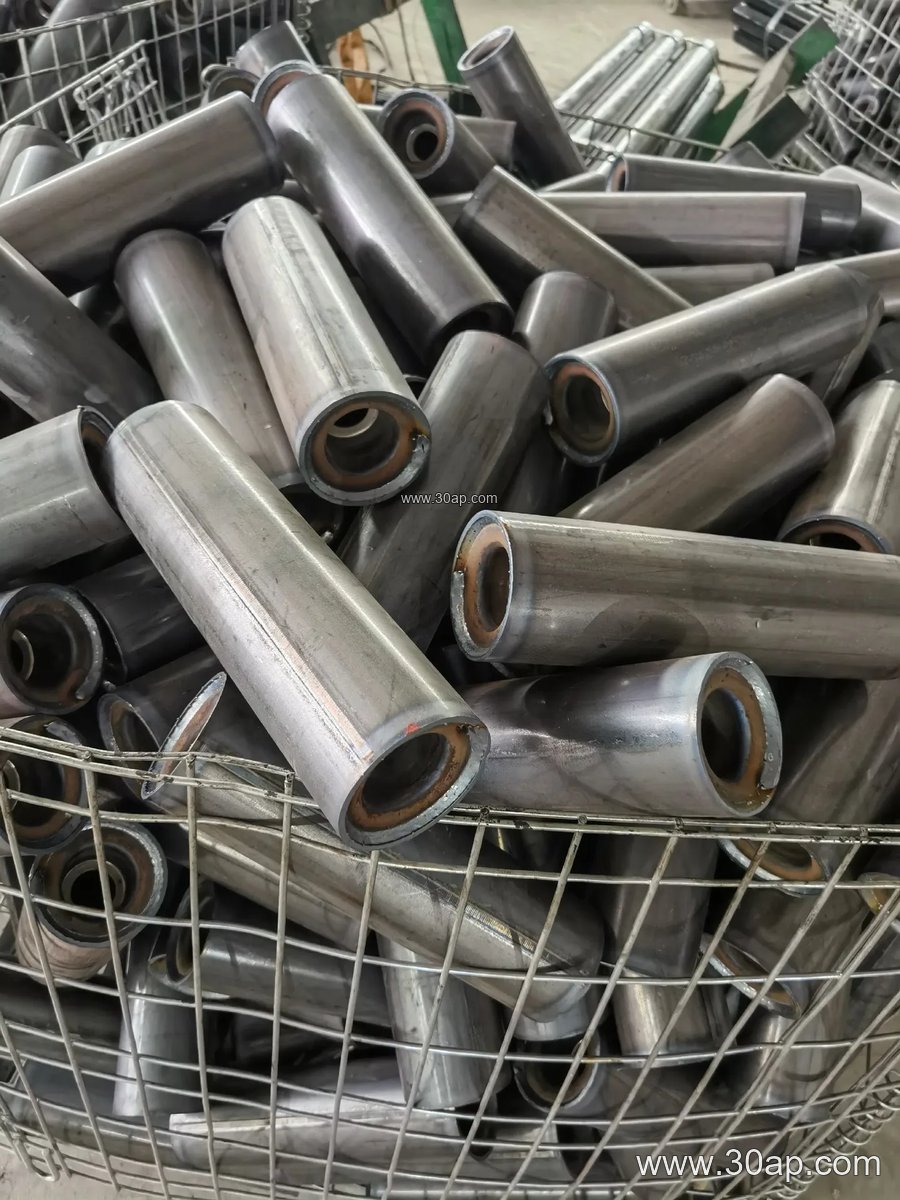
Common bearing numbers used in this equipment include 6204, 6205, 6305, 6306, 6308 and 6310. These are matched to the shaft and load by the designer, not by belt width alone, so a given belt does not lock in one shaft size.
Common Types and Where They Sit
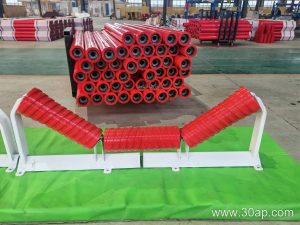
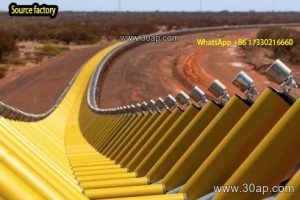
- Troughing idlers in two- or three-roll sets form the carrying side; three-roll troughing is the usual choice for bulk material.
- Impact idlers and rubber-ring impact rollers sit under the loading chute, where lumps from a crusher or screen drop onto the belt.
- Return idlers, including flat and V-return designs, support the empty strand.
- Self-aligning idlers with friction or tapered rollers correct minor misalignment on long runs.
- Spiral idlers help shed sticky material on the return side.
- Transition idlers ease the belt from flat to troughed profile near pulleys.
Troughing angle is normally 20, 30, 35 or 45 degrees. A steeper angle deepens the trough and can raise capacity, but it also increases edge tension and side-roll load, so the choice follows belt stiffness and material character. Forward-leaning rolls of about 1.5 to 2 degrees are used on self-aligning sets to assist tracking.
Sizing Notes for Buyers
Roller diameter and belt width are selected together with the conveyor design. Common roller diameters include Ø63, Ø76, Ø89, Ø102, Ø108, Ø127, Ø133, Ø159, Ø178, Ø194 and Ø219 mm, while belt widths commonly run from B400 to B2400. Roll length changes with belt width, trough angle and roll position. As an example only, a three-roll troughing set might use rolls of about 200 mm at B500, 250 mm at B650, 315 mm at B800, 380 mm at B1000, 465 mm at B1200, 530 mm at B1400, 600 mm at B1600, 670 mm at B1800 and 750 mm at B2000. Side rolls and centre rolls can differ, so these figures are reference points rather than fixed pairings.
| Parameter | Examples Often Used |
|---|---|
| Roller diameter | Ø89, Ø108, Ø127, Ø133, Ø159, Ø178 mm |
| Belt width | B500, B650, B800, B1000, B1200, B1400, B1600, B1800, B2000 mm |
| Trough angle | 20°, 30°, 35°, 45° |
| Bearing | 6204, 6205, 6305, 6306, 6308, 6310 |
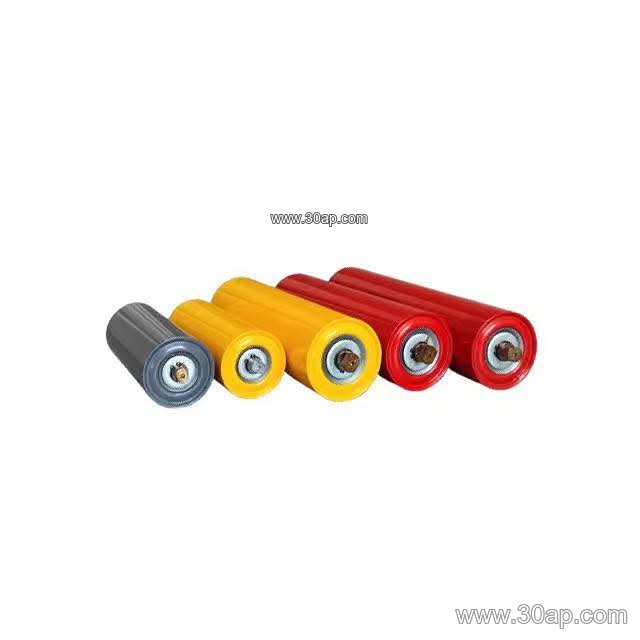
| Shell surface | steel, nylon, ceramic, rubber ring |
Finer points to confirm on the data sheet include shaft diameter, fixing dimensions, seal type and grease or maintenance-free bearing arrangement. When the belt is a flame retardant conveyor belt for an underground coal mining conveyor, check that roller materials and any plastic components suit the same fire-safety requirements.
Application and Matching Equipment
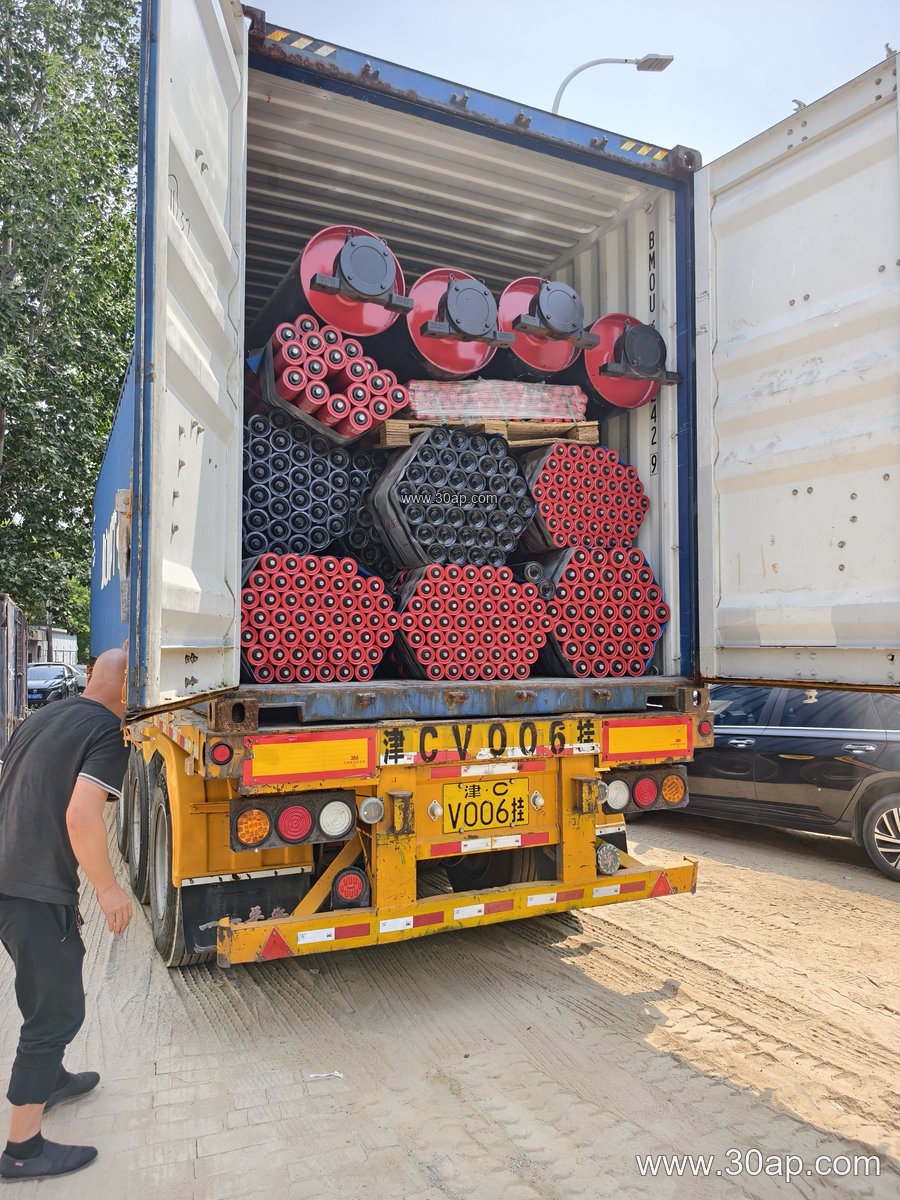
These rollers appear in limestone mines feeding a crusher, in cement plant clinker lines, in power plant coal yards and in aggregate plants with several transfer points. A quarry conveyor belt moving sharp rock benefits from abrasion resistant roller shells, while a wet wash plant may need better sealing. Heavier service, such as an iron ore conveyor carrying dense lump material, often calls for larger diameters and closer idler spacing to spread the load.
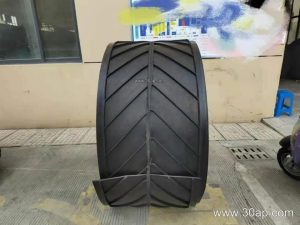
The belt itself should be considered at the same time. An EP conveyor belt or steel cord conveyor belt has different stiffness and tracking behaviour, and that affects how a troughing set should be set up. Where material is sticky or the route climbs steeply, a chevron conveyor belt or a corrugated sidewall conveyor belt changes the clearance and guidance needs around the idlers. Spare brackets, shafts and seals should match the original frame, so record the bracket hole pattern before reordering.
Care and Replacement
Inspect for a seized roller, a worn shell, grease leakage or a noisy bearing, and replace any unit that drags on the belt. A failed idler can cut the belt cover, damage a splice and raise current on the drive. Keep alignment straight after replacement, check that the idler sits square in its bracket, and confirm that the belt runs centred on both carrying and return strands. For long conveyors, keep a small stock of the most-used sizes so a single failed roller does not stop the whole circuit.