What Conveyor Bracket Procurement Covers
Conveyor bracket procurement is the process of sourcing the structural supports that hold idler rollers and shape the conveyor belt along its route. These brackets, often called conveyor support brackets or idler frames, are not a single part but a family of components: troughing brackets for the carrying side, return brackets for the empty side, impact brackets at load points, and self-aligning brackets for belt tracking. A buyer specifying these items needs to match them to the belt width, trough angle, roller diameter, and the environment—whether a quarry, a coal preparation plant, or a cement kiln line.
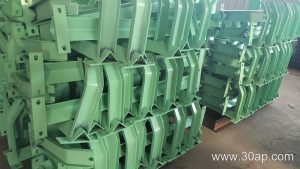
The bracket itself is typically fabricated from angle steel, channel steel, or folded steel plate. The design must resist vibration, material buildup, and corrosion while keeping the rollers at the correct angle. For a 1200mm wide conveyor belt carrying abrasive aggregate, a troughing bracket with a 35-degree trough angle and Ø133 rollers is a common starting point, but the final choice depends on the load and the transition distances.
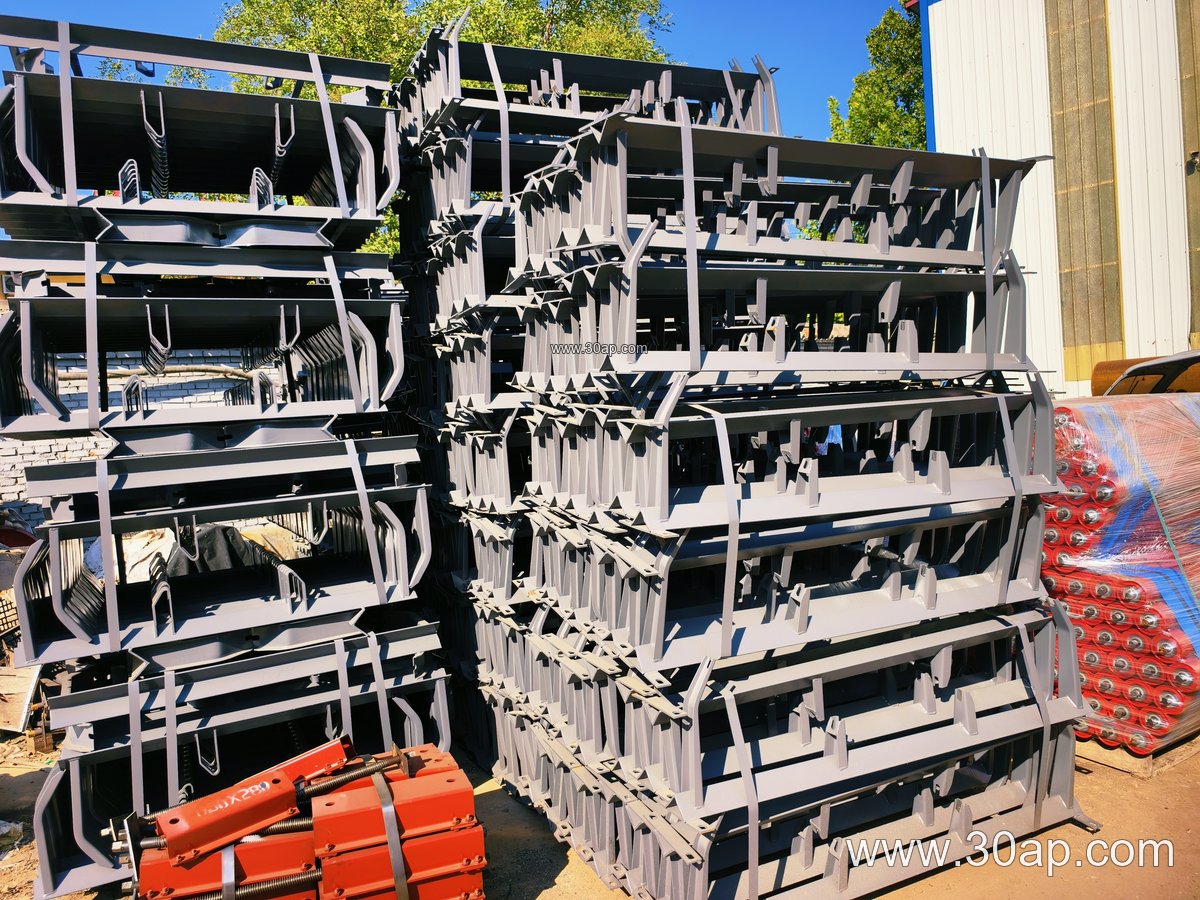
How the Brackets Are Built and Where They Fit
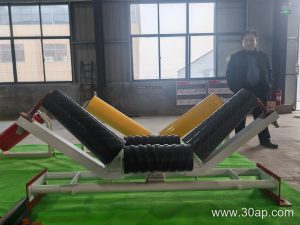
A troughing bracket usually consists of a base beam and two or three roller supports set at a fixed or adjustable angle. Fixed brackets are welded or bolted at a specific trough angle—20, 30, 35, or 45 degrees are typical. Adjustable brackets allow the angle to be changed on site, which helps when a conveyor is repurposed or when belt training needs fine-tuning. Return brackets are simpler, often a single cross beam with hooks or pads for the return idler roller. V-return brackets use two rollers in a V shape to help center the belt.
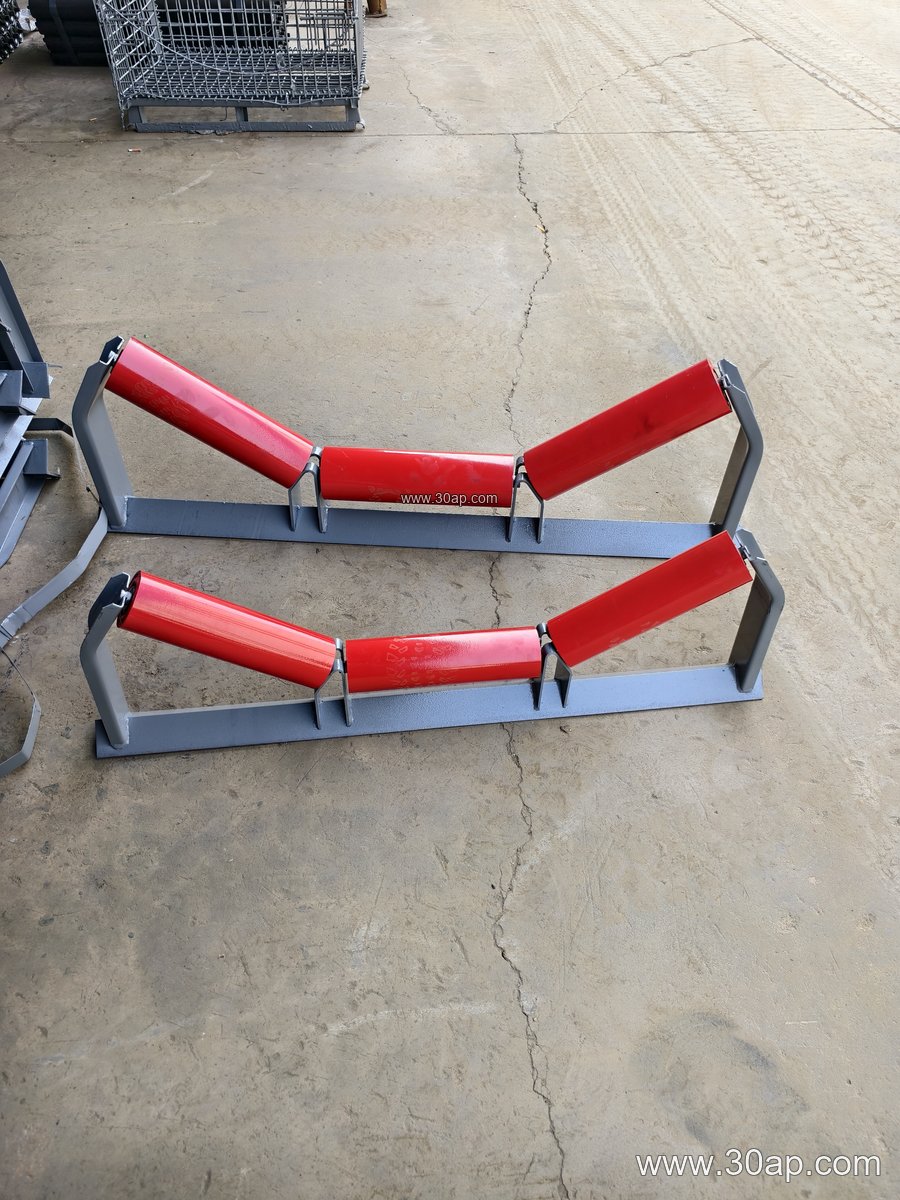
Installation position matters. Troughing brackets sit on the carrying side, spaced along the conveyor stringer. Impact brackets are placed under the loading chute, often with rubber buffers, to absorb the force of falling material. Self-aligning brackets include a pivot and are used where belt misalignment is a recurring issue. In a port terminal handling iron ore, for example, a combination of heavy-duty troughing brackets and self-aligning return brackets keeps the belt centered under high-tonnage transfer.
Matching Brackets to Belt and Roller Dimensions
Belt width and roller diameter are the first filters. Common belt widths include B500, B650, B800, B1000, B1200, B1400, B1600, B1800, B2000, B2200. Roller diameters often range from Ø89 to Ø194. A narrow belt such as B650 may use Ø89 rollers with a 30-degree trough angle, while a B1200 belt in a primary crusher discharge might use Ø133 or Ø159 rollers at 35 or 45 degrees. There is no fixed rule that one belt width must use one specific roller diameter or trough angle; the design engineer sets the combination based on belt tension, material lump size, and transition requirements.
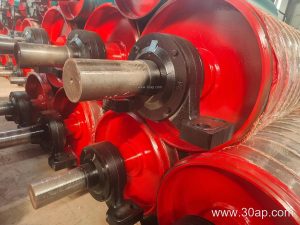
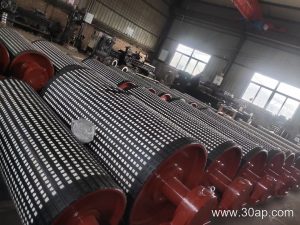
Mounting hole spacing and beam length vary with belt width and trough angle, so these should be confirmed against the conveyor drawing rather than assumed. For a B1000 conveyor carrying coal, a 35-degree troughing bracket with Ø108 rollers is a frequent choice, but a wider B1400 belt might use Ø133 rollers and a 45-degree angle to increase capacity. The bracket must also accommodate the selected conveyor pulley at the head and tail—drive pulleys, tail pulleys, and bend pulleys each have their own mounting needs, and the brackets near these points may need to be transition or special-purpose types.
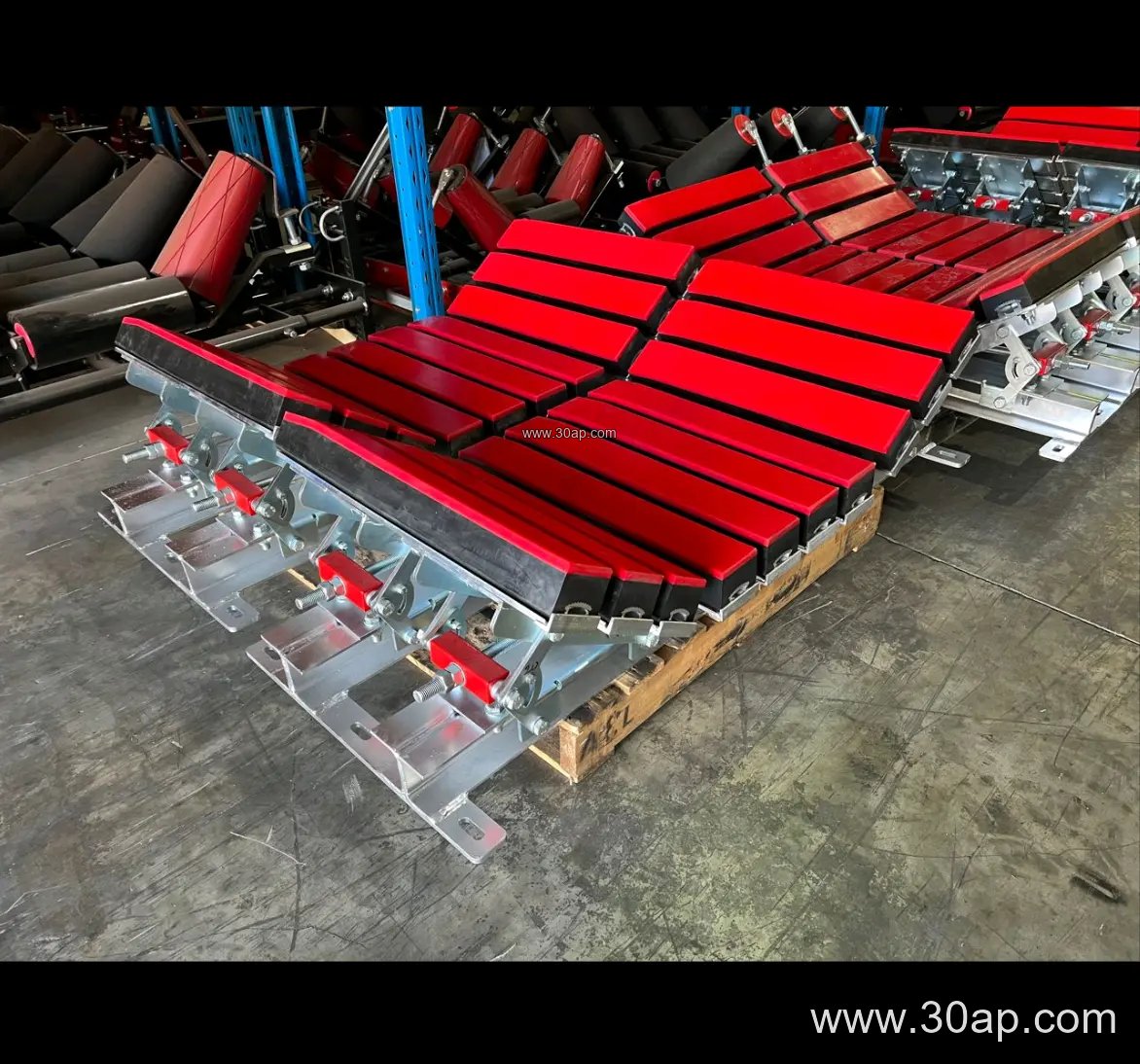
Procurement Notes for Different Industries
In a limestone quarry or sand and gravel line, dust and abrasion are the main concerns. Brackets should be sized for the belt width and roller diameter, and the trough angle should suit the material’s angle of repose. A 30-degree troughing bracket is often enough for sized aggregate, while a 45-degree angle may be used for fine, free-flowing material. In a coal preparation plant, flame retardant and anti-static properties of the belt are critical, and the brackets must be compatible with the belt’s edge profile and the idler roller dimensions.
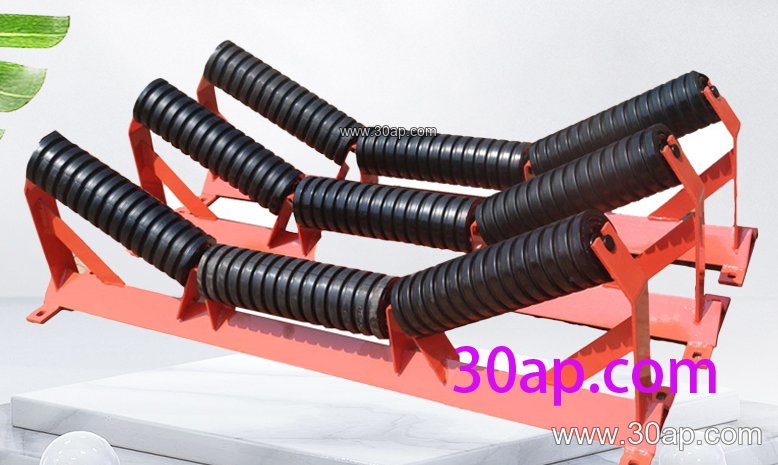
For a cement plant, heat and fine powder can affect bracket longevity. Steel cord conveyor belts or heat resistant conveyor belts may be used, and the brackets should allow for thermal expansion and easy roller replacement. In a power plant coal handling system, the brackets near the transfer points should be impact-resistant, and the return brackets should be designed to shed spillage. A buyer should request drawings showing the bracket’s load rating, material thickness, and surface treatment—painted, galvanized, or powder-coated—to match the plant’s maintenance regime.
Specification Checklist for Buyers
Before placing an order, confirm the following for each bracket type:
- Belt width (e.g., B800, B1200, B1600) and trough angle (20°, 30°, 35°, 45°).
- Roller diameter (Ø89, Ø108, Ø133, Ø159, Ø194) and roller spacing.
- Bracket material and finish: angle steel, channel steel, or folded plate; painted or galvanized.
- Mounting dimensions: hole spacing, beam length, and attachment method to the stringer.
- Application environment: abrasion, heat, oil, or corrosion, which may call for a specific belt type such as abrasion resistant conveyor belt or oil resistant conveyor belt.
- Compatibility with adjacent components: conveyor pulley, idler roller, and conveyor belt.
Because brackets are often procured alongside belts and rollers, it helps to review the whole conveyor layout. A bracket that fits a B1000 belt with Ø108 rollers will not fit a B1400 belt with Ø159 rollers, and a troughing bracket is not a substitute for a return bracket. Clear communication of the belt width, trough angle, and roller diameter—along with the conveyor’s duty—keeps the procurement process accurate and avoids site modifications.