What a Sand and Gravel Plant Conveyor Pulley Does
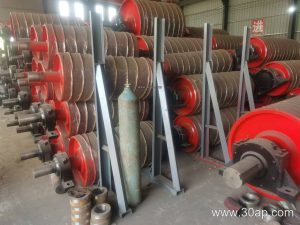
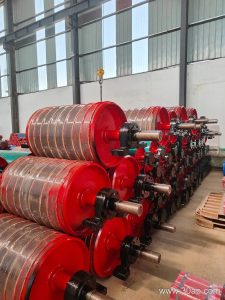
A sand and gravel plant conveyor pulley is the rotating drum that drives, tensions, or redirects the belt on an aggregate handling conveyor. In a crushing and screening line, the pulley is the point where motor torque becomes belt motion, so its build quality directly affects how steadily material moves from the primary crusher through the screens and onto the stockpiles. The same component appears under equivalent names such as conveyor drum or belt pulley, and in everyday plant language it is often just called a drum.
The working environment is abrasive and often wet. Fines from crushed stone and sand settle on frames and bearings, and wash water adds moisture. A pulley that is not sealed and balanced well will not last long in this setting, no matter how strong its shell is.
Construction Details That Matter
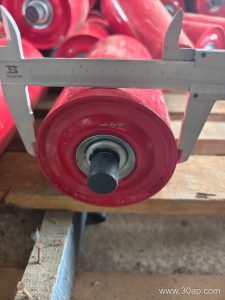
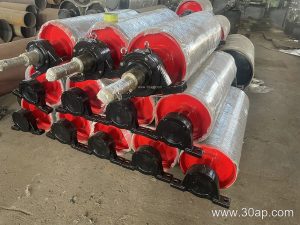
Most units use a welded steel shell with end discs and a through shaft or stub shafts. The shaft is sized by torque and radial load, not by belt width alone, so a B800 conveyor and a B1200 conveyor may use different shaft diameters even when the drum diameters look similar. Common shaft sizes in aggregate service include Ø80, Ø100, Ø120, and Ø140, but the final figure comes from the conveyor designer.
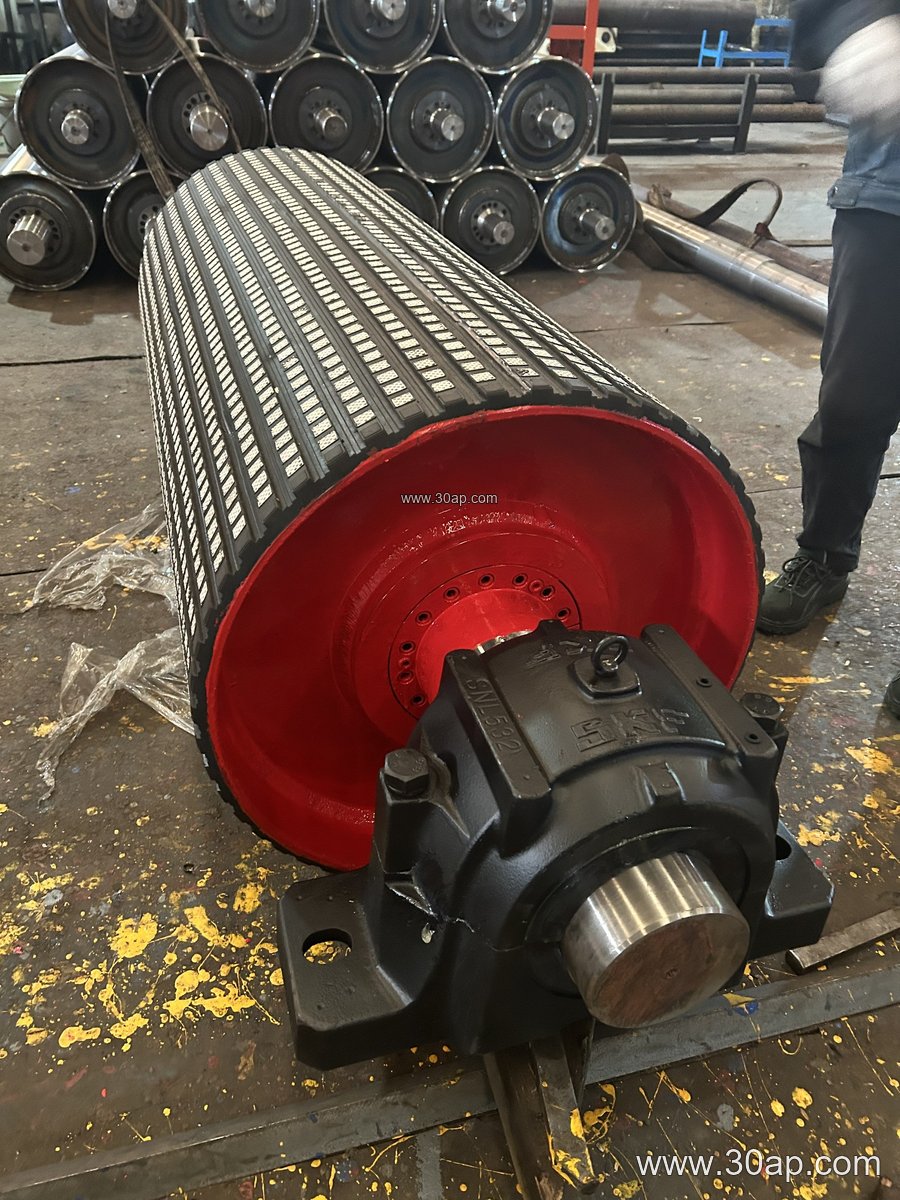
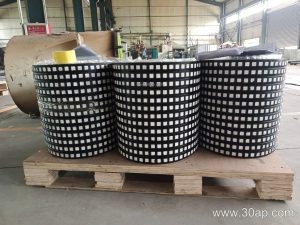
Surface treatment is where many buyers focus. Plain finish is acceptable on some non-drive positions, while lagging improves grip at the drive. Hot vulcanized rubber, cold-bonded rubber, diamond groove, herringbone, and ceramic lagging are all used; typical lagging thickness runs 8, 10, 12, 15, or 20 mm depending on duty. Bearings are usually housed in pillow blocks or flanged housings mounted on a conveyor bracket that allows adjustment at the tail or take-up position.
Where It Sits in the Circuit
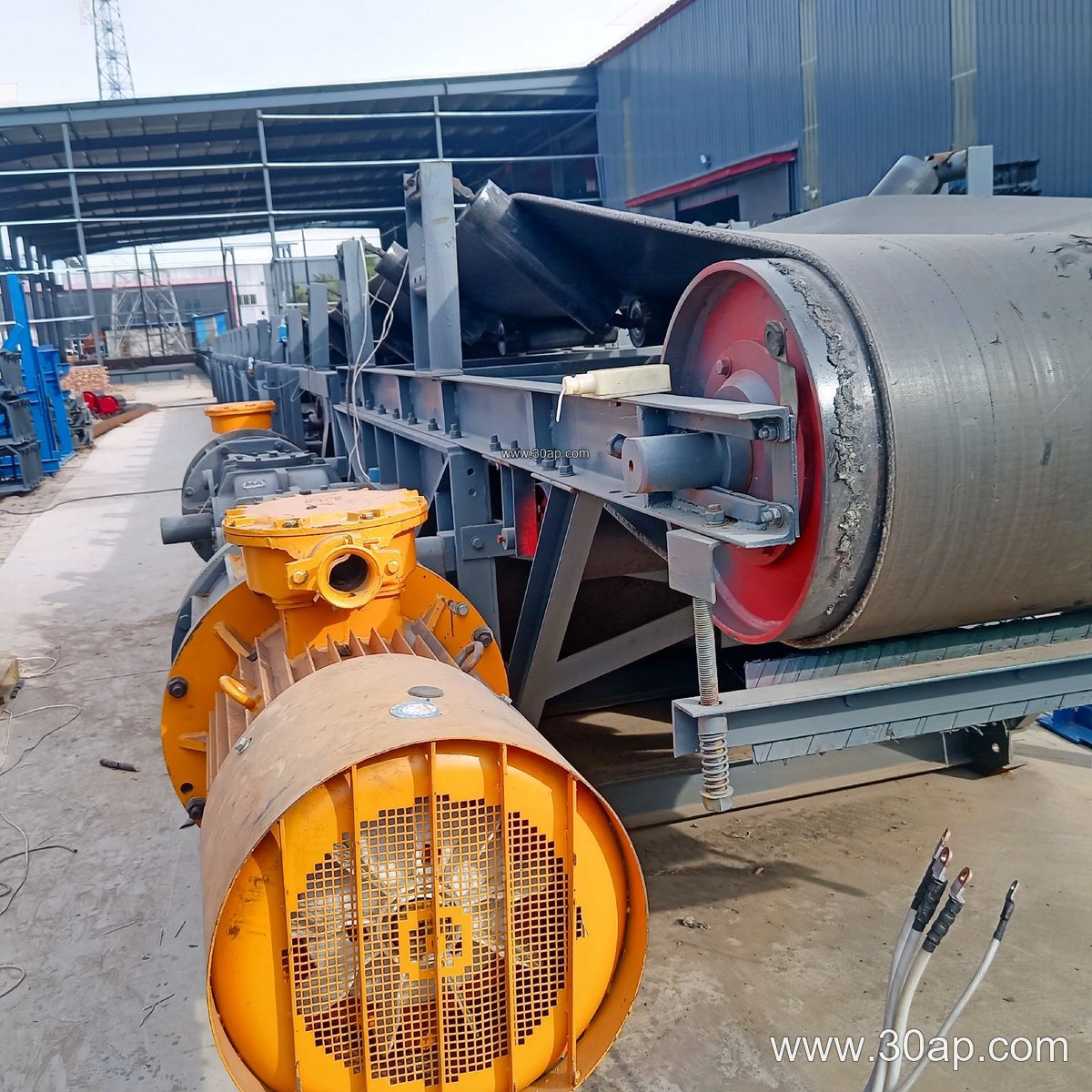
Position changes the job description. A drive pulley or head pulley pulls the belt and needs good traction, so lagging is common. A tail pulley at the loading point turns the belt back and may need wing-type or self-cleaning features if sticky material builds up. A bend pulley changes belt direction without driving, and a take-up pulley maintains tension as the belt stretches. These are separate roles, and a bend pulley should not be treated as a substitute for a drive drum.
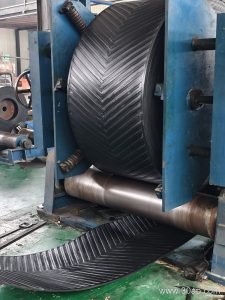
In a quarry or sand and gravel plant, the belt itself is often an abrasion resistant conveyor belt or a heavy-duty mining conveyor belt carrying 0–40 mm aggregate at high tonnage. The pulley and the belt must be matched: too small a drum diameter with a stiff belt shortens belt life, while an oversized drum adds cost and space. A rubber conveyor belt and an EP conveyor belt behave differently over the same drum, so the belt datasheet belongs in the pulley discussion.
Common Size References
The table below shows typical combinations seen in aggregate conveyors. These are reference values, not fixed pairings, and the final selection follows the conveyor design.
| Belt width | Typical pulley face width | Example drum diameter | Typical shaft range |
|---|---|---|---|
| B500 | about 600 mm | Ø250 to Ø400 | Ø60 to Ø80 |
| B650 | about 750 mm | Ø315 to Ø500 | Ø70 to Ø90 |
| B800 | about 950 mm | Ø400 to Ø630 | Ø80 to Ø100 |
| B1000 | about 1150 mm | Ø500 to Ø800 | Ø100 to Ø120 |
| B1200 | about 1400 mm | Ø630 to Ø1000 | Ø120 to Ø140 |
| B1400 | about 1600 mm | Ø800 to Ø1250 | Ø140 to Ø160 |
Face width is normally a little wider than the belt to allow tracking tolerance. Diameter is chosen from belt tension, belt stiffness, and the required wrap angle, so a B1200 x Ø1000 drive drum and a B1200 x Ø800 tail drum can both be correct on the same conveyor.
Buyer Checklist
- Confirm the pulley role: drive, tail, bend, take-up, or snub, and state it clearly on the inquiry.
- Provide belt width, belt type, and belt tension; mention whether the belt is an EP conveyor belt, steel cord, or multi-ply fabric core.
- Specify lagging type and thickness only after checking the duty and material.
- Ask for shaft diameter calculation based on torque, not a guess from belt width.
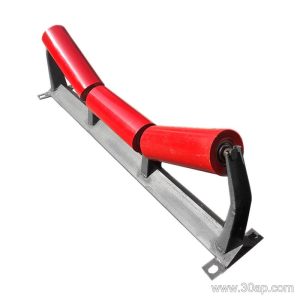
- Check bearing sealing and lubrication for dusty, wet aggregate conditions.
- Plan inspection intervals for lagging wear, shell cracks, and bearing temperature.
For spare parts planning, keep a record of each drum position, its dimensions, and the conveyor bracket arrangement so a replacement can be ordered without stopping the plant for measurement. Whether the line handles limestone, iron ore, or concrete aggregate, the pulley is a small part of the capital cost but a large part of uptime.