What a Rubber Lagged Pulley Does on a Conveyor
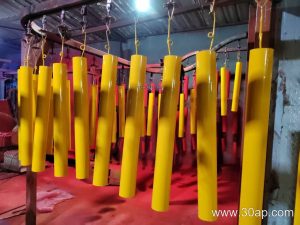
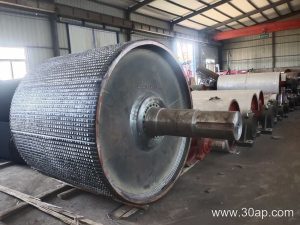
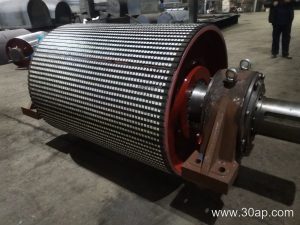
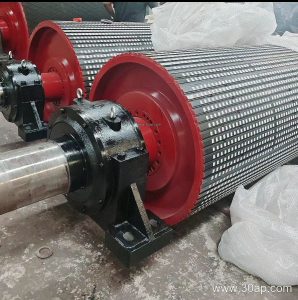
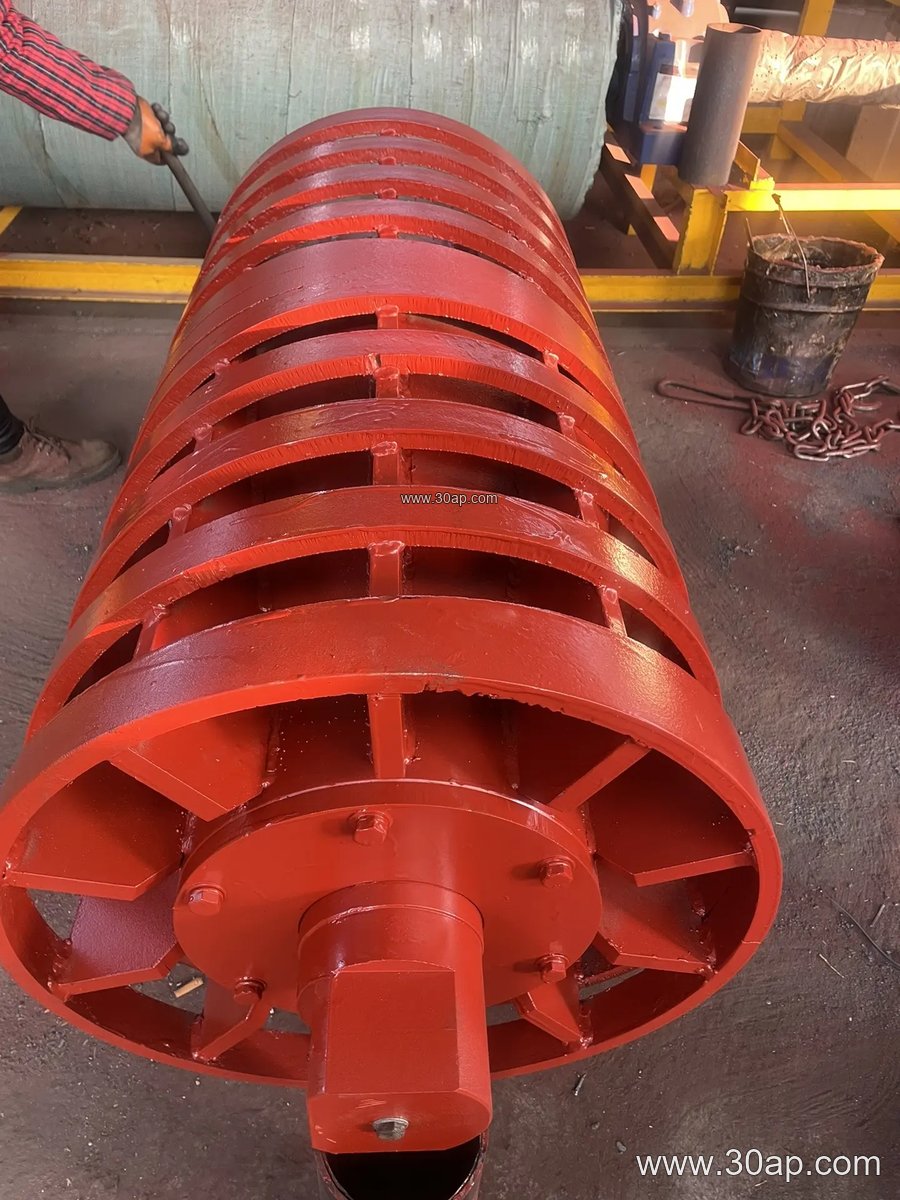
A rubber lagged pulley is a conveyor pulley whose cylindrical shell is covered with a rubber layer, usually bonded by hot vulcanization or cold adhesive, and sometimes finished with a grooved pattern. The lagging is not cosmetic. It raises the friction coefficient between the shell and the belt, protects the steel shell from abrasive dust and slurry, and helps keep the belt tracking steadily under load. In a quarry or a sand and aggregate line, that extra grip often decides whether a fully loaded belt can start without slipping.
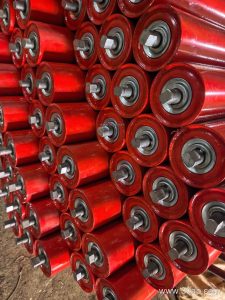
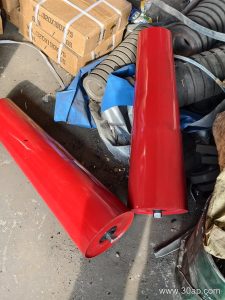
The work is done by the same basic component families across the plant: the conveyor pulley, the idler roller and the conveyor bracket all share the load path, but the lagged pulley has the added rubber interface. Depending on its position, it may serve as a drive pulley, a tail pulley, a bend pulley or a tension pulley, and each position asks something different from the rubber surface.
Construction and Surface Forms
Most units start as a welded or rolled steel shell with end discs, a shaft and bearing housings. The rubber layer is applied either as sheets cured onto the shell or as pre-formed strips, then machined or buffed to a uniform thickness. Common lagging thicknesses are 8, 10, 12, 15 and 20 mm, chosen according to belt tension and the amount of slip expected.
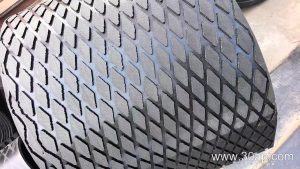
Surface patterns are practical choices rather than decoration. Plain lagging suits clean, dry service on a tail or bend pulley. Diamond lagging improves water shedding and is widely used on drive pulleys in washing plants. Herringbone grooving pushes water and fines outward toward the belt edges, which helps on wet coal or slurry-exposed drives. Ceramic lagging, where ceramic tiles are embedded in the rubber, is chosen for high-torque drives with heavy abrasion. Hot vulcanized rubber generally gives the strongest bond for demanding duty, while cold-bonded lagging can be a practical repair option in the field.
Where the Rubber Lagged Pulley Fits
Drive positions benefit most from lagging because friction is the whole point of the drive pulley. In a coal mining conveyor or a power plant coal handling system, a lagged head pulley reduces the risk of belt slip during startup with a loaded belt. Tail pulleys use lagging mainly for wear protection, since the belt wraps them with the dirty side outward. Bend and snub pulleys use thinner lagging to guide the belt and increase wrap angle without adding much mass.
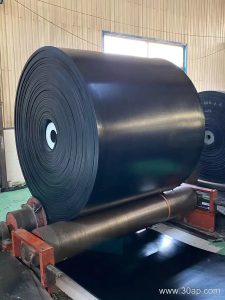
Belt selection and pulley selection belong together. A heavy-duty mining conveyor belt such as an EP conveyor belt or a steel cord conveyor belt carries very different tension into the drive, so the lagging compound and groove pattern should match the belt’s surface and the site conditions. In a cement plant, heat resistant conveyor belt grades may run near clinker, and the pulley lagging should tolerate warm, dusty air without softening. At a port or ship loading terminal, a rubber conveyor belt moving damp bulk material benefits from grooved lagging that clears water quickly.
Sizing Notes Buyers Should Check
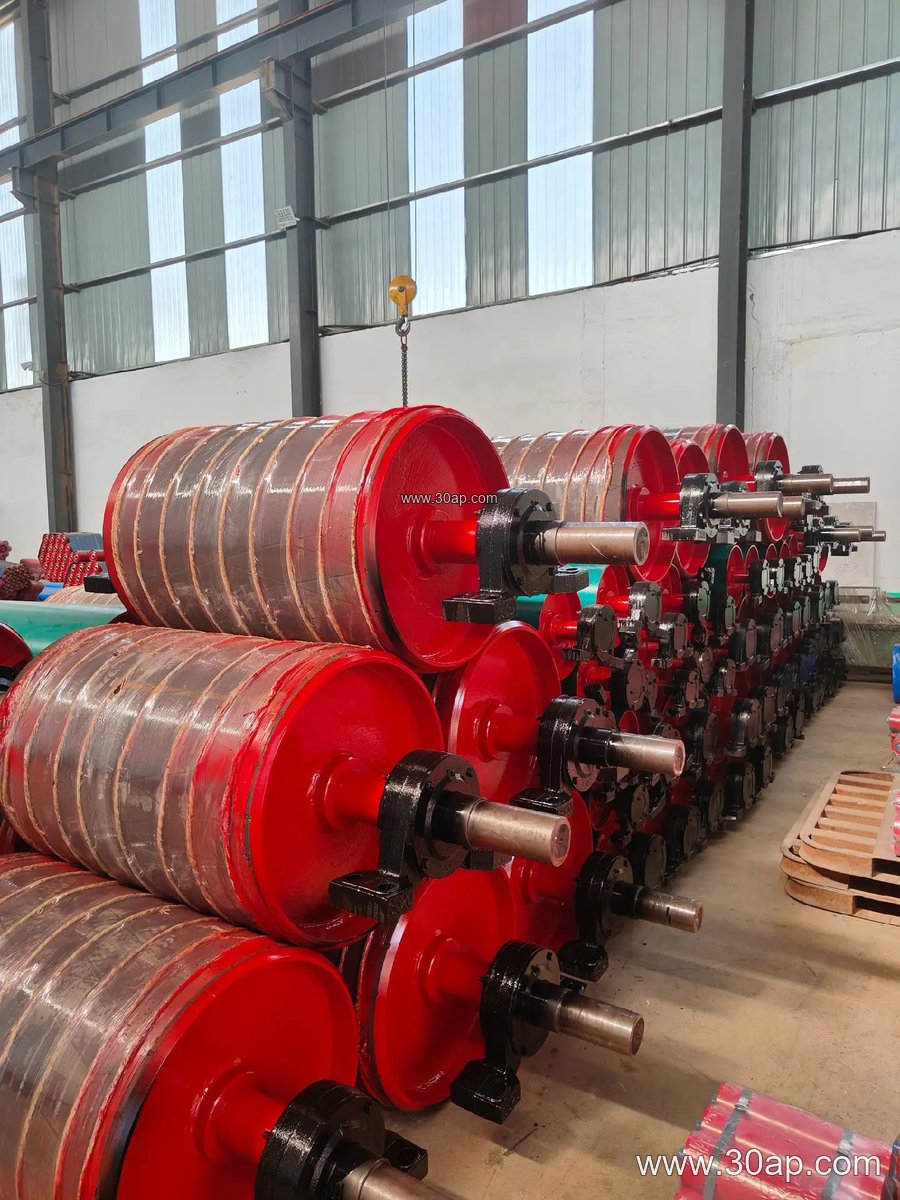
Pulley diameter is normally set by belt tension, shaft torque and the number of plies or cords in the belt, not by belt width alone. The face width of the shell is usually a little wider than the belt, as the reference values below suggest. Treat these as typical design references, not fixed rules.
- B400 belt — about 500 mm face width
- B650 belt — about 750 mm face width
- B800 belt — about 950 mm face width
- B1000 belt — about 1150 mm face width
- B1200 belt — about 1400 mm face width
- B1400 belt — about 1600 mm face width
- B1600 belt — about 1800 mm face width
- B1800 belt — about 2000 mm face width
Common shell diameters include Ø200, Ø250, Ø315, Ø400, Ø500, Ø630, Ø800, Ø1000, Ø1250 and larger, and a typical combination might be written as B1200 × Ø1000 or B800 × Ø500. Shaft diameters commonly fall in the Ø50 to Ø200 range, but the final size must come from torque and load calculation, not from the belt width. A single belt width can work with several pulley diameters, and a single pulley diameter can serve several belt widths.
Selection and Maintenance Tips
Ask for the lagging thickness, compound type, hardness, groove pattern and bonding method in writing, and confirm whether the pulley is a drive, tail, bend or tension position. Check that the lagging is vulcanized rather than merely glued if the duty is wet or highly abrasive. During operation, watch for worn grooves, loose edges and rubber Debris under the frame; a slipping drive usually shows polished or glazed lagging first. Keep the belt cleaner and the conveyor bracket alignment in good order, because misalignment wears lagging unevenly on one side.
For more on matched conveyor components, see the pulley and rubber lagging pages at pdconveyor.com, and for belt-side selection visit the conveyor belt section at pdconveyor.com.