What an Anti-Sticking Idler Does
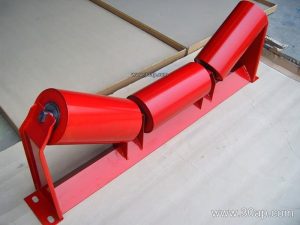
An anti-sticking idler is a carrying or return roller built to keep material from clinging to its shell. Wet coal, damp sand, clay-rich ore, and cement raw meal are classic offenders: they build up on a standard steel roll, the roll grows out of round, and the belt starts to track poorly or wear unevenly. The anti-sticking idler roller attacks that problem at the surface, so the conveyor belt releases fines instead of carrying them around the circuit.
These rollers are common in coal washing plants, cement plants, and aggregate crushing lines where moisture is present. They are not a substitute for a bend pulley or a tail pulley — those are separate components of the conveyor pulley family — but they work alongside them on the same frame.
How the Roller Is Built
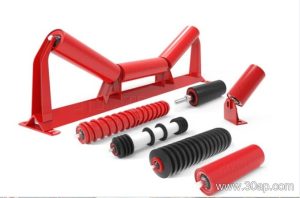
The anti-stick effect usually comes from one of three shell approaches:
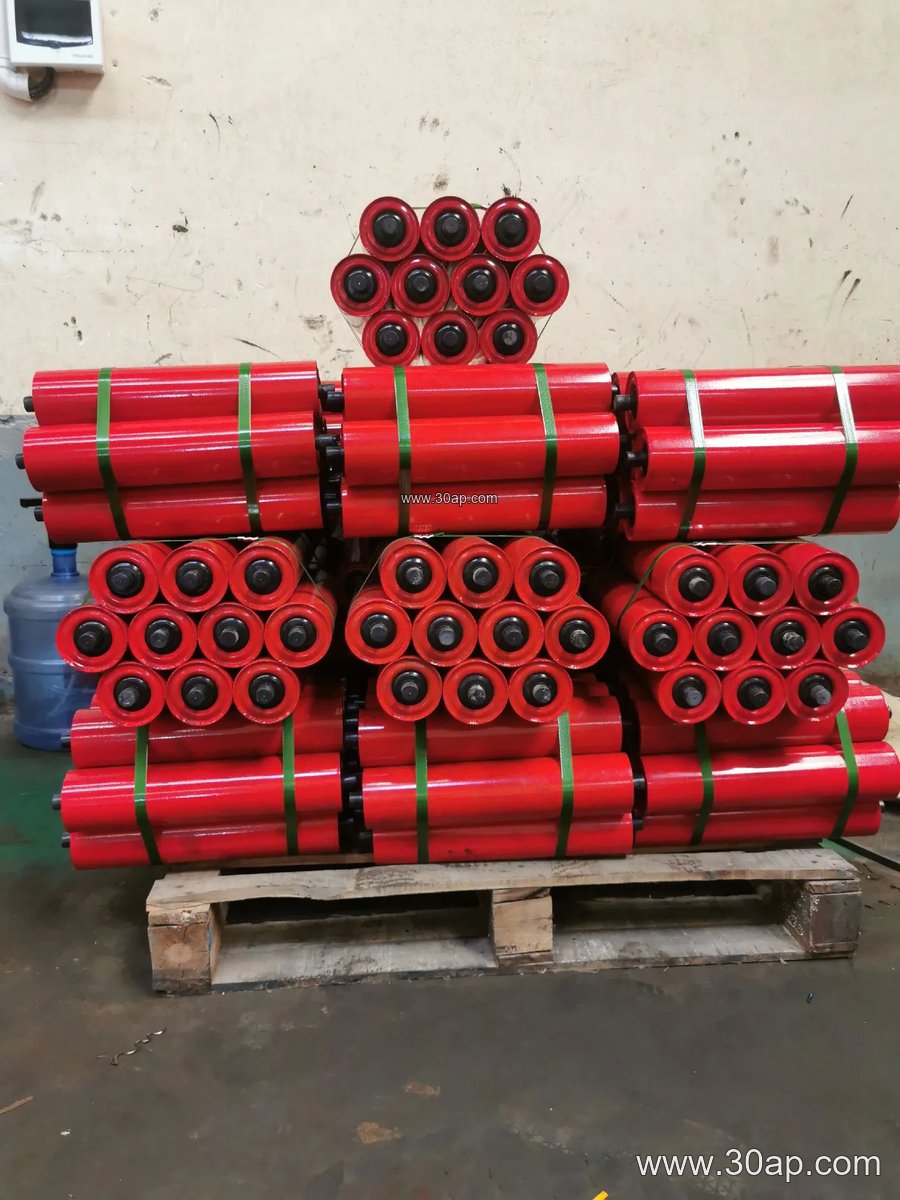
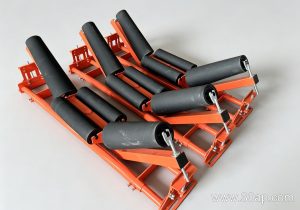
- Rubber-covered shell — a smooth or ribbed rubber sleeve that flexes slightly and sheds damp fines.
- UHMW-PE or nylon sleeve — low-friction polymer that resists wet build-up and reduces belt drag.
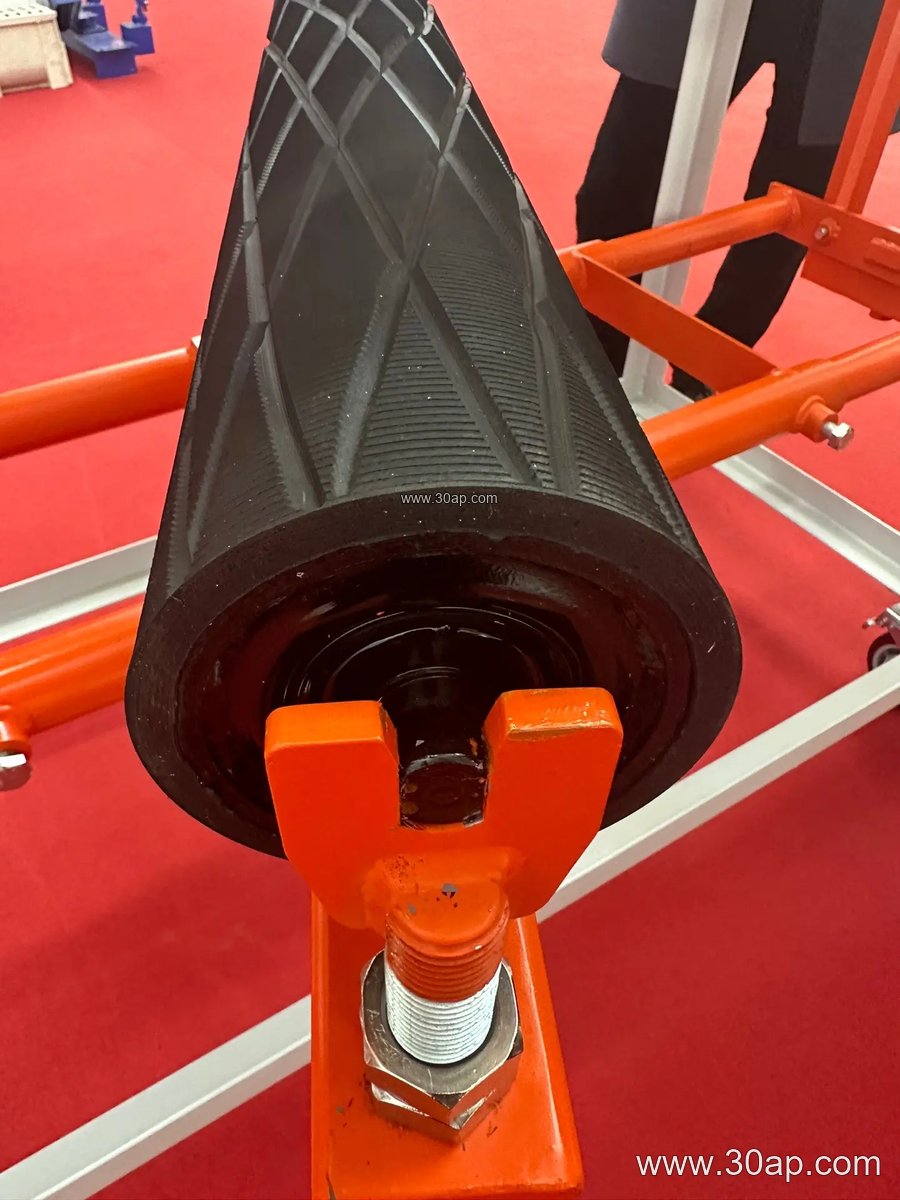
- Spiral or grooved steel roll — the helix pushes material sideways off the shell, often used as a return roller.
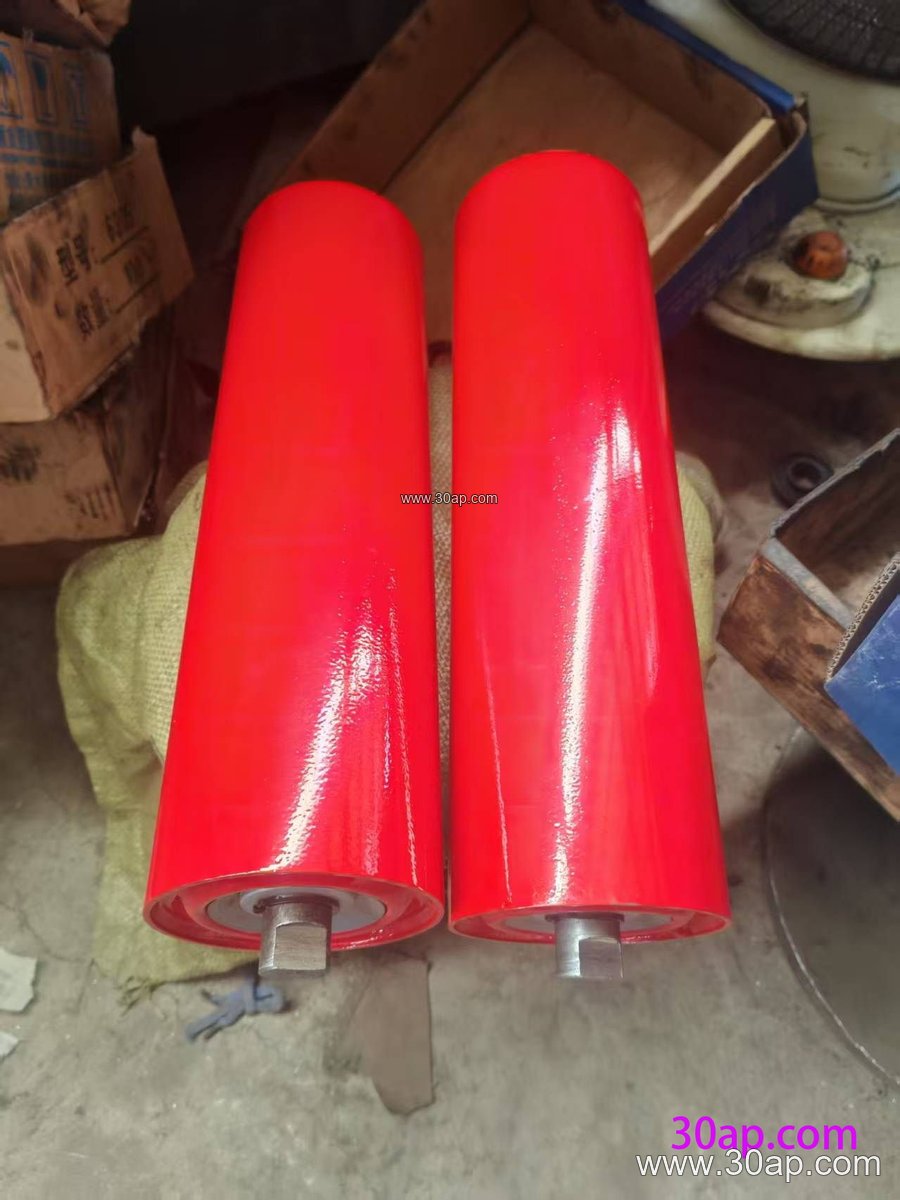
Bearing housings are typically sealed on both sides, with labyrinth or multi-lip seals to keep grit and wash water out. Common bearing sizes include 6204, 6205, 6305, 6306, 6308, and 6310, matched to the shaft and load rather than to belt width alone. Roller diameters in routine use run from Ø63 and Ø76 up through Ø89, Ø102, Ø108, Ø127, Ø133, Ø159, and larger Ø178 to Ø219 for heavy-duty mining conveyor frames.
Where It Fits on the Conveyor
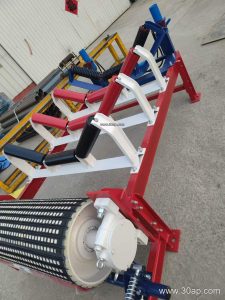
Anti-stick rollers are most often placed at the loading zone, at transfer points, and on the return run just behind the discharge. In a quarry conveyor or a coal mining conveyor belt line, the return side is where wet carryback collects, so a spiral or polymer-sleeved return roller earns its keep quickly. Troughing sets may combine anti-stick rolls with standard three-roll 20°, 30°, 35°, or 45° trough angles, and the centre roll can be the anti-stick element while the side rolls stay conventional steel.
On a steep incline, a chevron conveyor belt or corrugated sidewall conveyor belt can lift wet material, but the sticky fines still drop onto the return strand — another good place for this roller type. Where a skirted conveyor belt keeps material contained at the load point, the rollers beneath the skirt benefit most from a non-stick shell.
Matching Roller to Belt Width
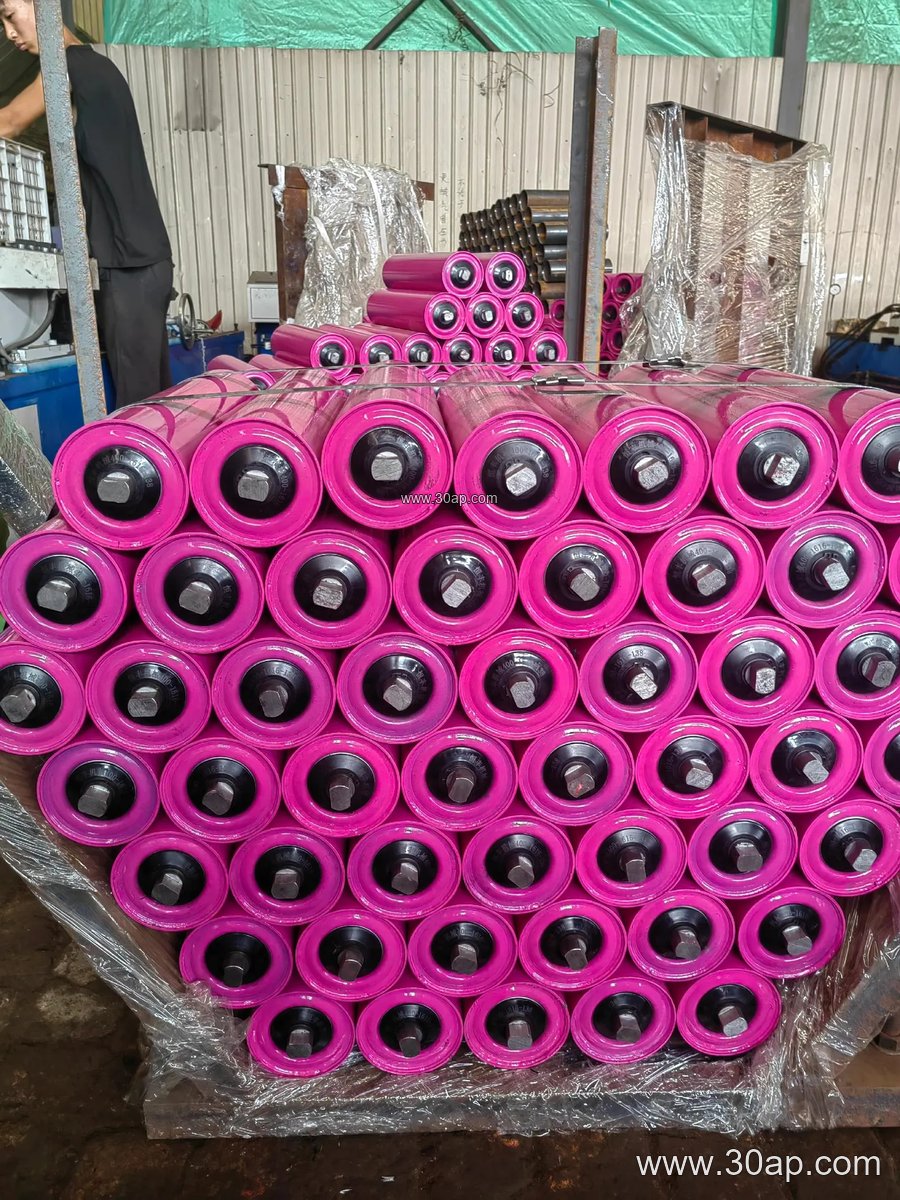
Roller length follows belt width, trough angle, and roll configuration, not a single fixed rule. Typical three-roll troughing examples are shown below as reference points; side rolls and centre rolls may differ, and final dimensions are set by design.
| Belt width | Typical roll length (three-roll trough) |
|---|---|
| B500 | about 200 mm |
| B650 | about 250 mm |
| B800 | about 315 mm |
| B1000 | about 380 mm |
| B1200 | about 465 mm |
| B1400 | about 530 mm |
| B1600 | about 600 mm |
| B1800 | about 670 mm |
| B2000 | about 750 mm |
Shaft diameter is determined from load and bearing selection, not from belt width alone. Buyers should confirm mounting dimensions against the existing conveyor bracket and frame before ordering.
Buying Notes
Ask for the shell material and thickness, the seal arrangement, and the bearing designation. In a cement plant or power plant coal yard, a flame retardant conveyor belt may be mandatory on the belt itself, and the roller should be compatible with that duty. In a port handling iron ore or copper ore, an abrasion resistant conveyor belt paired with polymer-sleeved rollers cuts maintenance. For food or fertilizer lines, a food grade conveyor belt and washdown-friendly rollers make sense.
Check that the roller spins freely by hand, that the seal sits flush, and that the shell has no runout. Anti-sticking idlers reduce carryback, but they work best with a properly adjusted scraper and good belt training. Replace rollers in sets where possible so the belt sees even support.