What a Spiral Return Idler Does
A spiral return idler is a return-side roller with a helical wrap around its shell. It sits under the carrying run of a conveyor belt and supports the belt on its way back to the tail. The spiral profile is not decorative: as the belt passes over it, the helix gently guides the belt toward the center and knocks off loose material that would otherwise build up on the return side. In a quarry, a coal washery, or a power plant coal yard, that self-cleaning action reduces the chance of belt misalignment and extends the life of the conveyor belt. The same product is also called a spiral return roller, and both names refer to the same return-side idler with a helical surface.
How It Is Built
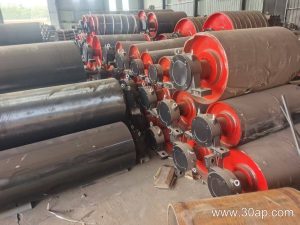
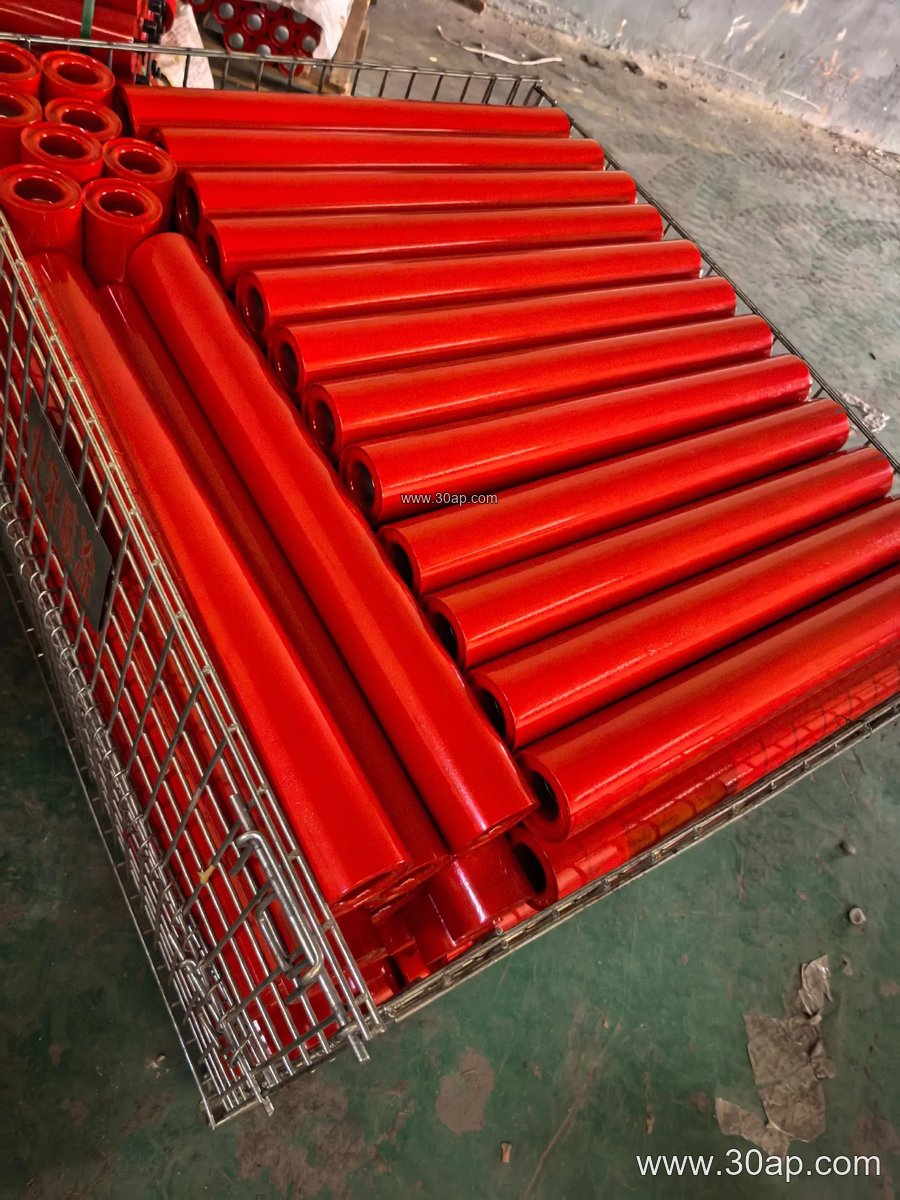
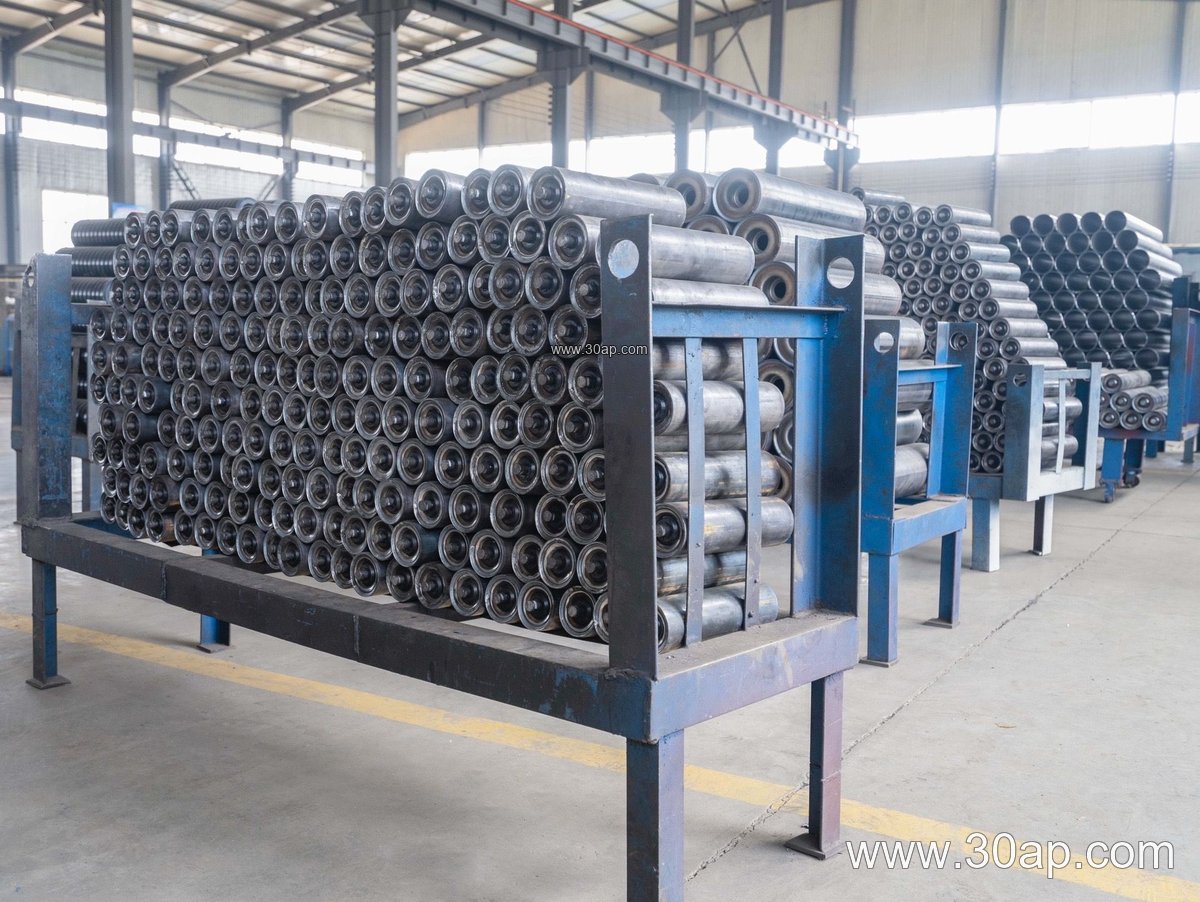
The core is a steel tube with welded bearing housings at each end. A helical steel strip is welded to the tube surface, often in a right-hand or left-hand pitch. Standard roller diameters include Ø89, Ø108, Ø127, Ø133, Ø159, and Ø178 mm, with larger sizes available for heavy-duty service. Bearings are commonly 6204, 6205, 6305, 6306, 6308, or 6310, selected according to load and speed rather than matched to one diameter. Seals are usually a combination of labyrinth and contact types to keep fine dust out. The shaft ends fit into conveyor bracket slots or bolted frames on the return side. Surface options include plain steel, nylon, or rubber-covered shells; the spiral itself is typically steel.
Where It Fits on the Conveyor
This idler belongs to the return run, not the carrying run. It may be used alongside a flat return idler or a V-return idler, but it does not replace those types. On a typical conveyor pulley arrangement, the belt leaves the head pulley, passes over the spiral return idler, and continues to the tail pulley. In a limestone mine or a sand and aggregate line, fines often cling to the belt after the discharge point; the spiral return idler helps shed that material before it reaches the tail. In a cement plant or a steel plant sinter line, the same action keeps the return side cleaner and reduces manual scraping.
Selection Notes for Buyers
Belt width and return idler length are related but not fixed. A B800 belt may use a return idler with a roller length around 315 mm in some frames, while a B1200 belt may use about 465 mm; these are common examples, not mandatory matches. The roller diameter should be chosen with the belt speed, load, and available bracket height in mind. For a heavy-duty mining conveyor belt carrying iron ore or copper ore, a larger diameter such as Ø159 or Ø178 mm is often preferred to reduce bearing load. For a lighter aggregate conveyor belt, Ø108 or Ø127 mm may be sufficient. The spiral pitch and direction should suit the belt travel direction and the type of material being handled.
Maintenance and Compatibility
Check the spiral return idler for wobble, seized bearings, and worn spiral edges. A worn spiral loses its cleaning effect and may damage the belt edge. Keep the idler roller free of wrapped material, especially in wet or sticky service. When replacing, confirm the shaft diameter, bearing type, and bracket spacing rather than assuming that one belt width matches one roller size. The spiral return idler works with many belt types, including EP conveyor belt, NN conveyor belt, and steel cord conveyor belt, but the belt cover and tension should be considered when choosing the roller surface. In a port or ship loading facility, a spiral return idler can help control dust carryback on the return side, while in an underground coal mining conveyor it should be selected with flame retardant and anti-static properties in mind for the whole system.
Quick Reference
| Item | Common range or example |
|---|---|
| Roller diameter | Ø89, Ø108, Ø127, Ø133, Ø159, Ø178 mm |
| Bearing | 6204, 6205, 6305, 6306, 6308, 6310 |
| Belt width examples | B500, B650, B800, B1000, B1200, B1400, B1600, B1800, B2000 |
| Roller length example | About 315 mm for B800, about 465 mm for B1200 (by frame design) |
| Surface | Steel tube with helical strip; nylon or rubber options |
Use these values as reference data for early planning. Final dimensions should follow the conveyor design, belt tension, and the bracket layout on the return side.