What a Trough Idler Does on a Conveyor
A trough idler is the carrying-side roller assembly that gives a loaded conveyor belt its trough shape. Three rolls are mounted in a frame, with the two side rolls angled upward so bulk material sits in a shallow channel instead of spilling over the edges. This assembly is often called a troughing idler or carrying idler set, and it is the component that supports the belt and its load between the head and tail of the conveyor. On a quarry conveyor belt or a cement plant feed line, the trough idler is what keeps tonnes of rock, clinker or aggregate centred and moving.
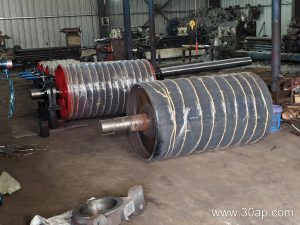
The same conveyor also uses return idlers beneath the belt to support the empty strand, but those serve a different purpose. Drive pulleys, tail pulleys and bend pulleys transmit or redirect belt tension and are not interchangeable with trough idlers. Keeping these roles separate matters when specifying spare parts.
How the Assembly Is Built
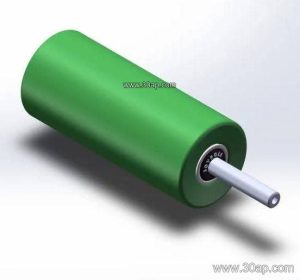
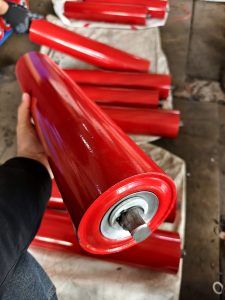
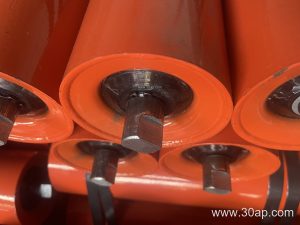
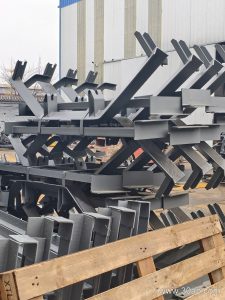
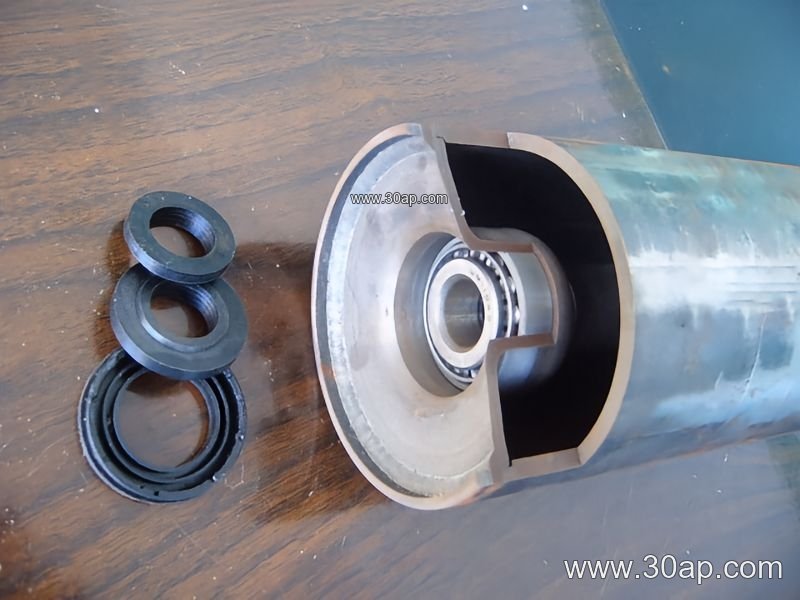
A typical trough idler set combines three idler rollers, a steel frame, and shaft ends that lock into the conveyor bracket. Each roller has a steel shell, a bearing housing at both ends, and a sealing arrangement that keeps dust and water away from the bearing. Rollers may be fitted with a plain steel surface, nylon, ceramic or rubber rings depending on the duty. Rubber rings are common on impact zones below a crusher, while ceramic or nylon surfaces help where sticky material builds up.
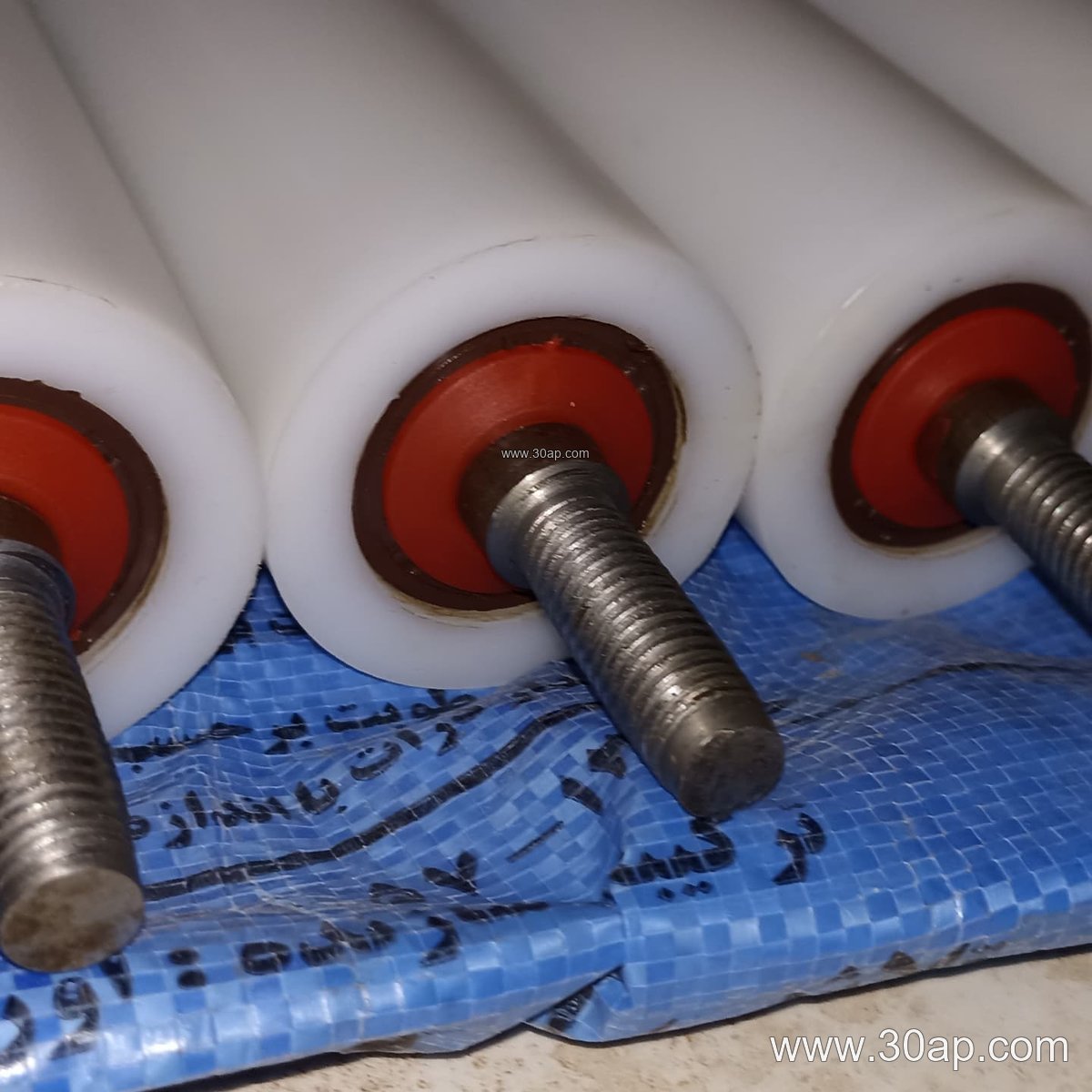
- Roll shell: steel tube, often with a protective surface
- Bearing: common sizes include 6204, 6205, 6305, 6306, 6308 and 6310
- Seal: labyrinth or contact type, chosen for dust and moisture levels
- Frame: fixed or adjustable, with 20, 30, 35 or 45 degree trough angles
The trough angle controls how deeply the belt sits in the frame. A 20 degree set suits flat, wide belts and fragile material, while 35 or 45 degrees gives better capacity and centring on high-tonnage lines. Slight forward tilt of about 1.5 to 2 degrees is used on some troughing sets to encourage the belt to track centrally.
Where Trough Idlers Are Used
These idlers appear wherever a conveyor carries bulk material. In an iron ore or copper ore operation, heavy-duty trough idlers support abrasive loads on long overland runs. In a coal mining conveyor belt system, flame retardant and anti-static belt grades are paired with robust idler sets underground. Aggregate plants, sand making lines and stone crushing circuits rely on them under crusher discharge and screening feed points, where impact resistance matters. Power plant coal handling and steel plant sinter lines use them on wide belts moving hot or dusty material.
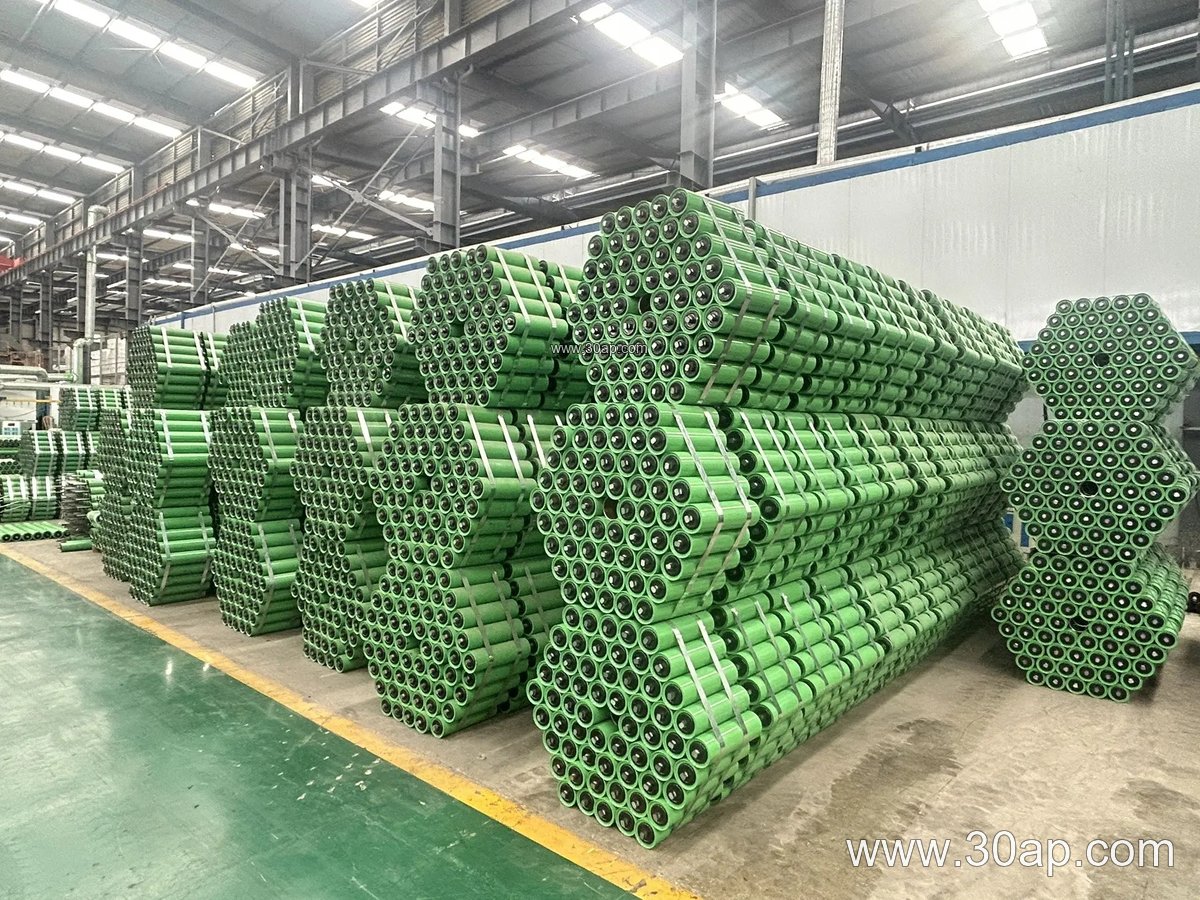
Belt width and idler size travel together. A narrow B500 or B650 line uses smaller rollers, while a B1200 or B1400 conveyor needs larger shells and longer rolls. Typical roll lengths for three-roll trough sets are roughly 200 mm at B500, 250 mm at B650, 315 mm at B800, 380 mm at B1000, 465 mm at B1200, 530 mm at B1400, 600 mm at B1600 and 670 mm at B1800. These are common references, not fixed pairings, and side rolls may differ from the centre roll.
Matching Roll Diameter and Belt Width
Roll diameter is chosen from belt speed, load and the space available in the frame. Common diameters include Ø63, Ø76, Ø89, Ø102, Ø108, Ø127, Ø133, Ø159, Ø178, Ø194 and Ø219 mm. Small diameters suit light belts and low speeds; large diameters handle heavy loads and reduce rolling resistance. There is no rule that one belt width can only match one diameter, so the frame, shaft and bearing must be checked together.
| Common diameter | Typical duty | Notes |
|---|---|---|
| Ø89 to Ø108 mm | Light to medium belts | Aggregate and general bulk lines |
| Ø127 to Ø159 mm | Medium to heavy duty | Mining and cement plants |
| Ø178 to Ø219 mm | Heavy duty | High-tonnage ore and coal systems |
Belt construction also guides the choice. An EP conveyor belt or multi-ply fabric core belt flexes differently from a steel cord conveyor belt, and a thick, stiff belt needs a larger roll to avoid excessive bending stress. Abrasion resistant conveyor belt grades are common in quarry and mining service, while heat resistant conveyor belt covers appear near kilns and sinter coolers.
Buyer Checklist Before Ordering
Confirm the belt width, trough angle and number of rolls first, then the roll diameter, shaft size, bearing type and frame fixing centres. State the material being carried, its lump size and whether the location is wet, dusty or hot. Ask how the seal is designed, since seal quality often decides idler life in a wash plant or underground mine. Check that the conveyor bracket matches the shaft ends, and keep a small stock of complete sets rather than loose rollers.
Finally, review the whole conveyor: belt grade, pulley condition and loading point all affect trough idler performance. A well-matched trough idler set keeps the belt tracking, reduces spillage and protects the belt cover, which is what most operators care about in daily service.