What a Metallurgical Conveyor Pulley Does
A metallurgical conveyor pulley is the rotating drum that turns a conveyor belt, sets its tension and guides its path at the head, tail, take-up or bend points of a bulk handling line. In a sinter plant, a crushing circuit or a cement clinker transport gallery, this drum is the point where belt tension, drive torque and material load all meet. It is a different component from a conveyor pulley used only for light duty, and it should never be confused with a drive pulley, a tail pulley or a bend pulley, because each position carries a different load case.
Although the working principle is simple, the drum is a pressure vessel in slow rotation. Its shell, shaft, hubs and lagging must survive abrasive dust, heat, moisture and continuous bending. This is why buyers in mining, quarrying, power generation and aggregate plants treat the metallurgical conveyor pulley as a wear-critical item rather than a generic accessory.
Construction and Surface Options
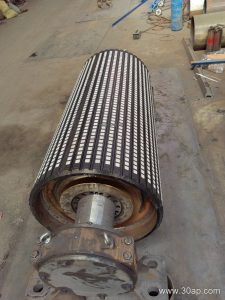
The standard build is a welded steel shell with end discs, a through shaft or stub shafts, and bearing housings mounted on a sturdy frame. Shell thickness and shaft diameter are chosen from torque and radial load, not from belt width alone. A B1200 belt may run on a Ø1000 drum in one plant and a Ø800 drum in another, depending on wrap angle, belt speed and tension.
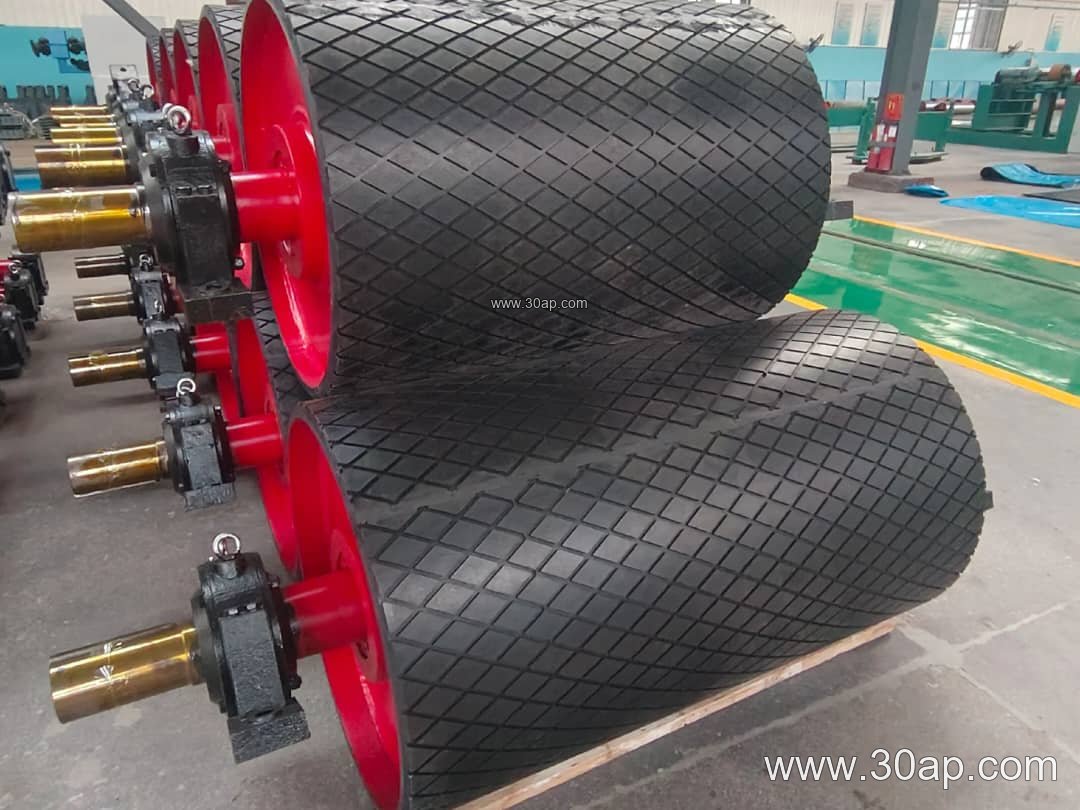
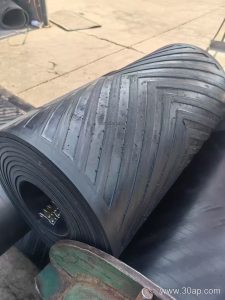
Lagging is where the metallurgical conveyor pulley earns its grip. Plain finish suits light, clean duty. Rubber lagging, applied cold or hot vulcanized, improves friction and cushions impact. Diamond and herringbone patterns help shed water and fines; ceramic lagging is used where slip and abrasion are severe. Common lagging thicknesses are 8, 10, 12, 15 and 20 mm, selected with the duty rather than copied from a catalogue.
Typical reference combinations include B800 × Ø500, B1200 × Ø1000 and B1400 × Ø800. Face width normally exceeds belt width, for example about 950 mm for B800 and about 1400 mm for B1200, so the belt is supported across its full width. Shaft sizes commonly range from Ø50 to Ø200, but final choice follows bearing life calculations.
Where It Fits in the Line
In a limestone quarry or an iron ore beneficiation plant, the head or discharge drum drives the belt and throws off the load. At the tail, a smaller drum redirects the return strand and often carries a tensioner. Bend and take-up pulleys guide the belt through curves without driving it. Each position changes the load direction and the lagging requirement, so a drive drum and a bend drum are not interchangeable even when their diameters look similar.
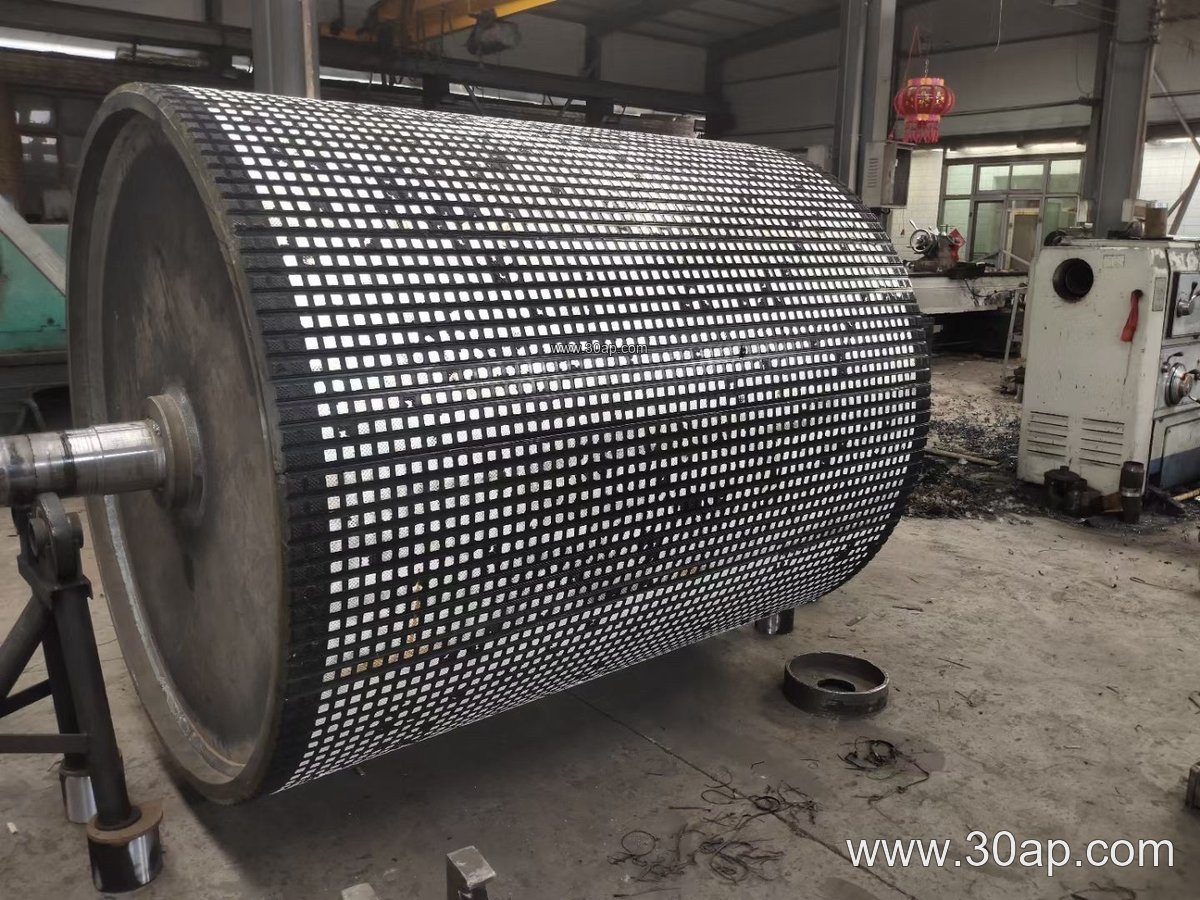
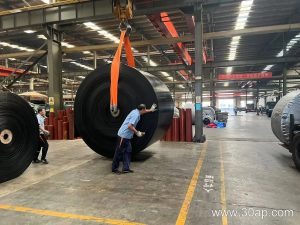
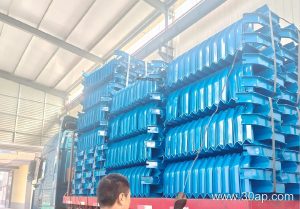
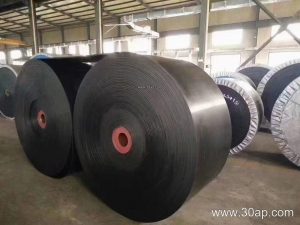
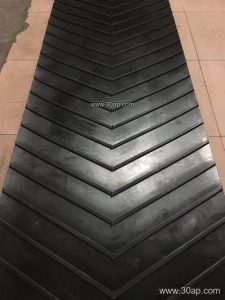
The drum must also match the belt it carries. A heavy-duty mining conveyor belt or a steel cord conveyor belt needs a larger drum diameter to limit bending stress, while a multi-ply fabric core belt can often run on a smaller shell. In a coal preparation plant, a flame retardant conveyor belt may be paired with a lagged drum to reduce slip; in a cement plant, a heat resistant conveyor belt calls for heat-tolerant lagging and careful bearing protection. Downstream, conveyor idler rollers and conveyor brackets share the same dusty environment, so alignment and maintenance access matter as much as the drum itself.
Other applications include power plant coal handling, port bulk terminals, sinter strands, concrete batching plants and tunnel muck removal. In every case the drum works with a conveyor belt, idler roller and support frame as one system.
Buyer Checklist Before Ordering
- Confirm the position: drive, tail, bend, take-up or snub, and state the wrap angle.
- Provide belt width, belt type and maximum tension, not just a nominal size.
- Specify lagging pattern and thickness, plus any heat, oil or flame requirement.
- State shaft diameter, bearing type and mounting centres, or ask for a design review.
- Describe the environment: dust, moisture, temperature and wash-down practice.
Correct specification keeps the metallurgical conveyor pulley running quietly for years. For related components such as rubber conveyor belt, EP conveyor belt, abrasion resistant conveyor belt and conveyor pulley assemblies, check the full conveyor range at www.example.com/conveyor-pulley and www.example.com/conveyor-belt.