What an Impact Idler Bracket Does
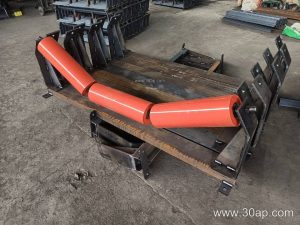
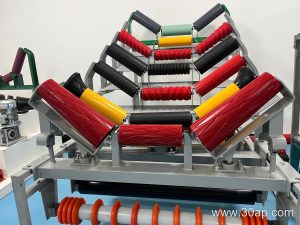
An impact idler bracket is the support structure that carries impact idler rollers at a conveyor transfer point, where material drops onto the conveyor belt. Instead of a rigid frame that transmits every shock into the stringer, the bracket is built to absorb and spread the load so the belt, the rollers and the surrounding structure last longer. In a quarry, a coal handling plant or a cement raw material line, this small assembly often decides how often a load zone has to be serviced.
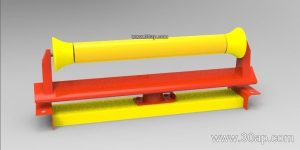
The bracket is usually mounted directly under the chute or hopper discharge. It positions one or more impact rollers close to the belt surface, so falling rock, clinker or ore strikes rubber rather than steel. Because the area is exposed to repeated hammering, the bracket itself must be stronger than a standard carrying bracket. You can think of it as the anchor of a shock absorbing station rather than a decorative frame.
Construction and Materials
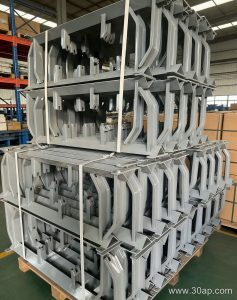
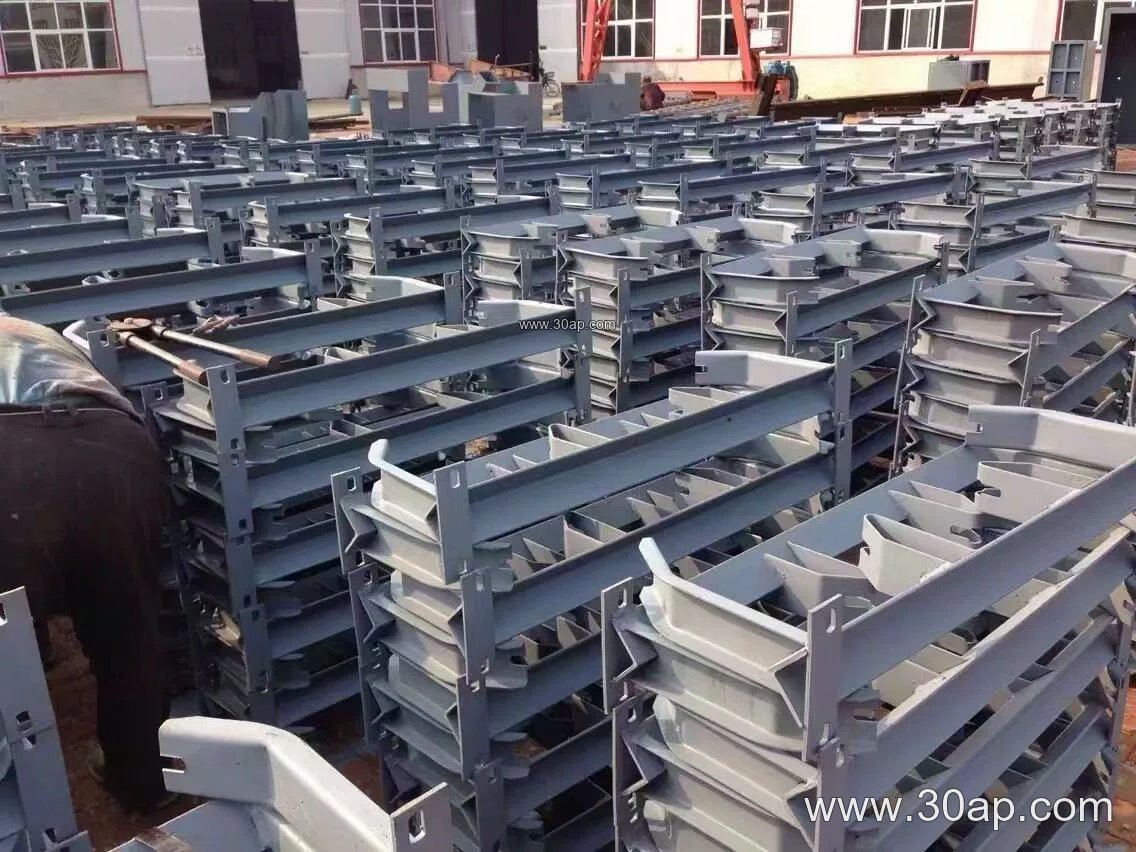
Most industrial impact idler brackets are fabricated from angle steel, channel steel or folded steel plate, then welded and drilled to suit the mounting holes on the conveyor stringers. The design may be fixed or adjustable, and the height and angle of the roller seats are set at the factory or on site. Typical finishes include painted or galvanized steel for dusty and humid conditions.
Key features usually include:
- Reinforced cross members that resist bending under repeated impact
- Rubber or polyurethane cushioned roller seats that damp vibration
- Bolt-on or clamp-on fixing to simplify replacement
- Adjustable slots for fine alignment with the belt line
The bracket does not work alone. It matches an idler roller set, and the roller diameter, shaft ends and frame width must agree with the bracket seat. Common roller diameters in this position are Ø89, Ø108, Ø133, Ø159 and Ø194 mm, chosen by belt width and load height rather than by a single rule.
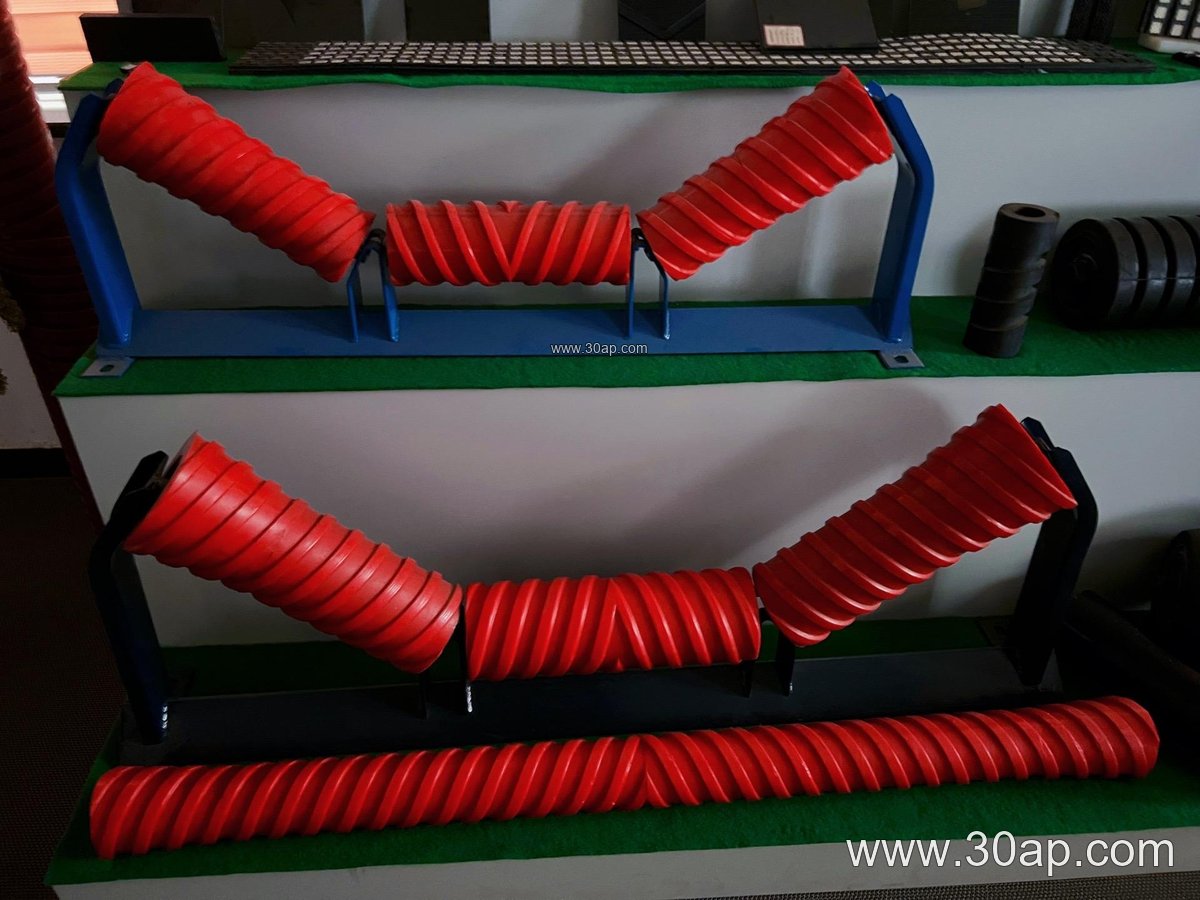
Where It Fits on the Conveyor
The impact bracket sits in the loading zone, between the tail pulley and the first normal carrying idler. In a stone crushing line it may stand under a vibrating feeder; in a power plant coal yard it may sit beneath a tripper or a transfer chute; in a fertilizer or grain silo it may protect the belt from a short, sharp drop. The bracket is not the same part as a bend pulley bracket or a drive frame, and it should never be used as a substitute for a return bracket in the carry side or a trough bracket in the middle of the run.
Proper spacing matters as much as the bracket itself. If the drop height is large or the lump size is coarse, two or three impact stations may be needed in series, each with its own bracket and a set of cushion rollers. The first station takes the worst hit and shields the rest of the line.
Matching Belt Width, Trough Angle and Roller Size
There is no fixed table that ties one belt width to one trough angle or one roller diameter. The bracket is selected by the conveyor designer using belt width, capacity, material lump size and the height of the drop. Reference values below show common ranges, not mandatory combinations.
| Reference item | Common range |
|---|---|
| Belt width | B500, B650, B800, B1000, B1200, B1400, B1600, B1800 |
| Trough angle | 20°, 30°, 35°, 45° |
| Roller diameter | Ø89, Ø108, Ø133, Ø159, Ø194 |
| Bracket material | Angle steel, channel steel, folded plate |
| Mounting type | Fixed or adjustable |
Examples such as B800 with 35° and Ø108, or B1200 with 45° and Ø133, describe a layout choice rather than a universal rule. On a wide, heavy-duty line carrying iron ore or copper ore, a larger roller and a stiffer bracket reduce flexing. On a smaller sand or aggregate line, a lighter bracket with Ø89 rollers may be sufficient. Where the belt is a heavy-duty mining conveyor belt or a steel cord conveyor belt, the load zone bracket should be matched to the belt’s impact resistance, not chosen by width alone.
Adjustable Versus Fixed Brackets
A fixed impact bracket is simple and rigid, and it suits a transfer point whose geometry will not change. An adjustable bracket allows the roller seats to be moved up or down and the trough angle to be set within a range, which helps during commissioning or when a chute is modified. Adjustable units are also easier to align when the belt is being tracked after installation.
Some plants prefer a self-aligning or training bracket nearby to keep the belt centred after the load zone. That is a different function from impact absorption, and the two are often used together rather than as replacements for each other.
Buyer Checklist
Before ordering, confirm the belt width, the roller diameter and shaft end type, the trough angle, the mounting hole pattern and the distance between stringers. Ask whether the bracket is fixed or adjustable, and check the steel thickness and the welding quality at the roller seats. For dusty or wet locations, discuss the surface treatment. A bracket that fits the conveyor stringer correctly will reduce vibration, protect the belt cover and lower maintenance in the load zone.
For related conveyor components such as the conveyor belt, idler roller and conveyor pulley, keep the load zone design consistent. A well chosen impact idler bracket is a small investment compared with the cost of repeated belt damage at a transfer point.