What a 1600mm Conveyor Belt Is
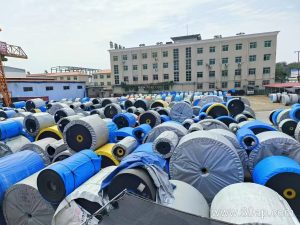
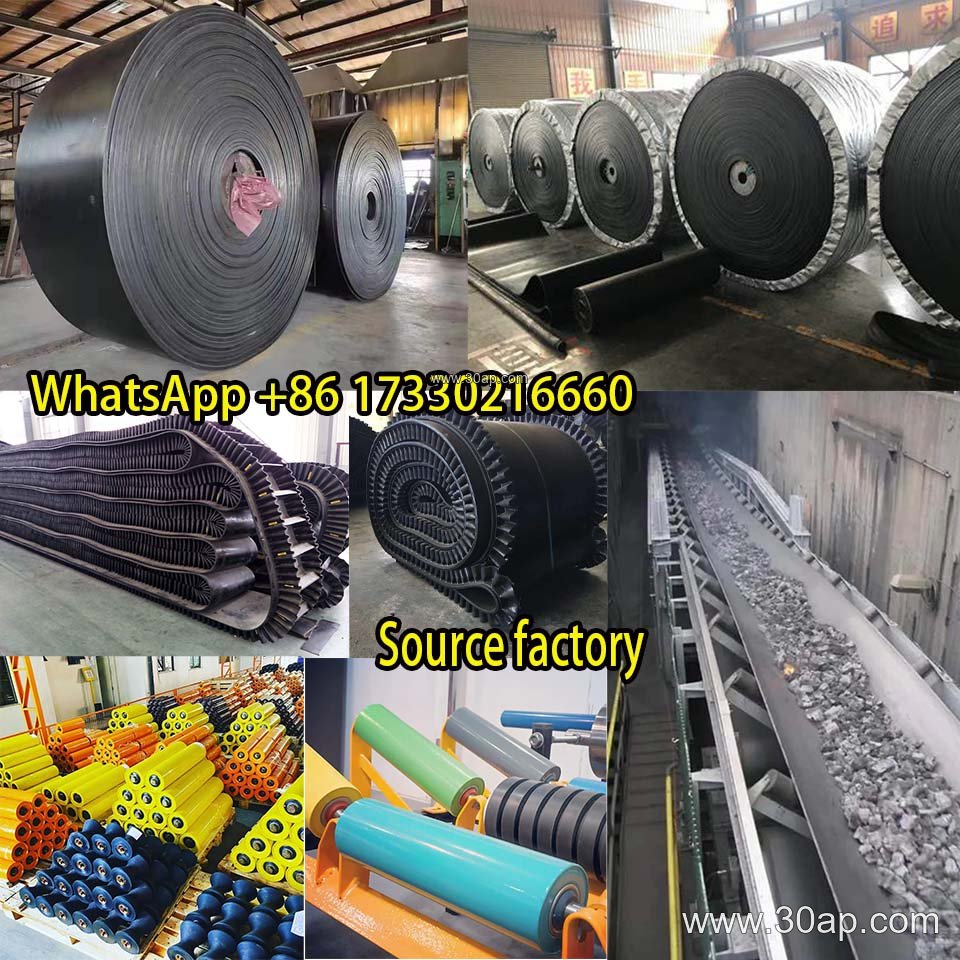
A 1600mm conveyor belt is a wide-format belt built for conveying systems that need to move large tonnages or bulky material in a single pass. The 1600 mm figure refers to the belt width, which places it among the wider standard sizes used in bulk handling. It is not a single product but a width class: the same 1600mm belt width can be supplied as an EP conveyor belt, an NN conveyor belt, a steel cord conveyor belt, or a special-purpose construction such as a heat resistant conveyor belt or a flame retardant conveyor belt.
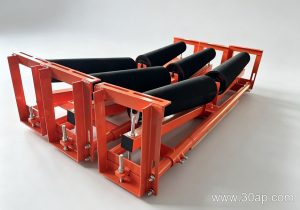
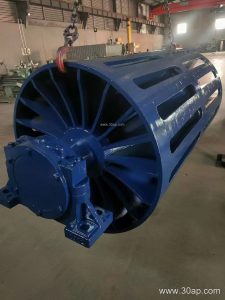
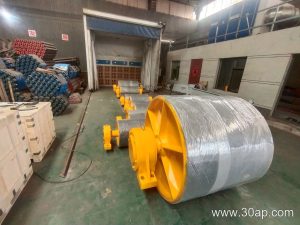
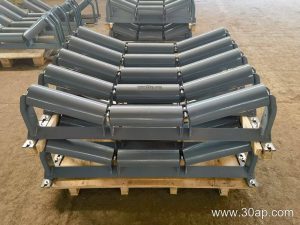
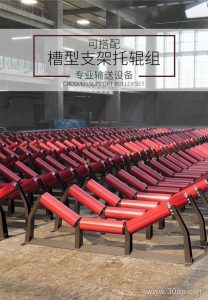
The belt is only one part of the circuit. It runs over a drive pulley at the head, a tail pulley at the return end, and bend pulleys along the profile, supported by idler rollers and mounted on conveyor brackets and frames. Matching these components to the belt width and tension is part of the design work.
Construction and Common Specifications
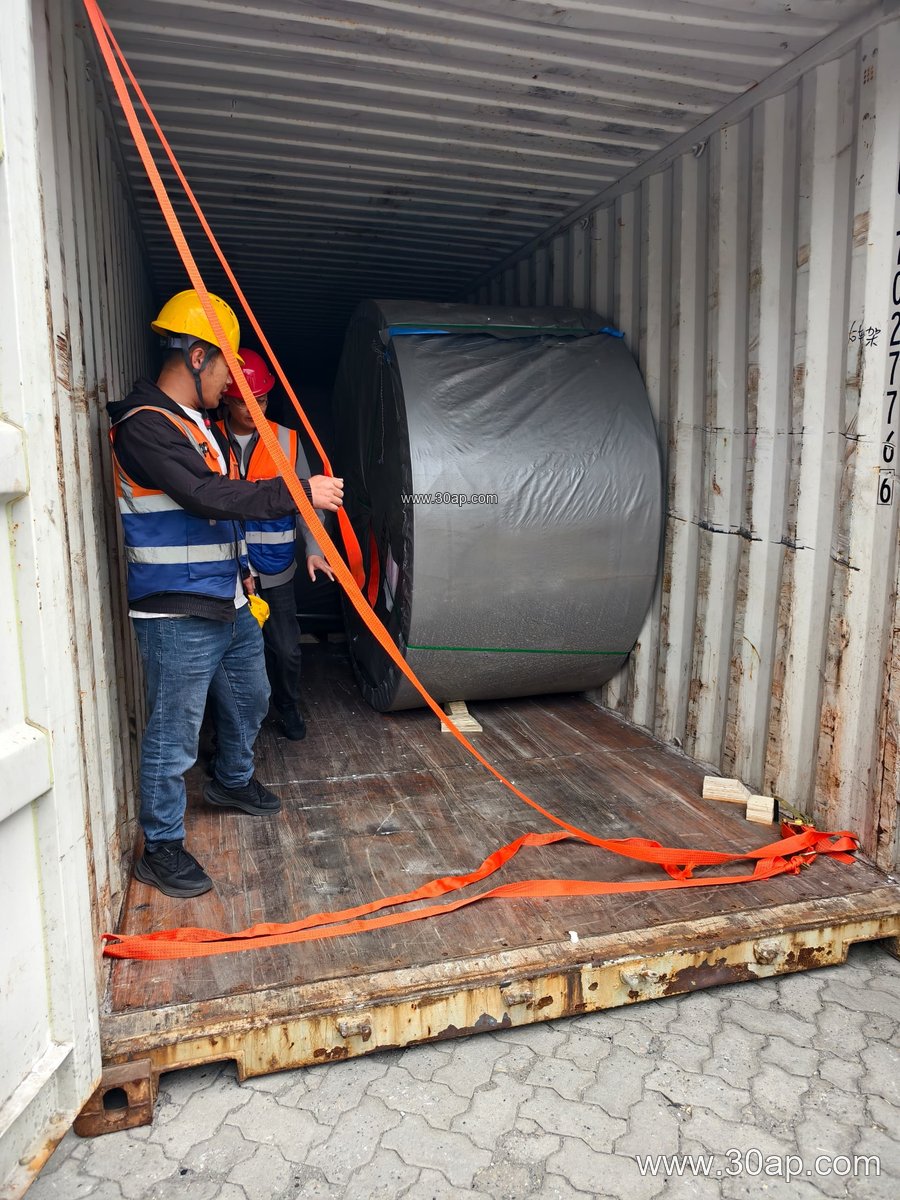
Most 1600mm belts use a fabric core or a steel cord carcass. Fabric cores are built from multiple plies of EP or NN fabric; steel cord belts use parallel brass-plated cords for very high tension and long center distances. Rubber covers protect the carcass and are selected for abrasion, heat, oil, flame resistance, or cold service. Cover thickness is usually quoted as top plus bottom, for example 6+2 mm or 8+3 mm.
The values below are typical reference ranges, not fixed supply promises. Actual construction is confirmed per project and per manufacturer.
- Belt width: 1600 mm (B1600)
- Common fabric types: EP conveyor belt, NN conveyor belt, multi-ply fabric core
- Typical EP strength grades: EP400, EP630, EP800, EP1000, EP1250
- Steel cord grades sometimes used at this width: ST1250, ST1600, ST2000
- Cover thickness examples: 4+2 mm, 5+2 mm, 6+2 mm, 8+3 mm
- Ply counts: usually 2 to 6 for fabric cores
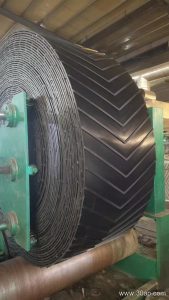
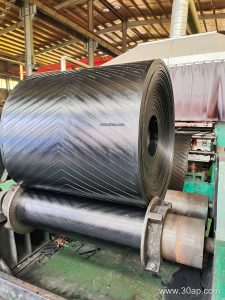
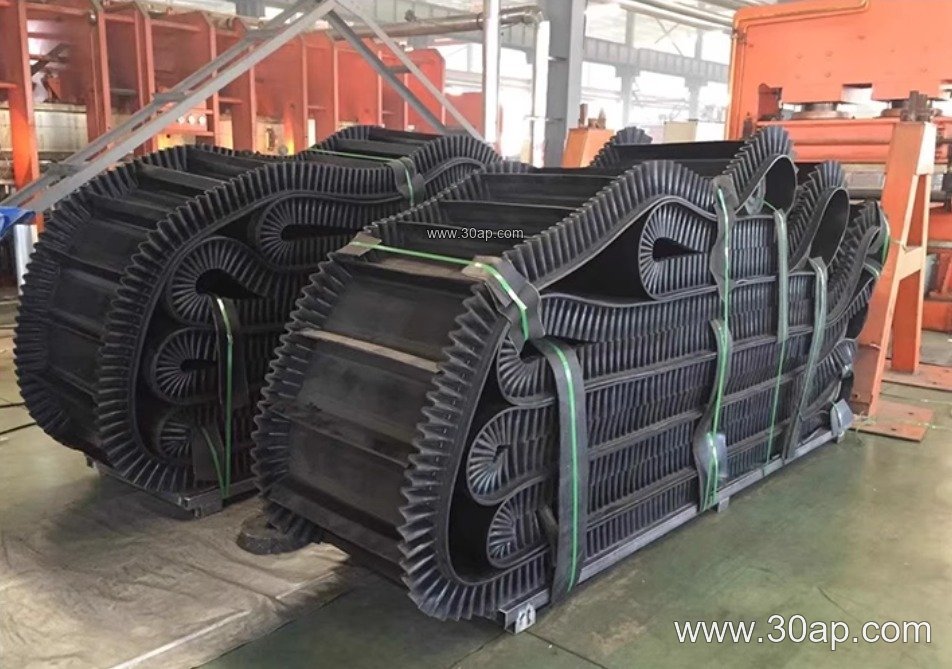
Special constructions include chevron conveyor belt for inclined transport, corrugated sidewall belt for steep or vertical lifts, skirted belt for containment at transfer points, pipe conveyor belt for enclosed routing, and endless conveyor belt where a joint-free loop is preferred.
Where This Width Fits
A 1600mm belt is common in mining, coal preparation, cement plants, power stations, steel works, ports, and large quarry or aggregate operations. Primary crusher discharge, plant-to-stockpile links, and ship loading lines often use this width because it can carry high tonnage at moderate belt speed. In a coal mining conveyor belt system, flame retardant and anti-static grades are often specified; in a cement plant, heat resistant conveyor belt grades may be needed after the kiln; in a quarry, abrasion resistant conveyor belt covers handle sharp rock.
Wider belts such as 1800mm or 2000mm exist for very large flows, while 1200mm and 1400mm are common for medium duties. The right choice depends on capacity, material lump size, incline, and the allowable belt tension, not on width alone. The belt must also match the pulley face width and the idler roller trough angle.
Buyer Checklist
Before ordering, confirm the material being handled, lump size, temperature, moisture, and whether oil or chemicals are present. State the required strength grade and cover thickness, the number of plies, and any flame retardant, anti-static, or food grade requirement. Ask for the carcass type, belt weight per square meter, and recommended minimum pulley diameters.
Check that the drive pulley, tail pulley, and bend pulleys are sized for the belt tension, and that idler rollers, brackets, and frames suit the 1600mm width and load. Consider splice method: vulcanized joints are usual for high-tension fabric and steel cord belts. For long overland routes, a steel cord belt may be preferable to a multi-ply fabric core; for shorter, flexible layouts, an EP or NN belt is often easier to install.
Finally, request the manufacturer’s data sheet for the exact 1600mm conveyor belt offered, including cover grade, tensile strength, elongation, and joint guidance. Treat catalog values as design references and verify them against the actual duty.