What Is a Surface Belt Conveyor Idler
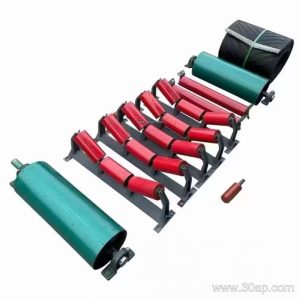
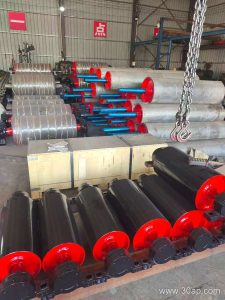
A surface belt conveyor idler is the rotating roller assembly that supports the conveyor belt along the carrying and return runs of an above-ground conveyor system. Unlike underground or enclosed gallery installations, surface conveyors are exposed to weather, dust, and temperature swings, so the idler must combine reliable sealing with a structure that sheds water and debris. In a typical aggregate or ore handling line, these idlers are mounted on a conveyor bracket at regular intervals and work together with the conveyor pulley to keep the belt tracking smoothly.
The term is often shortened to surface conveyor idler or simply belt idler in everyday plant conversation, but it always refers to the same product family: the roller that carries the belt between the drive and tail pulleys. Drive, tail, and bend pulleys are separate components and should not be confused with idlers.
Construction and Common Configurations
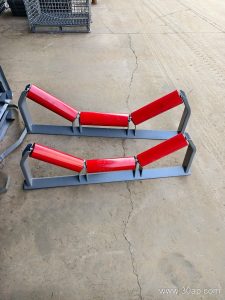
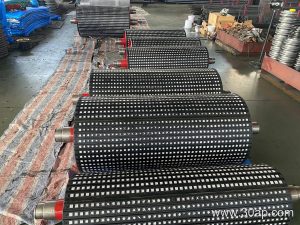
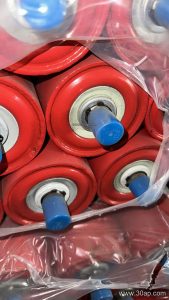
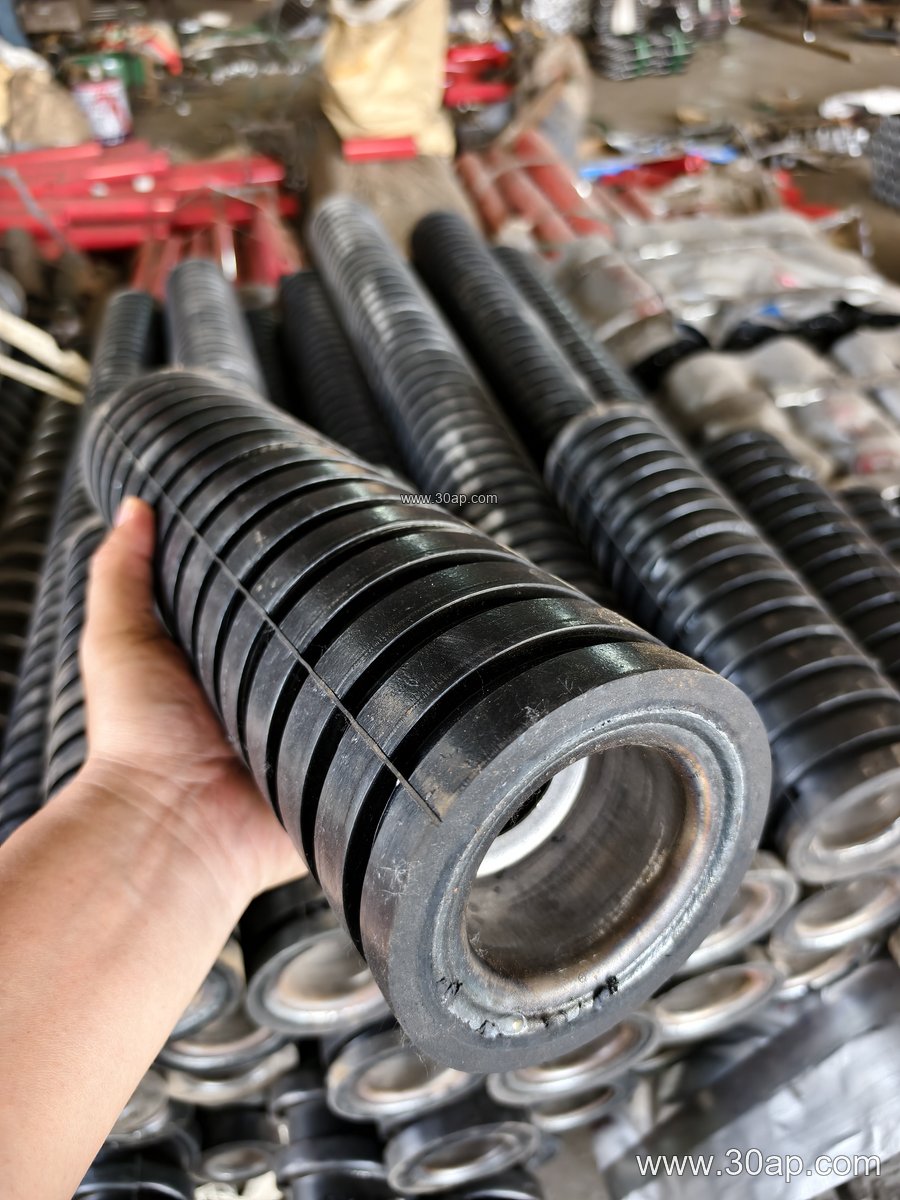
A surface belt conveyor idler usually consists of a steel tube shell, bearing housings, a shaft, and a sealing arrangement. The shell may be plain steel, nylon-coated, ceramic-covered, or fitted with rubber rings for impact absorption. Bearing sizes are selected according to load and speed; common bearings include 6204, 6205, 6305, 6306, 6308, and 6310, but no single bearing is tied to one specific roller diameter.
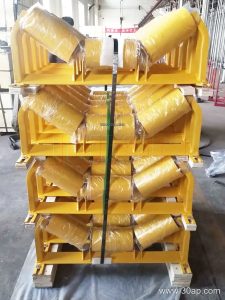
For carrying the loaded belt, three-roll troughing sets are widely used. The trough angle influences how the material sits on the belt. Common trough angles are 20, 30, 35, and 45 degrees, with 35 degrees frequently seen in bulk handling. A slight forward tilt of about 1.5 to 2 degrees is sometimes used on training idlers to help center the belt. Return runs may use flat or V-shaped return idlers, while impact zones near a crusher discharge benefit from rubber-ring impact idlers.
Typical Reference Dimensions
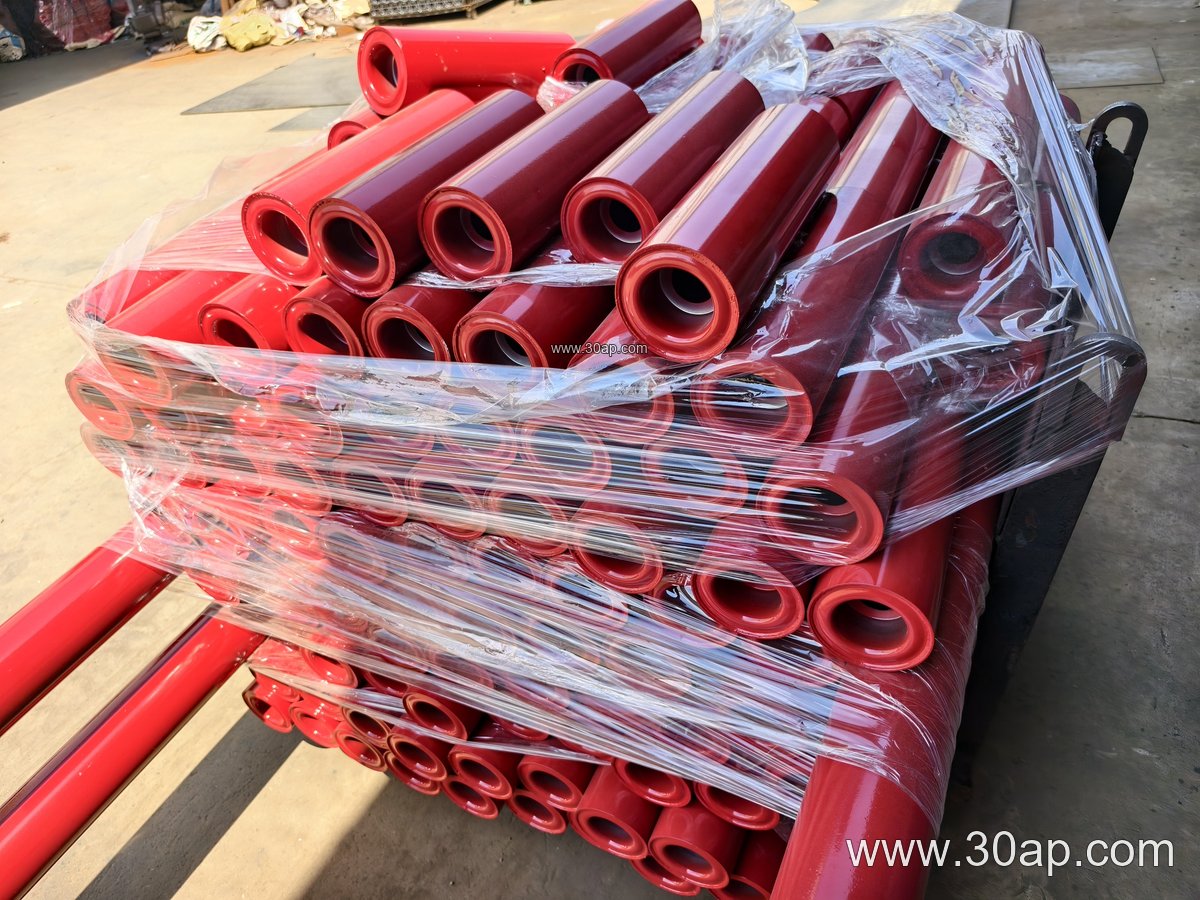
The table below gives common reference values, not fixed supply promises. Roller length varies with belt width, trough angle, and idler arrangement; side rollers and center rollers can differ.
| Belt Width | Common Roller Length (three-roll troughing) | Common Roller Diameter |
|---|---|---|
| B500 | about 200 mm | Ø63 to Ø89 mm |
| B650 | about 250 mm | Ø76 to Ø108 mm |
| B800 | about 315 mm | Ø89 to Ø133 mm |
| B1000 | about 380 mm | Ø108 to Ø159 mm |
| B1200 | about 465 mm | Ø108 to Ø178 mm |
| B1400 | about 530 mm | Ø127 to Ø194 mm |
| B1600 | about 600 mm | Ø133 to Ø194 mm |
| B1800 | about 670 mm | Ø159 to Ø219 mm |
| B2000 | about 750 mm | Ø159 to Ø219 mm |
These figures are examples only. A B1200 conveyor may use different roller lengths depending on the bracket design and trough angle, and the shaft diameter must be calculated from the actual load, not guessed from belt width alone.
Where Surface Belt Conveyor Idlers Are Used
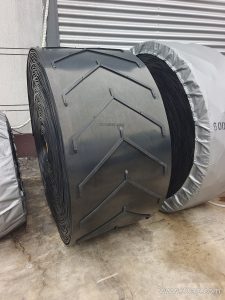
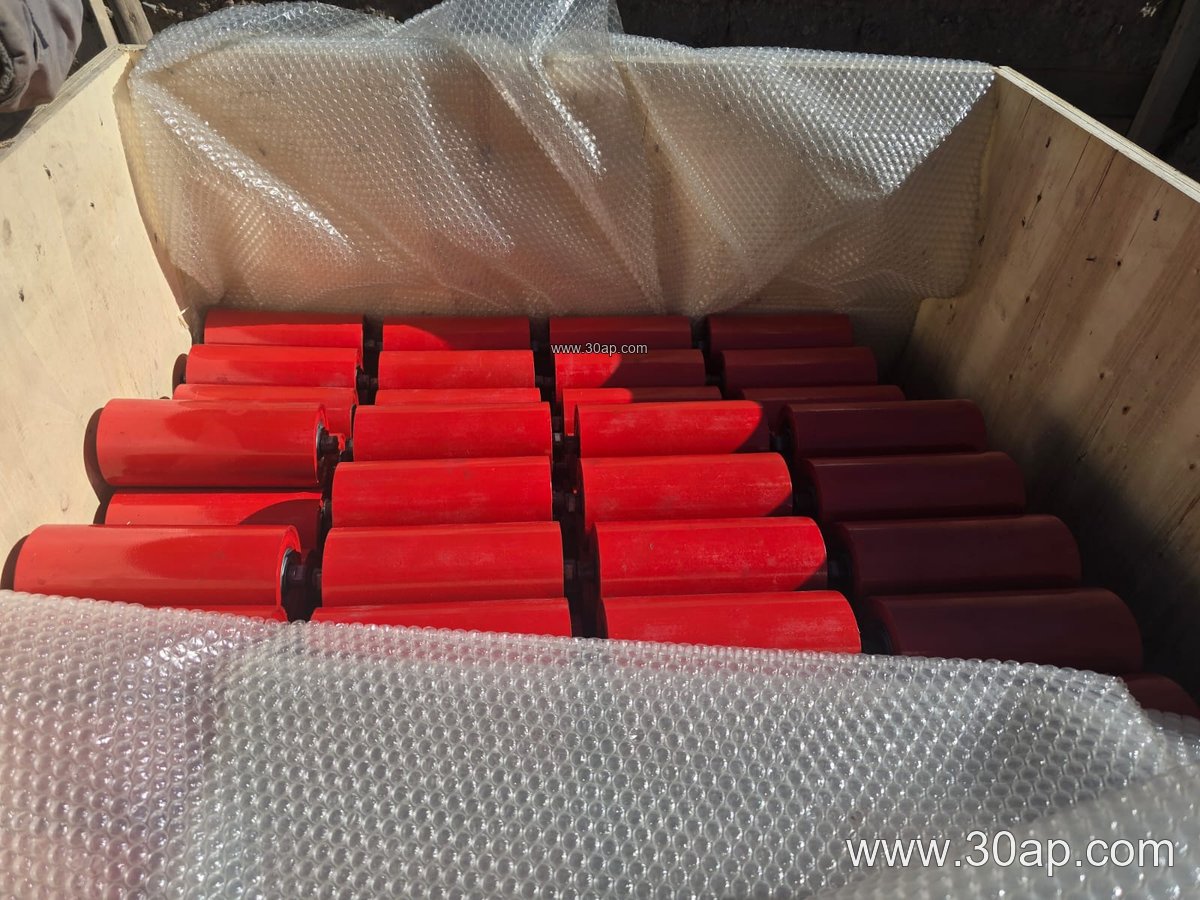
Surface installations are common in quarry and aggregate operations, where dust and open-air conditions demand robust sealing. They also appear in cement plant clinker transport, power plant coal yards, and port bulk terminals. In these settings, the idler works alongside a rubber conveyor belt or an EP conveyor belt, and the choice of roller surface and bearing protection matters as much as the belt specification.
For heavy-duty mining conveyor belts, such as steel cord conveyor belt or high abrasion resistant conveyor belt, idlers must handle high loads and continuous operation. In a coal mining conveyor belt system, flame retardant conveyor belt and anti-static conveyor belt are often specified, and the idler sealing should resist fine coal dust. Similarly, a heat resistant conveyor belt in a cement or sinter plant may require idlers that can tolerate warm ambient conditions without lubricant breakdown.
Buyer Checklist
- Confirm belt width and trough angle before selecting roller length; do not assume one belt width matches one pulley diameter.
- Match roller diameter and bearing size to the actual load and belt speed rather than copying a neighboring conveyor.
- Choose the roller surface for the environment: rubber rings for impact zones, ceramic or nylon for abrasive fines, plain steel for general duty.
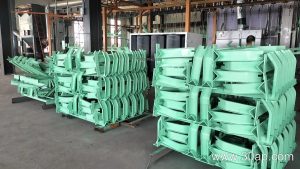
- Check that the conveyor bracket and idler frame are compatible with the chosen roller shaft and sealing type.
- For surface duty, prioritize sealing that keeps out rain and dust, especially in quarry, port, and power plant coal yard applications.
Whether the plant handles iron ore, copper ore, limestone, or fertilizer, the surface belt conveyor idler is a small but critical part of keeping the belt aligned and the material moving. Reviewing roller diameter, bearing size, and trough angle together with the conveyor belt specification will give a more reliable result than selecting any single component in isolation.