What Rubber Pulley Lagging Does
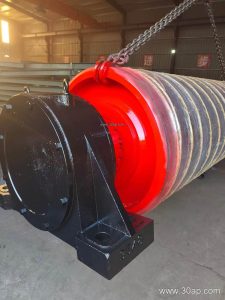
Rubber pulley lagging is the rubber layer bonded to the shell of a conveyor pulley to raise friction between the drum and the conveyor belt. Without it, a drive pulley in a damp or dusty plant can slip, the belt can wander, and the whole conveyor loses capacity. The same rubber covering also cushions the shell against abrasive material and reduces the chance of belt damage at the contact zone. In practice, lagging is a small component that protects a large investment.
Because the drum is the point where belt tension and drive torque meet, the quality of the rubber covering matters. A quarry conveyor handling wet gravel and a power plant coal line running in a dusty gallery both depend on a consistent grip. The lagging is not a universal part either; it should be matched to the pulley role, the belt, and the environment. Buyers who treat lagging as a commodity often end up replacing it early.
How the Lagging Is Built
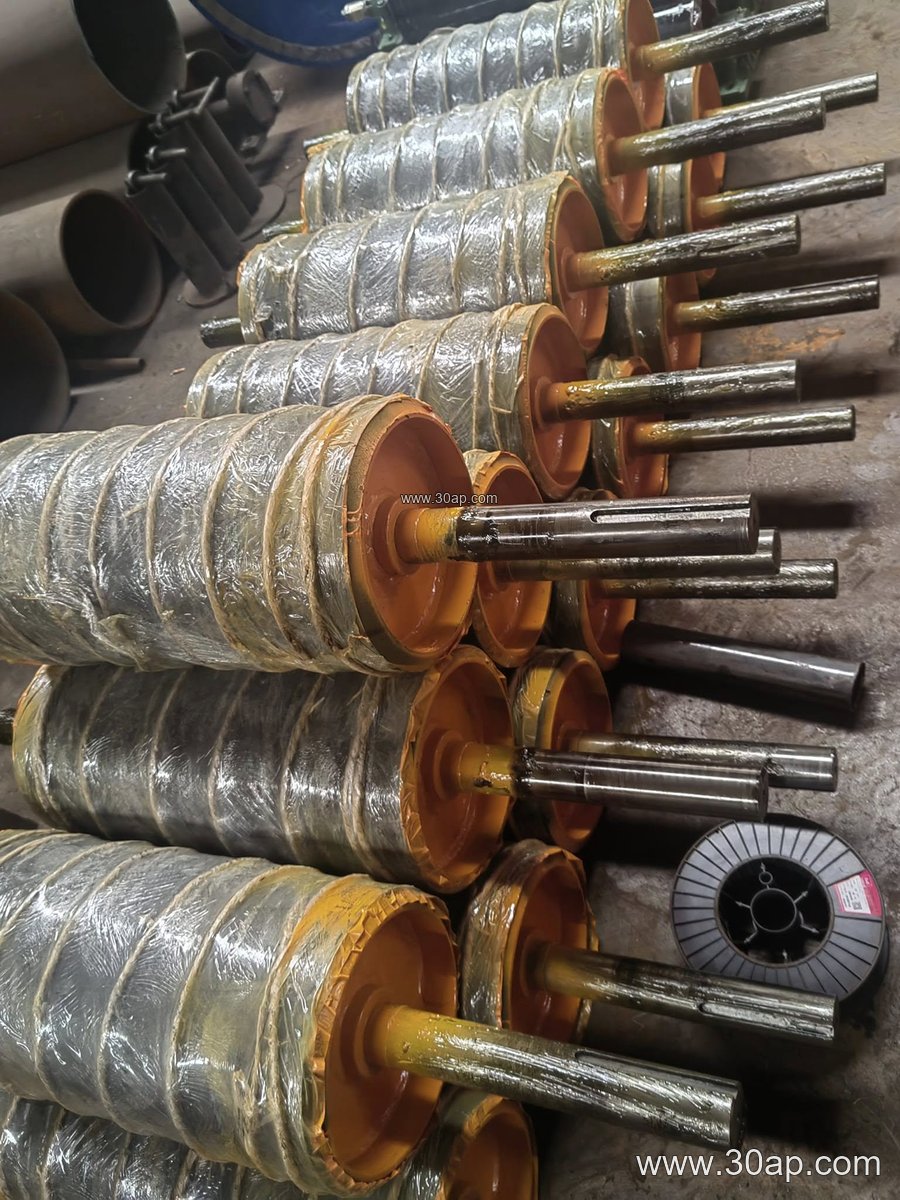
Most rubber pulley lagging starts as a rubber sheet with a fabric or cord reinforcement, or as a plain rubber compound for lower-demand positions. The sheet is cut to the shell width, wrapped around the drum, and bonded. Bonding methods differ: hot vulcanized lagging is cured onto the shell under heat and pressure and gives a strong, continuous joint, while cold bonded rubber is applied with adhesive and is common for field repairs. There is also cast or molded lagging, where rubber is formed directly on the pulley, and ceramic lagging, where hard tiles are set in a rubber matrix for severe slip conditions.
Surface patterns are chosen for the duty. Plain or flat rubber suits many tail and bend positions, diamond pattern helps shed water and fines, and herringbone grooves push debris outward as the drum turns. Thickness usually falls between 8 mm and 20 mm, with heavier covers used where impact and wear are high. The rubber compound itself may be formulated for abrasion resistance, oil resistance, or flame resistance, depending on the plant.
Where It Is Used
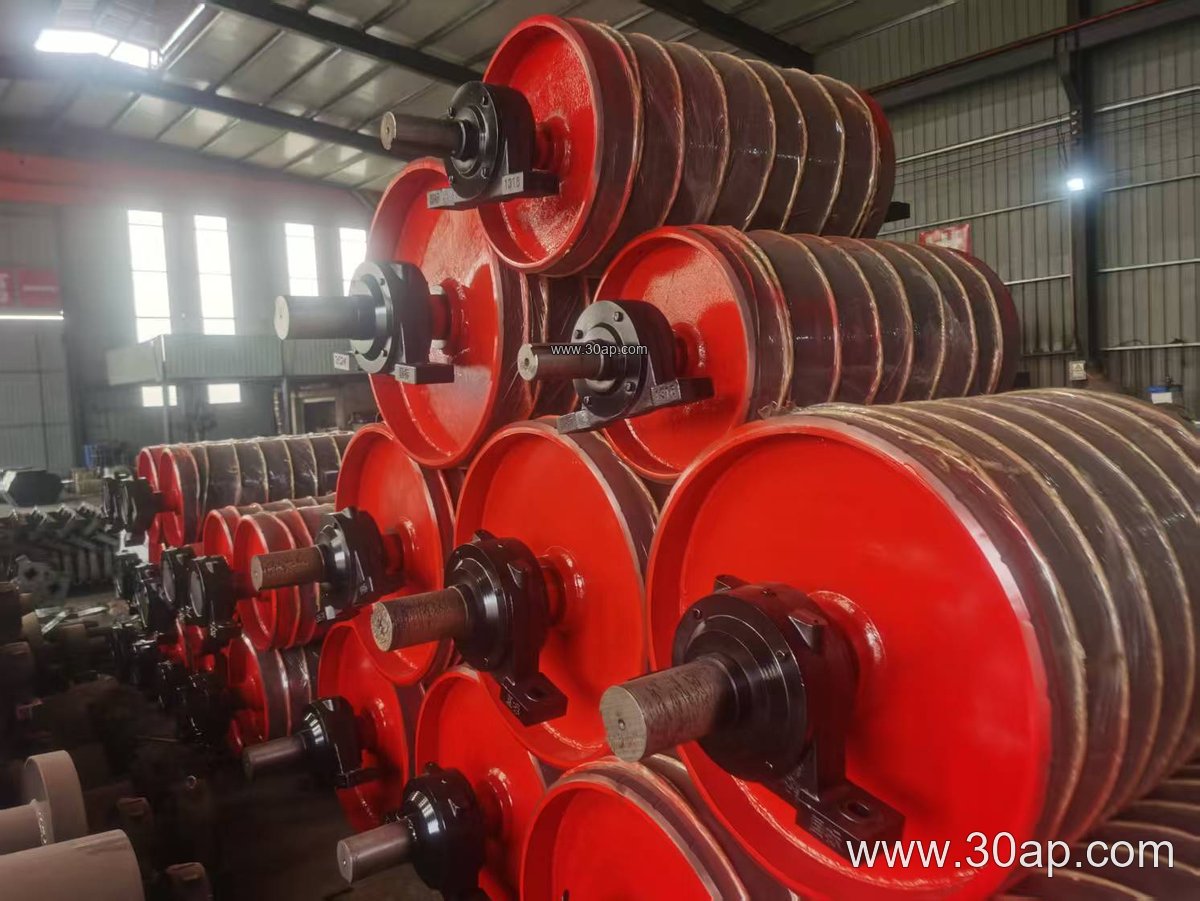
Rubber pulley lagging appears on drive pulleys, tail pulleys, bend pulleys, and tension pulleys. Each position has a different job, and the lagging requirement follows the job. A drive pulley needs reliable friction to transmit torque; a tail pulley mostly needs protection from material build-up and belt wear; a bend pulley needs a smooth, stable surface that keeps the belt tracking.
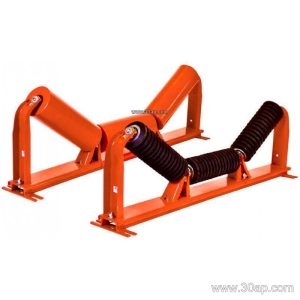
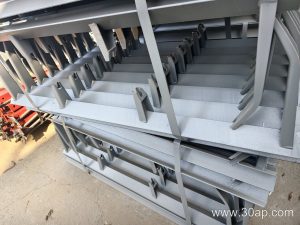
Typical sites include limestone quarries, iron ore and copper ore concentrators, coal preparation plants, cement clinker lines, power station coal handling, port bulk terminals, and crushing and screening circuits. In these plants, a conveyor pulley works alongside the conveyor belt, idler roller, and conveyor bracket, and lagging performance is felt through the whole system. A slip on a head pulley can polish the shell and damage the belt cover; a worn tail pulley can cause misalignment that shows up as edge wear far down the line.
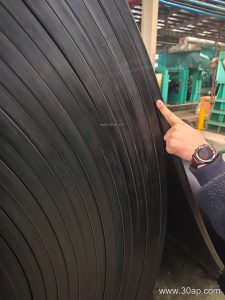
For plants running abrasive bulk material, pairing good lagging with an abrasion resistant conveyor belt or a heavy-duty mining conveyor belt helps extend the service interval of both parts. Where the belt is a steel cord conveyor belt carrying high tension, the drive pulley lagging must be selected with extra care because the friction demand is higher.
Matching Lagging to the Pulley and Belt
Selection should begin with the pulley role, belt width, and expected torque, not with a single catalog number. Shell width is normally a little wider than the belt, so a B800 belt usually runs on a shell around 950 mm wide, and a B1200 belt on a shell around 1400 mm. Diameter is set by the conveyor design; common drum diameters include Ø500, Ø630, Ø800, and Ø1000, and combinations such as B800 × Ø500 or B1200 × Ø1000 are normal. Shaft diameter is determined by torque and load, so it should not be guessed from belt width alone.
The table below shows typical reference ranges, not fixed supply rules.
| Item | Common reference values |
|---|---|
| Belt width | B400, B500, B650, B800, B1000, B1200, B1400, B1600 |
| Pulley diameter | Ø200, Ø250, Ø315, Ø400, Ø500, Ø630, Ø800, Ø1000, Ø1250 |
| Lagging thickness | 8, 10, 12, 15, 20 mm |
| Surface form | plain, diamond, herringbone, ceramic, hot vulcanized, cold bonded |
| Shaft diameter | Ø50 to Ø200, by design |
On a coal mining conveyor belt or an underground coal mining conveyor belt, flame retardant and anti-static properties may be required for the rubber, and the lagging should be specified together with the belt rather than after it. In food or clean handling, a food grade conveyor belt may need a different rubber compound. For steep inclines, a chevron conveyor belt or corrugated sidewall conveyor belt changes the contact pattern, and the lagging surface should be discussed with the pulley supplier.
Buyer Checklist and Maintenance Notes
- Confirm the pulley position: drive, tail, bend, or tension. The same rubber grade is not automatically right for all four.
- State the belt type and width, for example an EP conveyor belt at B1000 or a steel cord conveyor belt at B1400.
- Give the pulley diameter and shell width, and let the supplier verify the shaft size from torque data.
- Describe the material: wet, oily, hot, or highly abrasive. This decides the compound and the surface pattern.
- Ask how the lagging will be applied, since hot vulcanized and cold bonded covers behave differently in service.
Inspection is straightforward. Check for worn grooves, glazed rubber, loose edges, and embedded stone or metal. A drive pulley that starts slipping usually shows polished lagging before it fails. Re-lagging a pulley is often cheaper than replacing a damaged conveyor belt or an entire conveyor pulley, and it keeps the conveyor bracket and frame untouched. Keeping spare lagging sheets in the warehouse shortens downtime in a busy sand and gravel line or a cement plant.
Rubber pulley lagging is a small part of the conveyor, but it decides how much of the drive effort reaches the belt. Choose it by duty, not by habit, and the pulley will last longer.