What a Heavy-Duty Conveyor Bracket Does on a Working Line
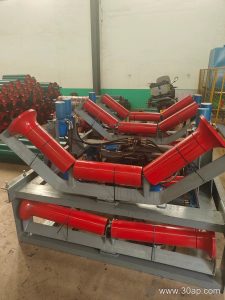
A heavy-duty conveyor bracket is the structural support that holds the idlers in position under the belt and keeps the whole conveyor frame stable. In a quarry, a limestone mine or a cement plant, the bracket carries the weight of the loaded belt, absorbs shock at the loading point and holds the trough angle steady so material stays centred. It is a fabricated steel component, usually made from angle steel, channel steel or folded plate, and it is bolted to the conveyor stringers rather than welded in place, which makes replacement and alignment simpler.
The bracket itself does not move, but everything above it does. A poorly matched bracket will let the idler roller sit out of line, which wears the conveyor belt edge and shortens roller life. That is why the bracket is treated as an engineered part of the frame, not a generic piece of steel.
How the Bracket Is Built
Most heavy-duty designs use channel or folded plate for the crossbeam and angle steel for the end supports. The mounting slots are punched or drilled to match the stringer spacing, and the idler cradle is formed to a specific trough angle. On adjustable versions, the cradle position can be changed so the same bracket covers a range of angles.
Key construction points a buyer should check:
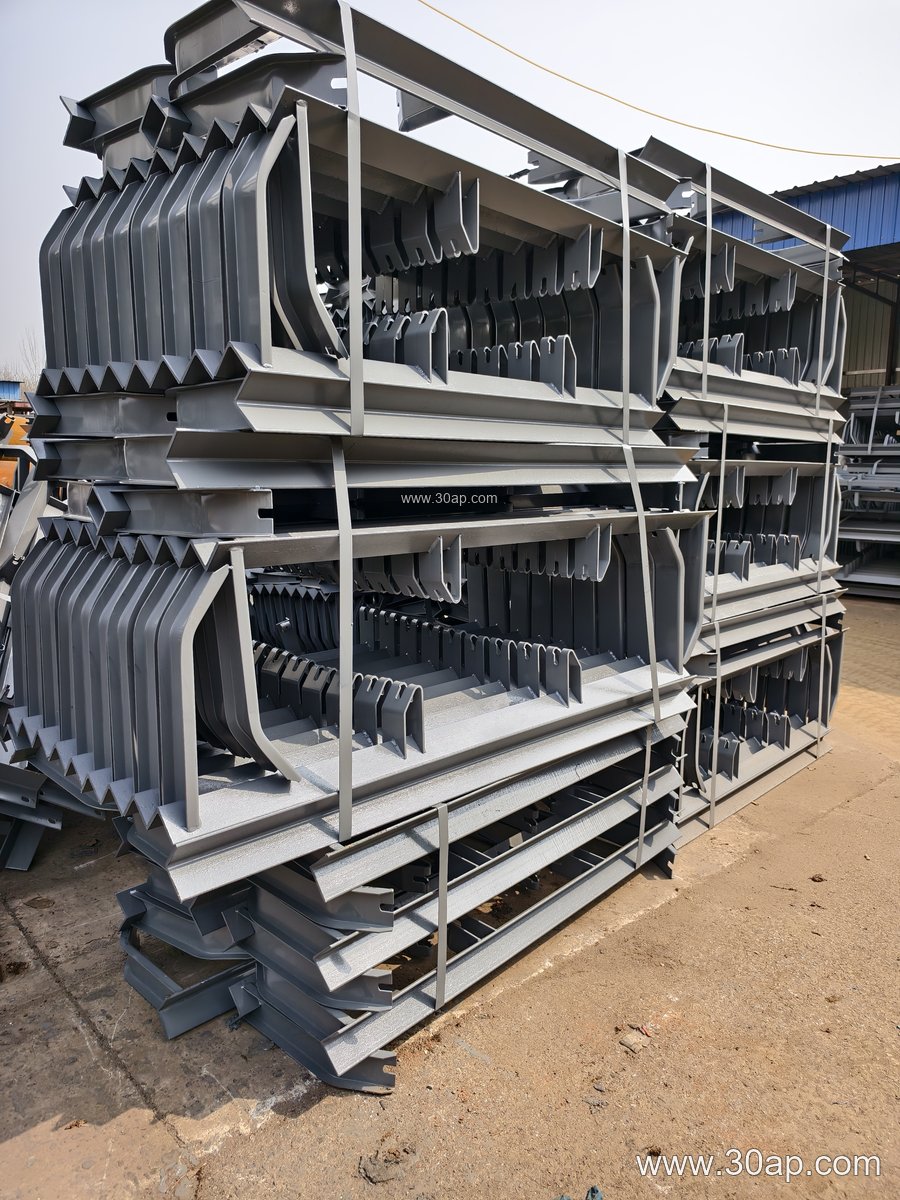
- Steel thickness and the weld quality at the cradle and end plates
- Galvanised or painted finish for wet or dusty service
- Slot length, which decides how much adjustment is available on site
- Whether the bracket is fixed or adjustable in trough angle
Trough Angle and Belt Width Go Together
The trough angle controls how much material the belt can carry without spillage. Common values are 20, 30, 35 and 45 degrees. A wider belt usually needs a higher angle to keep the load centred, but there is no fixed rule that ties one belt width to one angle or one roller diameter. The table below shows typical reference combinations, not universal specifications.
| Belt width | Trough angle | Roller diameter | Typical use |
|---|---|---|---|
| B650 | 30 degrees | Ø89 | Small transfer, sand and gravel |
| B800 | 35 degrees | Ø108 | Aggregate and cement lines |
| B1000 | 35 degrees | Ø133 | Power plant coal handling |
| B1200 | 45 degrees | Ø133 | Iron ore and heavy bulk |
| B1400 | 45 degrees | Ø159 | Main haulage, large tonnage |
| B1600 to B2000 | 35 to 45 degrees | Ø159 to Ø194 | Port and high-capacity trunk lines |
Installation hole spacing and crossbeam length change with belt width and trough angle, so these should be confirmed against the conveyor drawing rather than assumed.
Bracket Types and Where They Sit
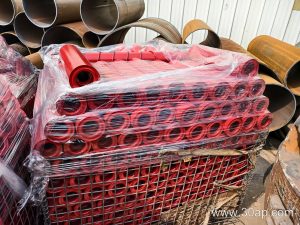
Carrying-side brackets include the standard trough bracket, the transition bracket near the pulley and the impact bracket under the loading chute. Return-side brackets include the flat return bracket and the V-return bracket, which helps centre the belt on the return run. Self-aligning and forward-leaning designs are used where belt tracking is a persistent problem. Hanging brackets suit frames where the stringer cannot take a bolted foot.
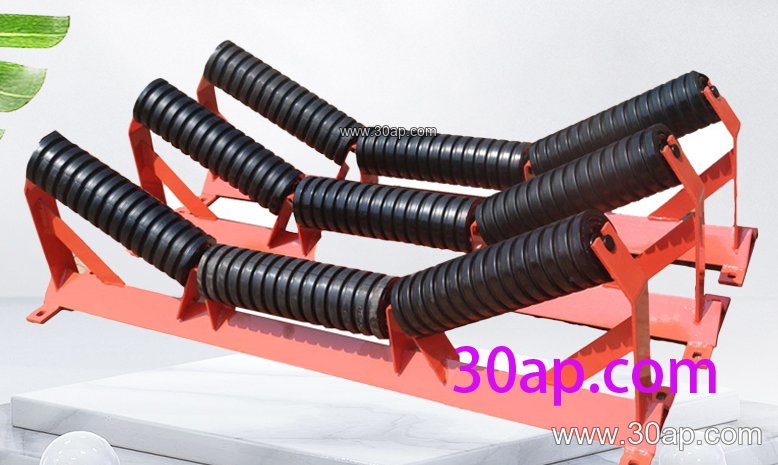
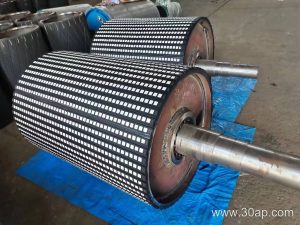
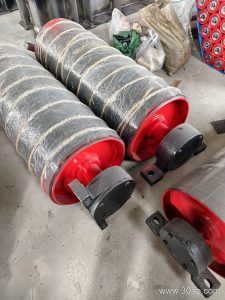
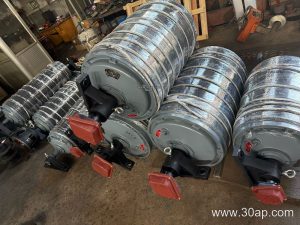
For comparison, a bend pulley bracket and a drive bracket serve different duties at the ends of the conveyor, and they are not interchangeable with a carrying trough bracket. Each position has its own load case.
Matching the Bracket to Belt and Roller
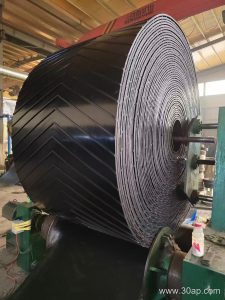
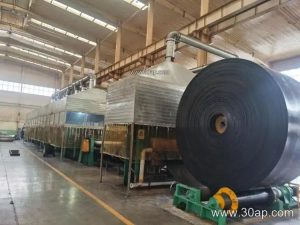
The belt grade affects the bracket choice indirectly. A heavy abrasion resistant conveyor belt running at high speed generates more vibration, so a stiffer crossbeam helps. Where a steel cord conveyor belt is used on a long overland line, the frame and brackets are usually heavier because tension and misalignment loads are higher. In a coal mining conveyor belt application, flame retardant conveyor belt grades are common, and the bracket finish should resist the same wet, dusty environment.
At a transfer point, an impact resistant conveyor belt works together with impact brackets and cushion rollers to absorb fall energy. On a pipe conveyor belt or a corrugated sidewall conveyor belt, the bracket geometry follows the special idler arrangement rather than a standard trough.
Buyer Checklist Before Ordering
- Confirm belt width, trough angle and roller diameter as a set
- State whether the bracket is fixed or adjustable
- Give the stringer spacing and bolt hole pattern
- Specify the finish for the site environment
- Check spare-part commonality across the line to reduce stock items
For a full frame package including conveyor pulley, idler roller and conveyor bracket supply, send the conveyor layout so the brackets can be matched to the actual load points. Browse more at beltconveyorparts.com for conveyor bracket and idler roller details, and review beltconveyorparts.com/conveyor-pulley when the end stations are part of the same project.