What a Non-Standard Conveyor Bracket Really Is
A non-standard conveyor bracket is a support component made to fit a conveyor structure that does not follow the usual catalog dimensions. It is not simply a modified standard part. It is engineered from the beginning around the actual belt width, pulley position, idler roller spacing, and frame geometry of a specific conveyor. In a quarry, a cement plant, or a coal mining operation, the conveyor frame rarely matches a clean drawing. Floor conditions, transfer points, and structural steel often force custom bracket geometry. That is where a non-standard conveyor bracket becomes the practical choice.
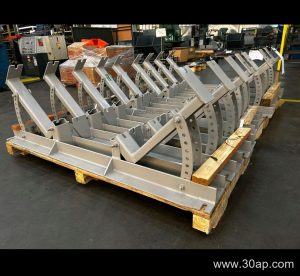
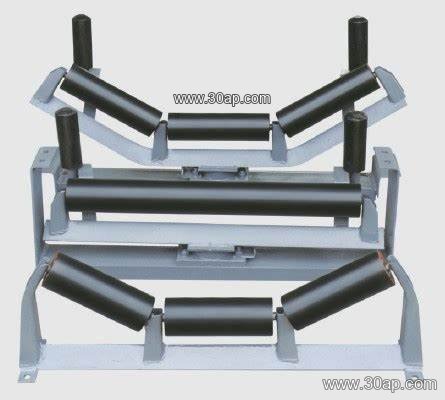
The bracket carries the idler roller or conveyor pulley and transfers the load into the conveyor frame. Depending on its position, it may be called a troughing bracket, a return bracket, a transition bracket, or an adjustable bracket. These names describe function and location, not a universal shape. A troughing bracket holds the belt in a trough profile, while a return bracket supports the empty side of the belt. A transition bracket guides the belt from a flat pulley into a troughed section. Each has its own geometry, and none replaces the other.
How It Is Built and Why the Details Matter
Most non-standard conveyor brackets are fabricated from angle steel, channel steel, or bent steel plate. The material choice follows the load and the environment. In a limestone mine or a power plant coal yard, dust and moisture are constant, so the bracket design should avoid pockets where material can build up. In a steel plant or sinter plant, heat and abrasive fines may call for heavier sections and careful weld placement.
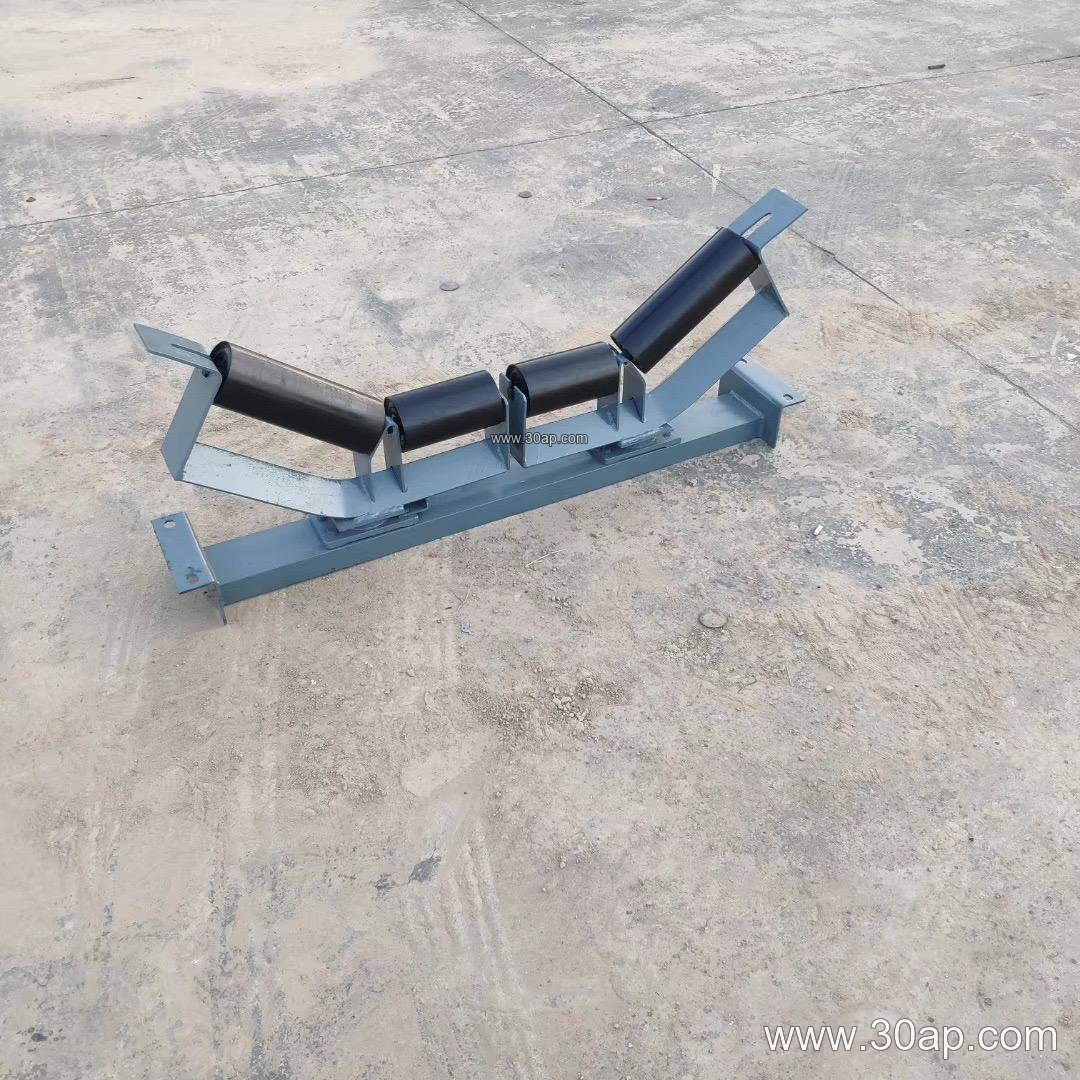
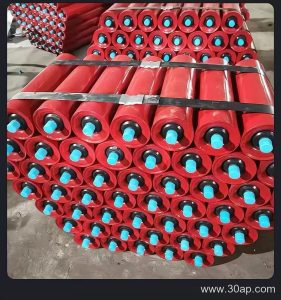
The main dimensions are tied to the conveyor belt and the idler roller. A bracket for B800 belt width may use Ø108 idlers at a 35 degree trough angle, while a wider B1200 conveyor may use Ø133 idlers at 45 degrees. These are common combinations, not fixed rules. The bracket drawing must also define the mounting hole spacing and the crossbeam length, both of which change with belt width and trough angle. A buyer should never assume that one belt width matches only one pulley diameter or one idler size. The conveyor layout, belt tension, and material load determine the final geometry.
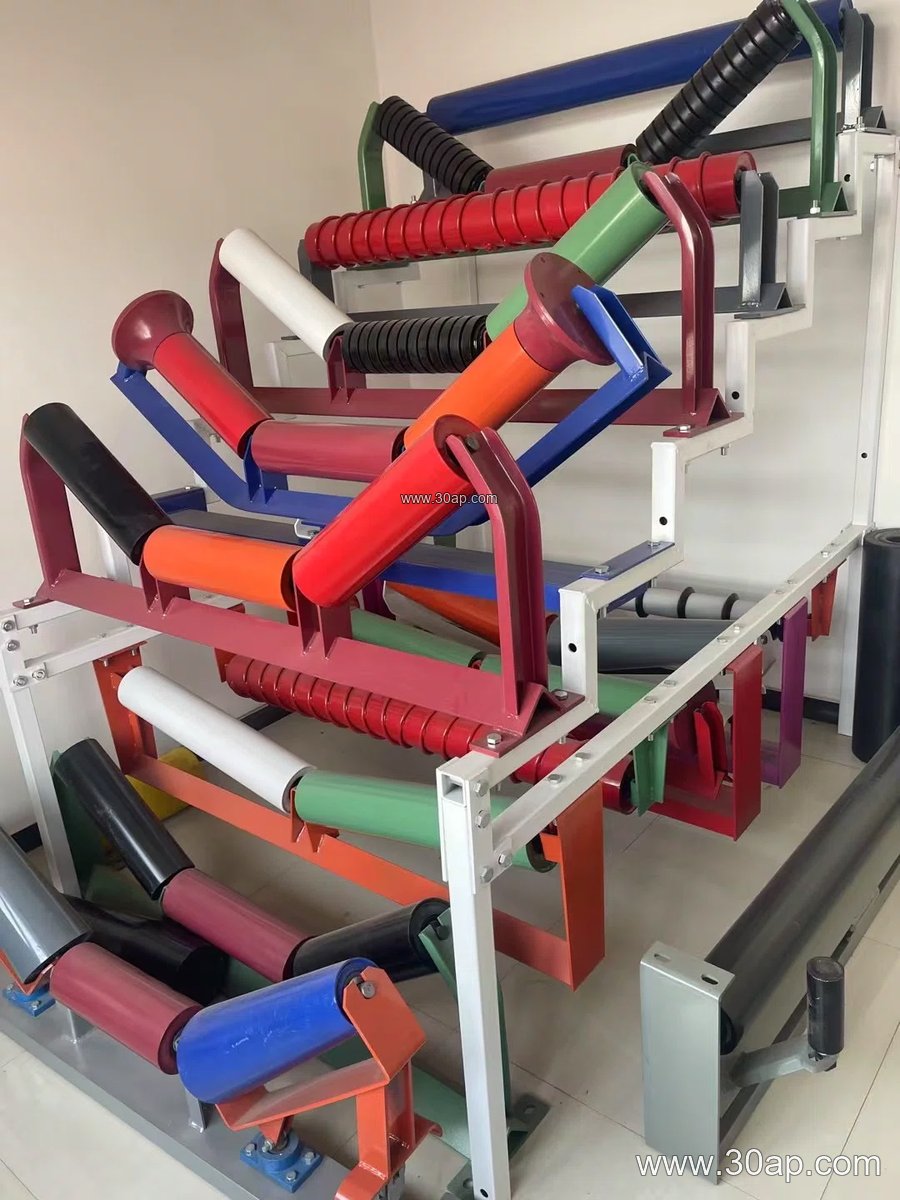
Surface treatment is part of the build. Painted, galvanized, or powder-coated finishes are common, but the correct choice depends on the site. A non-standard conveyor bracket for an underground coal mining conveyor may need a finish that resists corrosive mine water, while a bracket in a dry aggregate conveyor might use a simpler coating.
Where These Brackets Are Used
Custom brackets appear wherever a conveyor must adapt to an existing structure. In a stone crushing plant, the discharge point often needs a transition bracket that tilts the belt from a flat pulley into a 30 degree trough. In a cement plant, the kiln feed conveyor may require a non-standard bracket to clear a structural beam. In a port ship loading system, long overland conveyors use many standard brackets, but the transfer towers and bend sections often need custom supports.
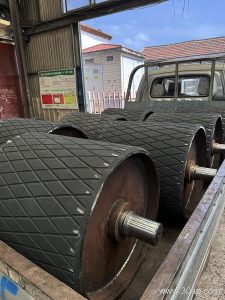
Other common locations include sand and gravel lines, iron ore handling, copper ore conveyors, and gold mining conveyor systems. A non-standard conveyor bracket is also used where a conveyor belt changes direction, where an idler roller must be offset, or where a conveyor pulley is mounted close to a wall or column. In each case, the bracket is designed around the interference rather than forcing the conveyor to fit a standard part.
Adjustable and Fixed Versions
An adjustable non-standard conveyor bracket allows the trough angle to be set between common values such as 20, 30, 35, and 45 degrees. This is useful during commissioning or when the material changes. A fixed bracket is welded or bolted at one angle and is simpler and stiffer. Neither is better in every case. A fixed bracket suits a stable process, while an adjustable bracket gives maintenance teams room to fine-tune belt tracking and material containment.
Forward-leaning brackets, often set at about 1.5 to 2 degrees, are another variation used to improve belt training. They are not a replacement for a self-aligning bracket, but they can reduce misalignment in long conveyors.
What Buyers Should Check Before Ordering
- Belt width and trough angle, for example B650 at 30 degrees or B1400 at 45 degrees.
- Idler roller diameter, such as Ø89, Ø108, Ø133, Ø159, or Ø194, and the actual mounting dimensions.
- Mounting hole spacing and crossbeam length, which must be confirmed from the conveyor frame drawing.
- Material and finish, based on dust, moisture, heat, and corrosion at the site.
- Whether the bracket is fixed or adjustable, and whether it is a troughing, return, or transition type.
A non-standard conveyor bracket is only as good as the information supplied with the order. Send the belt width, the idler roller size, the required trough angle, and a sketch of the mounting points. That allows the fabricator to produce a bracket that fits the conveyor belt, the conveyor pulley, and the frame without on-site modification.