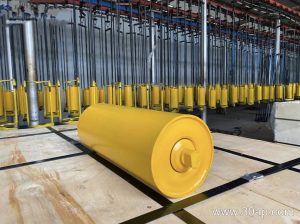
What a Three-Roll Trough Idler Does on a Belt Conveyor
A three-roll trough idler is a carrying idler assembly in which three idler rollers are mounted on a common frame to form a trough shape. The center roller sits horizontally, while the two side rollers incline upward at a defined trough angle. This arrangement supports the loaded run of the conveyor belt and shapes it into a shallow channel, which helps keep bulk material centered during transport. In a quarry, limestone mine, or aggregate line, that centering effect reduces spillage and keeps the belt tracking more predictably.
The three-roll trough idler is also known as a three-roll troughing idler or three-roller trough idler set. It is a carrying idler subtype, not a return idler, and it should not be confused with drive, tail, or bend pulleys, which serve entirely different functions in the conveyor drive and tensioning system.
Construction Details That Affect Service Life
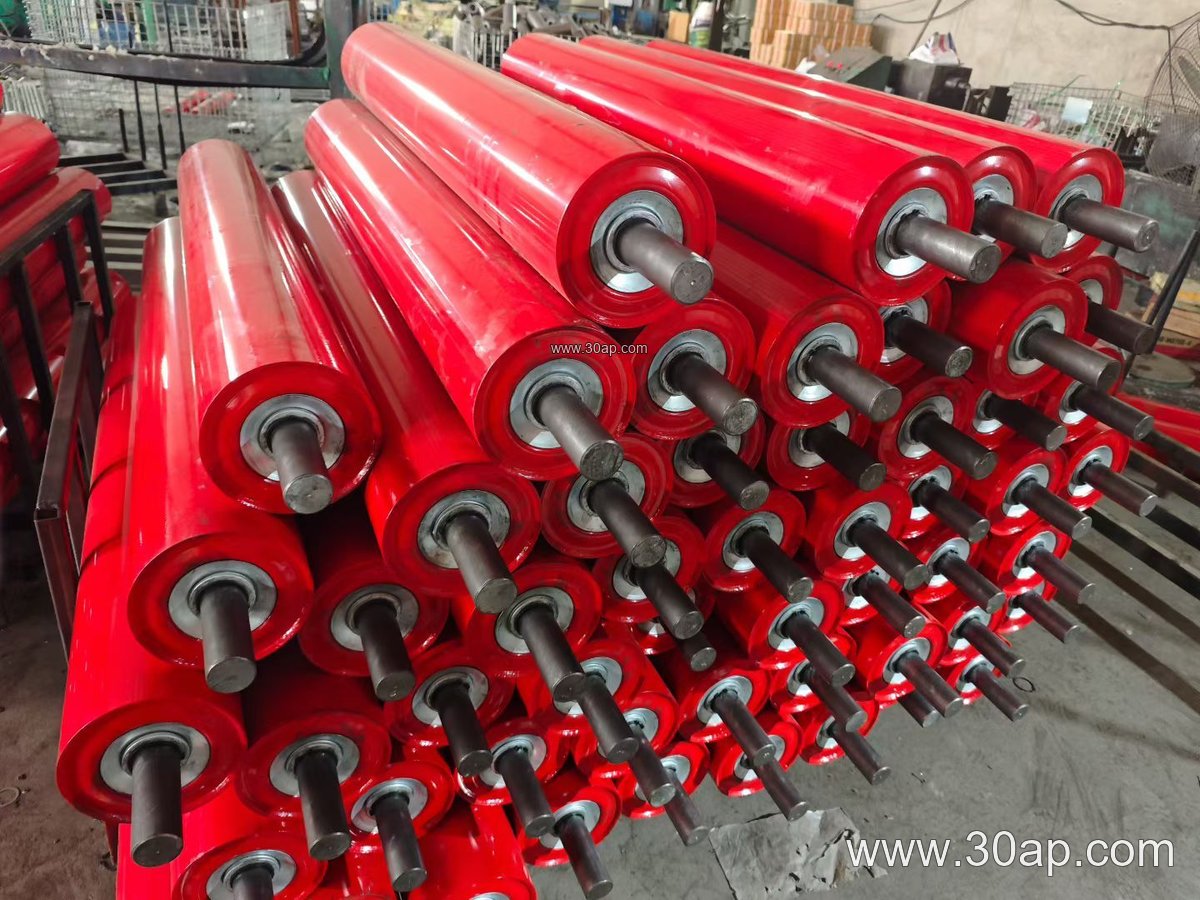
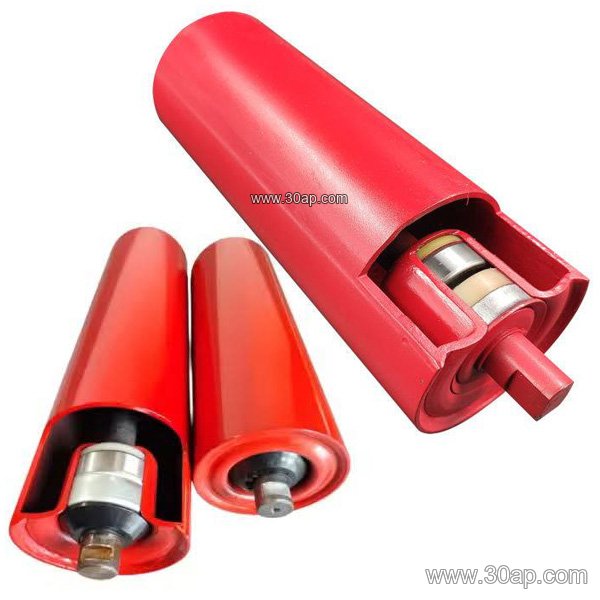
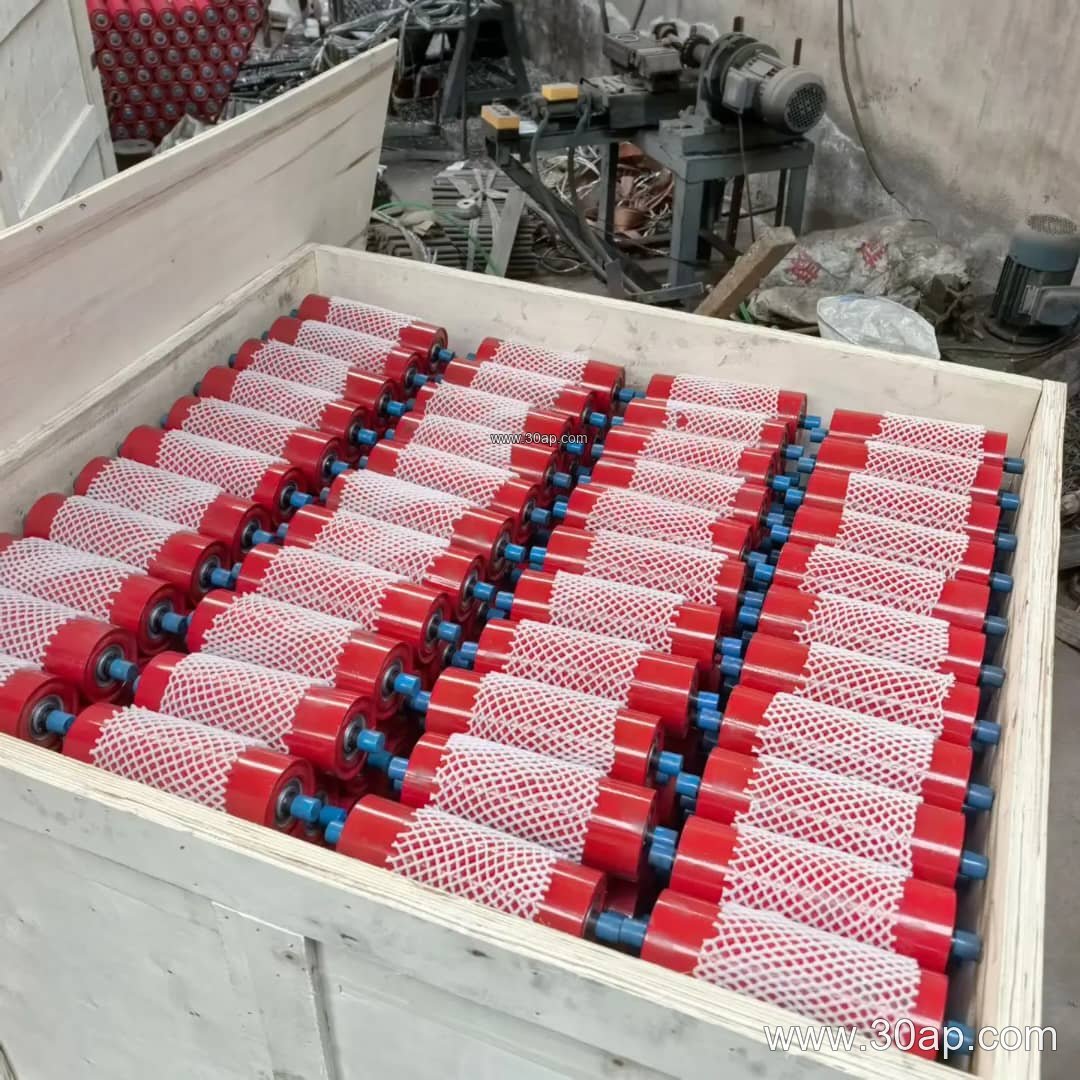
A typical assembly consists of three idler rollers, a rigid frame, shaft ends, bearing housings, and a sealing arrangement. Roller shells are commonly made of steel tube, with nylon, ceramic, or rubber-ring surfaces available for specific duties. Bearing selection usually follows the load and speed of the application rather than the belt width alone; common bearing sizes include 6204, 6205, 6305, 6306, 6308, and 6310, but no single bearing size is tied to one roller diameter.
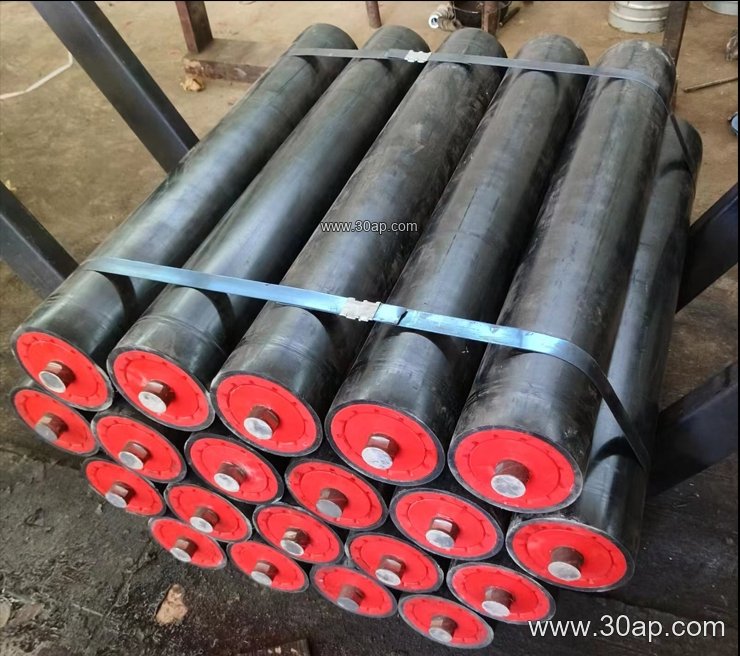
Sealing matters in dusty environments such as a cement plant, coal washing plant, or crushing and screening circuit. Labyrinth seals and effective grease retention help keep fines out of the bearings. The frame should be checked for squareness and mounting compatibility with the conveyor bracket on the stringer. Roller length varies with belt width, trough angle, and assembly form, so the center roller and side rollers may differ in length.
Common Sizes and Configuration Reference
The table below gives typical reference values, not fixed universal specifications. Final dimensions should be confirmed against the conveyor design and the material being handled.
| Parameter | Common Reference Values |
|---|---|
| Roller diameter | Ø63, Ø76, Ø89, Ø102, Ø108, Ø127, Ø133, Ø159, Ø178, Ø194, Ø219 mm |
| Belt width | B400, B500, B650, B800, B1000, B1200, B1400, B1600, B1800, B2000, B2200, B2400 |
| Trough angle | 20°, 30°, 35°, 45° |
| Roller surface | Steel tube, nylon, ceramic, rubber ring |
| Bearing | 6204, 6205, 6305, 6306, 6308, 6310 |
As a rough example of roller length, a three-roll trough set may use about 200 mm rollers at B500, 250 mm at B650, 315 mm at B800, 380 mm at B1000, 465 mm at B1200, 530 mm at B1400, 600 mm at B1600, 670 mm at B1800, and 750 mm at B2000. These are common examples only; side rollers and center rollers can differ, and the design engineer sets the final values.
Matching the Idler to the Conveying Duty
Material characteristics guide the choice. An abrasion resistant conveyor belt carrying sharp rock in a copper or iron ore operation may pair with robust steel rollers and well-protected bearings. Where fines are heavy, such as in a power plant coal handling line, sealing quality and roller balance deserve close attention. A pipe conveyor belt or corrugated sidewall conveyor belt uses different support arrangements, so the trough idler must be specified for the actual belt type rather than assumed.
Transition zones near the tail and head need gradual troughing change to avoid stressing the belt edges. Impact areas are usually handled by impact idlers or rubber-ring buffer rollers rather than standard three-roll trough sets. Training idlers, including friction and conical self-aligning types, address tracking separately. Belt cleaners, pulleys, and the conveyor bracket system all interact with the idler frame, so clearance and mounting height should be reviewed together.
Buyer Checklist Before Ordering
- Confirm belt width, trough angle, and whether the assembly is a three-roll trough idler or another carrying arrangement.
- State roller diameter, shell material, and surface form, such as steel, nylon, ceramic, or rubber ring.
- Specify bearing size and sealing expectations for the dust and moisture level on site.
- Check frame dimensions, mounting hole spacing, and compatibility with the existing conveyor bracket.
- Review the belt specification, whether EP conveyor belt, NN conveyor belt, steel cord conveyor belt, or flame retardant conveyor belt, so the idler load rating suits the application.
- Ask for dimensional drawings and inspection records rather than relying on nominal descriptions alone.
Well-chosen three-roll trough idlers support smoother belt travel, lower spillage, and more predictable maintenance in mining, cement, power, port, and aggregate operations. The right combination of roller size, seal quality, and frame accuracy is what keeps the carrying run dependable over time.