What a Deep Trough Idler Does on the Conveying Line
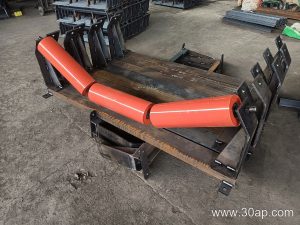
A deep trough idler is a carrying idler set whose rolls are angled more steeply than the standard 20 or 30 degree arrangement, so the belt forms a deeper U shape. That deeper pocket holds bulk material more securely, reduces spillage at transfer points, and helps keep a full load centred on the belt. In a quarry or an ore handling circuit, this often means fewer clean-ups under the line and better control of coarse, lumpy material.
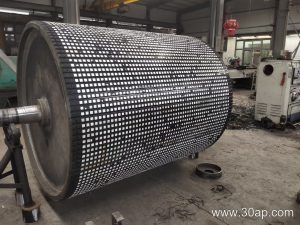
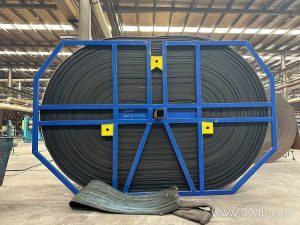
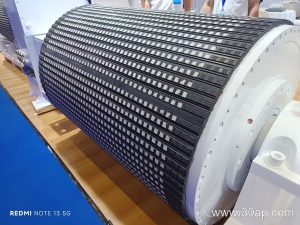
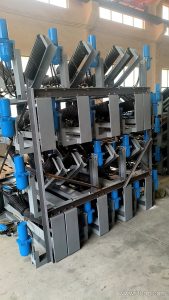
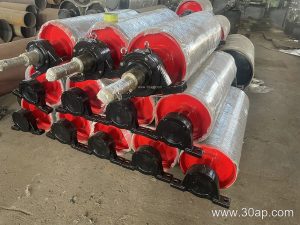
The idler is part of the carrying side of a conveyor, working together with the conveyor belt, the conveyor pulley at the head and tail, and the frame brackets that hold the whole assembly. It is not the same component as a drive pulley, tail pulley or bend pulley, which transmit or redirect belt tension rather than support the loaded belt.
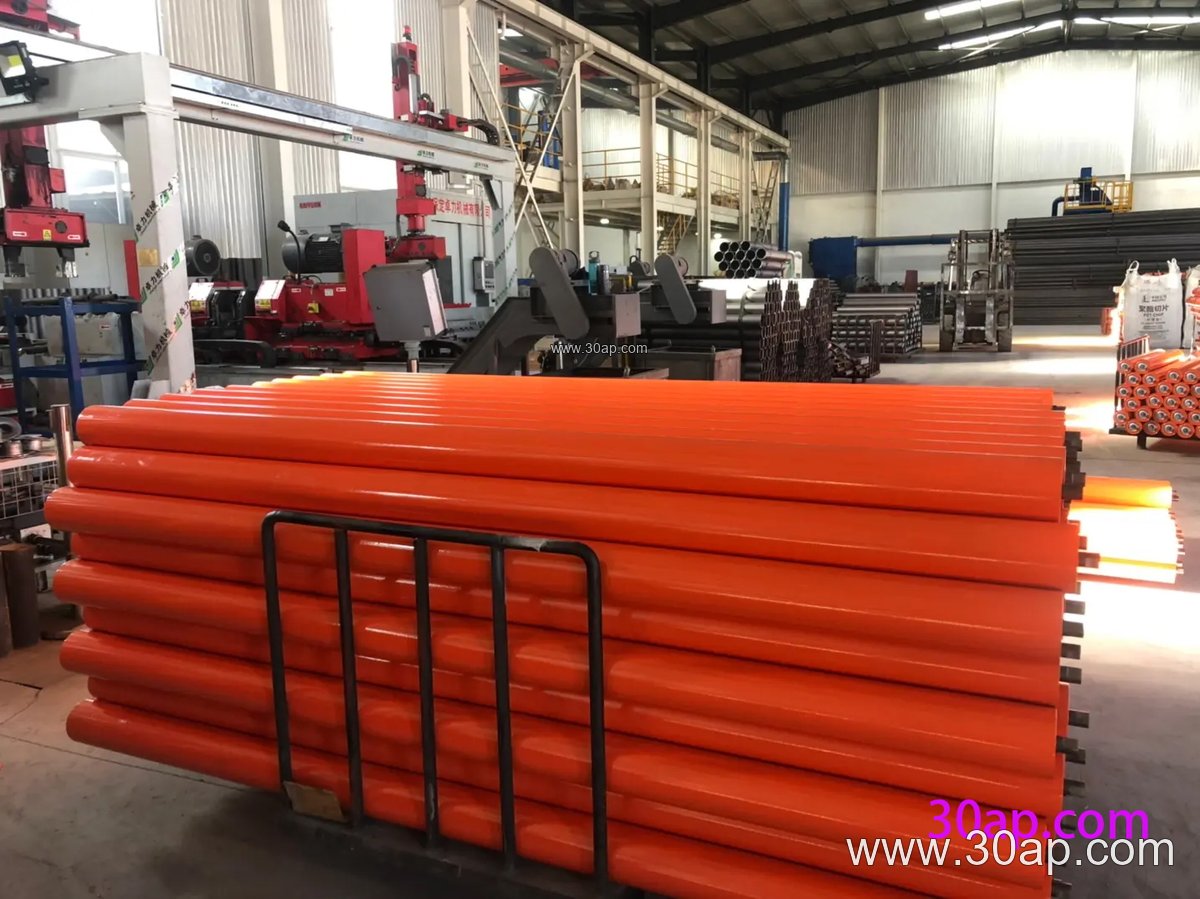
How the Assembly Is Built
Most deep trough units use a three-roll arrangement, with two side rolls set at a steep angle and a shorter centre roll. Common trough angles in this deeper class are 35 and 45 degrees, while 45 degrees gives the most pronounced pocket. The rolls themselves are usually steel tube shells fitted with sealed ball bearings; common bearing sizes include 6205, 6305, 6306 and 6308, matched to the load and roll diameter rather than to belt width alone.
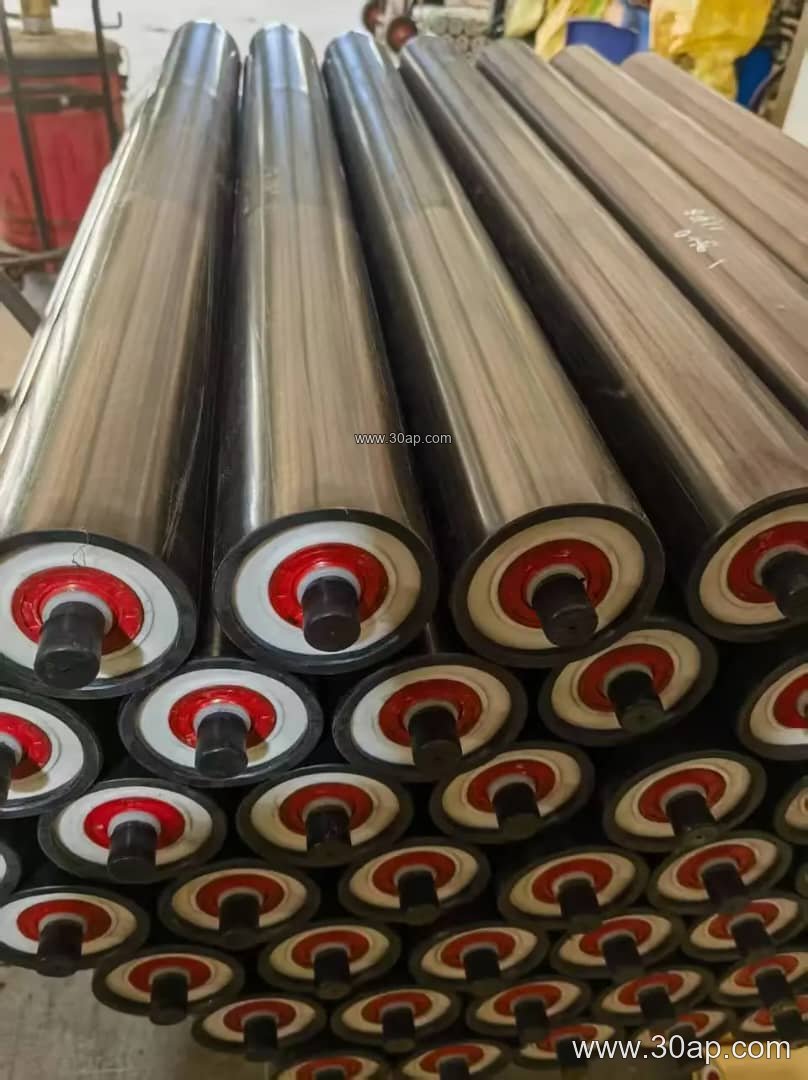
Roll diameters commonly seen in this range include 89 mm, 108 mm, 127 mm, 133 mm and 159 mm. The roll length changes with belt width, trough angle and the number of rolls in the set. For reference, a three-roll trough set may use a centre roll around 315 mm for an 800 mm belt or about 465 mm for a 1200 mm belt, but side rolls and centre rolls can differ, and final dimensions are set by the conveyor design.
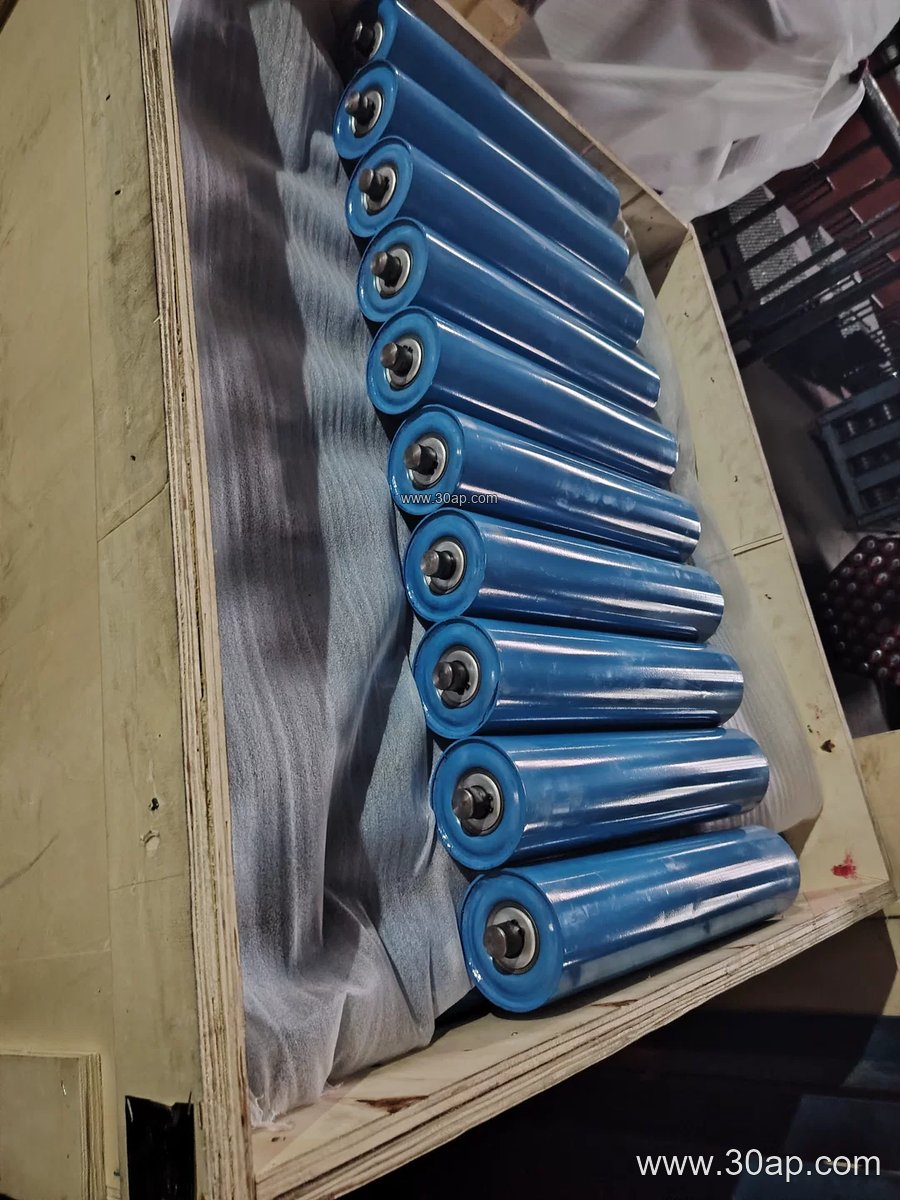
Common Reference Dimensions
- Roll diameters: 89, 108, 127, 133, 159 mm
- Trough angles: 35 degrees, 45 degrees
- Belt widths: 800, 1000, 1200, 1400, 1600 mm
- Bearing sizes: 6205, 6305, 6306, 6308
- Roll surface: plain steel tube, or rubber rings on impact sections
Where the belt is loaded with heavy lumps, a rubber-ring version or a separate impact idler can be placed under the chute, while the deep trough set continues along the carrying run. This is a comparison of duties, not a substitution: each roll position has its own job.
Where Deep Trough Sets Fit Best
The deeper profile is useful wherever the belt carries a wide, heaped load and spillage is a concern. In a coal preparation plant or a power station coal yard, it helps contain fine and mixed coal across the full belt width. In a limestone or iron ore crushing line, it supports a heavy burden after the crusher discharge and keeps the load from wandering toward the edges.
It also suits sand and aggregate plants feeding a screen house, and cement plants moving clinker or raw meal on inclined sections. When the belt is a chevron conveyor belt or a corrugated sidewall conveyor belt, check that the idler profile and the cleat or wall height do not interfere; the trough depth must match the belt construction.
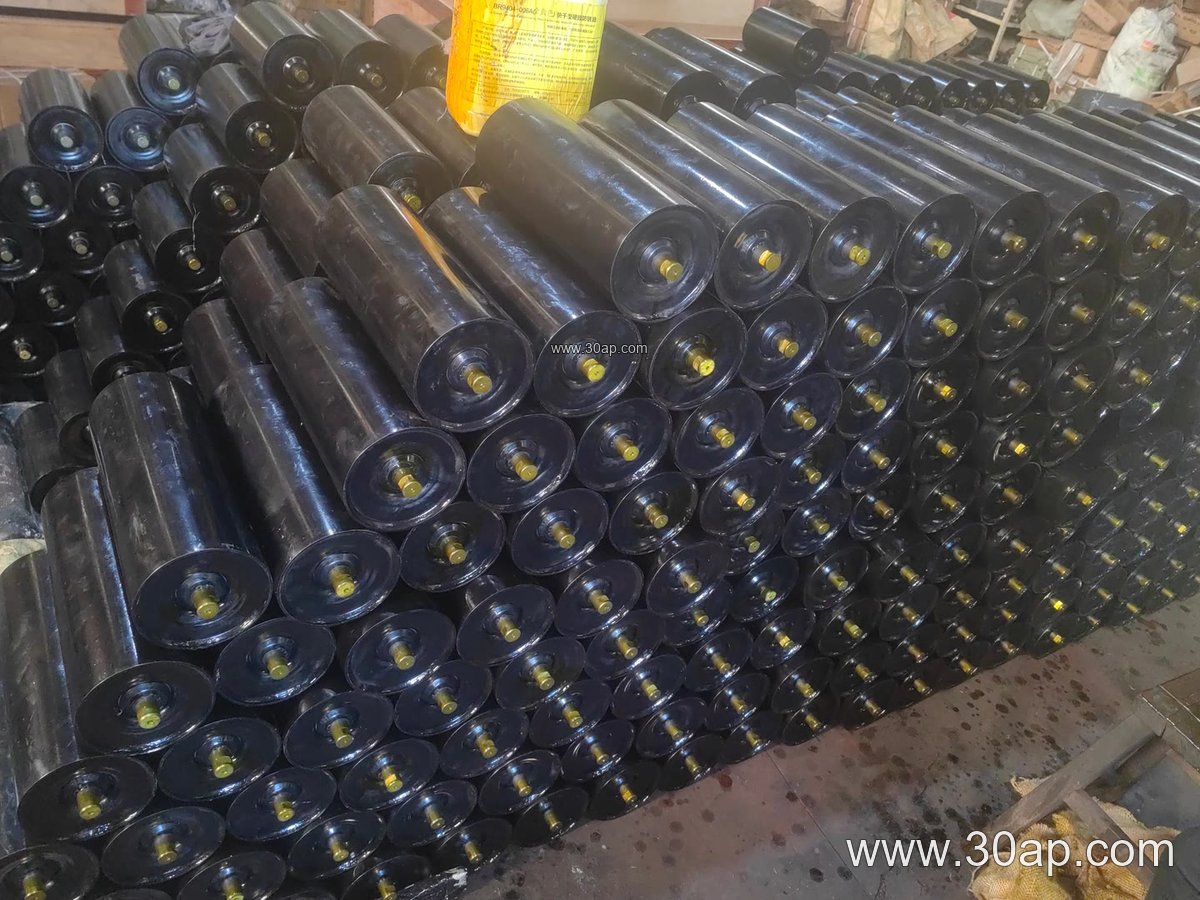
What Buyers Should Confirm Before Ordering
Start with the belt width and the required trough angle, then confirm the roll diameter and shaft ends that fit the existing brackets. Ask for the bearing type and sealing arrangement, since dust and water ingress are the usual causes of seized rolls in a stone crushing plant or a tunnel spoil line. Confirm the roll length for each position in the set, because the centre roll and side rolls are often different.
Also check the belt speed, the lump size and the expected load per metre, and state whether the line runs a fabric core belt such as an EP conveyor belt or a steel cord conveyor belt, as tension and stiffness affect how the belt seats in a deep trough. Spare rolls should be ordered with the same bearing and seal specification so that maintenance crews can swap them without adapters. For related conveying components, buyers often review the belt, idler roller and conveyor bracket together so the whole support system matches.