What the Driving Pulley Does
The driving pulley is the powered drum at the head end of a belt conveyor. It grips the inside of the belt and transfers torque from the gearbox or motor into belt motion. In some plant layouts the drive sits at an intermediate position, but the working principle is the same: friction between the drum surface and the belt carcass moves the load. The same component is often called a head pulley or drive drum, and those names describe one product, not separate ones.
Because it carries the full tangential force of the conveyor, this drum is usually the most heavily loaded rotating part in the system. Its diameter, shell thickness, shaft size and lagging all follow from the belt tension, the duty cycle and the material being moved.
Construction and Surface Options
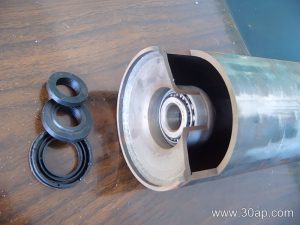
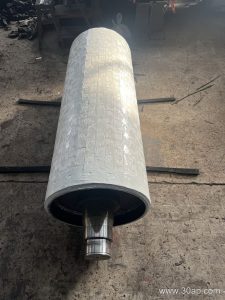
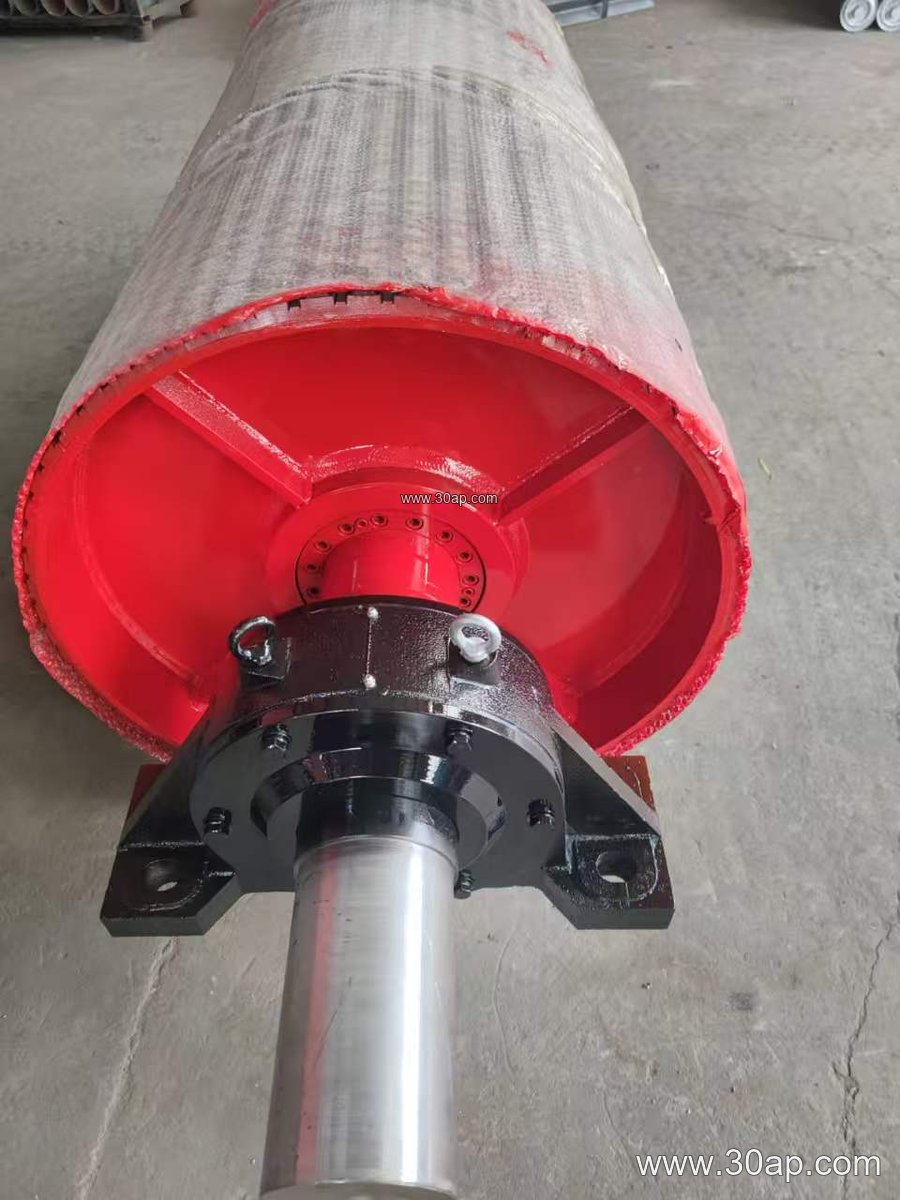
A typical unit combines a welded steel shell, end discs, a through shaft, bearing housings and a lagging layer. The shell is machined so the belt runs true, and the ends are often slightly tapered or fitted with a small crown to help the belt centre itself. Surface finish matters as much as shell strength, especially on inclined routes.
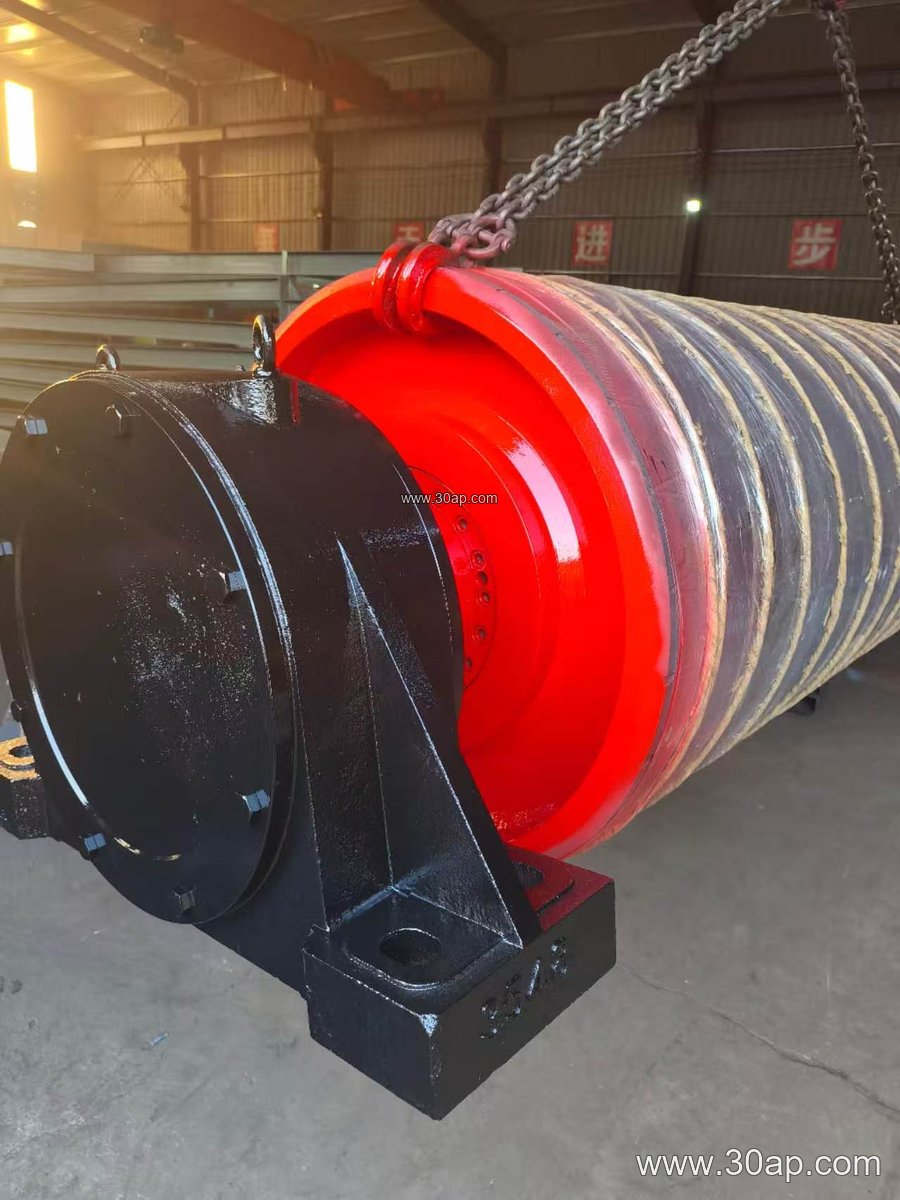
- Plain machined face for light, clean duties
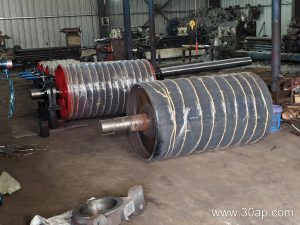
- Hot vulcanised rubber lagging for general grip and wear life
- Cold bonded rubber or cast rubber for workshop or field repair
- Diamond pattern lagging to shed water and fines
- Chevron lagging where slip risk is high on gradients
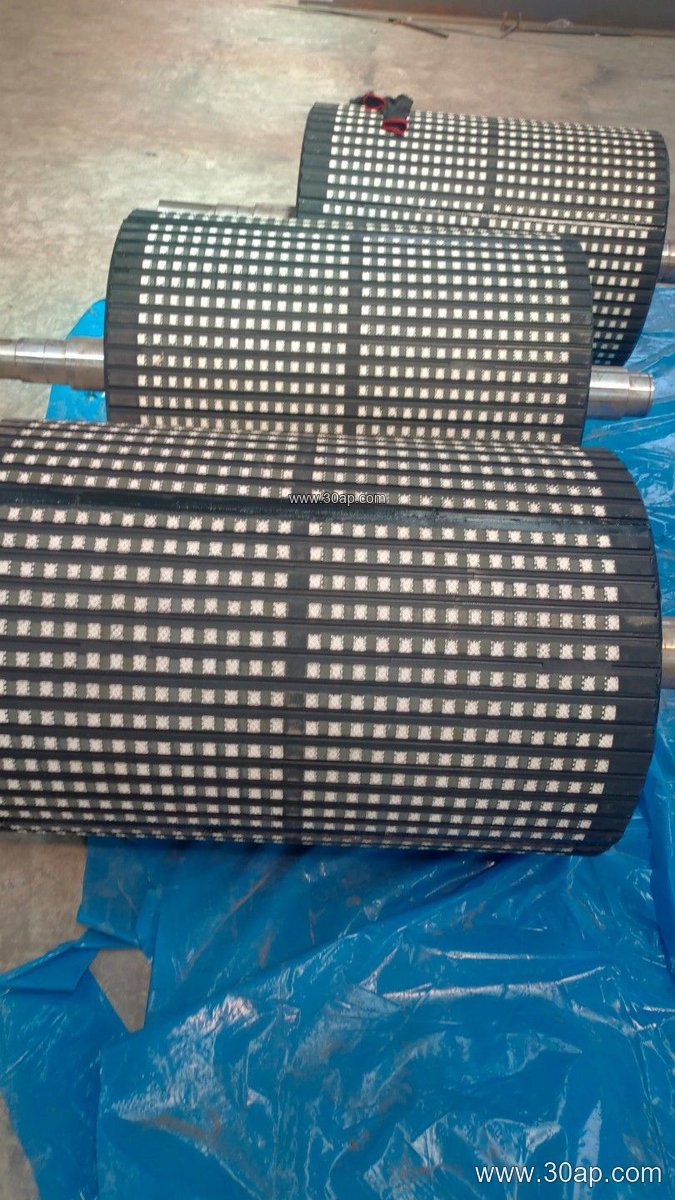
- Ceramic lagging for abrasive, wet or high-torque service
Lagging thickness commonly falls between 8 mm and 20 mm. Thicker covers last longer but add inertia and cost, so the choice should follow the actual slip and wear conditions rather than a habit.
Matching Diameter, Face Width and Shaft
Face width is normally a little wider than the belt, so the belt is fully supported without rubbing the end discs. Diameter is set by the required wrap angle, belt tension and the bending fatigue of the carcass. Shaft diameter follows torque and bearing load, not belt width alone.
| Belt width | Typical face width | Example diameter combination |
|---|---|---|
| B500 | about 600 mm | Ø400 or Ø500 |
| B650 | about 750 mm | Ø500 or Ø630 |
| B800 | about 950 mm | B800 x Ø500 |
| B1000 | about 1150 mm | Ø630 or Ø800 |
| B1200 | about 1400 mm | B1200 x Ø1000 |
| B1400 | about 1600 mm | B1400 x Ø800 |
| B1600 | about 1800 mm | Ø1000 or Ø1250 |
| B1800 | about 2000 mm | Ø1250 or Ø1400 |
These are reference combinations, not fixed pairings. A wide belt can run on a smaller drum when tension allows, and a narrow belt may need a larger drum to limit carcass bending. Shaft sizes such as Ø80, Ø100, Ø120, Ø160 or Ø200 are common, but the final value comes from the torque calculation.
Where It Is Installed
In a quarry or aggregate line, the driving pulley usually sits at the discharge end, pulling a heavy abrasion resistant conveyor belt loaded with crushed stone. In a coal handling plant or underground coal mining conveyor, flame retardant and anti-static properties of the belt matter, and the drum is often specified with ceramic or diamond lagging because the surface stays damp. Cement plants and power plant coal yards place similar demands on the drive drum, while ports and ship loading conveyors may use a larger diameter to reduce belt stress over long centres.
The drive drum is not the same as a tail pulley or a bend pulley. Those wheels redirect or tension the belt without input torque, and they cannot be swapped for the powered drum. A bend pulley or snub pulley may sit near the drive to increase wrap angle, but it does not replace it.
Buyer Checklist
- Confirm belt width, carcass type and maximum working tension before choosing diameter.
- State the lagging pattern and thickness, and whether grooves are needed for water drainage.
- Provide shaft and bearing data based on torque, not on belt width alone.
- Check that the conveyor bracket and bearing housing dimensions match the existing frame.
- For inclined or reversing duty, review wrap angle and consider a second drive or a snub arrangement.
- Ask for the balancing grade and runout tolerance if the drum runs at high speed.
Regular inspection of lagging wear, bolt tightness and bearing temperature keeps the drive drum working through long shifts. When the rubber cover wears smooth, re-lagging is usually cheaper than replacing the whole assembly, provided the shell and shaft remain within tolerance.
More drum and belt data can be reviewed at www.beltconveyorparts.com/driving-pulley, together with related conveyor pulley options.