What the EP800 Conveyor Belt Is
An EP800 conveyor belt is a fabric-core rubber belt built around polyester-polyamide (EP) carcass layers. The 800 refers to the nominal tensile strength of the carcass in newtons per millimeter of belt width, so this is a mid-to-high strength grade in the EP family, sitting above EP630 and below EP1000. It is widely stocked as an EP rubber conveyor belt for plants that need more load capacity than light fabric belts can offer but do not require the very high tensions of a steel cord conveyor belt.
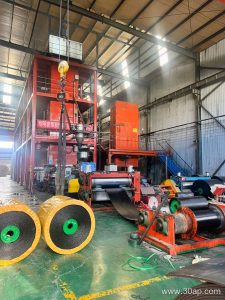
The carcass is the working heart of the product. Multiple plies of EP fabric are bonded under heat and pressure with rubber skim between the layers, then covered top and bottom with abrasion-resistant rubber. Because EP fabric stretches less than cotton or plain nylon under load, an EP fabric core conveyor belt holds its length well and needs less take-up travel than an NN conveyor belt of similar rating. That is one reason EP800 is a common choice on long runs in mines, cement works and power stations.
Construction and Common Specifications
An EP800 belt is usually supplied with 2 to 6 plies depending on the manufacturer and the duty. Cover rubber thickness is selected to suit the material being carried. The figures below are typical reference values, not a fixed supply promise; actual construction is confirmed by design for each conveyor.
- Strength grade: EP800 (also written EP 800)
- Carcass: EP fabric, usually 2 to 6 plies
- Common cover gauges: 4+2 mm, 5+2 mm, 6+2 mm, 8+3 mm
- Common belt widths: 650 mm, 800 mm, 1000 mm, 1200 mm, 1400 mm, 1600 mm
- Surface options: plain, chevron, corrugated sidewall, skirted
- Special grades: heat resistant, oil resistant, flame retardant, anti-static, cold resistant
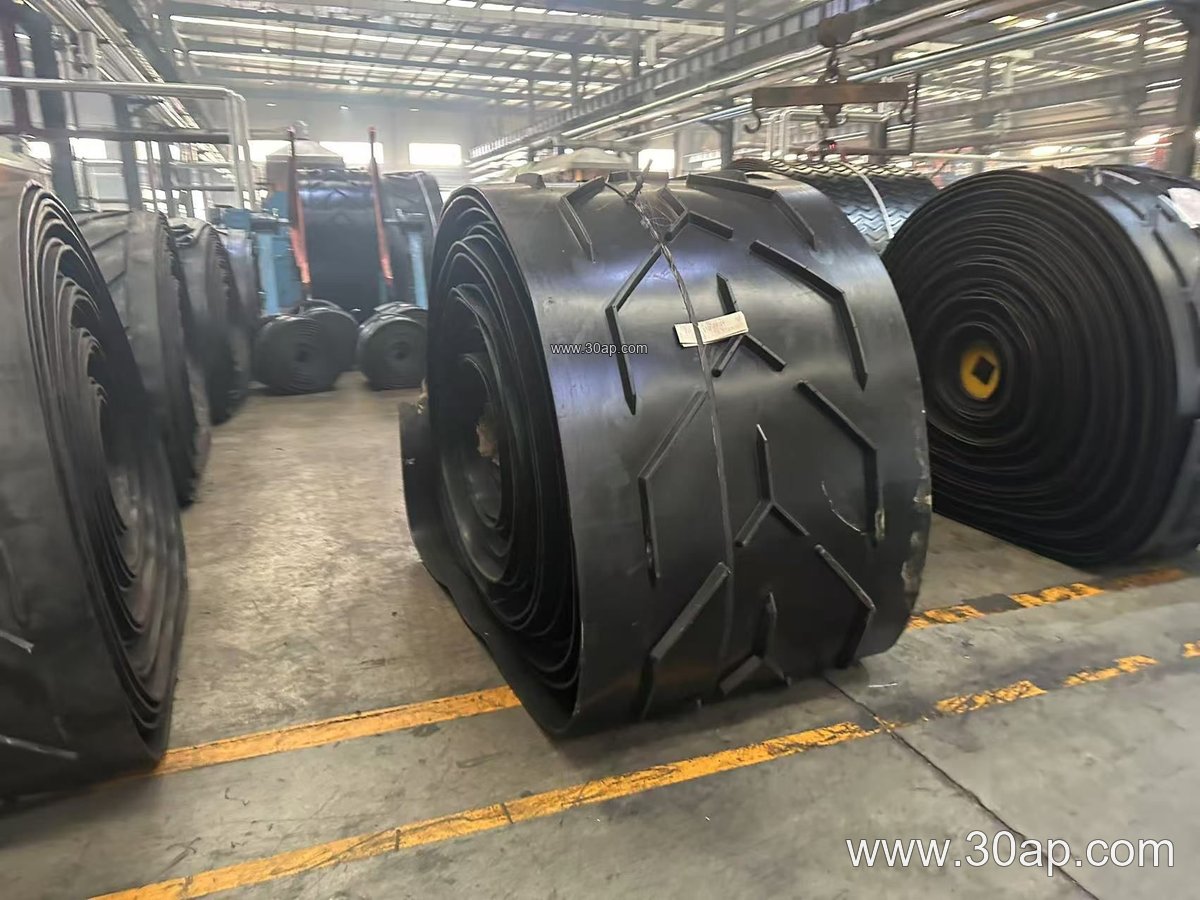
The same carcass grade can be built into different surface forms. A chevron conveyor belt in EP800 is common on inclines where material would slide back on a smooth belt, while a corrugated sidewall version handles steep lifts with a skirted edge. These are variations of the same base product, not replacements for it.
Where EP800 Belts Are Used
The strength class suits medium and heavy bulk material conveyor belt duties. Typical installations include:
- Coal handling and underground mining conveyor belt lines where flame retardant grades are specified
- Cement plant clinker and raw meal transport
- Power plant coal feed and ash handling
- Quarry and aggregate conveyor belt runs feeding crushers and screens
- Iron ore, copper ore and other ore conveyor belt systems
- Port and ship loading conveyors moving bulk material at high tonnage
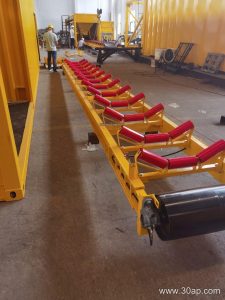
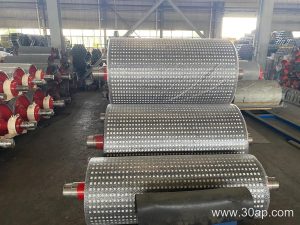
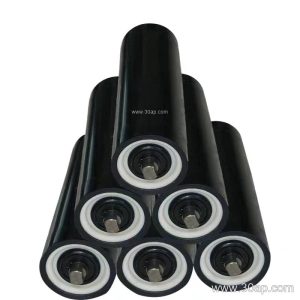
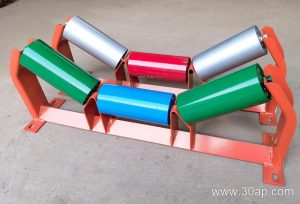
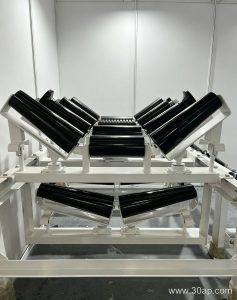
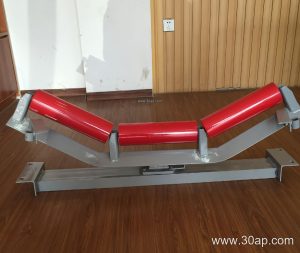
In these settings the belt works with conveyor pulleys at the head and tail, idler roller sets supporting the carrying run, and conveyor brackets holding the frames. The drive pulley, tail pulley and bend pulley each do a different job, and none of them can be swapped for another type without reviewing the conveyor design.
Selection Points for Buyers
Choosing an EP800 conveyor belt is more than picking a strength number. Buyers should confirm the maximum working tension, the belt width the conveyor frame allows, the lump size and impact energy at the loading point, and the ambient and material temperature. A belt that is too narrow for the tonnage will sag and spill; one that is too wide adds weight and cost without benefit. Belt width and pulley diameter are matched through the conveyor design, not by a single fixed rule, so the pulley dimensions should be checked separately rather than assumed from the belt width.
For abrasive rock and ore, a high abrasion resistant conveyor belt cover extends service life. For hot clinker or sinter, a heat resistant conveyor belt grade is needed. In coal mines, flame retardant and anti-static properties are usually mandatory. Food and recycling lines may call for an oil resistant or food grade cover. Each of these is a cover compound choice on the same EP800 carcass.
Installation and Maintenance Notes
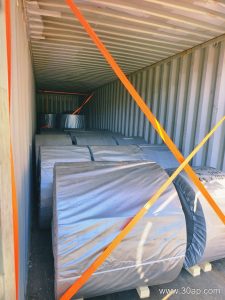
Correct splicing matters as much as the belt itself. A poorly made splice can reduce joint strength well below the carcass rating. Alignment should be checked at the head pulley, tail pulley and every bend pulley, and idler roller frames should be square to the belt line. Keep the belt tracking straight, avoid over-tensioning, and inspect covers for cuts and edge wear at regular intervals. Stored belts should be kept dry, away from ozone sources and out of direct sunlight.
Where a conveyor needs very high tension over long distances, a steel cord conveyor belt may be the better fit, and where cost and lighter duty dominate, an NN conveyor belt can serve. For the broad middle ground of mining, cement, power and quarry work, the EP800 conveyor belt remains a dependable, well-understood grade.