What Is a Trough Idler Bracket Set
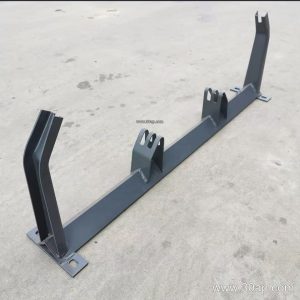
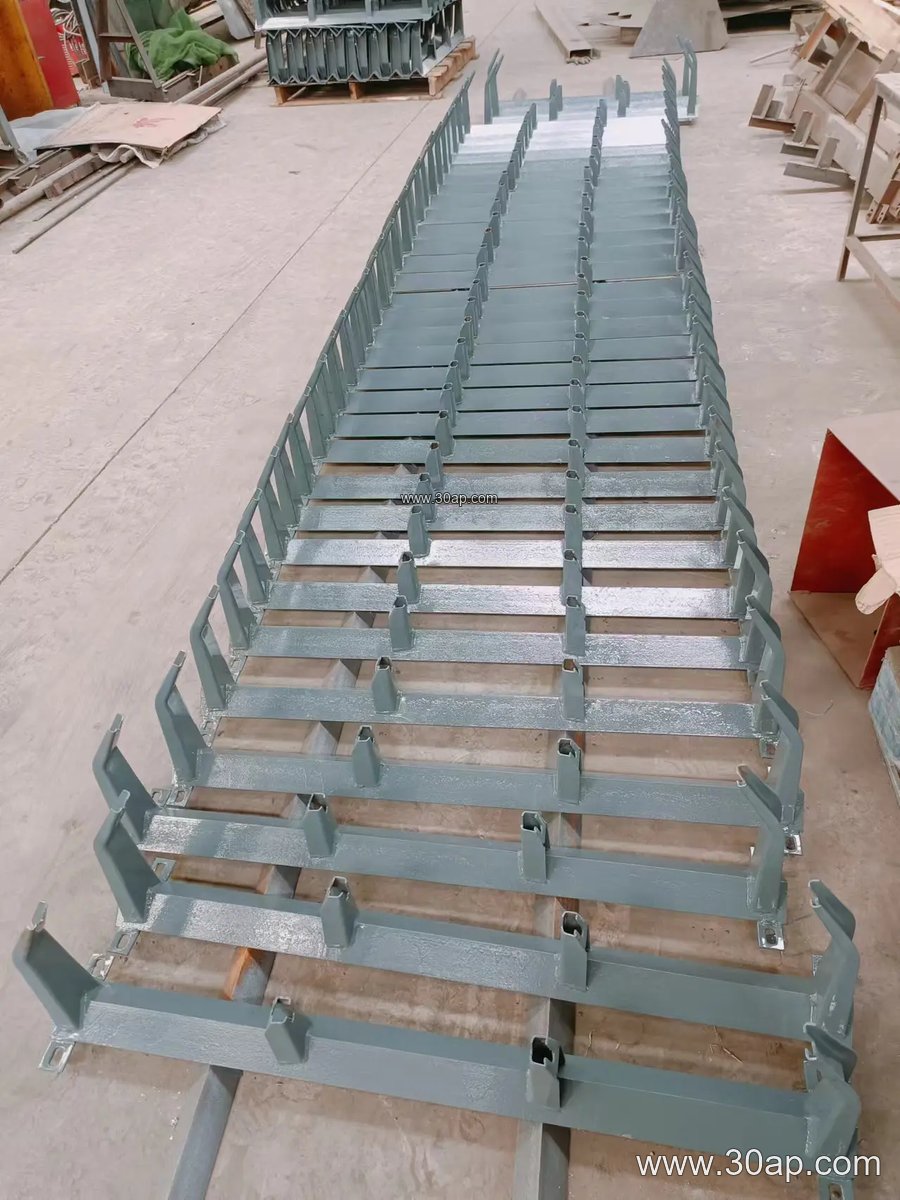
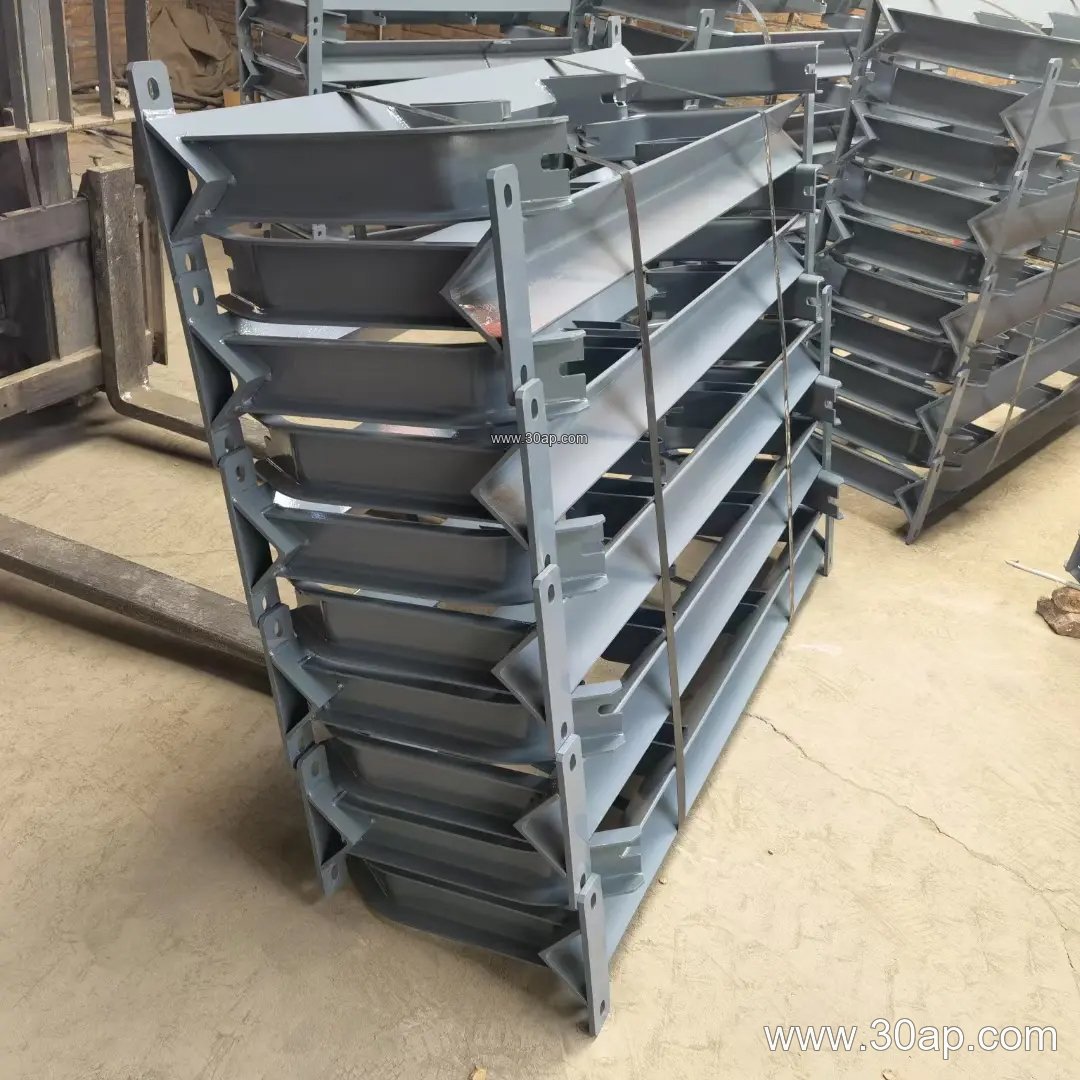
A trough idler bracket set is the structural frame that holds the inclined and center idler rollers in a troughing arrangement on a belt conveyor. It positions the rollers so the conveyor belt forms a stable trough shape, keeping bulk material centered during transport. This bracket set is distinct from the conveyor pulley that drives or redirects the belt; it is purely a support component for the idler roller assembly.
Commonly referred to as a troughing idler bracket set or simply trough bracket set, it is typically supplied as a set of two side brackets and a center support that together form one troughing station. Buyers in mining, coal preparation, cement plants, and power plant coal handling systems specify these sets to match their belt width, trough angle, and roller diameter.
Construction and Mounting
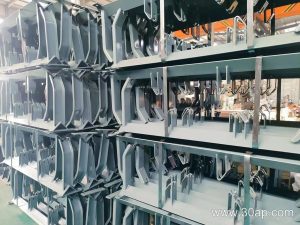
Trough idler bracket sets are usually fabricated from angle steel, channel steel, or folded steel plate. The side brackets carry the inclined rollers at a fixed trough angle, while the center bracket supports the horizontal roller. Mounting holes and crossbeam lengths vary with belt width and trough angle; they are not universal across sizes.
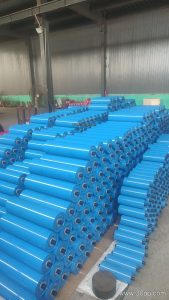
Installation is straightforward: the set bolts onto the conveyor’s longitudinal beams, and the idler rollers drop into the bracket notches or slots. Proper alignment of the bracket set relative to the belt line is critical to avoid belt misalignment and premature roller wear. The set works together with the conveyor bracket system that forms the overall frame of the conveyor.
Where It Is Used
These bracket sets are found wherever a conveyor belt carries bulk material over idlers. In a limestone quarry, they support the belt on the main haulage conveyor. In a coal-fired power plant, they are part of the coal handling conveyor that feeds the boiler. Other common locations include aggregate plants, cement kilns, and ship loading facilities.
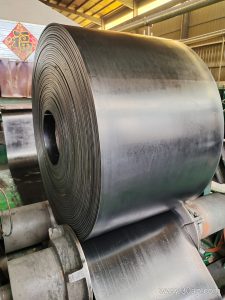
The choice of bracket set often depends on the material being conveyed and the environment. For example, a flame retardant conveyor belt in an underground coal mine may require bracket sets that are easy to inspect and replace, while a heat resistant conveyor belt in a cement plant may call for brackets that tolerate thermal expansion. The bracket set itself does not determine belt properties, but it must be compatible with the roller diameter and belt width specified for the conveyor.
Key Parameters for Selection
When selecting a trough idler bracket set, several parameters must be matched to the conveyor design. The table below lists common reference values; actual dimensions should be confirmed with the conveyor designer.
| Parameter | Common Reference Values |
|---|---|
| Belt width (B) | B500, B650, B800, B1000, B1200, B1400, B1600, B1800, B2000, B2200 |
| Trough angle | 20°, 30°, 35°, 45° (adjustable brackets allow change within this range) |
| Idler diameter | Ø89, Ø108, Ø133, Ø159, Ø194 |
| Material | Angle steel, channel steel, folded steel plate |
For instance, a B800 conveyor with a 35° trough angle and Ø108 idlers would use a bracket set designed for that combination. A wider B1200 belt with a 45° trough angle and Ø133 rollers would require a different set. There is no fixed rule that one belt width matches only one trough angle or roller diameter; the bracket set is engineered accordingly.
Types and Variations
Beyond the standard fixed troughing bracket set, several variations exist for specific needs. Adjustable bracket sets allow the trough angle to be changed on site, which can be useful during commissioning or when material characteristics change. Transition bracket sets are used near the head or tail pulley to gradually change the belt shape. Impact bracket sets, often paired with impact idlers, are placed at loading points to absorb shock.
For comparison, a return bracket set supports the belt on the return side and typically uses a flat or V-shaped arrangement, but it is not a substitute for the troughing set on the carrying side. Similarly, a self-aligning bracket set includes features to correct belt tracking, but it serves the same fundamental role of holding idlers in place.
Buyer Checklist
- Confirm belt width and trough angle required for your conveyor.
- Match idler diameter to the bracket set’s roller seating dimensions.
- Check material and finish for environmental conditions (e.g., corrosive or abrasive dust).
- Verify mounting hole spacing and crossbeam length against your conveyor frame.
- Consider adjustable or transition sets if future changes or specific belt transitions are planned.
For reliable belt support, the trough idler bracket set should be selected as part of the complete conveyor system, alongside the conveyor belt, idler rollers, and conveyor pulley. Whether you are specifying a rubber conveyor belt for a quarry or an EP conveyor belt for a cement plant, the bracket set must be compatible with the overall design. For more information on conveyor components, visit our site at conveyor belt and idler roller resources.