What a Dual Drive Pulley Does
A dual drive pulley is a conveyor pulley that transmits torque through two independent drive points on the same shell, rather than relying on a single motor and gearbox connection. In practice, the pulley body often carries two drive couplings or two gearbox outputs feeding the same drum, so the total drive power is split across two paths. This arrangement is common on long overland conveyors, heavy-duty mining conveyors and high-capacity bulk handling lines where starting torque and belt tension control matter. The dual drive pulley should not be confused with a tail pulley or a bend pulley, which guide or tension the belt but do not provide the main driving force.
Because the load is shared, each motor and each coupling can be smaller than a single equivalent drive. That helps in confined head stations and in plants where a large single gearbox would be difficult to install or maintain.
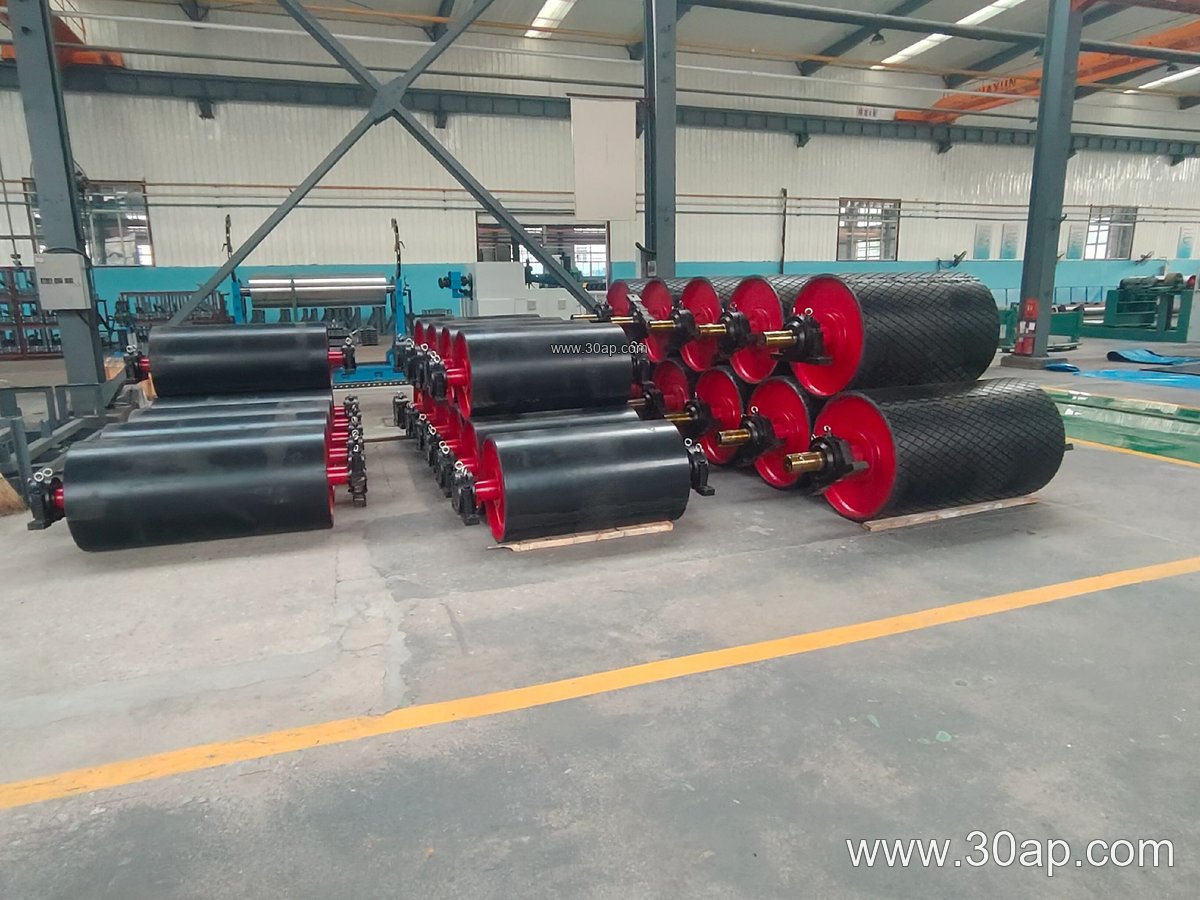
Construction and Key Components
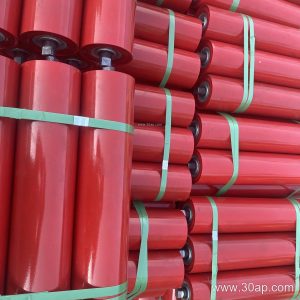
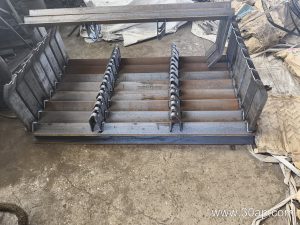
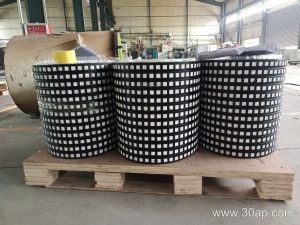
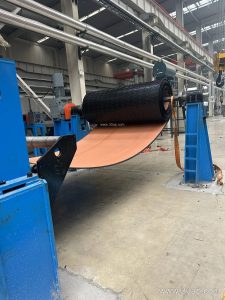
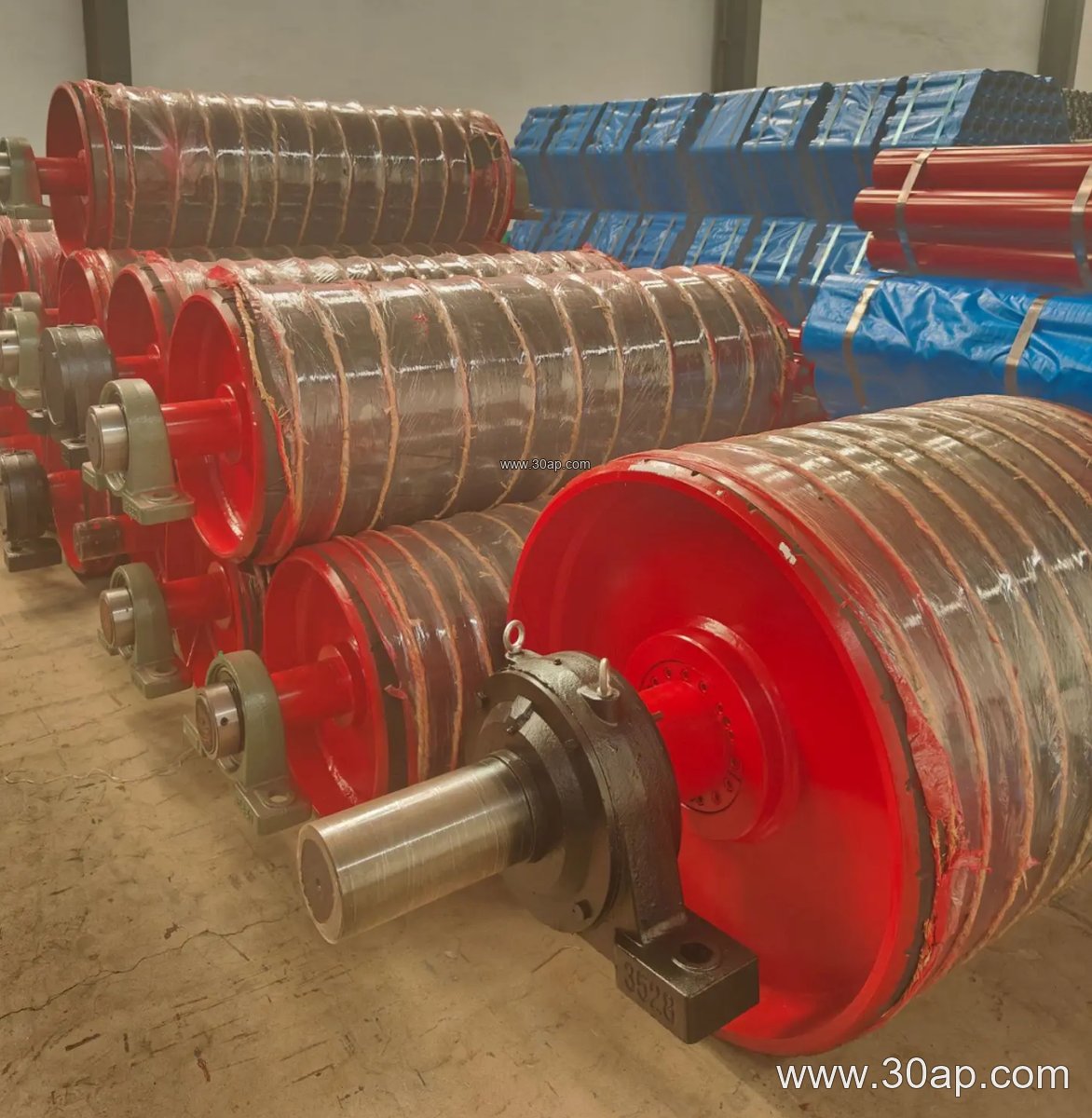
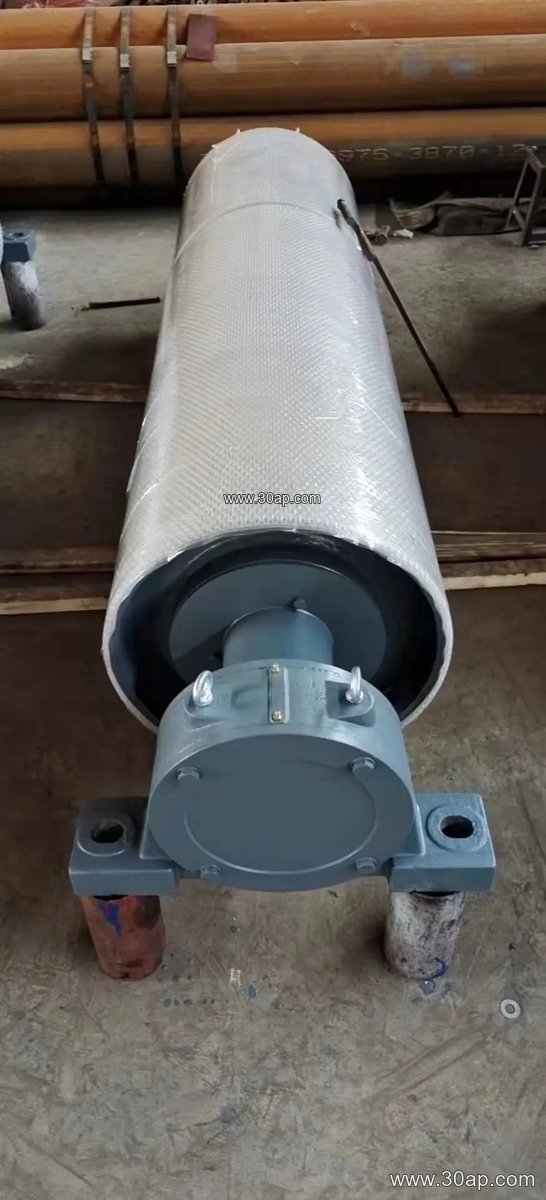
A dual drive pulley is built around a welded steel shell, two end discs, a through shaft or two stub shafts, and bearing housings mounted on a sturdy conveyor bracket or frame. The shell surface may be plain, rubber lagged, or ceramic lagged depending on grip requirements. Common lagging thicknesses are 8, 10, 12, 15 and 20 mm, applied by hot vulcanizing, cold bonding or casting. Diamond and herringbone patterns are used where wet or dusty conditions reduce friction.
- Shell: rolled and welded steel, machined for balance.
- Shaft: sized by torque and bearing load, not by belt width alone. Typical shaft diameters run from Ø50 to Ø200 mm depending on duty.
- Drive connections: two keyed or shrink-disc couplings, or two gearbox outputs.
- Bearings: spherical roller bearings in split housings for easier service.
- Surface: plain, cast rubber, cold-bonded rubber, hot-vulcanized rubber, diamond lagging, herringbone lagging or ceramic lagging.
Matching the Pulley to Belt Width and Duty
Face width is normally slightly wider than the belt. For example, a B800 belt usually runs on a pulley face of about 950 mm, and a B1200 belt on roughly 1400 mm. Diameter is selected from belt speed, wrap angle, tension and space; a B1200 × Ø1000 combination and a B800 × Ø500 combination are both realistic in different duties. There is no fixed rule that one belt width matches one diameter. The table below shows common reference combinations, not universal specifications.
| Belt width | Typical pulley face | Common diameter range |
|---|---|---|
| B500 | about 600 mm | Ø250 to Ø500 |
| B650 | about 750 mm | Ø315 to Ø630 |
| B800 | about 950 mm | Ø400 to Ø800 |
| B1000 | about 1150 mm | Ø500 to Ø1000 |
| B1200 | about 1400 mm | Ø630 to Ø1250 |
| B1400 | about 1600 mm | Ø800 to Ø1400 |
| B1600 | about 1800 mm | Ø1000 to Ø1600 |
Shaft diameter is determined by torque, bearing span and load, so a Ø120 mm shaft on a B1000 pulley is common but not mandatory. Buyers should supply belt speed, capacity, starting method and wrap angle so the supplier can size the drive properly.
Where It Fits in the Conveyor
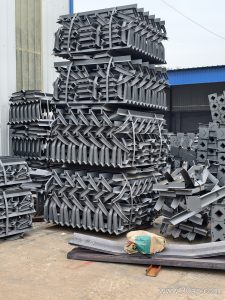
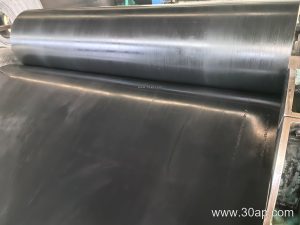
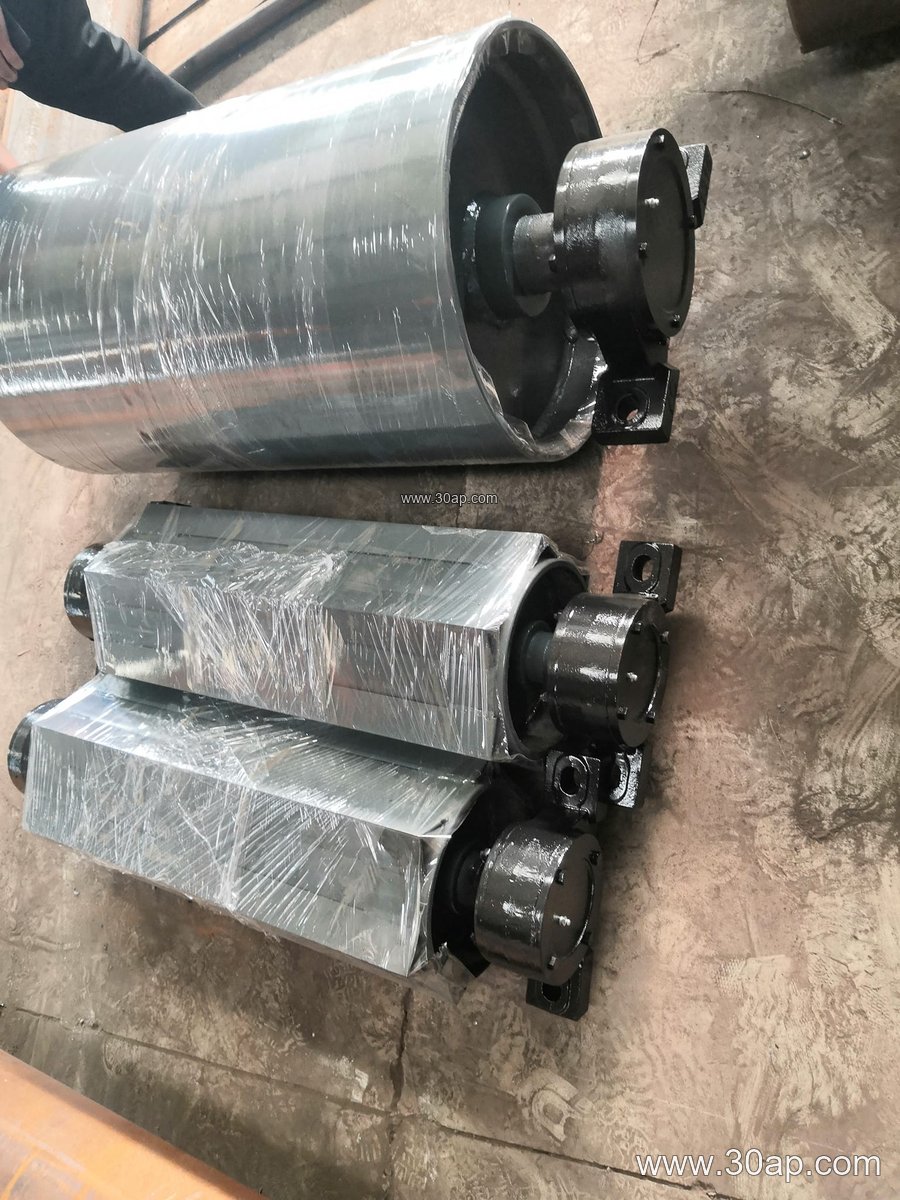
The dual drive pulley is usually installed at the head of the conveyor, where it discharges material onto the next stage. In a quarry or aggregate line it may sit after a crusher, pulling a heavy-duty conveyor belt loaded with rock. In a coal mining or underground coal mining application, flame retardant conveyor belt and anti-static conveyor belt grades are often specified alongside the pulley. In a cement plant or power plant coal yard, the same pulley may handle clinker or coal on an EP conveyor belt or a steel cord conveyor belt.
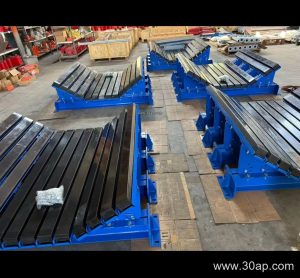
It can also appear at an intermediate drive station on long overland routes, where a second drive point reduces belt tension at the head. In such layouts, idler roller frames and conveyor brackets must be aligned carefully so the belt enters and leaves the pulley squarely.
Buyer Checklist
- Confirm the drive arrangement: two motors, two gearboxes, or one motor with a split coupling.
- State belt width, belt type and belt speed, for example B1200 with EP1000 or ST1600 steel cord belt.
- Specify lagging type and thickness, such as 12 mm diamond rubber or 15 mm ceramic lagging.
- Provide wrap angle and starting torque so shaft and bearing size can be checked.
- Ask about balancing, machining tolerances and bearing housing fit.
- Plan maintenance access, since two drive couplings need room for alignment checks.
For assistance with drum selection, lagging options and matching conveyor belt specifications, contact the engineering team at conveyor-components.example and reference dual drive pulley when requesting a quotation.