What a Conveyor Equipment Idler Does
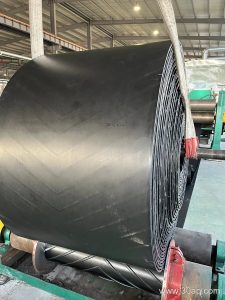
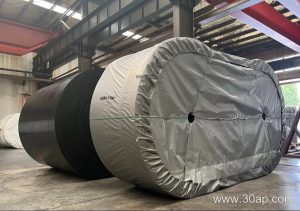
A conveyor equipment idler is the rotating support that carries the conveyor belt along its route. In a typical bulk handling line, dozens or even hundreds of idlers sit under the belt, holding it in a stable trough, reducing friction, and keeping material from spilling. While the belt itself may be an EP conveyor belt or a steel cord conveyor belt, the idlers determine how smoothly that belt tracks and how long the system runs between maintenance stops.
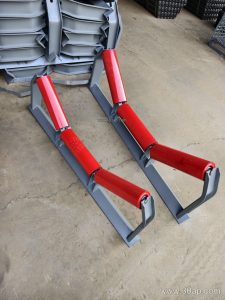
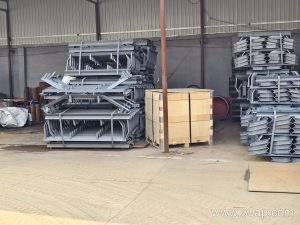
The idler is not a single part. It usually consists of a steel tube shell, a shaft, bearing housings, and seals. The shell may be plain steel, nylon-coated, rubber-covered, or ceramic-lined depending on the duty. Bearings such as 6204, 6205, 6305, 6306, 6308, or 6310 are common, but the correct bearing for a given roller diameter is a design decision, not a fixed rule.
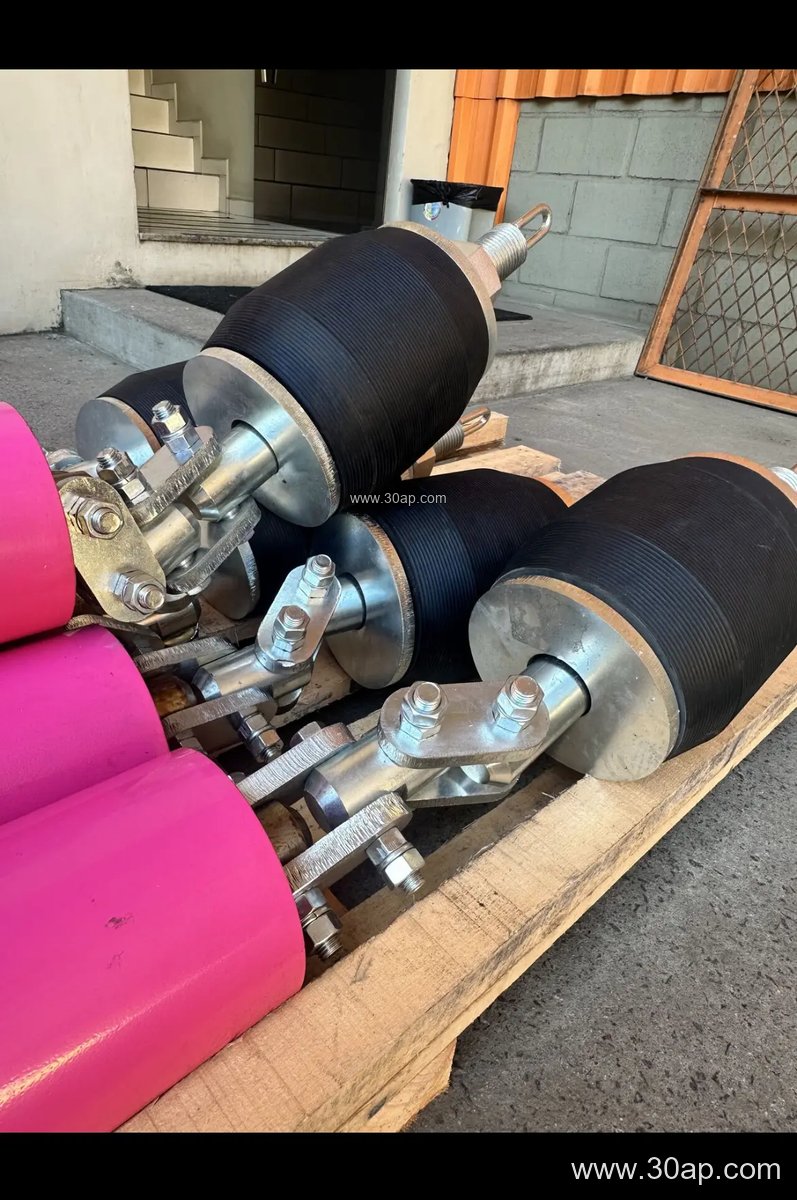
Common Idler Types and Where They Sit
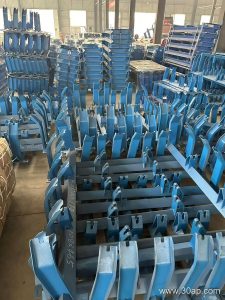
Carrying idlers support the loaded belt and are often arranged in three-roll troughing sets with trough angles of 20, 30, 35, or 45 degrees. Return idlers support the empty belt on the lower run. Impact idlers, sometimes with rubber rings, are placed at transfer points below a crusher or chute to absorb falling material. Self-aligning idlers, including friction and conical types, help correct belt wander on long conveyors. Spiral idlers are used where sticky material tends to build up on the return side.
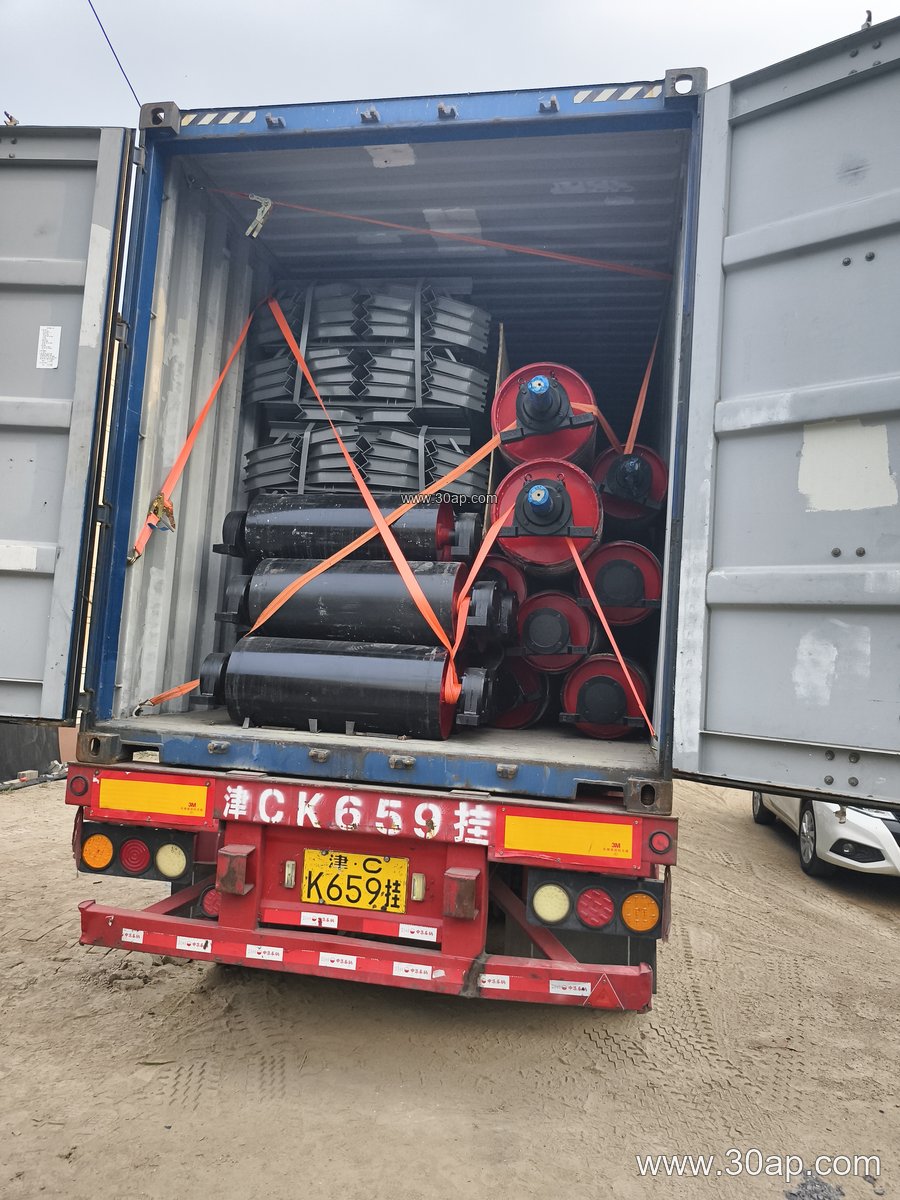
On a quarry conveyor belt or an aggregate conveyor belt, troughing idlers are the workhorses, while V-return idlers keep the belt centered on the return strand. In a coal mining conveyor belt system, flame retardant conveyor belt and anti-static conveyor belt properties are often specified alongside idler seals that resist dust and water.
Roller Diameter, Belt Width, and Roll Length
Idler diameter and belt width are related through the load and the belt sag, but they are not locked one-to-one. A 500mm conveyor belt and a 650mm conveyor belt may both use Ø89 or Ø102 rollers in different designs. Roll length changes with belt width, trough angle, and idler set form. The table below gives common examples for three-roll troughing sets; side rolls and center rolls can differ, and final dimensions are confirmed by the conveyor designer.
| Belt Width | Typical Roll Length (three-roll troughing) | Common Idler Diameters |
|---|---|---|
| B500 | about 200 mm | Ø63, Ø76, Ø89 |
| B650 | about 250 mm | Ø76, Ø89, Ø102 |
| B800 | about 315 mm | Ø89, Ø102, Ø108 |
| B1000 | about 380 mm | Ø102, Ø108, Ø127 |
| B1200 | about 465 mm | Ø108, Ø127, Ø133 |
| B1400 | about 530 mm | Ø127, Ø133, Ø159 |
| B1600 | about 600 mm | Ø133, Ø159, Ø178 |
| B1800 | about 670 mm | Ø159, Ø178, Ø194 |
| B2000 | about 750 mm | Ø178, Ø194, Ø219 |
These are reference values, not universal specifications. A heavy-duty mining conveyor belt moving iron ore may call for larger shafts and thicker shells than a cement plant conveyor belt handling fine powder at the same width.
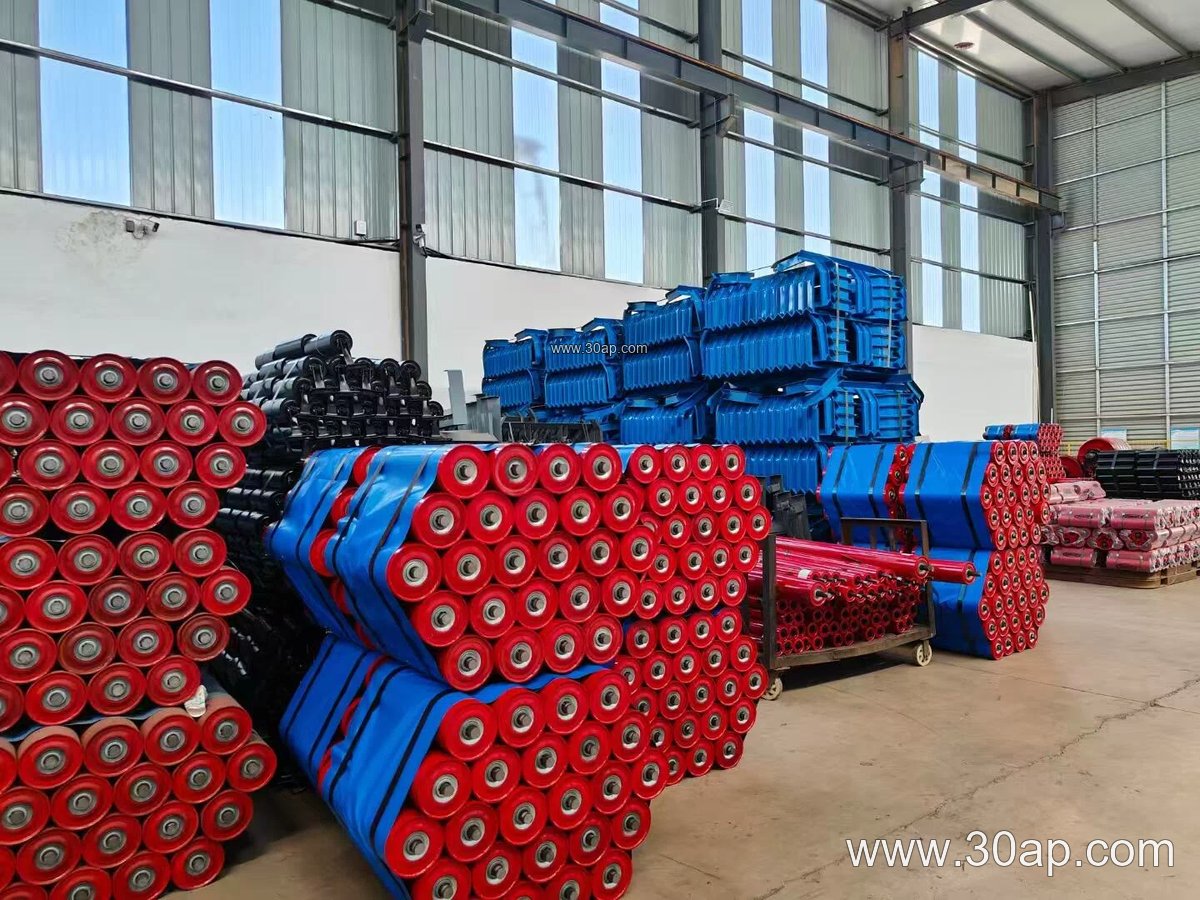
Materials and Surface Forms
The roller surface matters. Steel shells are standard for general bulk material conveyor belts. Nylon rolls reduce wear in wet or abrasive service. Rubber-covered rolls grip the belt and damp vibration, which helps on high abrasion resistant conveyor belt lines. Ceramic lagging is sometimes chosen where slip and wear are both concerns. Seals and bearing protection are especially important in coal mining conveyor belt and underground coal mining conveyor belt environments, where dust and moisture shorten bearing life.
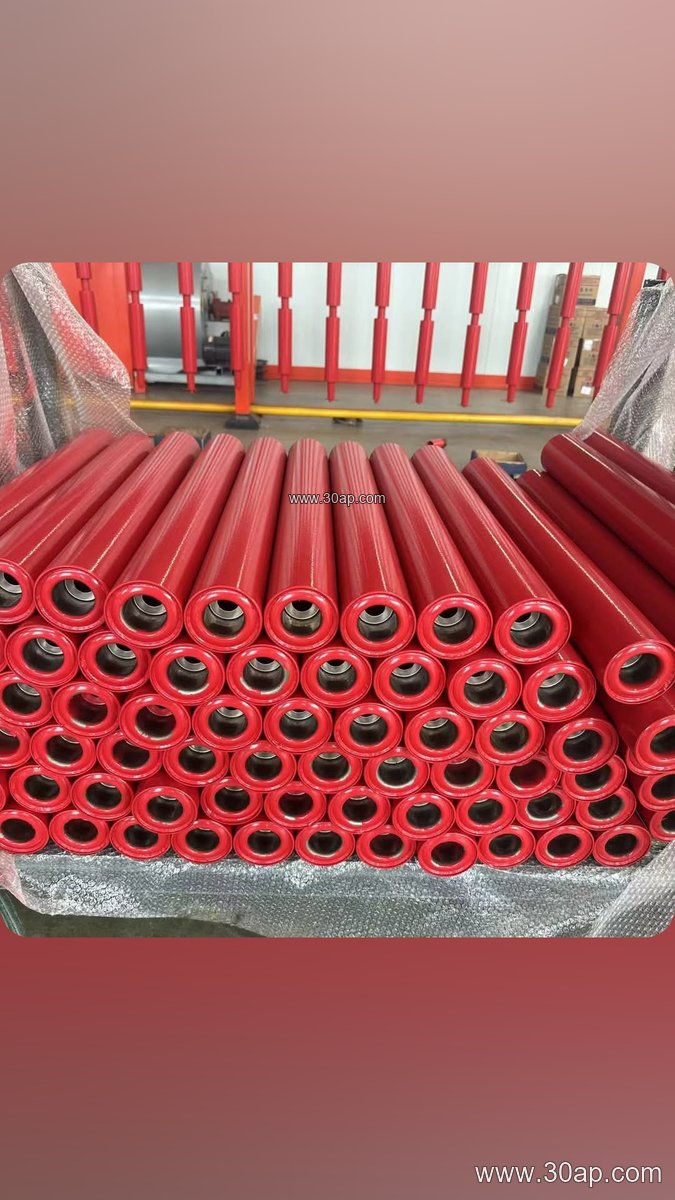
Applications Across Industries
Idlers appear wherever a conveyor belt runs. In a limestone quarry or stone crushing plant, troughing and impact idlers handle sharp rock. In a power plant, coal conveyor belt lines rely on well-sealed return idlers to keep the belt tracking. In a port ship loading conveyor belt system, long overland runs use self-aligning idlers to counter wind and off-center loads. In a fertilizer or grain facility, smooth steel rolls and clean seals help prevent material buildup and contamination.
When the belt is a corrugated sidewall conveyor belt or a pipe conveyor belt, idler layout changes, but the basic function remains: support, guide, and protect the belt.
What Buyers Should Check
- Match idler diameter and roll length to the actual belt width and trough angle, not to a catalog guess.
- Confirm bearing size and seal type for the environment: dusty, wet, or high temperature.
- Ask about shell thickness and shaft material for heavy-duty mining conveyor belt duty.
- Consider impact idlers at transfer points and self-aligning idlers on long runs.
- Keep spare rolls for critical conveyors to reduce downtime.
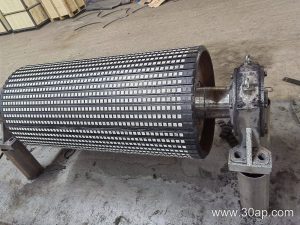
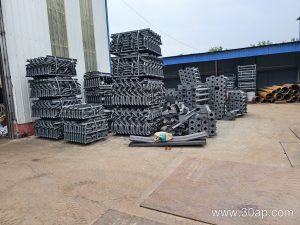
Related components such as the conveyor pulley, conveyor bracket, and conveyor belt all interact with the idler. A well-chosen idler set extends belt life and keeps the whole conveyor stable, whether the line handles ore, coal, cement, or aggregate.