What a Coal Mine Belt Conveyor Pulley Does
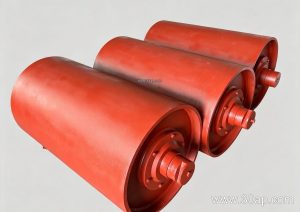
A coal mine belt conveyor pulley is the rotating drum that carries the conveyor belt, sets its path, and transfers drive force at the head of the system. In a typical underground coal mining conveyor belt line, the drum at the discharge end is the driving unit, while the tail drum keeps tension and the bend drums steer the belt around corners and transfer points. Each position demands different construction, so buyers should identify the duty first, then match diameter, face width, shaft, and lagging to the belt and load.
The drum is built around a steel shell welded to end discs, with a shaft keyed or shrink-fitted through the hubs. Bearing housings sit in conveyor brackets on either side of the frame. Face width normally runs slightly wider than the belt so the belt is supported across its full width, for example a B800 belt on a drum with roughly 950 mm face, or a B1200 belt on about 1400 mm face. Diameter is chosen from belt tension, wrap angle, and space, not from belt width alone.
Build Details That Affect Service Life
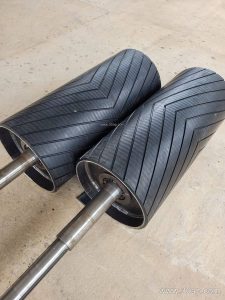
Shell thickness, weld quality, and shaft size determine how the drum handles starting torque and shock loads from lump coal. Shaft diameter is set by torque and bearing load, commonly in steps such as Ø80, Ø100, Ø120, Ø140, or Ø160 mm on medium and heavy drives. A larger shaft is not automatically better; it must match the bearing and hub design. Surface treatment matters just as much. Plain shells suit light, clean duty, while hot vulcanized rubber, cold bonded rubber, diamond grooving, herringbone grooving, or ceramic lagging improve grip on wet or dusty coal. Lagging thickness is often 8, 10, 12, 15, or 20 mm depending on the drive load.
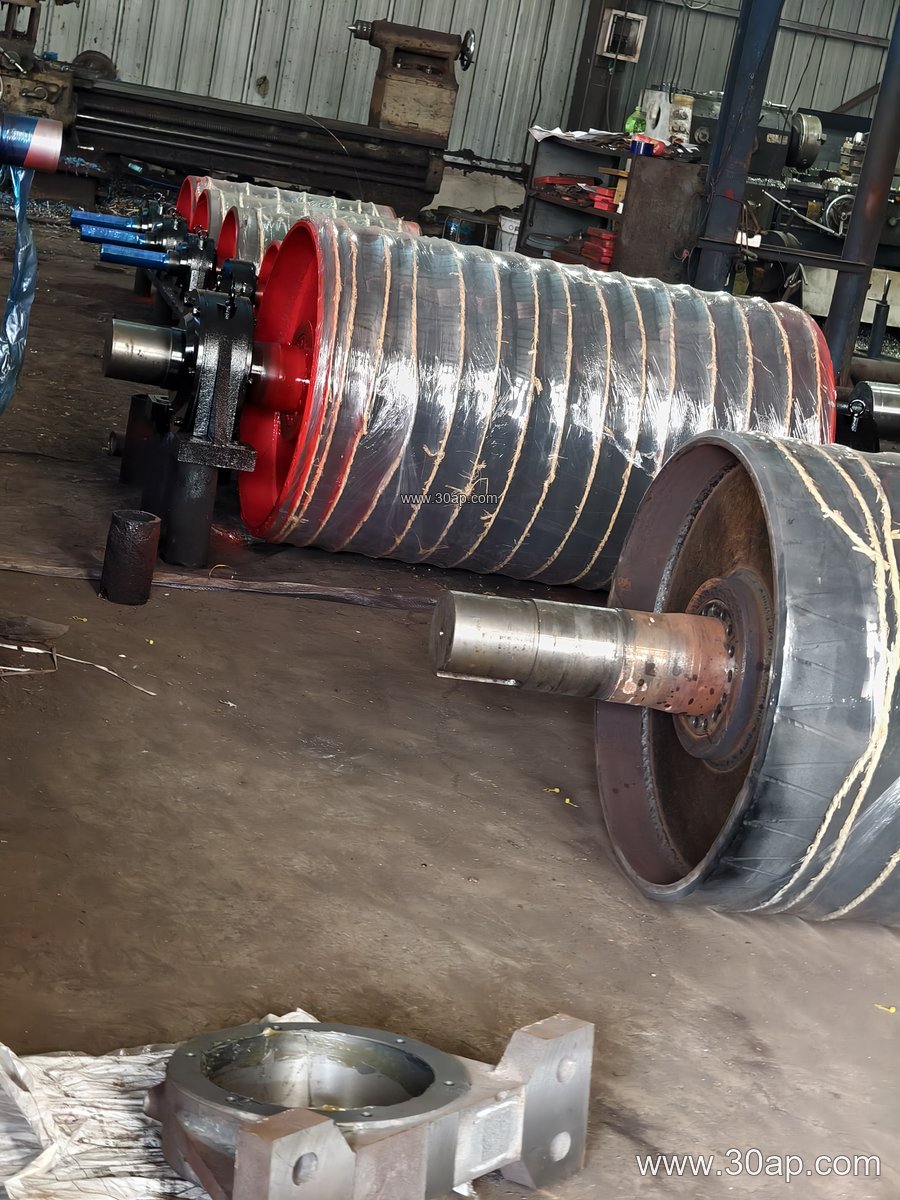
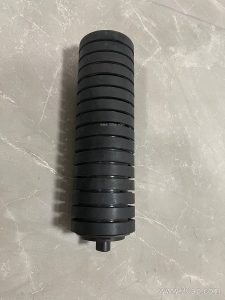
Drive, tail, and bend drums are not interchangeable. The drive pulley needs high friction and torque capacity, the tail pulley needs reliable belt tracking and cleaning, and the bend pulley needs a smaller profile to redirect the belt without over-stressing it. A snub or take-up drum may be added where wrap angle must increase. Where space is tight, an electric drum can replace an external drive, but it should be specified for the same duty and belt speed.
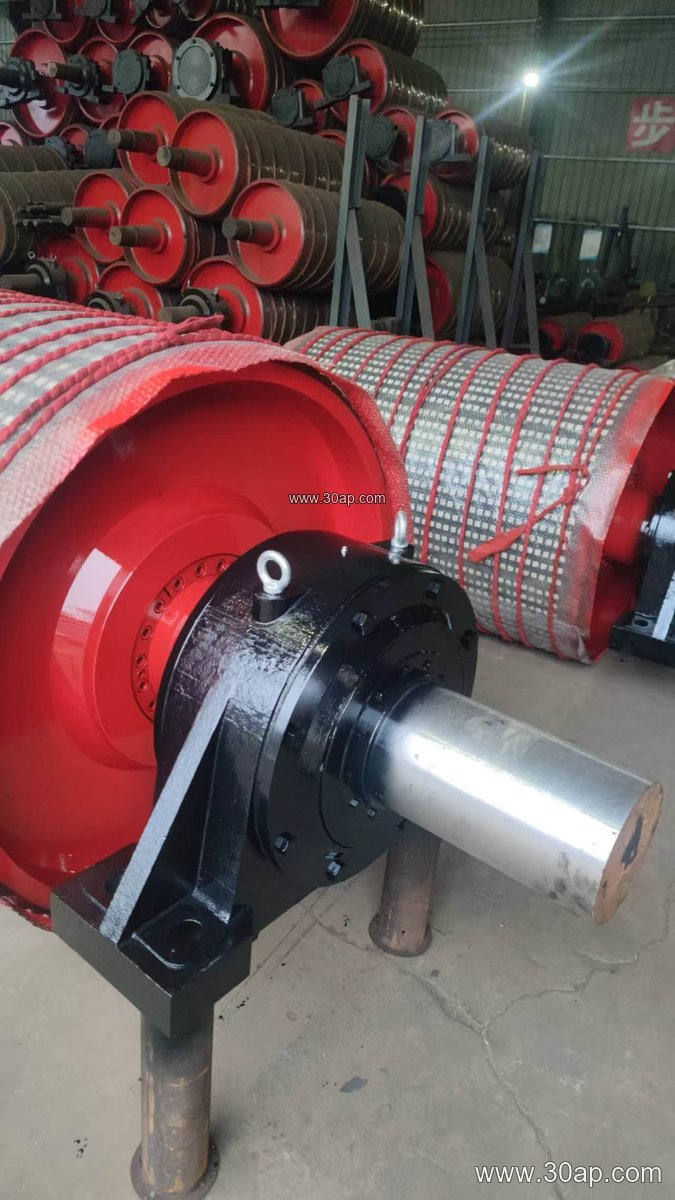
Where These Drums Are Used
Coal handling is the core application, but the same drum design appears in power plant coal yards, washing plants, and coke oven feed lines. In a coal preparation plant, a flame retardant conveyor belt and anti-static conveyor belt are common, and the drum lagging should resist coal dust and moisture. In a cement plant or aggregate line, abrasive dust shortens shell and lagging life, so abrasion resistant conveyor belt grades and thicker lagging are often paired with the drum. A quarry conveyor belt or crusher conveyor belt may carry sharp rock, making impact resistant conveyor belt and a robust head drum important. Port bulk terminals and steel plant stockyards use similar pulleys on long overland lines.
Matching the Drum to the Belt
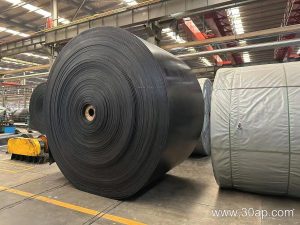
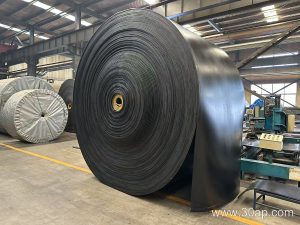
The pulley and belt work as a pair. A steel cord conveyor belt needs a larger diameter to limit bending stress, while an EP conveyor belt or NN conveyor belt can often run on a smaller drum. Multi-ply fabric core conveyor belt, chevron conveyor belt, and corrugated sidewall conveyor belt each have their own minimum drum requirements, so the belt supplier’s data should guide the final choice. Where a pipe conveyor belt or skirted conveyor belt is used, the drum face and edge clearance need special attention. Common combinations include B800 x Ø500, B1200 x Ø1000, and B1400 x Ø800, but these are reference examples, not fixed rules.
Buyer Checklist
- Confirm position: drive, tail, bend, take-up, or snub.
- State belt width, belt type, speed, and material carried.
- Provide torque or motor power so shaft size can be calculated.
- Choose lagging: plain, rubber, diamond, herringbone, or ceramic.
- Check bearing type, bracket dimensions, and lubrication method.
- Plan inspection of lagging wear, shell cracks, and bearing play.
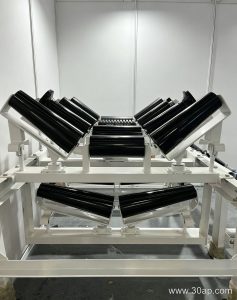
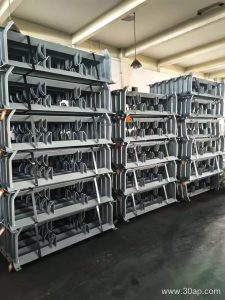
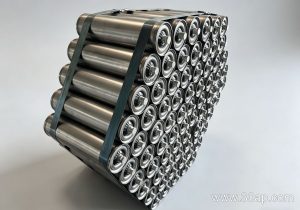
For more on matching drums with conveyor belt, idler roller, and conveyor bracket components, visit www.example.com/conveyor-pulley. A well specified coal mine belt conveyor pulley keeps the belt centered, protects the splice, and reduces downtime in the toughest coal handling conditions.