What the Discharge-End Pulley Does
The discharge-end pulley is the roller at the head of a belt conveyor where the belt turns over and the load leaves the belt. In many plants it is simply called the head pulley or the unloading pulley, and it usually serves as the drive pulley at the same time. Its job is to keep the conveyor belt tracking steadily while transferring torque from the drive to the belt surface, so the material can be thrown clear into a chute, screen, crusher or stockpile. Because it sits at the busiest point of the line, its construction and lagging have a direct effect on belt life and on how cleanly the material leaves the belt.
How It Is Built
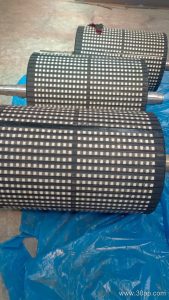
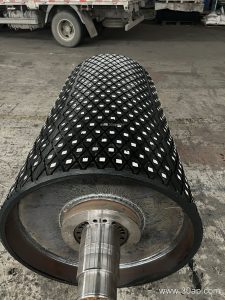
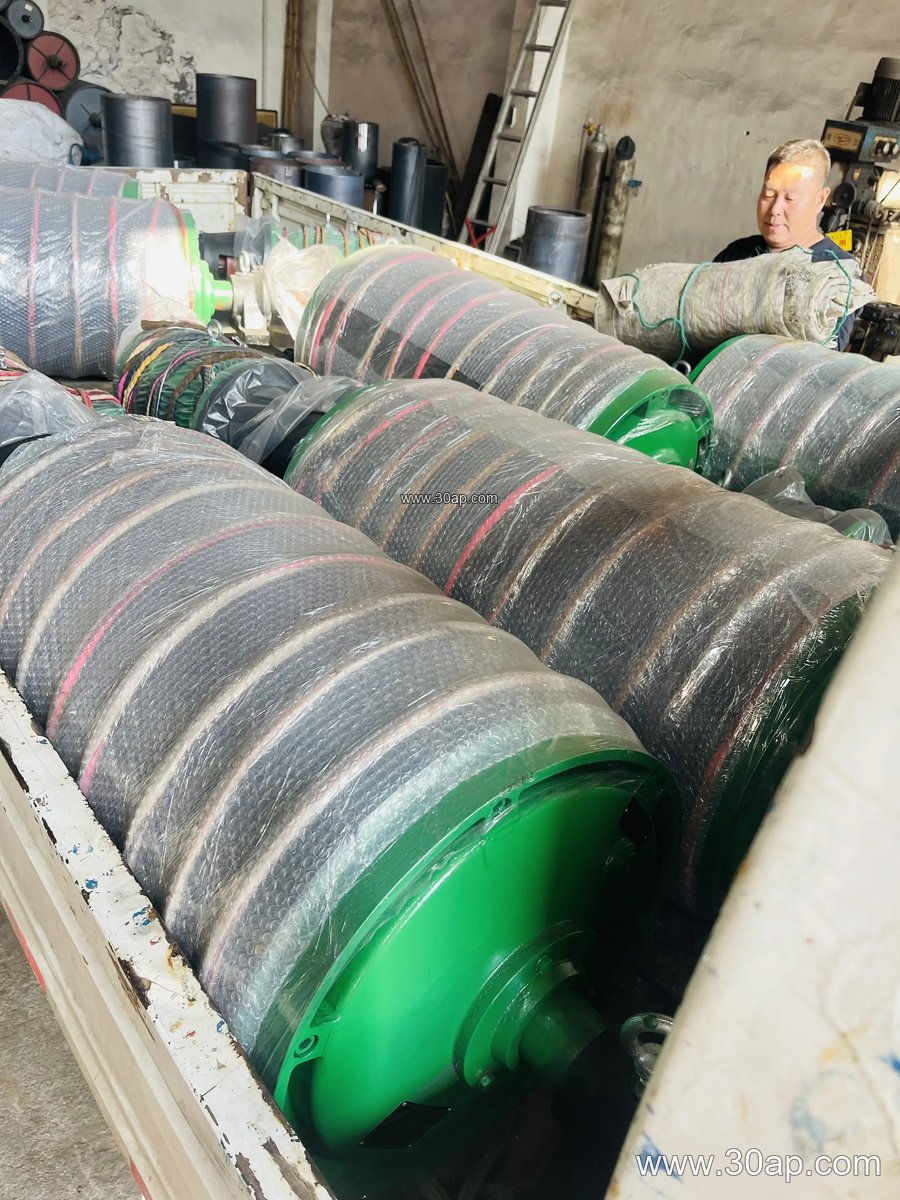
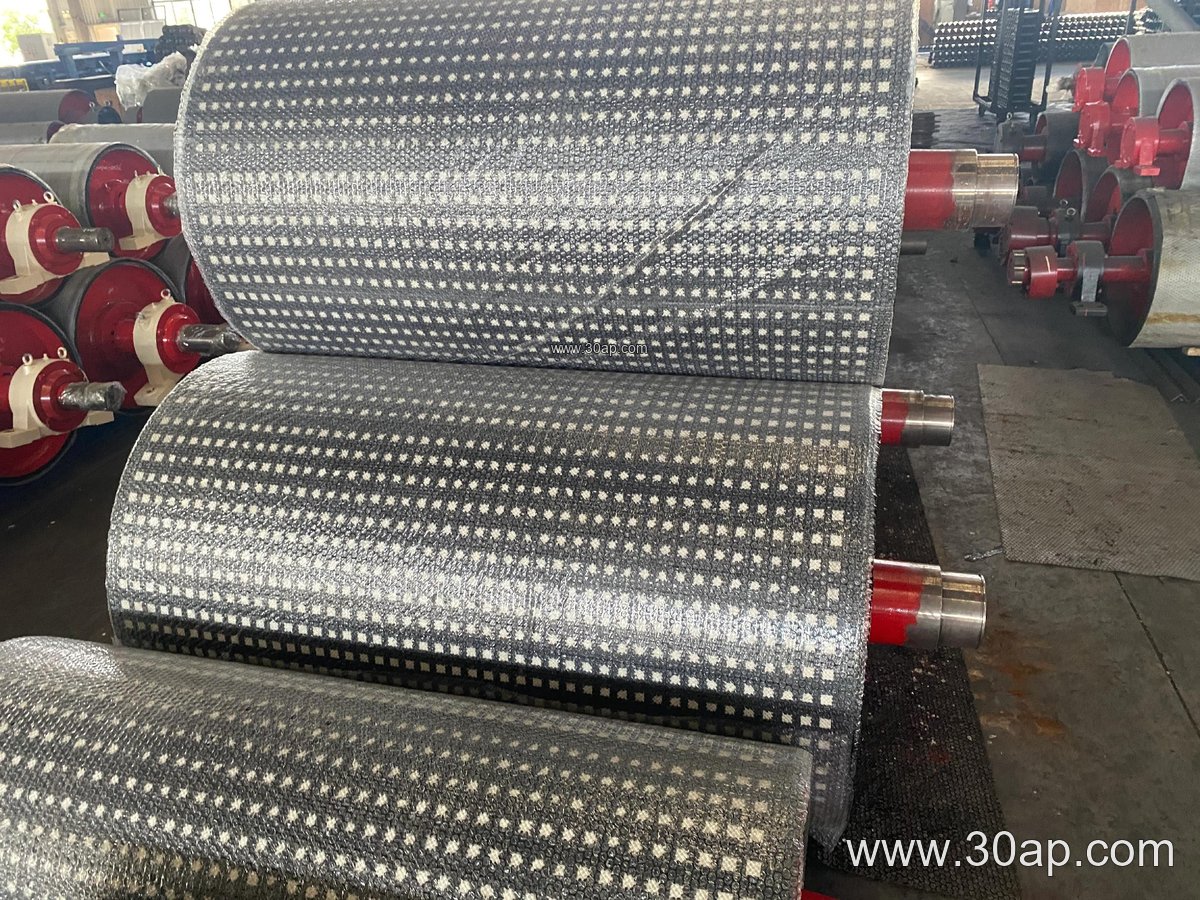
A typical discharge-end pulley is a welded steel drum with a shaft, end discs and a hub assembly. The shell is machined so the belt runs on a true surface, and the face is often covered with rubber lagging to improve grip and reduce slip. Common surface forms include plain, cast rubber, cold-bonded rubber, hot-vulcanized rubber, diamond groove, herringbone groove and ceramic lagging, with lagging thickness commonly 8, 10, 12, 15 or 20 mm. A crowned or slightly tapered face can help with belt centering, while a flat face is often preferred on long, high-tension conveyors.
The shaft diameter is determined by torque and load, not by belt width alone, so a B800 conveyor may use anything from a modest shaft to a heavy one depending on the drive and the duty. Bearings are carried in pillow blocks or a conveyor bracket at each end, and the whole assembly is usually bolted to a sturdy head frame.
Sizes and Common Combinations
The table below gives indicative relationships rather than fixed rules. Final dimensions follow the conveyor design.
| Belt width | Typical face width | Example diameter | Common shaft range |
|---|---|---|---|
| B500 | about 600 mm | Ø250 to Ø400 | Ø50 to Ø80 |
| B650 | about 750 mm | Ø315 to Ø500 | Ø60 to Ø100 |
| B800 | about 950 mm | Ø400 to Ø630 | Ø70 to Ø120 |
| B1000 | about 1150 mm | Ø500 to Ø800 | Ø80 to Ø140 |
| B1200 | about 1400 mm | Ø630 to Ø1000 | Ø100 to Ø160 |
| B1400 | about 1600 mm | Ø800 to Ø1250 | Ø120 to Ø180 |
| B1600 | about 1800 mm | Ø1000 to Ø1400 | Ø140 to Ø200 |
Combinations such as B800 × Ø500, B1200 × Ø1000 or B1400 × Ø800 are common in practice, but no single width locks the designer to one diameter. A larger drum reduces belt bending stress and can extend belt life, while a smaller one saves space and cost.
Where It Fits in the Plant
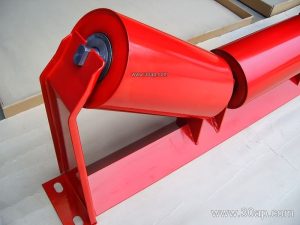
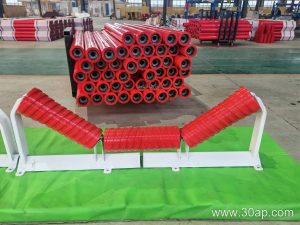
In a quarry or aggregate line, the discharge-end pulley sits at the end of the primary conveyor and throws rock into a screen or stockpile. In a coal handling system it may be part of an underground mining conveyor or a surface coal conveyor that feeds a bunker. Cement plants use it on clinker and limestone belts, power plants on coal belts, and ports on ship loading lines. In each case the pulley works together with the conveyor belt, the idler roller sets and the conveyor bracket structure, so alignment across the whole head frame matters as much as the pulley itself.
Buyer Checklist
- Confirm the actual belt width, belt type and belt tension, including whether the belt is an EP conveyor belt, an NN conveyor belt, a steel cord conveyor belt or a heat resistant conveyor belt.
- State the duty: continuous or intermittent, abrasive or oily material, and ambient temperature.
- Choose lagging to suit the material; abrasive ore may call for thick rubber or ceramic, while a food grade conveyor belt line needs a different surface.
- Check shaft diameter, bearing centers and keyway dimensions against the drive coupling.
- Ask for dynamic balance and inspection reports where high speed is involved.
When specifying, buyers at www.ruishengconveyor.com often compare the discharge-end pulley with the tail and bend pulleys on the same line, because belt tracking problems are easier to trace when the whole conveyor pulley set is reviewed together. Matching the head drum to the idler roller layout and the conveyor bracket height keeps the belt running centered and avoids edge wear. For more on belts and components, see www.ruishengconveyor.com/conveyor-pulley and www.ruishengconveyor.com/conveyor-belt.
Maintenance Notes
Inspect lagging wear at each shutdown, especially on belts carrying sharp rock or hot clinker. Check that the belt is not slipping and that the pulley face stays clean; material build-up under the belt is a frequent cause of tracking faults. Re-lag or replace the shell when the rubber is worn through, and keep the bearing lubrication schedule in step with the drive duty.