What a Trough Idler Bracket Set Does on a Conveyor
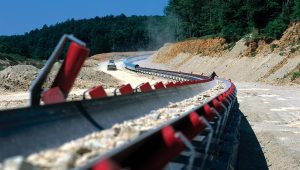
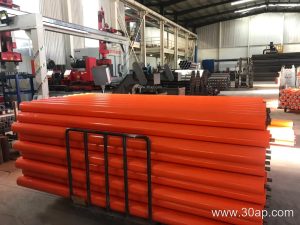
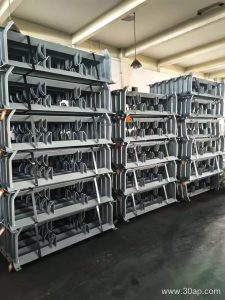
A trough idler bracket set is the structural frame that holds the carry-side idler rollers in a troughed profile, shaping the conveyor belt into a channel so bulk material stays centered during transport. On a quarry conveyor belt line, in a cement plant clinker circuit, or along a power plant coal handling route, these bracket sets carry the weight of the belt, the material load, and the dynamic forces of start-up and braking. They are mounted on the conveyor stringer or frame and position each idler roller at the required troughing angle, which is why engineers sometimes call the same assembly a conveyor idler support bracket set or a troughed roller mounting frame.
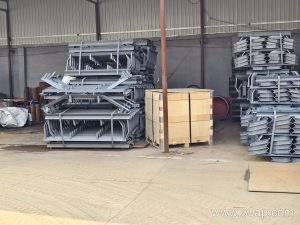
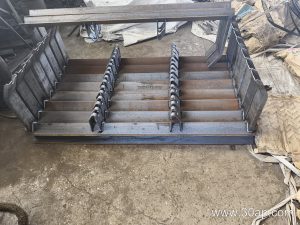
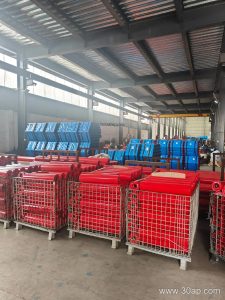
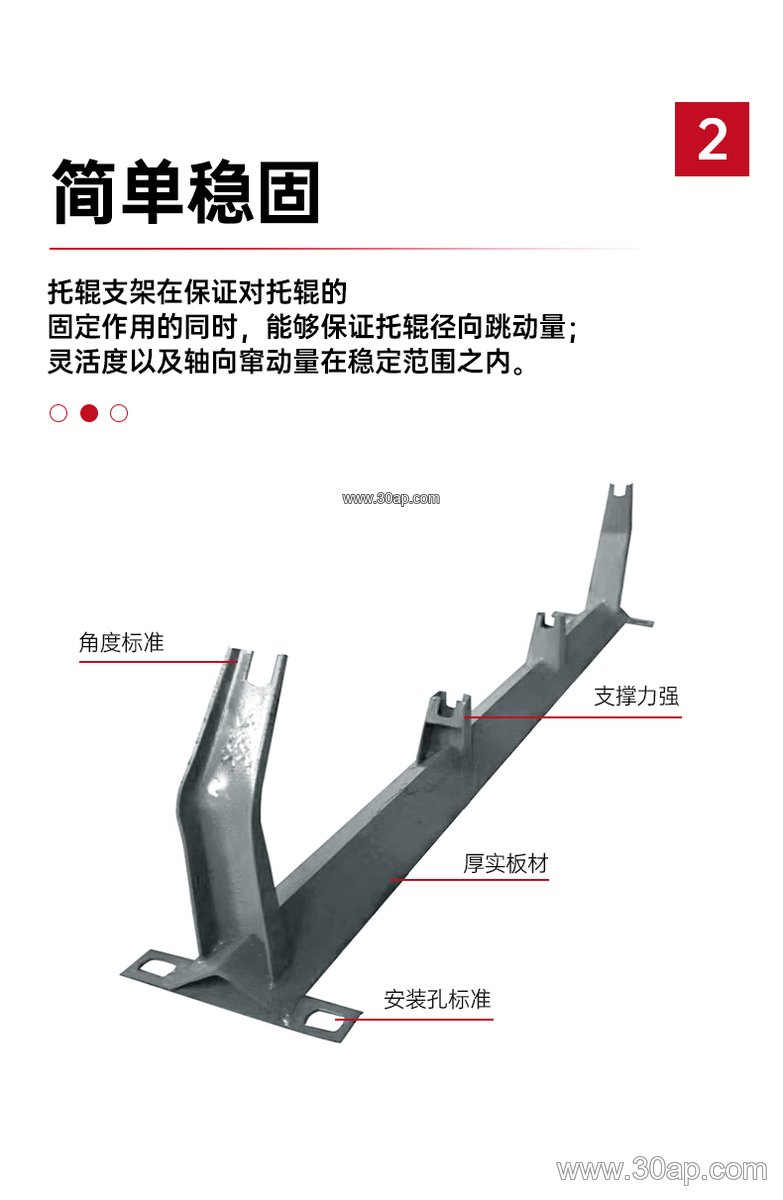
A complete set normally includes the angled brackets or arms, a cross beam or base channel, mounting plates, bolt holes, and sometimes adjustable pivot points. The brackets are produced from angle steel, channel steel, or folded steel plate, with welded or bolted connections depending on the design. Surface treatment is usually painted or galvanized to resist dust and moisture in outdoor installations.
How the Bracket Set Is Built and Installed
Fabrication starts with cutting and drilling the steel sections, followed by welding the side arms to the cross member at the specified trough angle. Installation is straightforward: the set is bolted to the conveyor frame, and the idler rollers are dropped into the bracket slots or cradles. Correct alignment matters, because a misaligned bracket can cause belt edge loading or uneven roller contact.
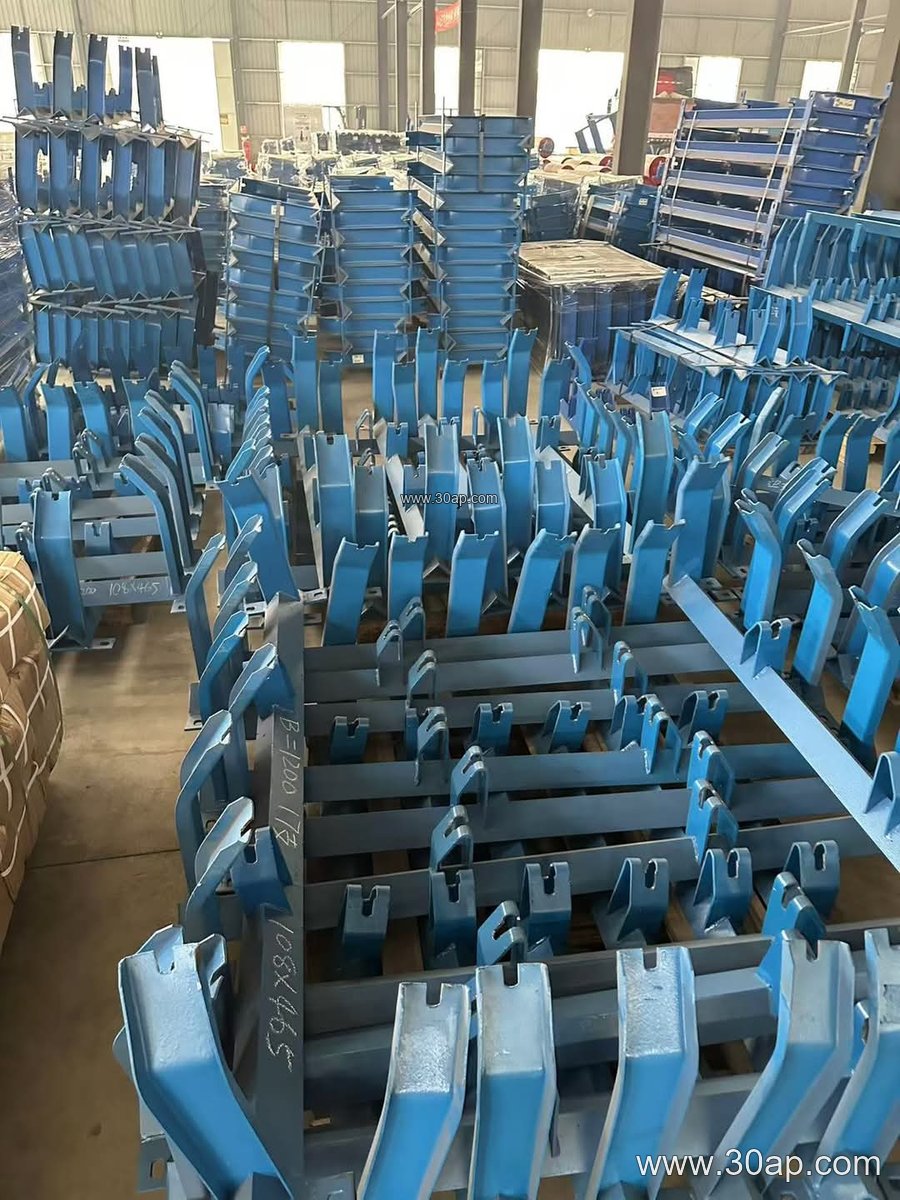
The main structural types include:
- Fixed troughing brackets with a welded, non-adjustable angle
- Adjustable brackets that allow the trough angle to be changed on site
- Transition brackets near the head and tail of the conveyor, where the belt gradually flattens
- Impact or buffer brackets placed under loading points, often paired with impact idler rollers
- Self-aligning brackets that work with training idlers to correct belt wander
Adjustable versions are useful when a plant handles several material types or wants to fine-tune belt capacity after commissioning. A forward-tilted bracket, commonly around 1.5 to 2 degrees, can help with belt tracking on long runs.
Matching Bracket Sets to Belt Width and Roller Diameter
Buyers should match the bracket set to the belt width, the trough angle, and the idler roller diameter used on the same conveyor. Typical belt widths range from B500 to B2200, with common trough angles of 20, 30, 35, and 45 degrees, and roller diameters such as Ø89, Ø108, Ø133, Ø159, and Ø194. These values are reference ranges, not fixed combinations, and the final selection depends on load, belt speed, and frame design.
The table below shows representative configurations for orientation only:
| Reference | Belt Width | Trough Angle | Roller Diameter |
|---|---|---|---|
| Light duty | B500 | 20 degrees | Ø89 |
| General duty | B800 | 35 degrees | Ø108 |
| Medium duty | B1000 | 35 degrees | Ø133 |
| Heavy duty | B1200 | 45 degrees | Ø133 |
| High capacity | B1400 | 45 degrees | Ø159 |
| Wide belt | B1800 | 35 degrees | Ø194 |
Mounting hole spacing and cross beam length change with belt width and trough angle, so these dimensions should be confirmed against the conveyor frame drawing rather than assumed from the belt width alone.
Where These Bracket Sets Are Used
In a limestone quarry or stone crushing line, trough idler bracket sets support the conveyor belt through the crushing and screening stages, where dust and impact loads are constant. In a coal washing plant or underground coal mining conveyor, flame retardant conveyor belt and PVG conveyor belt are common, and the bracket sets must cope with wet conditions and fines buildup.
Similar mounting frames appear on conveyor lines carrying iron ore, copper ore, or aggregate, and alongside conveyor pulley assemblies at transfer points. The bracket set does not replace the drive pulley, tail pulley, or bend pulley; it works with the idler rollers that support the belt between those pulleys.
What Buyers Should Check Before Ordering
Start with the belt width and the existing roller diameter, then confirm the trough angle required by the conveyor design. Ask whether fixed or adjustable brackets are preferred, and check the steel thickness, welding quality, and surface finish for the site environment. For dusty or corrosive locations, specify galvanized or heavy-coated brackets.
Consider the belt type in service as well. A heavy-duty mining conveyor belt or a steel cord conveyor belt running at high tension places different demands on the frame than a lightweight fabric core conveyor belt in a grain silo. Spare parts planning should include the bracket bolts and any pivot pins, since these wear points are often overlooked. Ordering bracket sets and idler rollers together helps ensure the mounting slots and roller shafts match on arrival.