What a Heavy-Duty Conveyor Belt Is
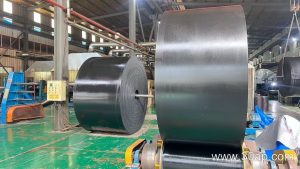
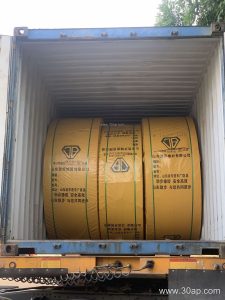
A heavy-duty conveyor belt is the load-carrying element of a bulk handling system built for abrasive, heavy or high-impact materials. It is not a single construction but a family of belt builds sharing the same job: moving large tonnages reliably with minimal downtime. In a quarry, cement plant, power station or iron ore terminal, this belt often works continuously under sharp rock, hot clinker or wet fines, so its carcass and covers are engineered with extra margin.
The most common designs include multi-ply fabric core belts (EP and NN), steel cord belts for very long runs, and specialty builds such as abrasion resistant, heat resistant, flame retardant, oil resistant, chevron and corrugated sidewall belts. Each is a distinct subtype, and the right choice depends on the conveyor layout, material and environment rather than on habit.
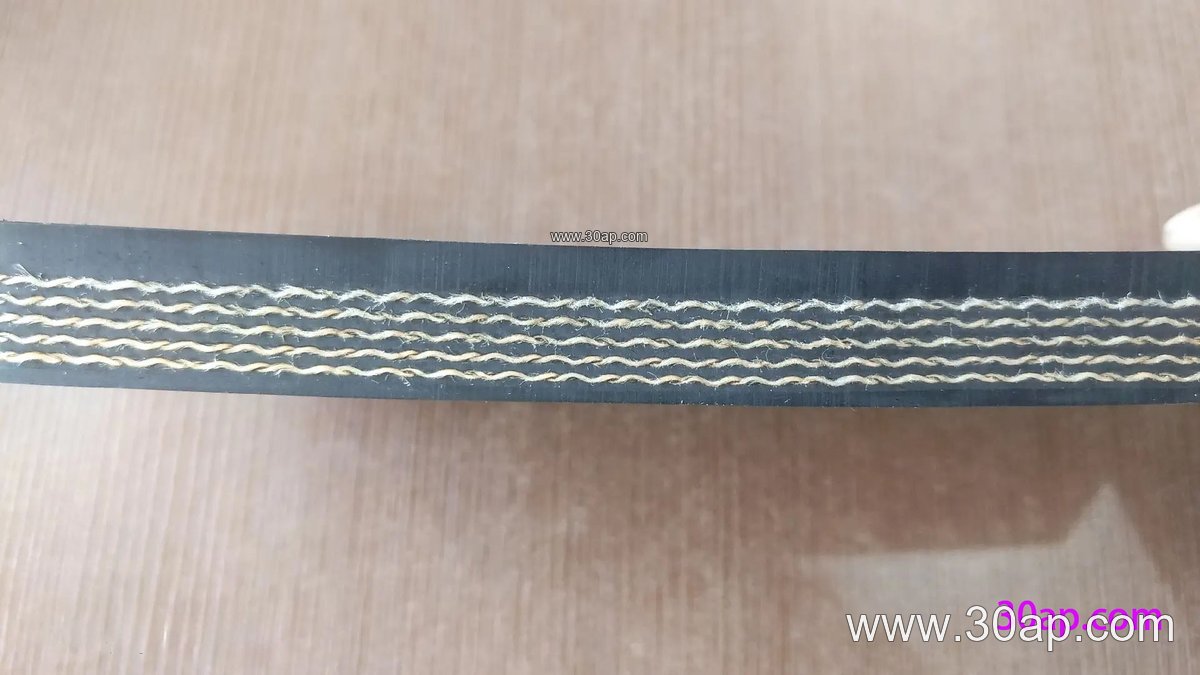
How the Belt Is Built
Three layers matter most: the carcass, the covers and the edges.
- Carcass: EP (polyester warp, nylon weft) or NN (nylon/nylon) fabric plies provide tensile strength and resistance to fatigue. Steel cord belts use parallel brass-plated wires for high tension over long distances.
- Covers: The top cover takes the impact and abrasion; the bottom cover runs over idler rollers and pulleys. Common constructions include 4+2 mm, 5+2 mm, 6+2 mm and 8+3 mm, with the first figure being the top cover.
- Edges: Cut edges or molded edges affect moisture ingress and tracking behavior on wide belts.
For underground coal work, PVG and PVC belts are typical because they combine flame resistance with solid-woven or fabric cores. For surface mining and aggregate, an abrasion resistant conveyor belt or a high abrasion resistant conveyor belt is common, while a heat resistant conveyor belt suits clinker and sinter.
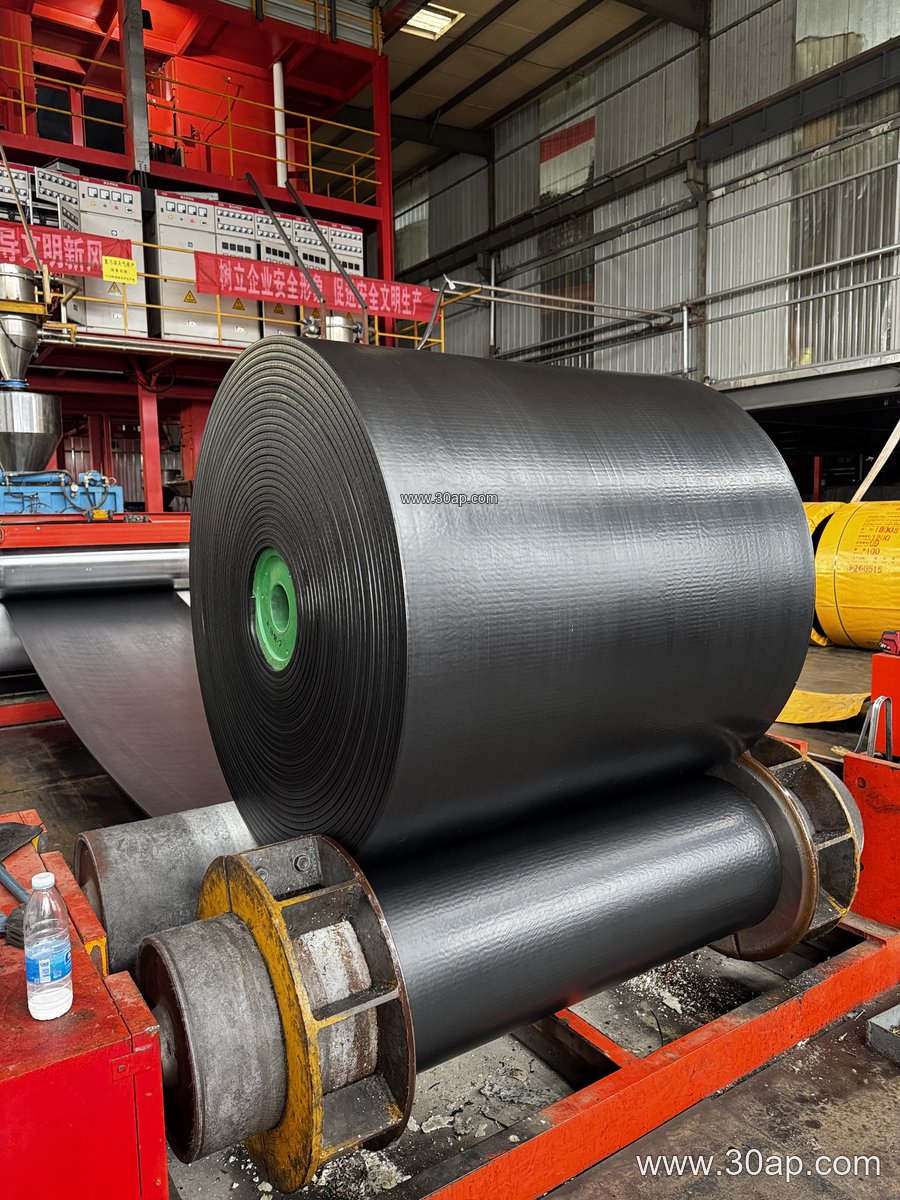
Typical Installations and Industries
These belts appear wherever bulk material moves in volume: primary crushing stations, overland conveyors, ship loading lines, stockyard reclaim systems and cement kiln feed circuits. In an underground coal mine, a flame retardant conveyor belt and anti-static properties are usually specified together. In a steel plant or power plant, heat and abrasion resistance often combine. In a sand making plant or stone crushing line, impact resistance at the loading point is the main concern.
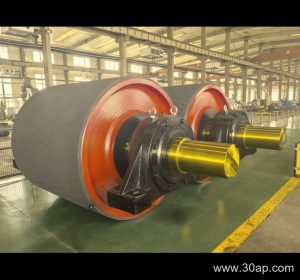
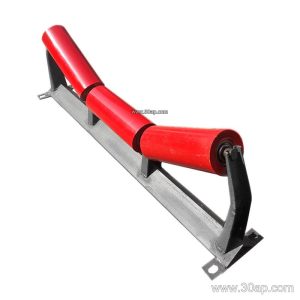
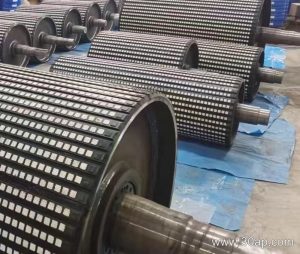
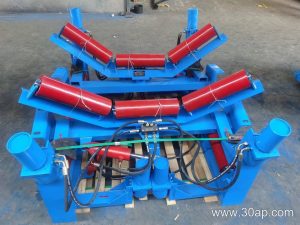
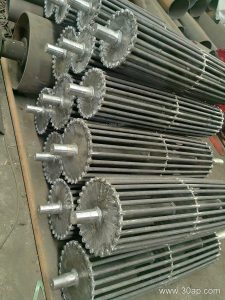
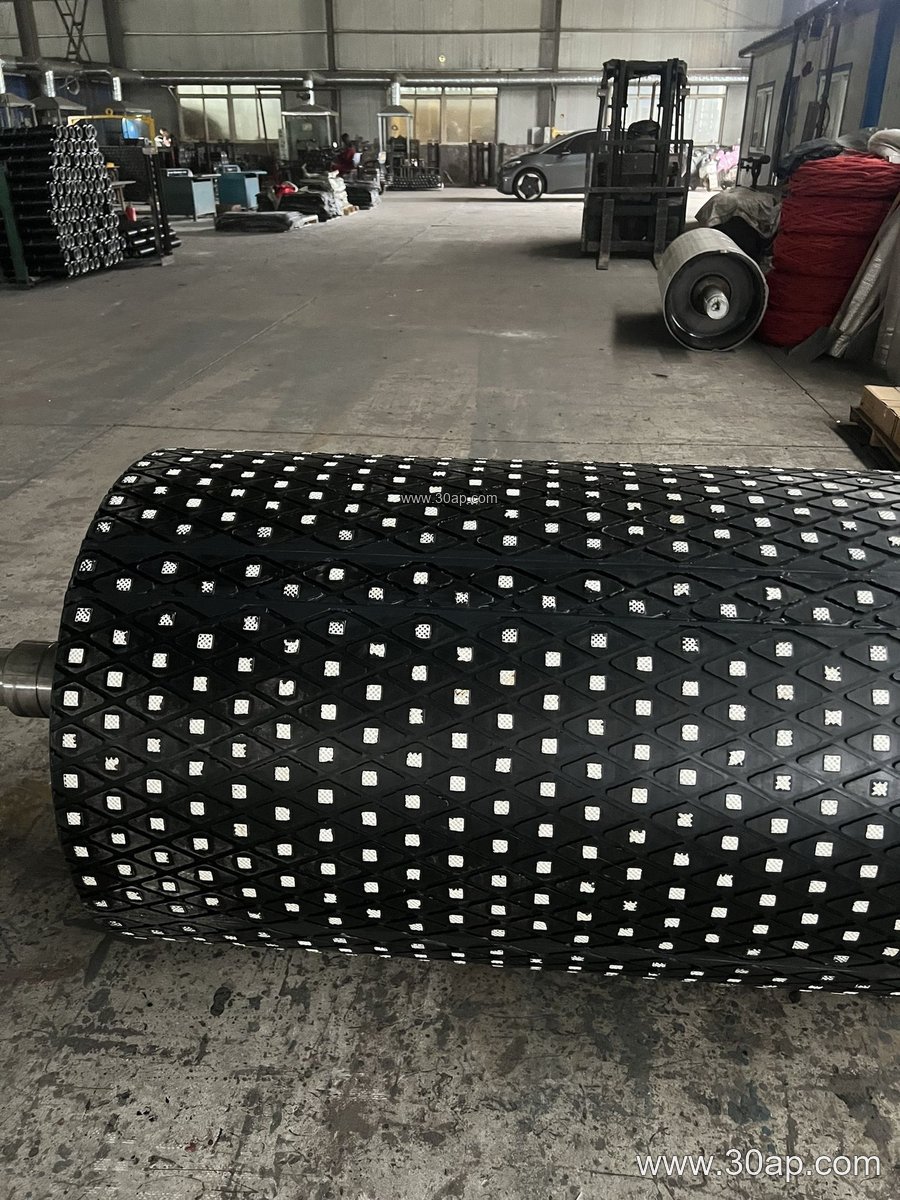
The belt does not work alone. A well-matched conveyor pulley, properly aligned idler roller sets and rigid conveyor brackets keep the belt tracking and extend cover life. Drive, tail and bend pulleys each perform different duties and are not interchangeable, so belt tension and pulley specification should be reviewed together.
Common Specification Reference
Strength grades and widths are selected by calculation, not by rule of thumb. The figures below are reference points that appear in catalogues and tender documents; actual supply depends on the manufacturer and the conveyor design.
| Property | Typical reference values |
|---|---|
| Fabric core grades | EP200, EP315, EP400, EP500, EP630, EP800, EP1000, EP1250 |
| Nylon grades | NN100, NN200, NN300, NN400 |
| Steel cord grades | ST1000, ST1250, ST1600, ST2000, ST2500 |
| Belt width | B500, B650, B800, B1000, B1200, B1400, B1600, B1800, B2000 |
| Cover thickness | 3+1.5, 4+2, 5+2, 6+2, 8+3 mm |
| Ply count | Usually 2 to 6 plies |
A 1200mm wide belt and a 1800mm wide belt may both be described as heavy duty, but the required strength grade, cover thickness and pulley sizes differ with tonnage, incline and lump size. One belt width does not dictate one pulley diameter; shaft and pulley dimensions are fixed by the conveyor designer after tension and torque calculations.
Buyer Checklist
- Confirm the material: lump size, moisture, temperature, oil content and abrasiveness.
- Check the environment: underground, outdoor, cold climate or hot process area.
- Match the carcass grade to the calculated working tension, with a sensible safety margin.
- Select cover thickness and compound for wear life, not only for initial price.
- Review splice type, edge construction and belt thickness against the pulley and idler layout.
- Ask for the manufacturer’s data sheet for the exact grade, since values vary between suppliers.
For very long or steep routes, a pipe conveyor belt or a corrugated sidewall design may be compared with a conventional trough belt, but the comparison should be made on layout and material behavior. Whatever the final choice, belt, pulley, idler roller and bracket specifications form one system, and treating them as a set is the surest way to keep a heavy-duty line running.