What a Guide Roller Does on a Conveyor
A guide roller is a small but critical component that keeps a conveyor belt centered and running smoothly. Unlike a drive pulley or tail pulley, which transmit power and tension, the guide roller—often called a belt guide roller or training roller—applies lateral force to correct belt misalignment. In quarry, cement, and power plant applications, a properly selected guide roller reduces edge damage and spillage, extending the life of the entire conveyor belt system.
Construction and Key Components
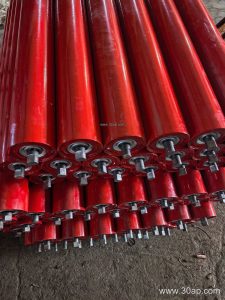
Most guide rollers share a common build: a steel tube shell, precision bearings, and a sealing arrangement to keep out dust and moisture. The roller surface may be plain steel, nylon, rubber-covered, or ceramic-lined, depending on the environment. Bearing sizes such as 6204, 6205, or 6305 are common, but the choice depends on load and speed, not on a fixed rule. The shaft is typically machined with flattened ends to fit a conveyor bracket, and the overall roller length is matched to the belt width and the frame design.
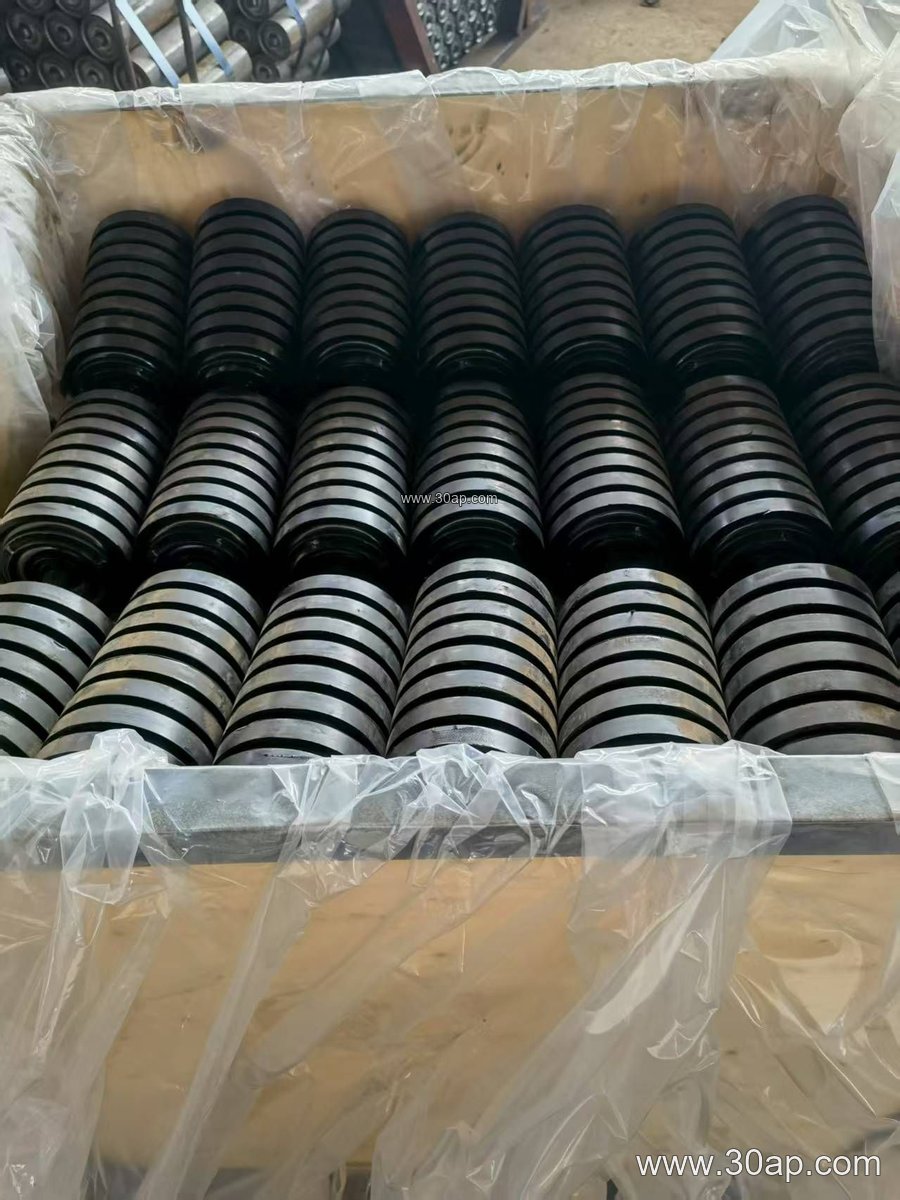
Common Guide Roller Types
- Friction self-aligning roller: Uses friction from the belt to pivot and steer the belt back to center.
- Tapered self-aligning roller: Conical ends create a differential speed that encourages centering.
- Spiral roller: A helical pattern on the surface helps shed material and guide the belt.
- Comb roller: Rubber or steel discs arranged in a comb pattern for light-duty guidance.
These types are distinct from standard carrying idlers or return rollers, which support the belt but do not actively correct tracking. For comparison, a V-return roller may help with belt training in some layouts, but it is not a substitute for a dedicated guide roller.
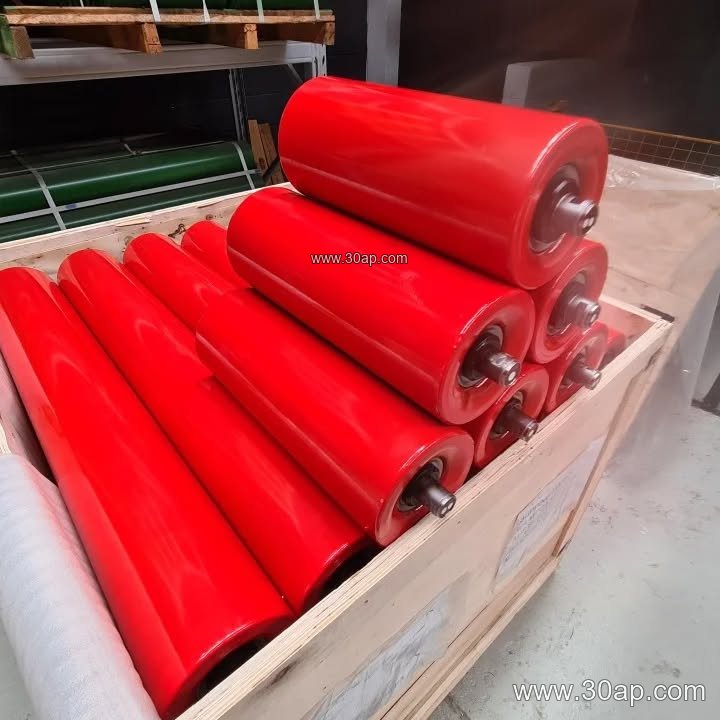
Where Guide Rollers Are Used
You will find guide rollers in aggregates plants, coal handling systems, and cement mills. They are especially useful on long overland conveyors, at transfer points, and before the tail pulley where belt misalignment is most likely. In a typical quarry conveyor, a guide roller might be installed just ahead of the head pulley to ensure the belt enters the pulley squarely. Similarly, in a power plant coal yard, guide rollers help maintain belt position on inclined sections. They also work alongside conveyor brackets and support frames to keep the belt path stable.
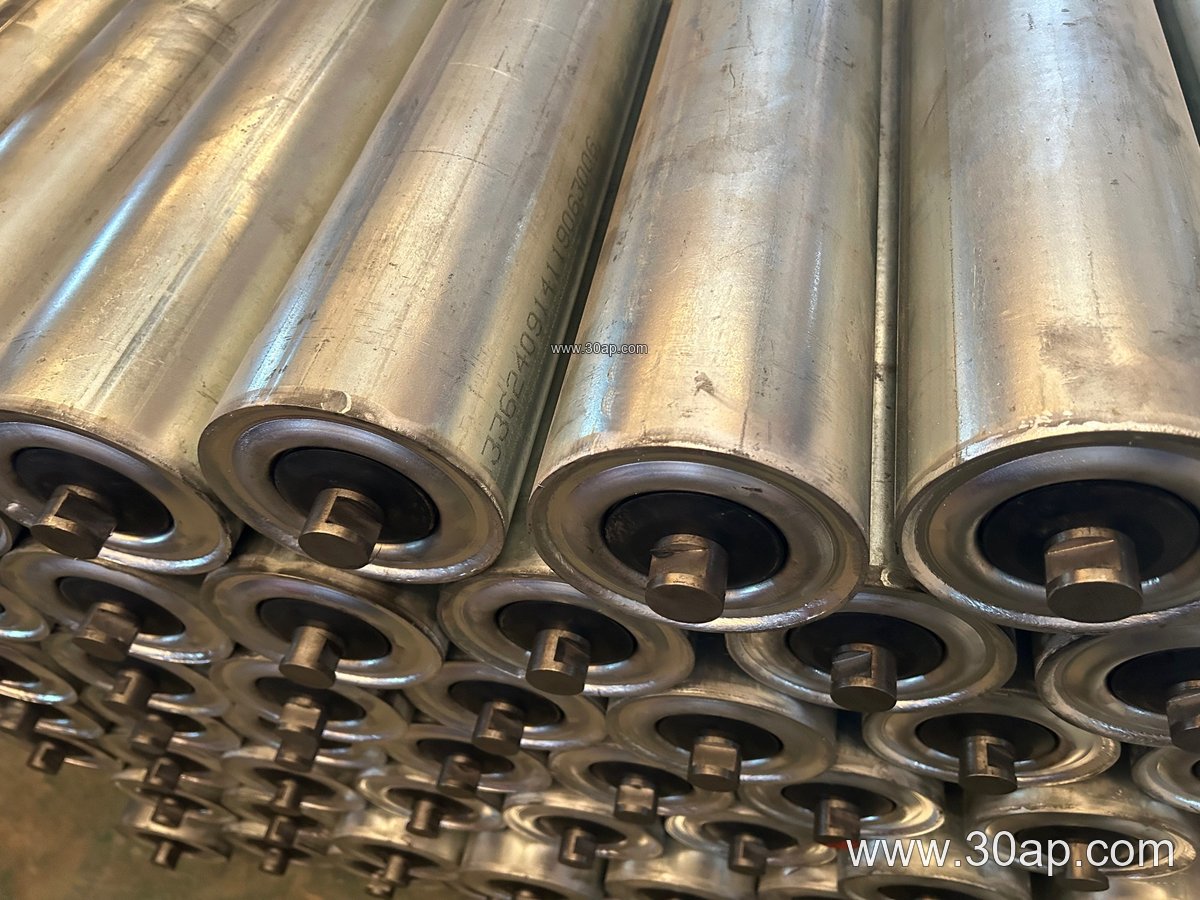
Sizing and Selection Notes
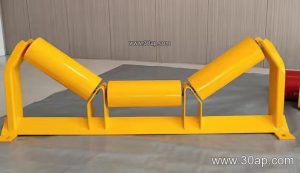
Guide roller dimensions are not one-size-fits-all. Roller diameter options often include Ø63, Ø76, Ø89, Ø102, Ø108, Ø127, Ø133, Ø159, and larger. Belt widths from B400 to B2400 are common, but the roller length must be matched to the belt width, trough angle, and frame type. For a three-roll troughing set, typical roller lengths might be around 200 mm for B500, 315 mm for B800, and 465 mm for B1200—but these are examples, not fixed rules. The shaft diameter and bearing size should be selected based on the actual load and speed, not simply derived from belt width.
Reference Data for Common Configurations
| Parameter | Common Options |
|---|---|
| Roller diameter | Ø63, Ø76, Ø89, Ø102, Ø108, Ø127, Ø133, Ø159 |
| Belt width | B400, B500, B650, B800, B1000, B1200, B1400, B1600, B1800, B2000 |
| Trough angle | 20°, 30°, 35°, 45° |
| Bearing | 6204, 6205, 6305, 6306, 6308 |
| Roller surface | Steel, nylon, rubber ring, ceramic |
When selecting a guide roller, consider the belt speed, material lump size, and ambient conditions. In dusty or wet environments, effective sealing is more important than a specific bearing number. For heavy-duty mining conveyor belts, a robust guide roller with reinforced seals will last longer. Always consult the conveyor design to confirm the correct mounting position and clearance.
Maintenance and Buyer Tips
Regular inspection of guide rollers helps prevent belt tracking problems. Check for worn surfaces, seized bearings, or damaged seals. A guide roller that no longer rotates freely should be replaced promptly to avoid belt edge wear. Buyers should request dimensional drawings and material specifications, and verify that the roller fits the existing conveyor bracket. Remember that guide rollers are not interchangeable with drive pulleys or tail pulleys—each has a distinct role. For reliable belt guidance in industries from sand and gravel to iron ore, choose a guide roller designed for your specific belt width and load conditions.