What the Feed-End Pulley Does
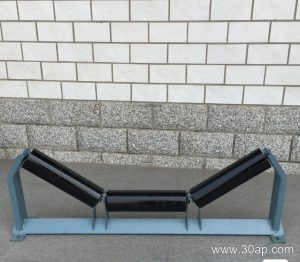
On a belt conveyor, the feed-end pulley sits at the loading zone and supports the belt as material first lands on it. In most layouts this is the tail pulley position, so the component is often called the tail pulley or the feed-end bend pulley. It keeps the belt tracking straight at the point of impact, helps absorb loading shocks, and works with the conveyor belt and idler rollers to form a stable trough. Unlike a drive pulley, which transmits power, or a bend pulley that changes belt direction elsewhere, the feed-end pulley is defined by its position at the material entry point.
Construction and Surface Options
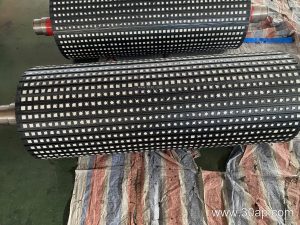
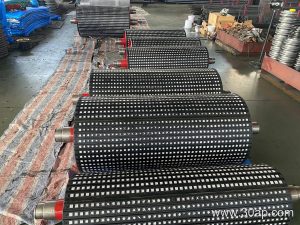
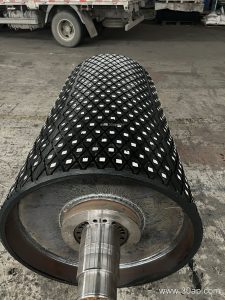
A typical feed-end pulley is built around a steel drum with welded end discs, a through shaft, and bearing housings mounted on the conveyor bracket. The shell may be plain, or it may carry rubber lagging to protect the belt and improve grip during start-up. Common surface forms include plain, cast rubber, cold-bonded rubber, hot-vulcanized rubber, diamond groove, herringbone groove, and ceramic lagging. Lagging thickness is often 8, 10, 12, 15, or 20 mm, selected according to belt speed, load, and material abrasiveness. For dusty or wet conditions, grooved lagging can help shed fines and reduce slip.
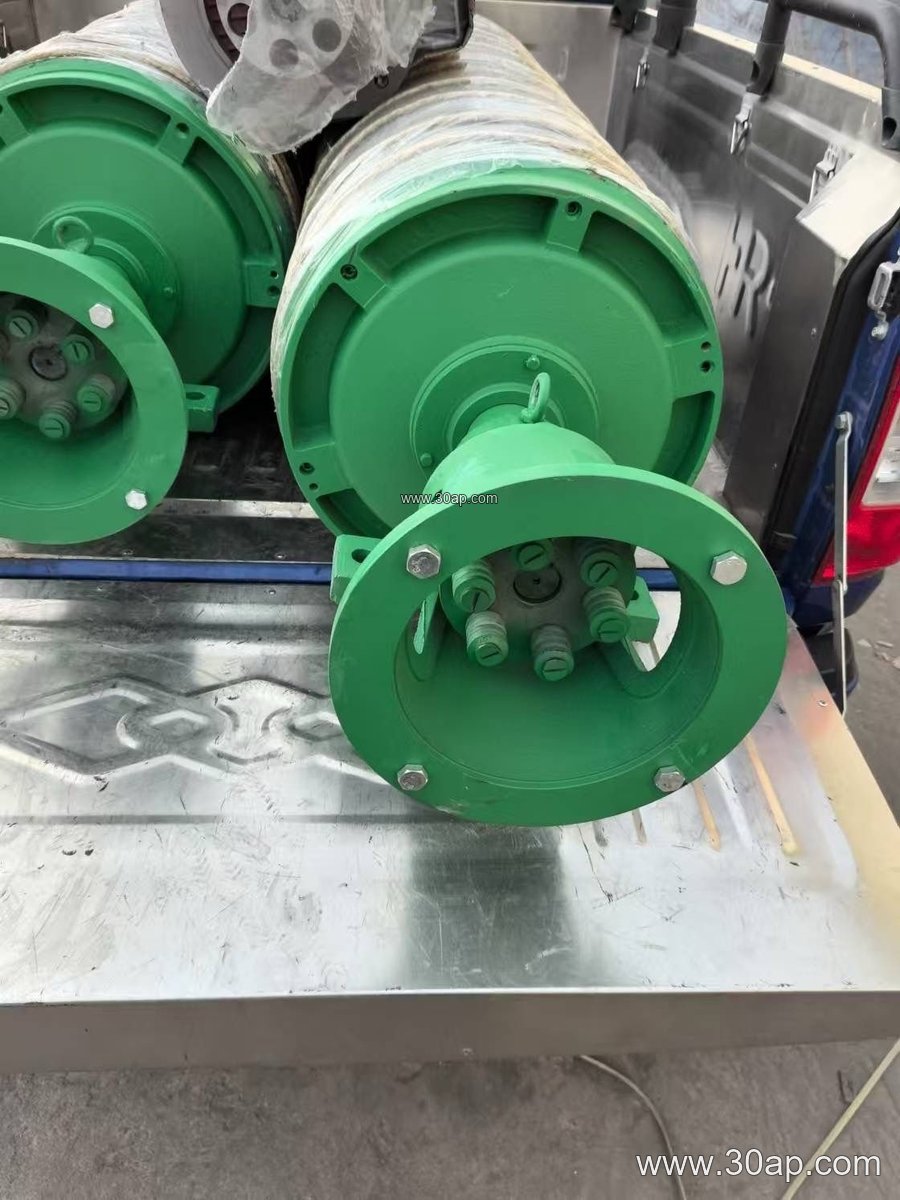
Matching the Pulley to Belt Width
The pulley face width usually runs slightly wider than the belt to allow for misalignment and edge wear. Typical references include B400 with about 500 mm face, B650 with about 750 mm, B800 with about 950 mm, B1000 with about 1150 mm, B1200 with about 1400 mm, and B1400 with about 1600 mm. Diameter is chosen from shaft load and belt tension, not from belt width alone; common sizes range from Ø200 to Ø1600, and combinations such as B800 × Ø500 or B1200 × Ø1000 appear in practice. Shaft diameter is determined by torque and bearing life, with common values from Ø50 to Ø200 mm.
Reference dimensions for feed-end pulley selection
| Belt width | Typical face width | Common diameter range |
|---|---|---|
| B400 | ~500 mm | Ø200–Ø400 |
| B650 | ~750 mm | Ø250–Ø500 |
| B800 | ~950 mm | Ø315–Ø630 |
| B1000 | ~1150 mm | Ø400–Ø800 |
| B1200 | ~1400 mm | Ø500–Ø1000 |
| B1400 | ~1600 mm | Ø630–Ø1250 |
These values are reference data, not fixed pairings. The final choice should follow the conveyor design and the actual belt tensions.
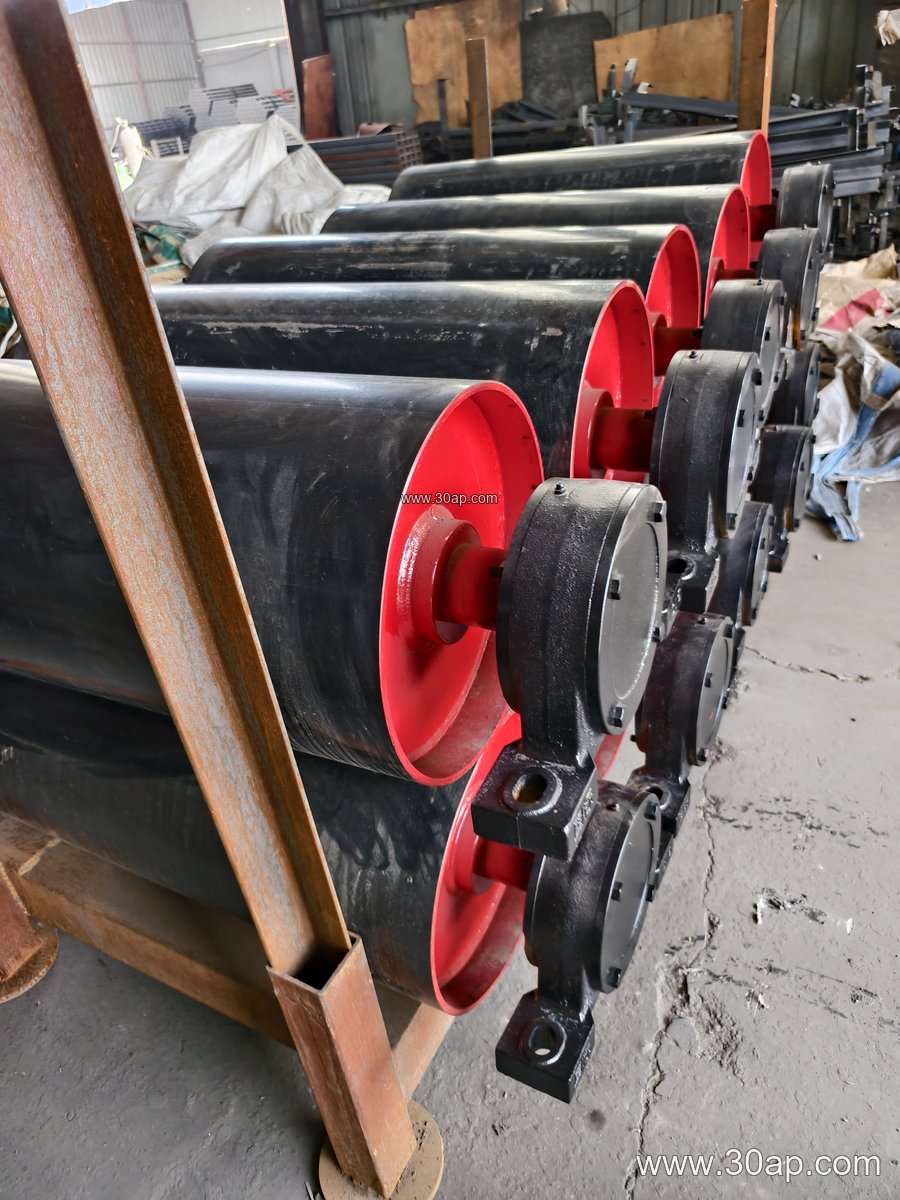
Where It Fits in the Plant
Feed-end pulleys are used in quarry and aggregate lines, coal handling at power plants, cement clinker transport, iron ore and copper ore circuits, and port bulk terminals. In a stone crushing plant, the pulley at the crusher feed point may see sharp rock and heavy impact, so abrasion-resistant lagging and a robust shaft are useful. In a coal mining conveyor, flame-retardant and anti-static properties of the belt are important, and the feed-end pulley should be specified to match the belt and the environment. Underground coal mining conveyors and surface coal mining conveyors often use different belt constructions, such as PVG conveyor belt or steel cord conveyor belt, and the pulley face and lagging should suit the belt type.
Buyer Checklist
- Confirm the mounting position: tail, feed-end bend, or tension location, because each has different load direction.
- Specify belt width, belt type, and belt tension so the pulley diameter and shaft can be sized correctly.
- Choose lagging according to material: plain for clean duty, rubber or ceramic for abrasive rock, grooved for wet or dusty service.
- Check bearing type, housing, and conveyor bracket dimensions against the existing frame.
- Ask for dynamic balance and runout data where high belt speed is involved.
- Plan maintenance access, since the feed-end area often accumulates spillage.
For plants handling abrasive bulk material, pairing the feed-end pulley with an abrasion resistant conveyor belt and well-aligned idler rollers reduces wear on both belt and pulley. In cement and power plant applications, heat resistant conveyor belt or flame retardant conveyor belt may be needed nearby, and the pulley lagging should be compatible with the belt cover. A feed-end pulley is a small part of the conveyor but a critical one at the loading point, so matching it to the belt, the material, and the structure is worth the attention.