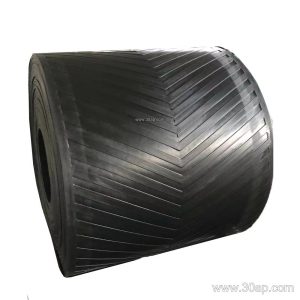
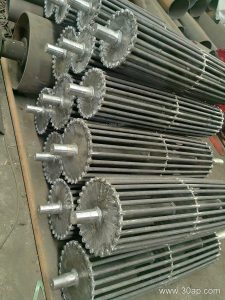
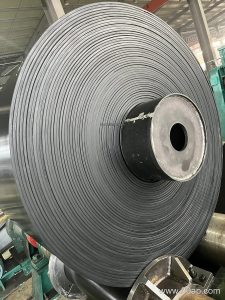
What a Drive Lagged Pulley Does
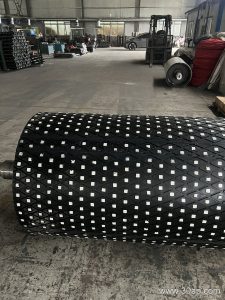
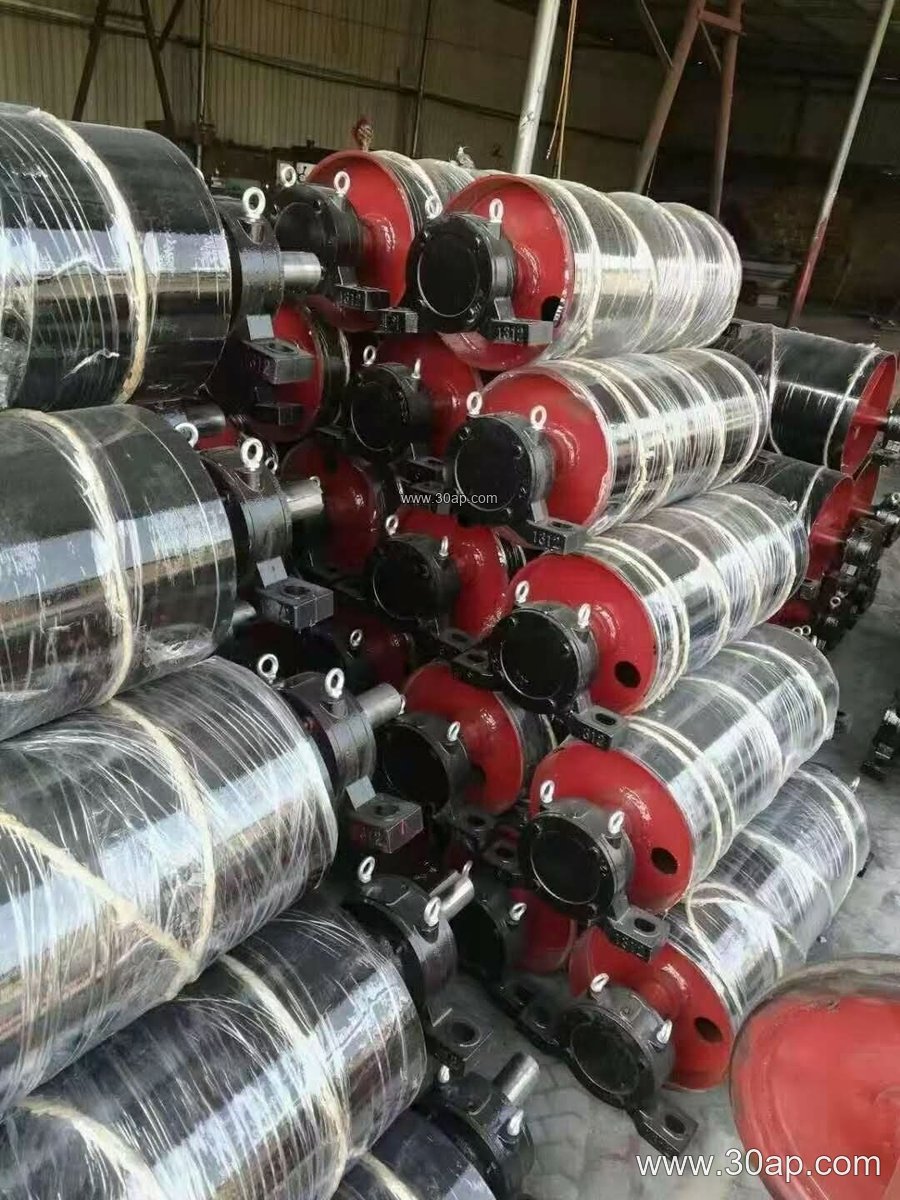
A drive lagged pulley is the powered drum at the head of a belt conveyor, and its lagging is the sacrificial rubber or ceramic layer bonded to the shell. The lagging raises friction between the drum and the conveyor belt, which lets the drive transmit torque without excessive slip. In a quarry, a coal handling plant, or a cement clinker line, this drum often decides whether the belt starts smoothly under load or stalls. The accurate equivalent name is lagged head pulley or lagged drive drum; these terms describe the same component, and they should not be confused with a tail pulley or a bend pulley, which serve different duties.
Construction and Surface Options
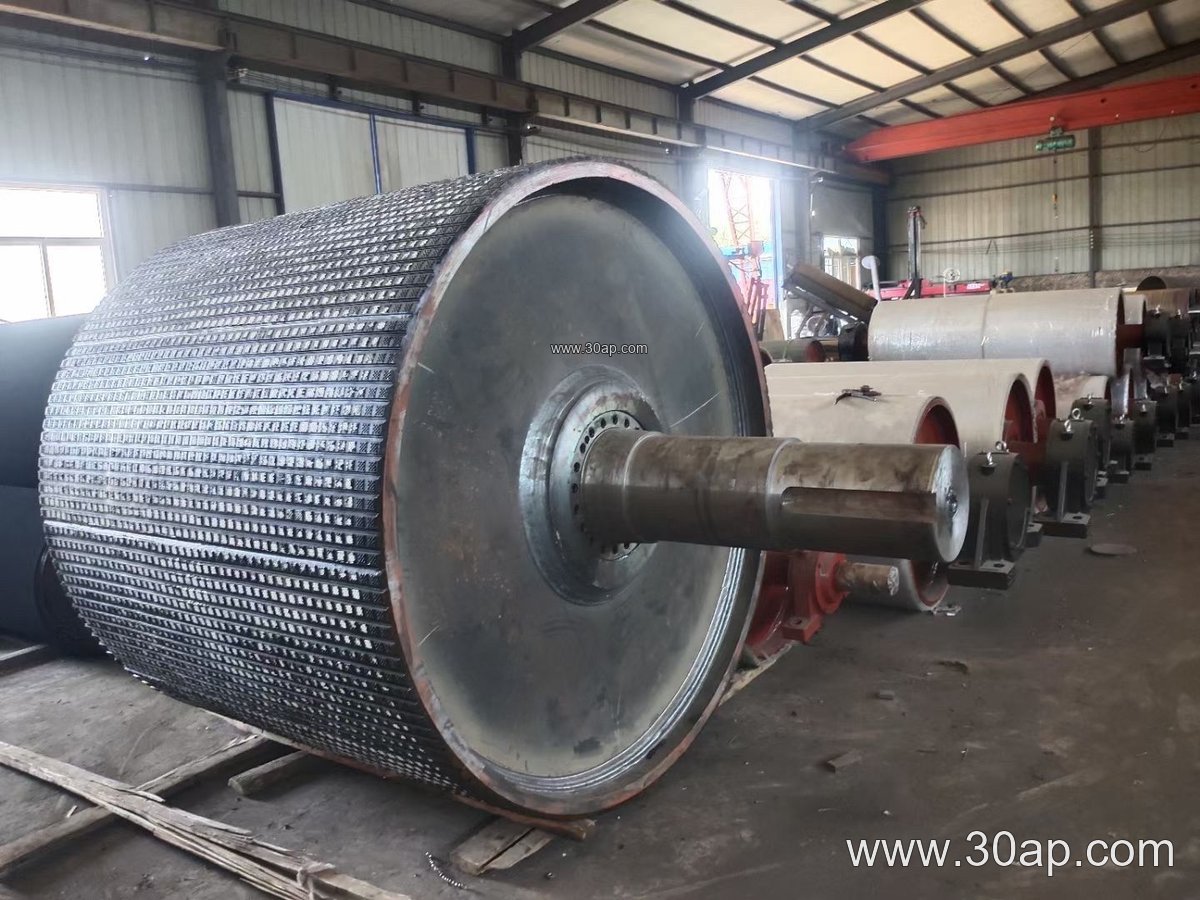
The core is usually a welded steel shell with machined end discs and a shaft sized by torque and radial load. Lagging is applied in several ways, and the choice affects grip, wear life, and belt cleanliness.
- Plain or flat rubber lagging for general bulk duty
- Diamond groove lagging to shed water and fines
- Herringbone lagging for reversing or wet conditions
- Ceramic lagging for high-traction, abrasive service
- Hot vulcanized or cold bonded rubber, typically 8 to 20 mm thick
Groove patterns matter in a washdown area such as a sand and gravel plant, while ceramic tiles suit an iron ore or copper ore transfer point where abrasive fines polish plain rubber quickly. A smooth face is easier to clean and is often chosen where sticky material builds up.
Sizing and Common Combinations
Diameter and face width follow belt width, belt tension, and the wrap angle around the drum. Face width is normally a little wider than the belt, for example B800 with roughly 950 mm face, or B1200 with about 1400 mm. Diameter is not fixed by belt width alone; a B800 conveyor may run Ø500 or Ø630 depending on tension and shaft design. Likewise, shaft diameter is determined by torque and bearing load, not by belt width, so a Ø100 shaft on one B1000 drive does not mean every B1000 drum uses that size.
| Belt width | Typical face width | Example diameter |
|---|---|---|
| B650 | about 750 mm | Ø400 to Ø500 |
| B800 | about 950 mm | Ø500 to Ø630 |
| B1000 | about 1150 mm | Ø630 to Ø800 |
| B1200 | about 1400 mm | Ø800 to Ø1000 |
| B1400 | about 1600 mm | Ø800 to Ø1250 |
These values are reference ranges for discussion, not universal specifications. Final geometry should be confirmed against the conveyor design.
Where It Fits in the Conveyor
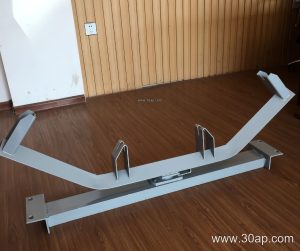
The lagged drive drum sits at the discharge end, supported by a conveyor bracket or frame and paired with a conveyor pulley at the tail and idler roller sets along the carry side. A rubber conveyor belt or an EP conveyor belt wraps the drum, and the available wrap angle can be increased with a snub pulley. In a coal mining conveyor, flame retardant conveyor belt and anti-static conveyor belt grades are common, and the lagging should be selected to match that belt surface. A steel cord conveyor belt on a long overland run needs a larger drum and a well bonded lagging to spread pressure and avoid carcass fatigue.
Buyer Checklist
Before ordering, confirm belt width, belt type, drum diameter, shaft diameter, bearing centers, and the required lagging pattern and thickness. Check whether the duty involves abrasion, oil, heat, or wet fines, since those conditions point to different rubber compounds. Ask how the lagging is bonded, because a poorly bonded layer can peel at the edges under high torque. Also verify that the pulley will align with the conveyor bracket and that the drive coupling matches the shaft. For a mining conveyor belt or an underground coal mining conveyor belt installation, confirm that the lagging compound and belt grade are compatible with the local fire and static requirements without assuming a single standard applies everywhere.
Maintenance is mostly inspection. Look for worn grooves, glazed rubber, loose ceramic tiles, and material buildup that changes the effective diameter. Re-lagging a drive lagged pulley is often cheaper than replacing the whole drum, and keeping a spare lagging sheet on site shortens downtime in a busy aggregate or power plant circuit.