What a Custom Conveyor Bracket Does on a Belt Line
A custom conveyor bracket is the fabricated support that holds idler rollers in the correct position under or over a conveyor belt. Unlike a catalog part pulled from a shelf, this bracket is made to match a specific belt width, trough angle, roller diameter, and frame layout. In a quarry or a cement plant, the bracket often has to fit around existing structure, so the fabricator works from site dimensions rather than a standard drawing. The result is a bracket that keeps the belt profile stable, reduces misalignment, and allows maintenance crews to replace rollers without cutting into the main frame.
How the Bracket Is Built
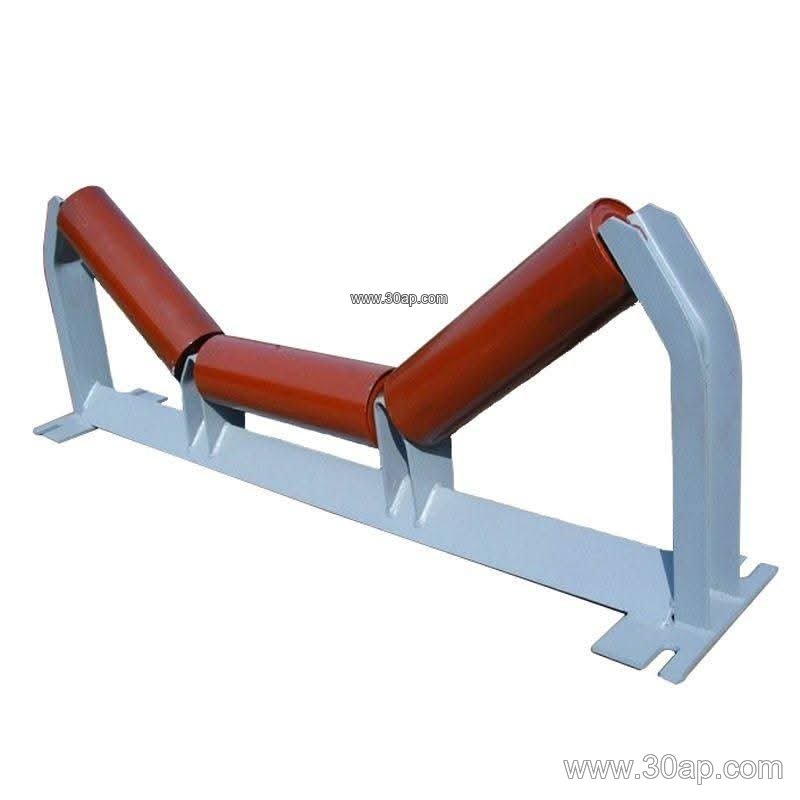
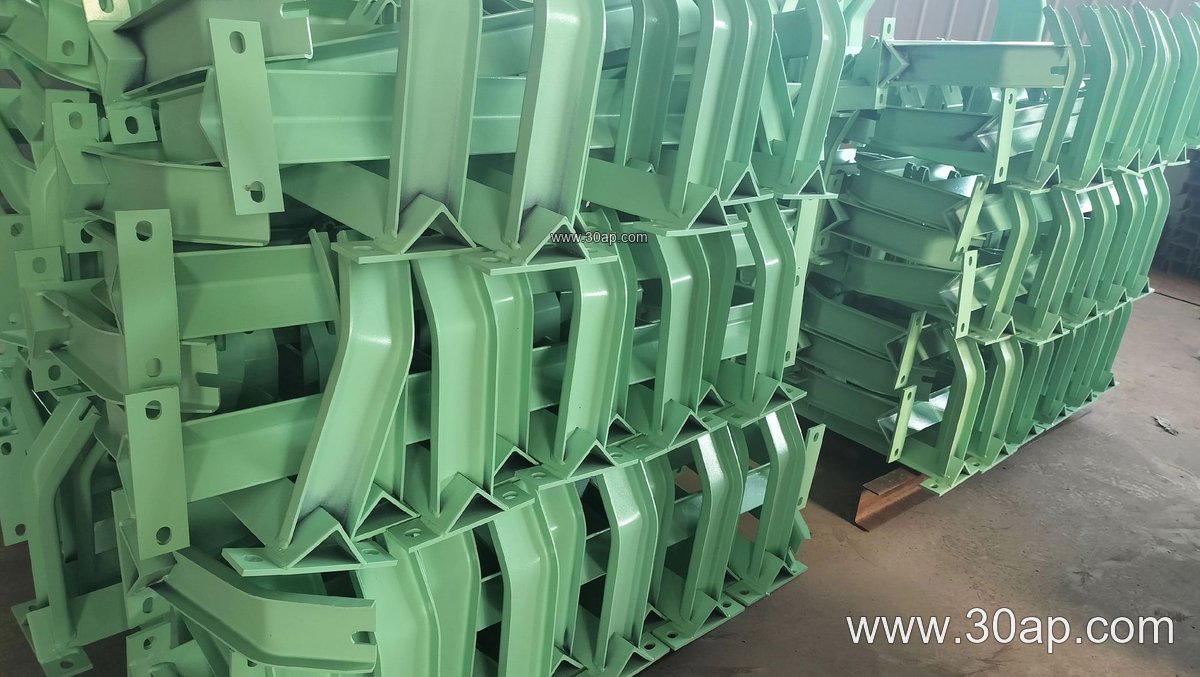
Most custom conveyor brackets are formed from angle steel, channel steel, or folded steel plate. The choice depends on load and environment. A heavy-duty mining conveyor belt running ore at high tonnage usually calls for thicker channel sections, while a smaller aggregate line may use lighter angle. The bracket includes mounting holes for the idler roller shaft, a crossbeam that sets the trough angle, and attachment points to the conveyor stringer. Welds are typically ground and checked for squareness so the rollers sit evenly. When the belt is a pipe conveyor belt or a corrugated sidewall conveyor belt, the bracket geometry may need extra clearance for the belt edge or cleat path.
Common Types and Where They Fit
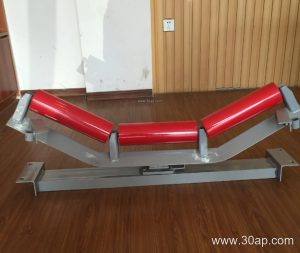
Custom conveyor brackets are not one shape. The trough bracket carries the upper carrying idlers at a set angle. The transition bracket gradually changes belt shape near a pulley. Return brackets support the belt on its way back, and V-return brackets help center the belt. Impact brackets sit under loading points to absorb shock from large lumps. Self-aligning brackets correct minor tracking errors. Adjustable brackets let operators change the trough angle between common values such as 20, 30, 35, and 45 degrees. A forward-tilt bracket, often around 1.5 to 2 degrees, can assist belt tracking on long runs.
Matching Bracket to Belt and Roller
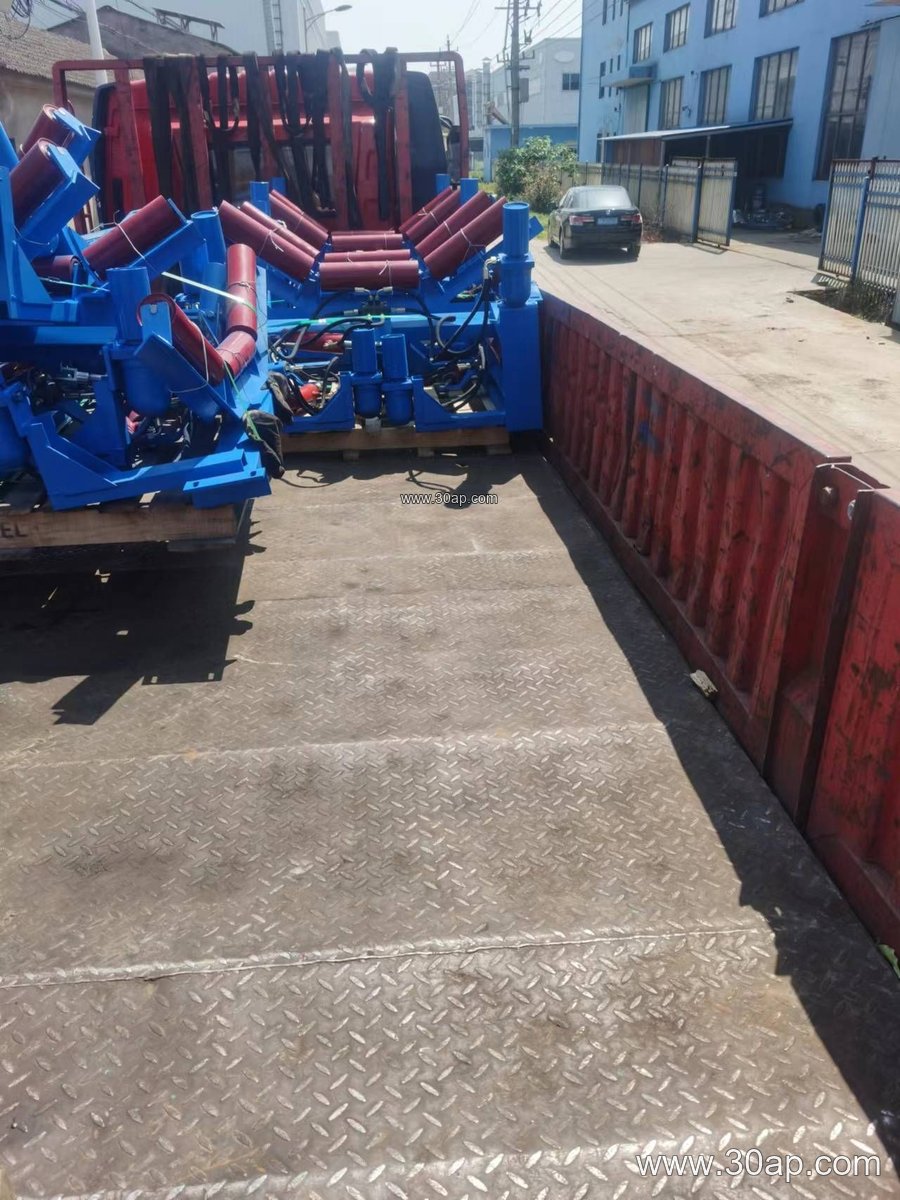
Buyers should treat belt width, trough angle, and roller diameter as a design group, not a fixed formula. A B800 belt may use a 35-degree trough with Ø108 rollers on one conveyor and a different combination on another, depending on material and speed. The table below shows common reference combinations, not mandatory matches.
| Belt Width | Trough Angle | Roller Diameter | Typical Bracket Use |
|---|---|---|---|
| B500 | 20° / 30° | Ø89 | Light aggregate, sand |
| B650 | 30° / 35° | Ø89 / Ø108 | Small quarry line |
| B800 | 30° / 35° / 45° | Ø108 / Ø133 | Cement plant, power plant coal |
| B1000 | 35° / 45° | Ø108 / Ø133 / Ø159 | Iron ore, crusher discharge |
| B1200 | 35° / 45° | Ø133 / Ø159 | Heavy mining conveyor belt |
| B1400 | 35° / 45° | Ø159 / Ø194 | Port, steel plant |
| B1600 | 35° / 45° | Ø159 / Ø194 | Large bulk material conveyor belt |
| B1800 | 35° / 45° | Ø194 | High-tonnage ore |
| B2000 | 35° / 45° | Ø194 | Extra-wide belt lines |
Mounting hole spacing and crossbeam length change with belt width and trough angle, so these should be confirmed from the actual conveyor drawing. Do not assume a B1200 bracket will fit a B1400 frame without adjustment. For a steel cord conveyor belt or a thick conveyor belt, the roller load is higher, and the bracket needs enough stiffness to avoid deflection between supports.
Where These Brackets Are Used
In a limestone quarry, custom conveyor brackets hold troughing idlers along a primary crushing line. In a coal-fired power plant, they support the belt through transfer towers and bunker feeding. Other common sites include iron ore terminals, cement clinker lines, and sand and gravel operations. The bracket also matters when the belt is a flame retardant conveyor belt in an underground coal mining conveyor system, because replacement parts must fit the existing frame without weakening the structure. A heat resistant conveyor belt in a sinter plant may need brackets that keep rollers aligned despite thermal expansion of the frame.
Buyer Checklist for Custom Conveyor Brackets
- Confirm belt width, trough angle, and roller diameter as a set.
- Provide the stringer spacing and mounting hole pattern.
- State the material being carried and the loading method.
- Specify whether the bracket is fixed or adjustable.
- Ask for the steel section and finish, such as painted or galvanized.
- Check clearance for skirted conveyor belt edges or corrugated sidewall profiles.
A well-made custom conveyor bracket is a small part with a large effect on belt tracking, roller life, and downtime. Matching it to the actual conveyor frame is more important than copying a standard size from another line.