What a Large Conveyor Pulley Does
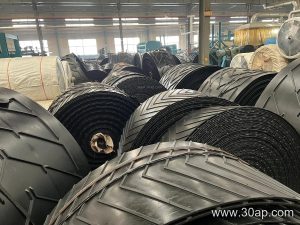
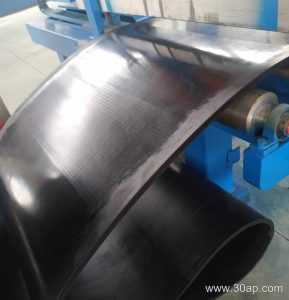
A large conveyor pulley is the drum that carries and drives the belt at the main transfer points of a heavy-duty conveyor. In a quarry or a crushing and screening circuit, it is often the component that decides whether the whole line keeps its grip and alignment. The belt may be an abrasion resistant conveyor belt on a primary discharge, or a multi-ply fabric core conveyor belt on a smaller secondary line, but the pulley has to match the duty of that particular position.
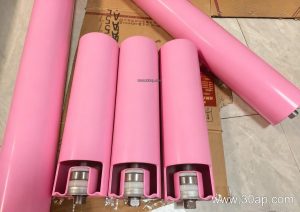
Depending on where it sits, the same drum can act as a drive pulley, a head or discharge pulley, a tail pulley, a bend pulley, a tension pulley, a snub pulley, or a take-up pulley. These are different roles, not interchangeable names. A bend pulley guiding the belt around a structure cannot simply replace a drive pulley that has to transmit torque, and a tail pulley should not be ordered as a substitute for a drive drum.
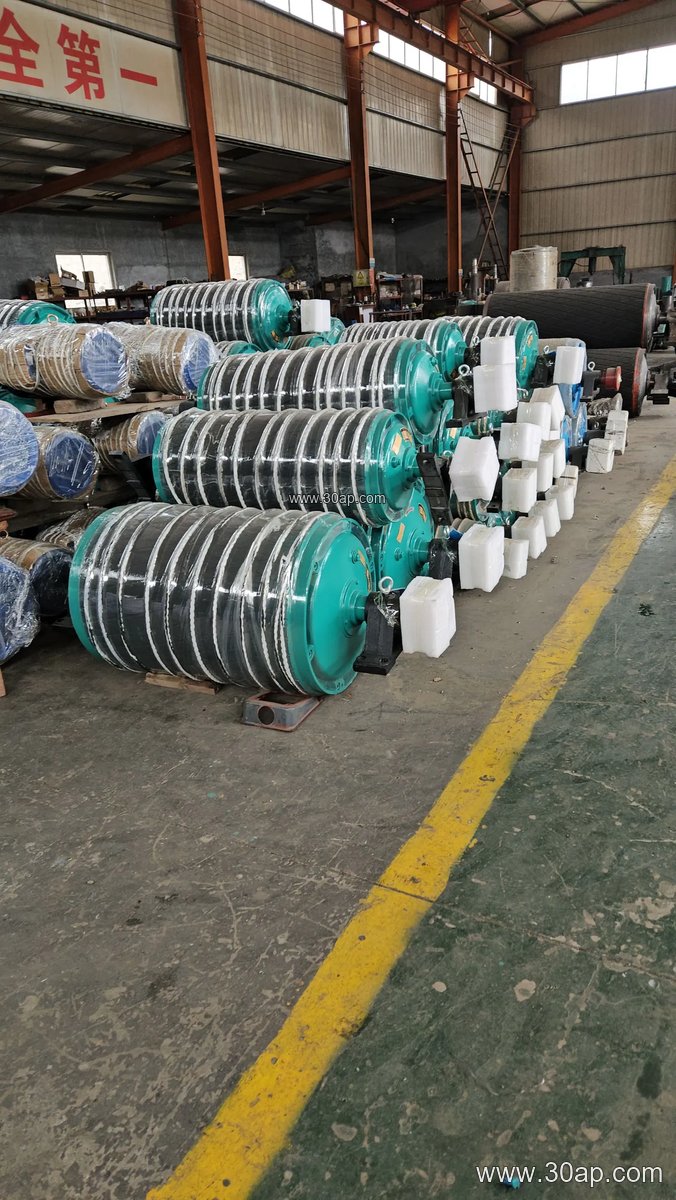
How the Drum Is Built
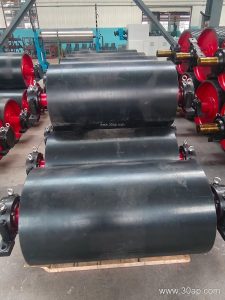
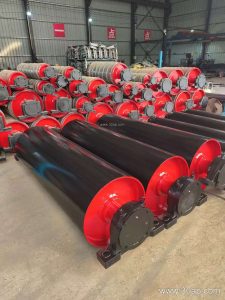
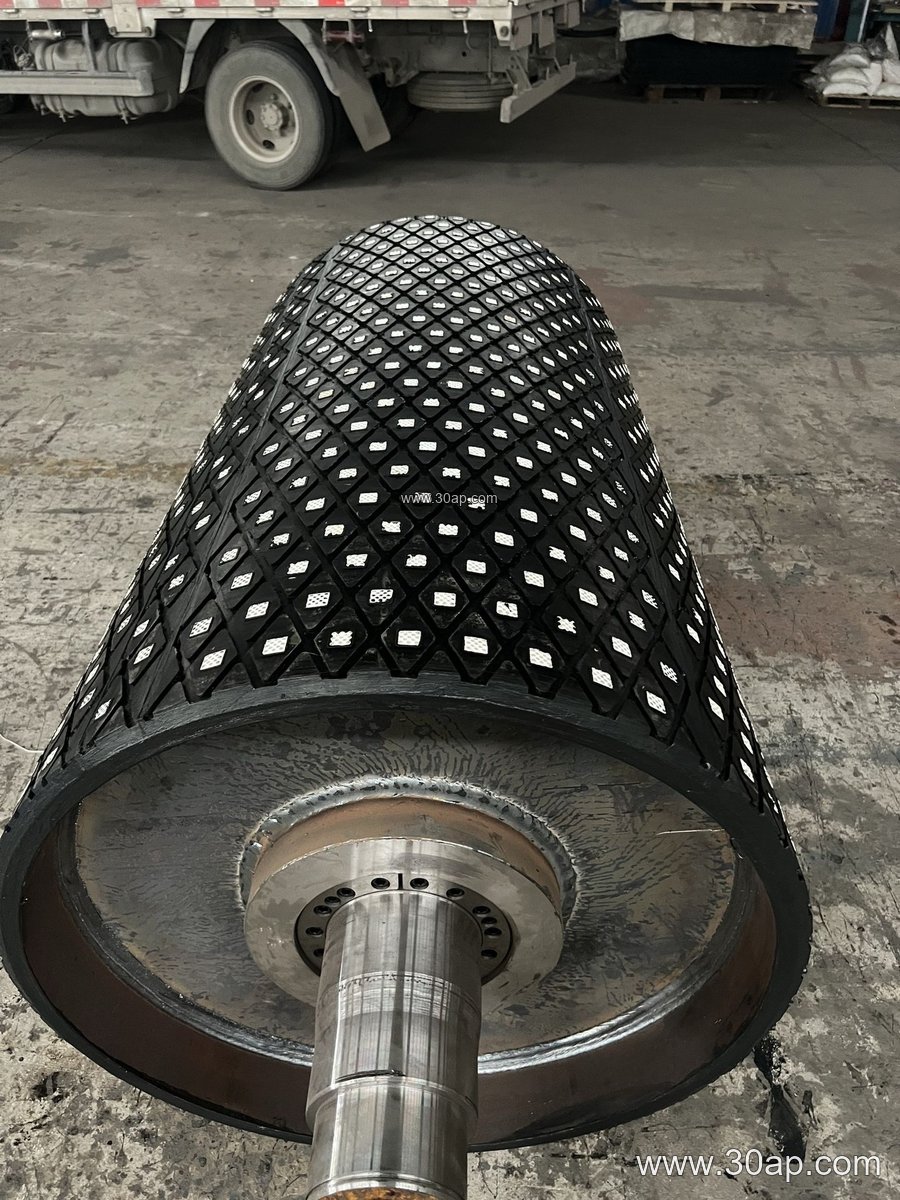
The body is usually a rolled steel shell welded to end discs, with a shaft running through hubs. The shell is machined so the belt tracks evenly, and the surface may stay plain or be covered with rubber. Common covering methods include hot vulcanized rubber, cold bonded rubber, cast rubber, diamond grooving, herringbone grooving, ceramic tiles, and plain sheet rubber. Cover thicknesses of 8, 10, 12, 15, and 20 mm are frequently quoted, with the thicker covers used where slip and wear are expected.
Bearings sit in housings on either side and are fixed to the conveyor frame through a conveyor bracket. Shaft diameter is decided by torque and load, not by belt width alone; typical shaft sizes run from Ø50 up to Ø200, and a larger drum rarely gets a small shaft just because the belt is narrow.
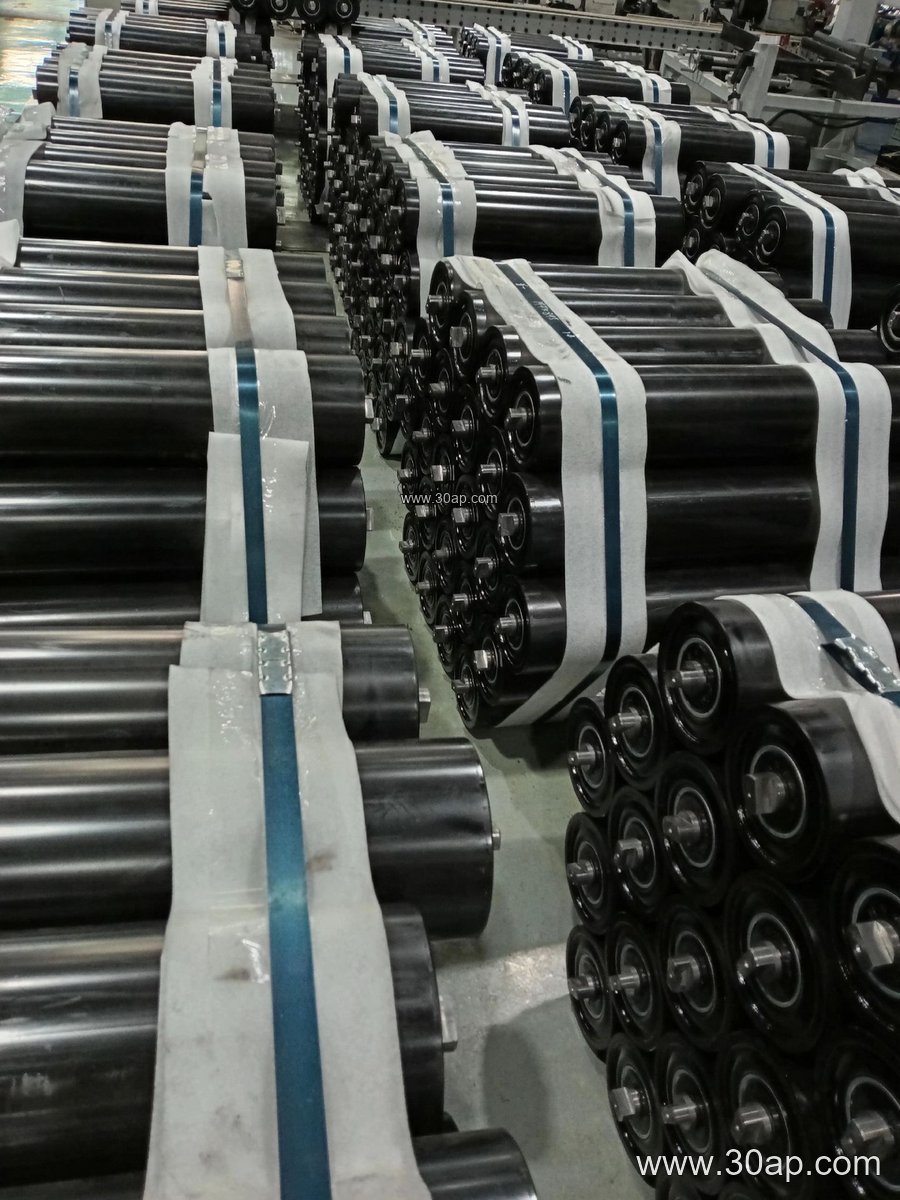
Sizes and Common Combinations
Drum diameter and face width are chosen together with the belt. The face is normally a little wider than the belt so the edges are supported. The table below shows reference values only; they are common starting points, not fixed pairings.
| Belt width | Typical pulley face width | Example drum combination |
|---|---|---|
| B400 | about 500 mm | B400 x Ø200 |
| B500 | about 600 mm | B500 x Ø250 |
| B650 | about 750 mm | B650 x Ø315 |
| B800 | about 950 mm | B800 x Ø500 |
| B1000 | about 1150 mm | B1000 x Ø630 |
| B1200 | about 1400 mm | B1200 x Ø1000 |
| B1400 | about 1600 mm | B1400 x Ø800 |
| B1600 | about 1800 mm | B1600 x Ø1000 |
| B1800 | about 2000 mm | B1800 x Ø1250 |
| B2000 | about 2200 mm | B2000 x Ø1400 |
A 1200 mm wide belt can be paired with several diameters depending on belt tension, wrap angle, and space. What matters is that the drive pulley has enough contact area and grip for the load, and that the shell and shaft are strong enough for the starting torque.
Where It Fits in the Plant
In a limestone quarry or aggregate line, a large head pulley at the crusher discharge often runs under wet, gritty conditions, so a diamond grooved rubber cover helps keep the belt from slipping. In a coal handling section of a power plant, a flame retardant conveyor belt and an anti-static conveyor belt may be used together with a lagged drive drum, and the pulley covering should suit the same safety requirements.
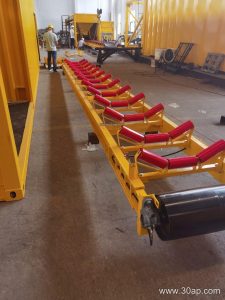
Port bulk terminals and ship loading conveyors use wide drums on long belts, while a cement plant clinker line may prefer a heat resistant conveyor belt and a drum that can cope with warm material. In each case, the pulley is matched to the belt, the idler roller set, and the frame, not chosen in isolation.
Buyer Checklist
- Confirm the pulley role: drive, tail, bend, tension, or snub. Do not swap roles.
- State belt width, belt type, and belt tension so the drum face and shaft can be sized.
- Choose the covering by duty: plain for light tracking, rubber for grip, ceramic for severe wear.
- Check shaft diameter against torque and bearing load, not against belt width.
- Ask for the bracket and bearing housing dimensions to match the existing frame.
- For heavy ores such as iron ore or copper ore, specify abrasion resistant and impact resistant grades where needed.
For more on matching drums with rubber conveyor belt, EP conveyor belt, and steel cord conveyor belt systems, the drum data should always be read together with the belt specification. A large conveyor pulley is a long-life item when it is sized for the real load, covered for the real material, and installed with the correct bracket and alignment.