What an EP Rubber Conveyor Belt Is
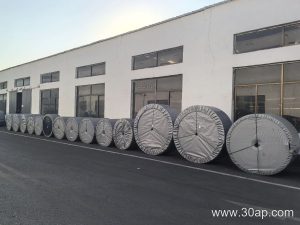
An EP rubber conveyor belt is a fabric-core belt built around polyester-warp and polyamide-weft (EP) canvas, bonded with rubber covers. In the trade it is often shortened to EP Conveyor Belt or EP Fabric Core Conveyor Belt, and it remains one of the most widely used belt constructions in bulk material handling. The carcass gives the belt its tensile strength, while the top and bottom covers protect the fabric from abrasion, moisture, heat, oils and impact.
Compared with an NN Conveyor Belt, the EP carcass usually offers lower elongation under load and better resistance to fatigue, which helps on long, heavily loaded runs. Where tensile demands exceed fabric capabilities, a Steel Cord Conveyor Belt may be considered; EP belts generally sit in the mid-range of strength and cost.
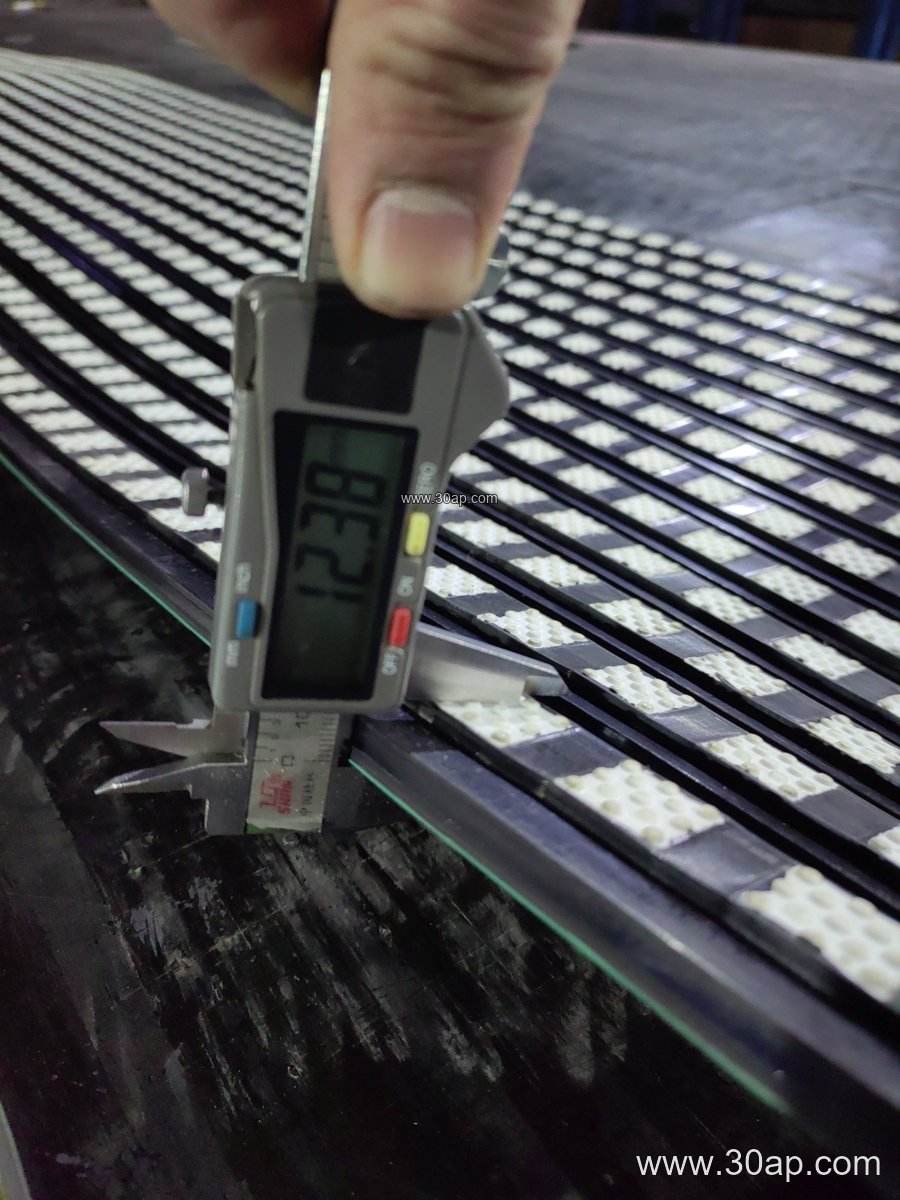
Construction and Structure
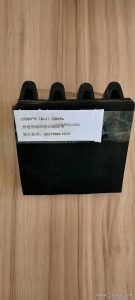
A typical EP belt is a Multi-Ply Fabric Core Conveyor Belt with two to six plies, depending on the duty. The plies are laminated under heat and pressure with rubber skim between layers, and the cover compounds are selected for the working environment.
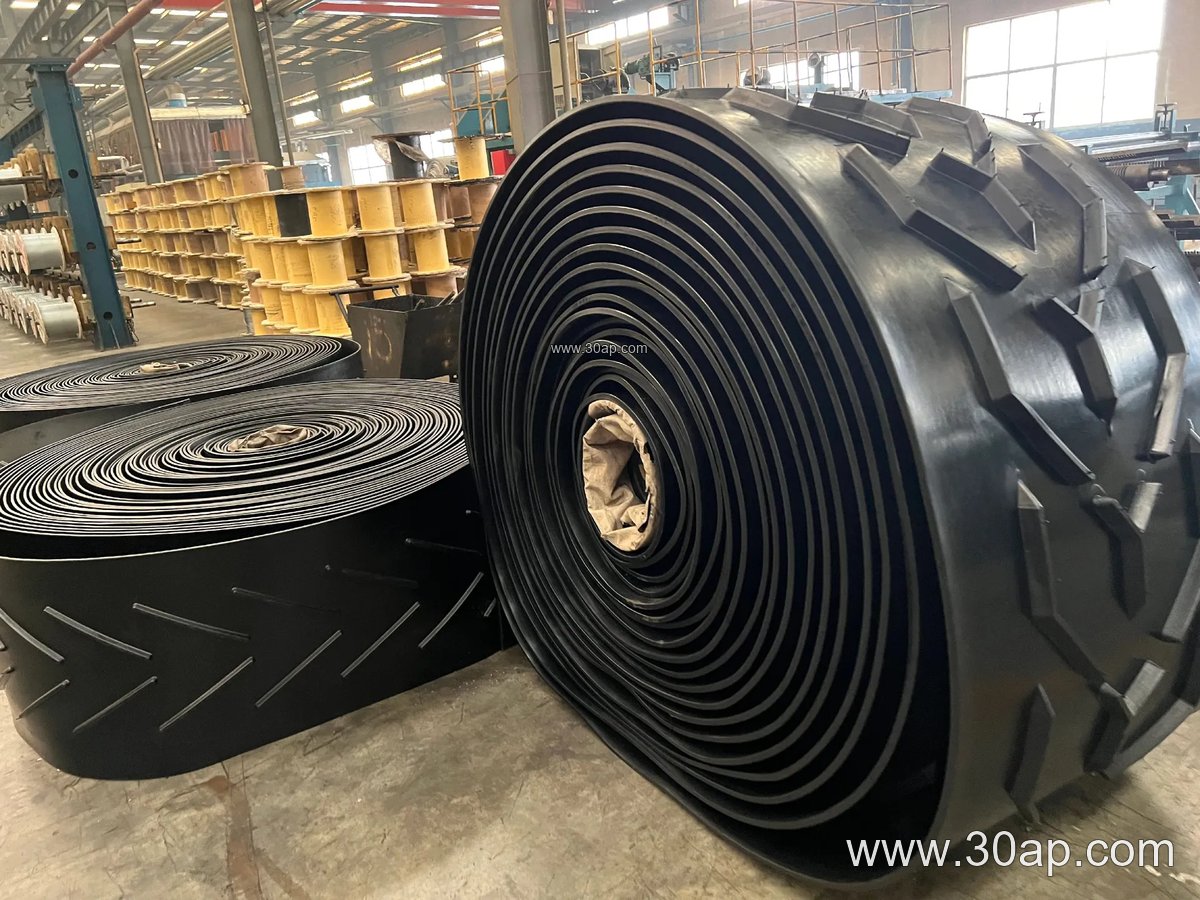
- Carcass: EP fabric plies, commonly 2 to 6 layers.
- Top cover: abrasion, heat, oil, flame retardant or cold resistant compounds.
- Bottom cover: usually a thinner abrasion resistant layer for pulley contact.
- Edges: cut or moulded, depending on the application.
Cover thickness is often quoted as a pair such as 4+2 or 6+2 mm, meaning top cover plus bottom cover. These are reference values and final construction is confirmed by design.
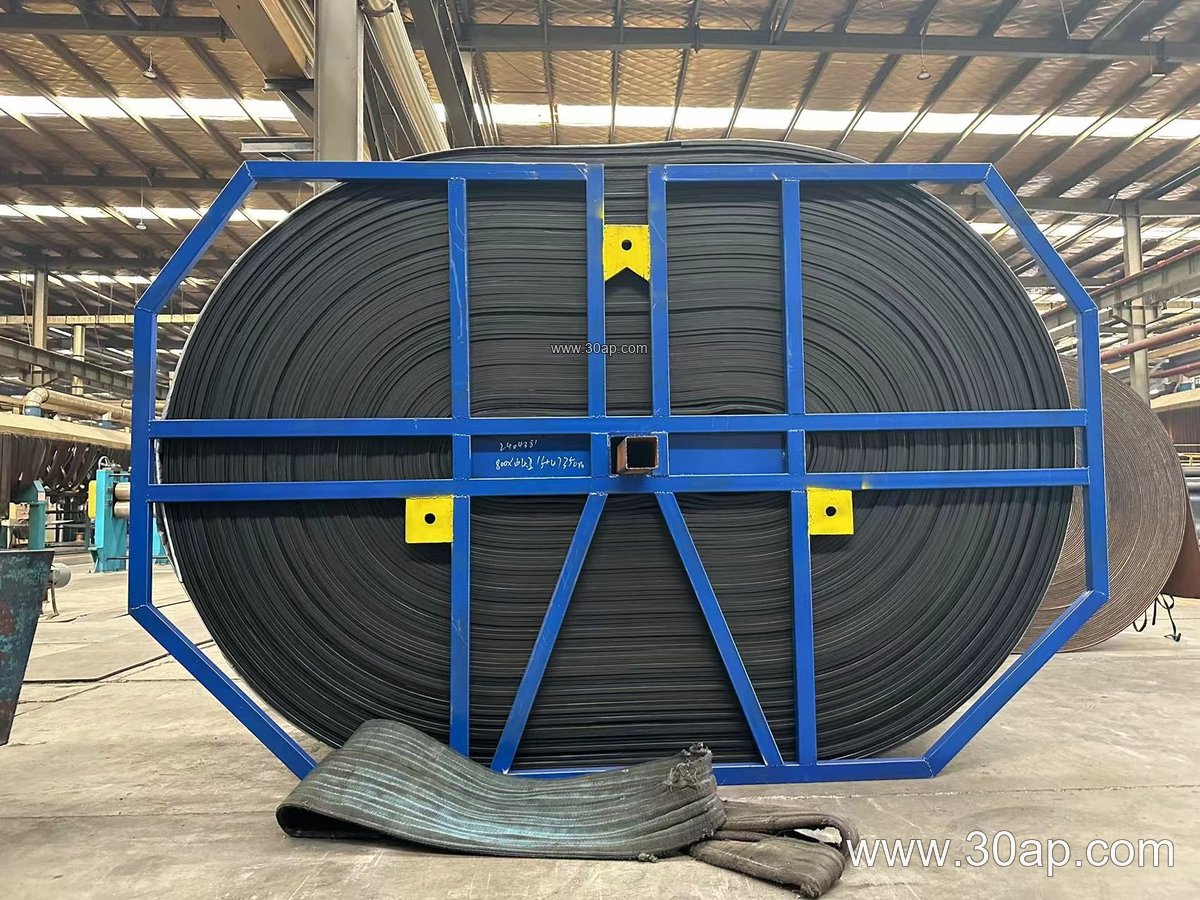
Common Strength Grades and Dimensions
EP belts are specified by nominal tensile strength per unit width, for example EP100, EP200, EP315, EP400, EP630, EP800, EP1000, EP1250, EP1600 and EP2000. The table below shows typical reference data; actual values vary between manufacturers.
| Parameter | Typical Reference Range |
|---|---|
| Strength grade | EP200 to EP2000 |
| Belt width | B500, B650, B800, B1000, B1200, B1400, B1600, B1800, B2000 |
| Cover thickness | 3+1.5, 4+2, 5+2, 6+2, 8+3 mm |
| Number of plies | Usually 2 to 6 |
Belt width and pulley diameter are matched through conveyor design, not by a single fixed rule. A B1000 belt may run on different conveyor pulley sizes depending on tension, wrap angle and load.
Where EP Belts Are Used
EP rubber belting is common in mines, quarries, cement plants, power stations, steel plants, ports and sand and gravel yards. It handles crushed rock, ore, clinker, coal, aggregate and other bulk materials. For abrasive stone circuits, an Abrasion Resistant Conveyor Belt grade is often chosen; for hot clinker or sinter, a Heat Resistant Conveyor Belt compound is used.
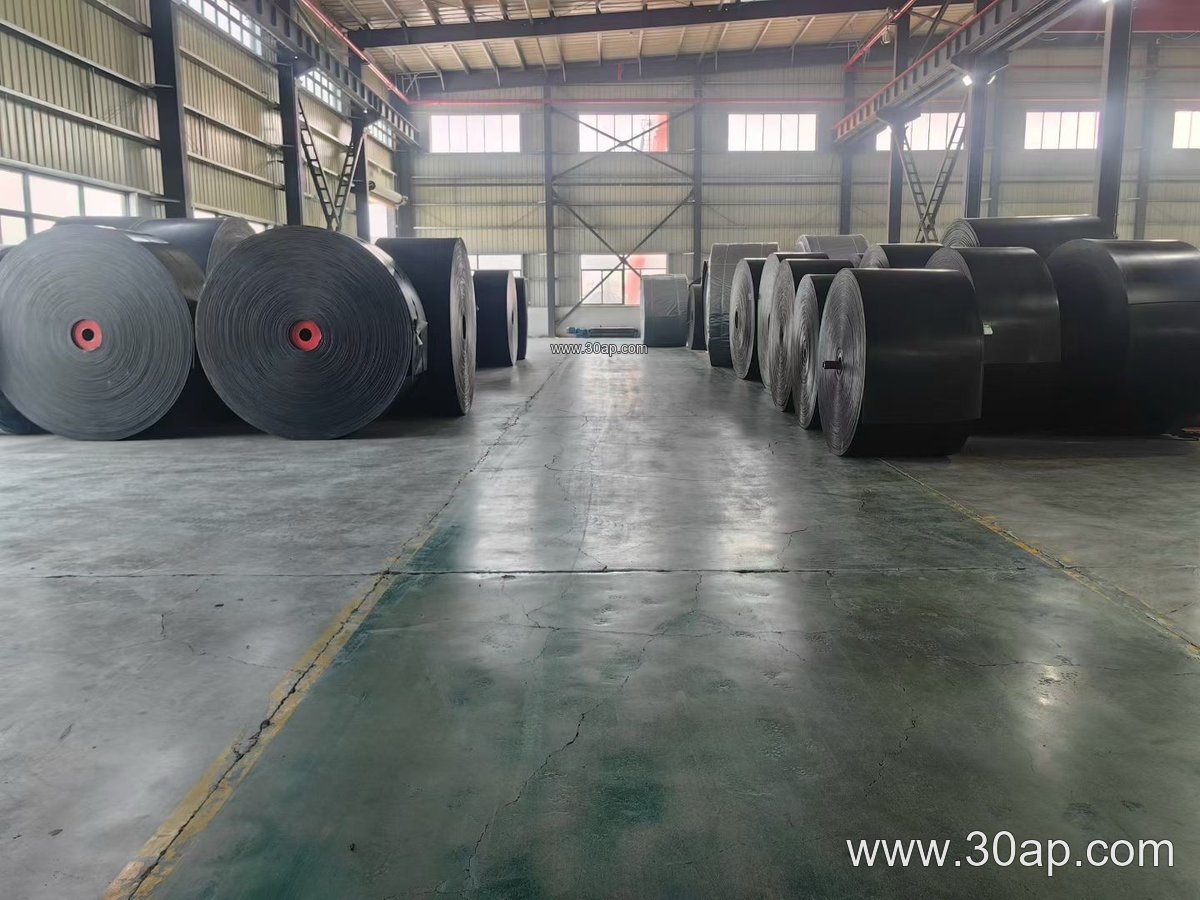
Underground coal operations may require a Flame Retardant Conveyor Belt or Fire Resistant Conveyor Belt specification, sometimes with anti-static properties. In cold regions, a Cold Resistant Conveyor Belt compound helps prevent cover cracking. Where material must be contained on steep inclines, a Chevron Conveyor Belt or Corrugated Sidewall Conveyor Belt may be a better fit than a standard flat EP belt.
Buyer Checklist
- Confirm the required strength grade and number of plies for the conveyor duty.
- Match cover compound to the material: abrasive, hot, oily, wet or food contact.
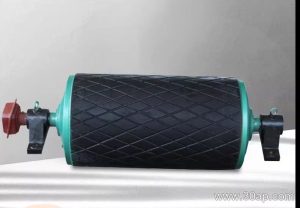
- Check belt width against the conveyor pulley and idler roller layout.
- Review splice method and whether an Endless Conveyor Belt is needed.
- Consider impact loading at transfer points and specify suitable cover thickness.
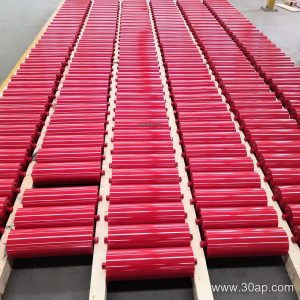
For a full conveyor system, the belt works alongside the conveyor pulley, idler roller, conveyor bracket and frame. A well-matched EP belt, correctly spliced and maintained, supports reliable operation in demanding bulk handling environments. Buyers should request the manufacturer’s data sheet for the exact grade before ordering.