What a Conveyor Bracket Does on the Line
On any belt conveyor, the conveyor bracket is the interface between the rotating components and the supporting structure. It holds idler rollers at the correct angle and spacing, keeps the belt profile stable between pulleys, and allows maintenance crews to replace rollers without cutting or re-splicing the belt. In a quarry or a coal handling plant, a well-matched bracket set reduces spillage, belt edge damage, and premature roller failure.
The bracket is not a single universal part. It is a family of assemblies: trough brackets for the carrying side, return brackets for the empty side, impact brackets under loading points, self-aligning brackets on long runs, and transition brackets where the belt changes from flat to troughed. Each type has a specific job, and mixing them up leads to poor belt training or accelerated wear.
Construction and Common Materials
Most conveyor brackets are fabricated from angle steel, channel steel, or folded steel plate. The frame is drilled or slotted to accept idler shafts, and the mounting feet are positioned to suit the stringer spacing. A typical trough bracket carries three idlers at a fixed trough angle, while an adjustable bracket allows the angle to be set on site. Common trough angles include 20, 30, 35, and 45 degrees, and forward-tilt brackets often use about 1.5 to 2 degrees of lead to help center the belt.
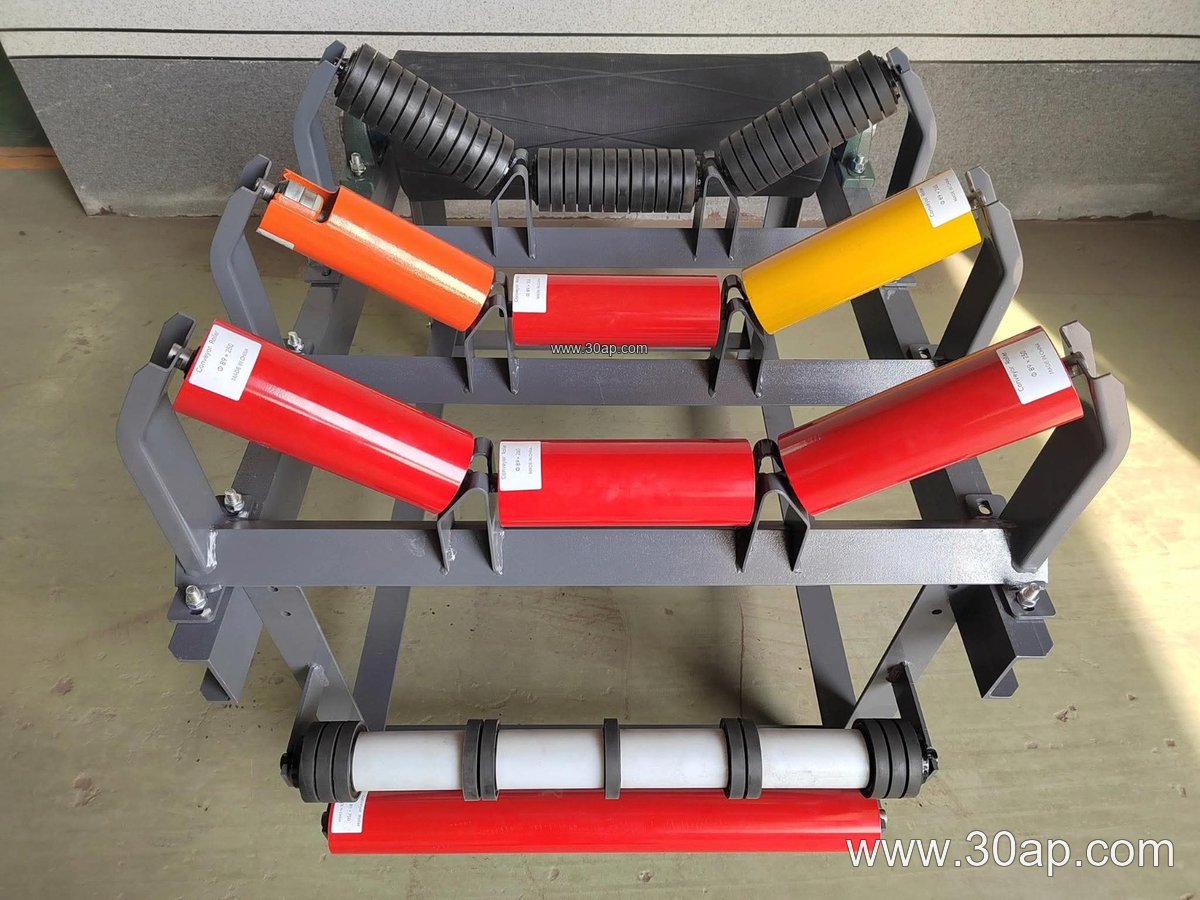
Roller diameter and bracket geometry go together. A B800 conveyor might use Ø108 idlers in a 35-degree trough bracket, while a B1200 line could run Ø133 rollers at 45 degrees. These are examples, not fixed rules. The mounting hole spacing and crossbeam length change with belt width and trough angle, so the bracket must be ordered against the actual conveyor design.
Common Bracket Types and Their Role
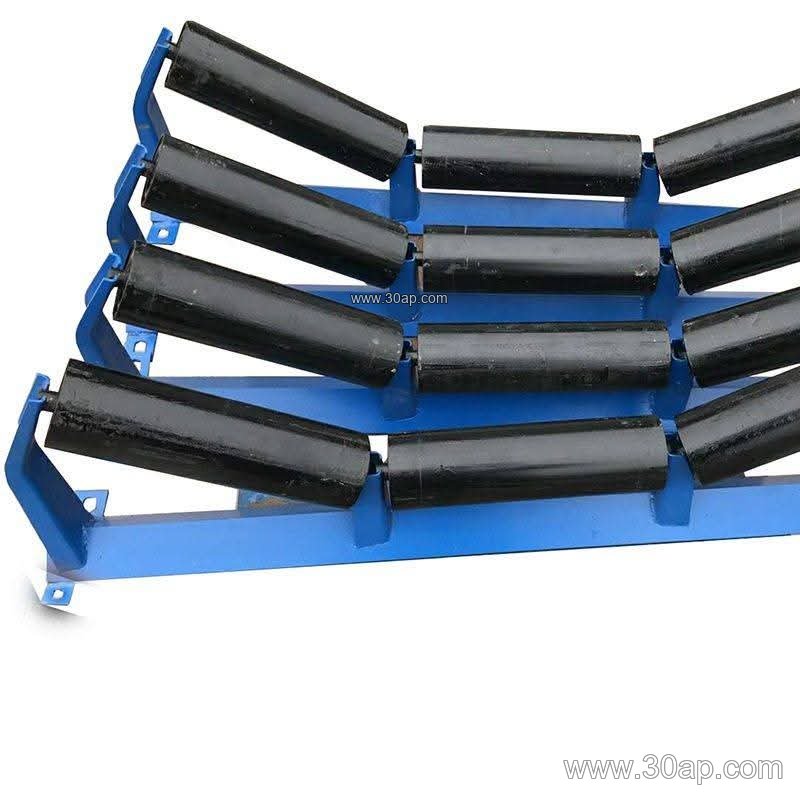
- Trough bracket (carrying side): supports three idlers and sets the trough angle.
- Return bracket: carries the empty belt, often with a flat or V-return roller.
- Impact bracket: reinforced frame under the loading zone to absorb material drop.
- Self-aligning bracket: pivots to correct belt misalignment on long conveyors.
- Transition bracket: guides the belt from flat to troughed profile near pulleys.
- Adjustable bracket: allows trough angle changes within the common 20–45 degree range.
Where Conveyor Brackets Are Used
In a limestone quarry, trough brackets and impact brackets work together under the crusher discharge, where sharp rock tests both the roller and the frame. In a coal-fired power plant, flame retardant conveyor belts run on brackets that must resist coal dust buildup and allow quick roller changes during short maintenance windows. Cement plants use heavy-duty brackets on clinker lines, while sand and gravel operations favor adjustable brackets to fine-tune belt training as the load profile changes.
Brackets also appear in less obvious places: fertilizer granulation lines, grain silos, and tunnel spoil conveyors. In each case, the bracket choice follows the belt width, the roller diameter, and the available stringer spacing rather than a single standard.
Matching Brackets to Belt and Roller Hardware
A conveyor bracket only performs well when it matches the belt and roller system around it. A 1000mm wide EP conveyor belt running at high tension needs brackets with enough stiffness to hold trough angle under load. A steel cord conveyor belt on a long overland run may use wider brackets and larger rollers to reduce indentation resistance. On the return side, a V-return bracket helps keep the belt centered and sheds loose material.
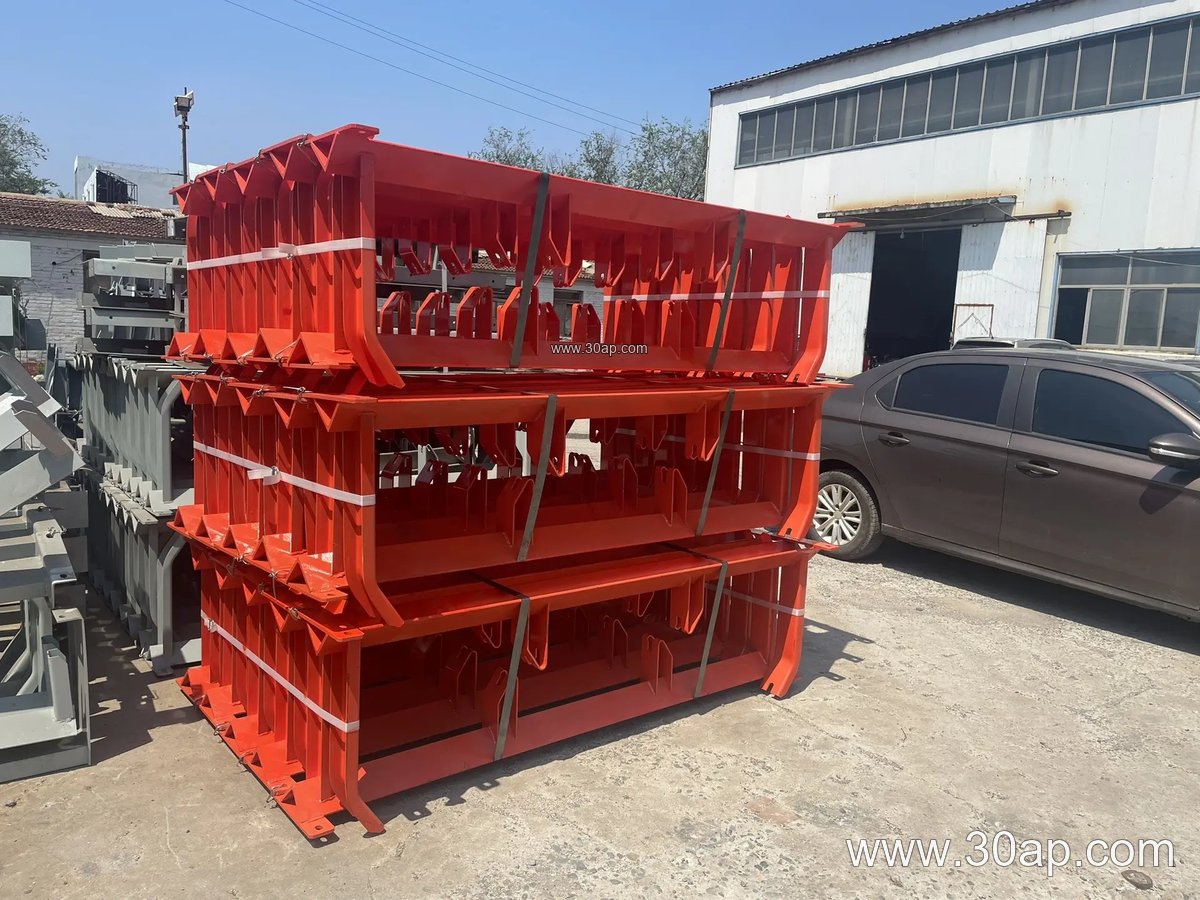
Buyers should confirm the belt width, trough angle, roller diameter, and mounting dimensions before ordering. Brackets are often supplied as weld-on or bolt-on assemblies, and the foot pattern must match the existing stringer. For retrofit projects, measuring the old bracket and the idler shaft is more reliable than assuming a standard size.
Installation and Maintenance Notes
Bracket alignment affects belt training. Brackets should be set square to the conveyor centerline and at a consistent height so the idlers share the load evenly. On adjustable brackets, lock the trough angle after adjustment and check that all three idlers contact the belt. Inspect brackets for bent frames, elongated holes, and loose bolts during routine roller inspection. A worn bracket can cause a new roller to fail early, so replacement should be planned together with idler changes.
For abrasive duty in an iron ore or copper ore operation, specify brackets with reinforced gussets and corrosion protection suited to the wash-down regime. In cold climates, keep bracket pockets free of frozen material so the roller can rotate freely. These details are decided at the selection stage, not after installation.