What a Return Idler Bracket Does
A return idler bracket, also called a return roller bracket or lower support bracket, holds the return idlers that carry the empty side of a conveyor belt. It keeps the belt tracking smoothly on its way back to the tail pulley. In a quarry, cement plant, or power plant coal yard, this bracket is a small but vital part of the conveyor frame. Without a sturdy return idler bracket, the belt can sag, rub against structure, or drift off center. The bracket supports the idler roller shaft and fixes the roller position relative to the belt line. Some designs are fixed, while others allow adjustment for belt training or clearance.
Construction and Common Forms
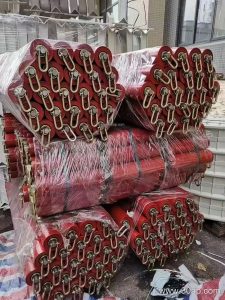
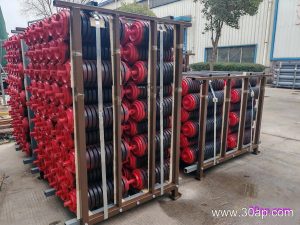
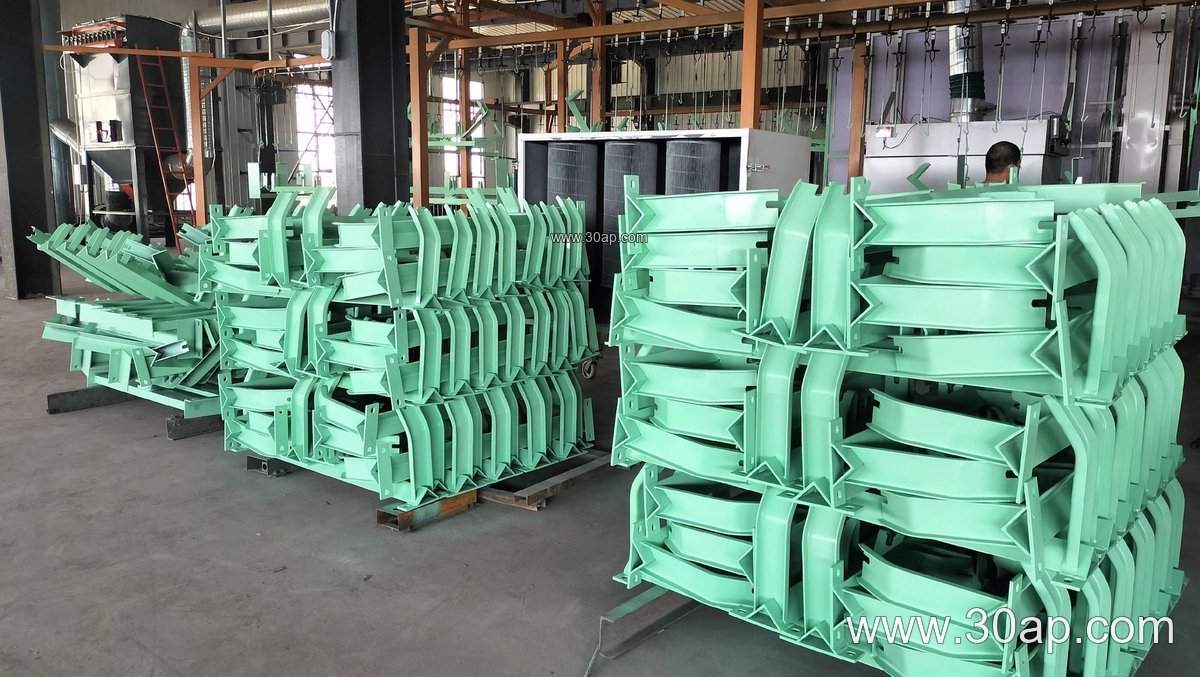
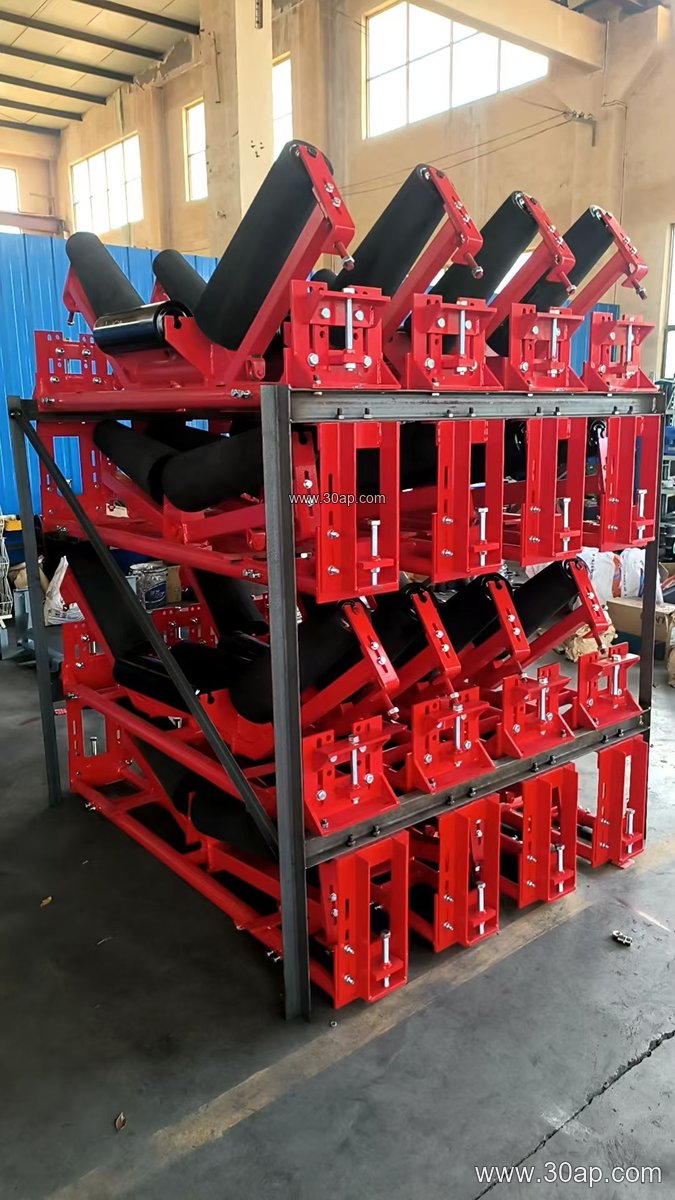
Most return idler brackets are fabricated from angle steel, channel steel, or bent steel plate. The material thickness and coating depend on the duty. In a limestone mine or aggregate line, brackets often use painted or galvanized steel to resist dust and moisture. The bracket usually has slots or holes for mounting the idler shaft. Common return bracket styles include flat return brackets, V-return brackets, and adjustable return brackets. A V-return bracket uses two idlers set at an angle to help center the belt. A flat return bracket supports a single return roller. Adjustable brackets let maintenance staff change the roller height or angle to correct belt tracking or accommodate wear.
Matching Brackets to Belt Width and Roller Diameter
Return idler brackets are sized to the conveyor belt width and the return roller diameter. Common belt widths include B500, B650, B800, B1000, B1200, B1400, B1600, and B1800. Return roller diameters often fall in the range of Ø89, Ø108, Ø133, Ø159, and Ø194. The bracket mounting hole spacing and crossbeam length are not universal; they change with belt width, roller diameter, and frame design. A bracket for a B800 belt with Ø108 return rollers will not fit a B1200 belt with Ø133 rollers. Buyers should confirm the roller shaft diameter, the distance between mounting holes, and the bracket height before ordering. The table below shows typical reference combinations, but these are examples, not fixed rules.
| Belt Width | Common Return Roller Diameter | Typical Bracket Form |
|---|---|---|
| B500 | Ø89 | Flat return bracket |
| B650 | Ø89 or Ø108 | Flat or V-return bracket |
| B800 | Ø108 | V-return or adjustable bracket |
| B1000 | Ø108 or Ø133 | V-return bracket |
| B1200 | Ø133 | V-return or heavy-duty bracket |
| B1400 | Ø133 or Ø159 | Heavy-duty return bracket |
| B1600 | Ø159 | Heavy-duty return bracket |
| B1800 | Ø159 or Ø194 | Heavy-duty return bracket |
In a coal mining conveyor or a port ship loading line, the return idler bracket must handle heavy belts and abrasive dust. A steel cord conveyor belt or a thick fabric core conveyor belt adds weight, so the bracket and its mounting bolts need enough strength. For high-abrasion service, such as an iron ore conveyor or a copper ore conveyor, the bracket should be inspected for wear at the mounting slots.
Where Return Idler Brackets Are Used
These brackets appear in many bulk material handling systems. In a cement plant, they support the return side of a clinker or limestone conveyor. In a power plant coal yard, they keep the return belt aligned under the coal conveyor. In a sand and gravel line, a return idler bracket works with the conveyor belt and idler roller to maintain tension and reduce spillage. They are also found in steel plants, fertilizer plants, and grain silos. The bracket is not a drive pulley or a tail pulley; it is a support component for the return idlers. When a conveyor uses a bend pulley to change belt direction, the return idler bracket still serves its own role along the carrying path.
Buyer Checklist
- Confirm the conveyor belt width, such as B800 or B1200, and the return roller diameter, such as Ø108 or Ø133.
- Check the roller shaft diameter and the mounting hole spacing on the existing frame.
- Decide between fixed and adjustable return brackets based on belt tracking needs.
- Match the bracket material and coating to the site conditions, such as dust, moisture, or heat.
- Ask for the bracket drawing and confirm dimensions before production.
For more information on compatible conveyor components, visit conveyor belt and idler roller pages. A well-chosen return idler bracket helps extend the life of the conveyor belt and keeps the return side running true.