What a Custom Conveyor Pulley Really Is
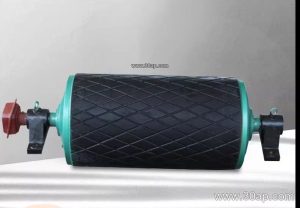
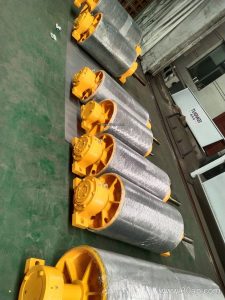
A custom conveyor pulley is a drum assembly built to match a specific conveyor layout rather than taken from a short list of stock sizes. It combines the shell, shaft, end discs, hubs, bearing housings and lagging into one unit sized around the belt, the load and the space available at the installation point. Because every conveyor has its own belt width, tension profile and shaft height, a made-to-order drum often solves problems that a catalogue item cannot. In practice, buyers usually specify shell diameter, face width, shaft diameter, lagging type and bearing arrangement together, since changing one dimension affects the others.
Different positions on the same conveyor call for different duties. The drive pulley transmits torque to the belt, the tail pulley returns it, and bend or take-up pulleys guide it around curves and maintain tension. These are separate roles and should not be treated as interchangeable when a machine is being specified.
How the Assembly Is Built
The shell is normally a rolled steel cylinder machined at both ends, with end discs welded or shrink-fitted to the shaft. Shafts are turned to suit the bearing seats and locking elements, and the whole unit is balanced before lagging is applied. Common shaft diameters include Ø80, Ø100, Ø120, Ø140 and Ø160, but the correct value follows from torque and radial load, not from belt width alone.
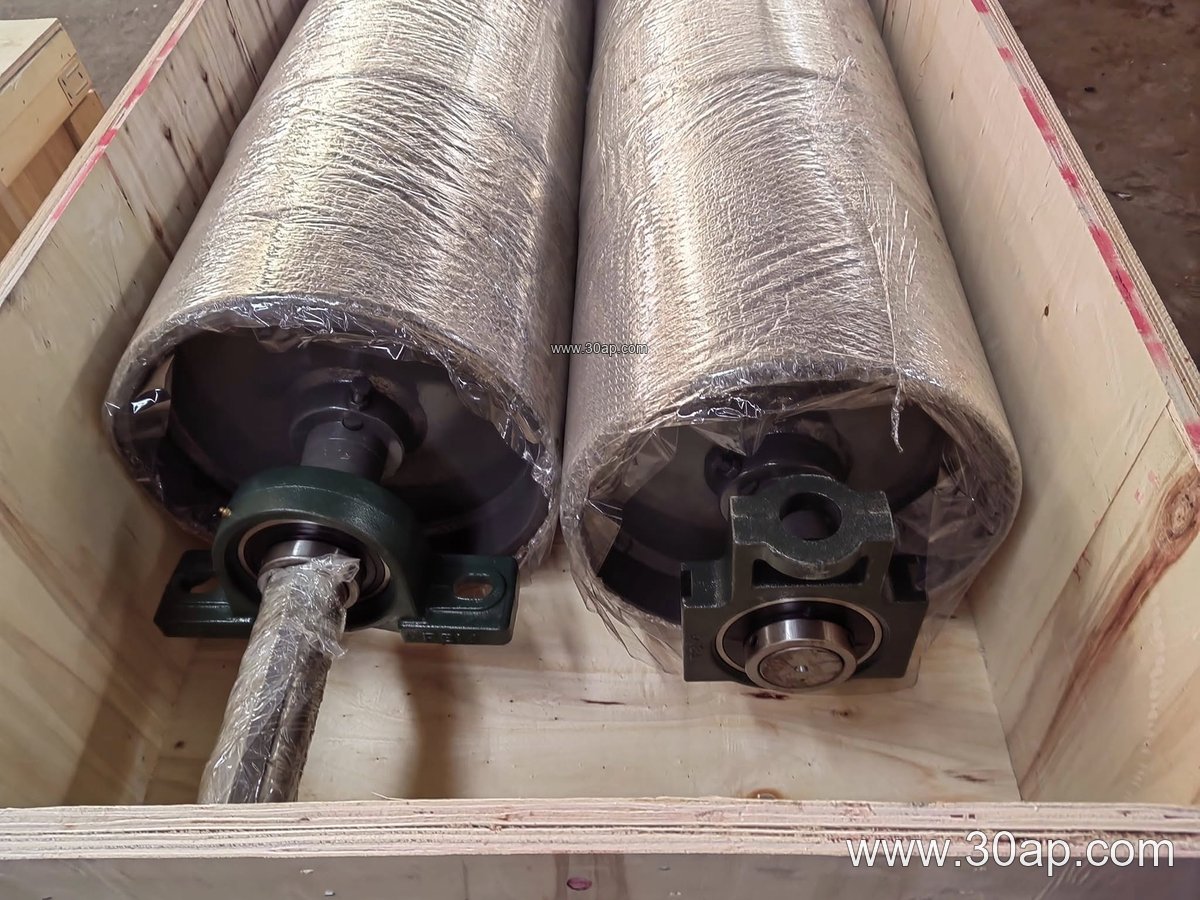
- Shell and end disc welded construction, stress-relieved where required
- Keyed or shrink-disc shaft connection
- Spherical roller bearings in split or fixed housings
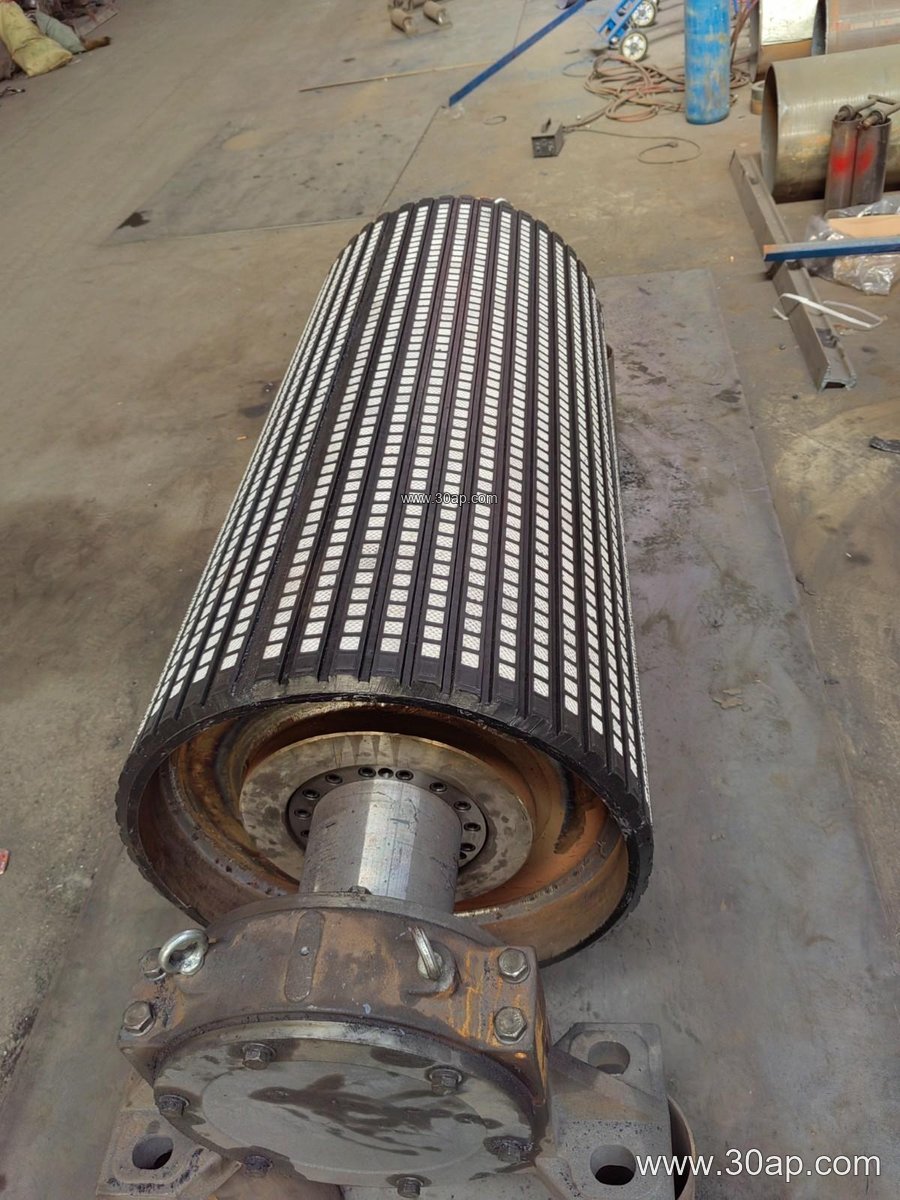
- Lagging applied by cold bonding, hot vulcanizing or ceramic tile
- Optional wing design for sticky material release
Face width is usually a little wider than the belt. Typical relationships include B650 with roughly 750 mm face, B800 with about 950 mm, B1000 with about 1150 mm and B1200 with about 1400 mm. A B1200 × Ø1000 drum or a B800 × Ø500 drum are both realistic combinations, and neither fixes the other dimension. Surface forms range from plain and flat rubber to diamond, herringbone and ceramic lagging, with cover thickness commonly 8, 10, 12, 15 or 20 mm.
Where These Drums Fit in the Plant
In a limestone quarry or a sand and aggregate line, a custom conveyor pulley at the head end often runs with abrasion resistant conveyor belt and needs thick lagging to grip under wet, gritty conditions. In a coal preparation plant or a power station coal yard, flame retardant conveyor belt and anti-static properties matter, and the pulley lagging should be selected so that it does not compromise those safety characteristics. Similar reasoning applies in cement clinker lines, iron ore handling, copper concentrator circuits and port bulk terminals.
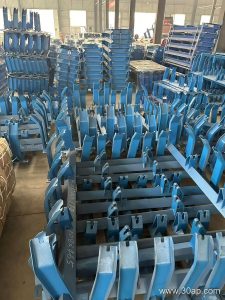
At transfer points, a bend or snub pulley may be needed simply because the belt path has to clear a structure. Here the drum is small in diameter but highly loaded, so bearing selection and shaft stiffness deserve attention. A wing pulley is sometimes chosen at the tail of a crusher discharge where wet fines cling to the belt; it is a different subtype from a standard tail drum and should be specified as such.
Matching the Pulley to the Belt and the Frame
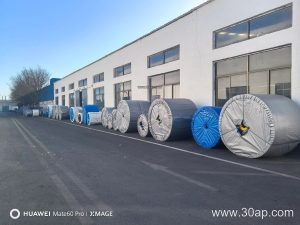
The belt and the drum work as a pair. A heavy-duty mining conveyor belt with a steel cord carcass will tolerate higher tension and usually calls for a larger diameter drum than a lighter EP conveyor belt of the same width, because cord fatigue depends on the ratio of drum diameter to cord pitch. Fabric constructions such as NN conveyor belt or multi-ply fabric core belt are more forgiving, but repeated small-diameter bends still shorten service life. Where the belt carries hot sinter or cement clinker, heat resistant conveyor belt is used and the lagging compound should be checked for temperature as well.
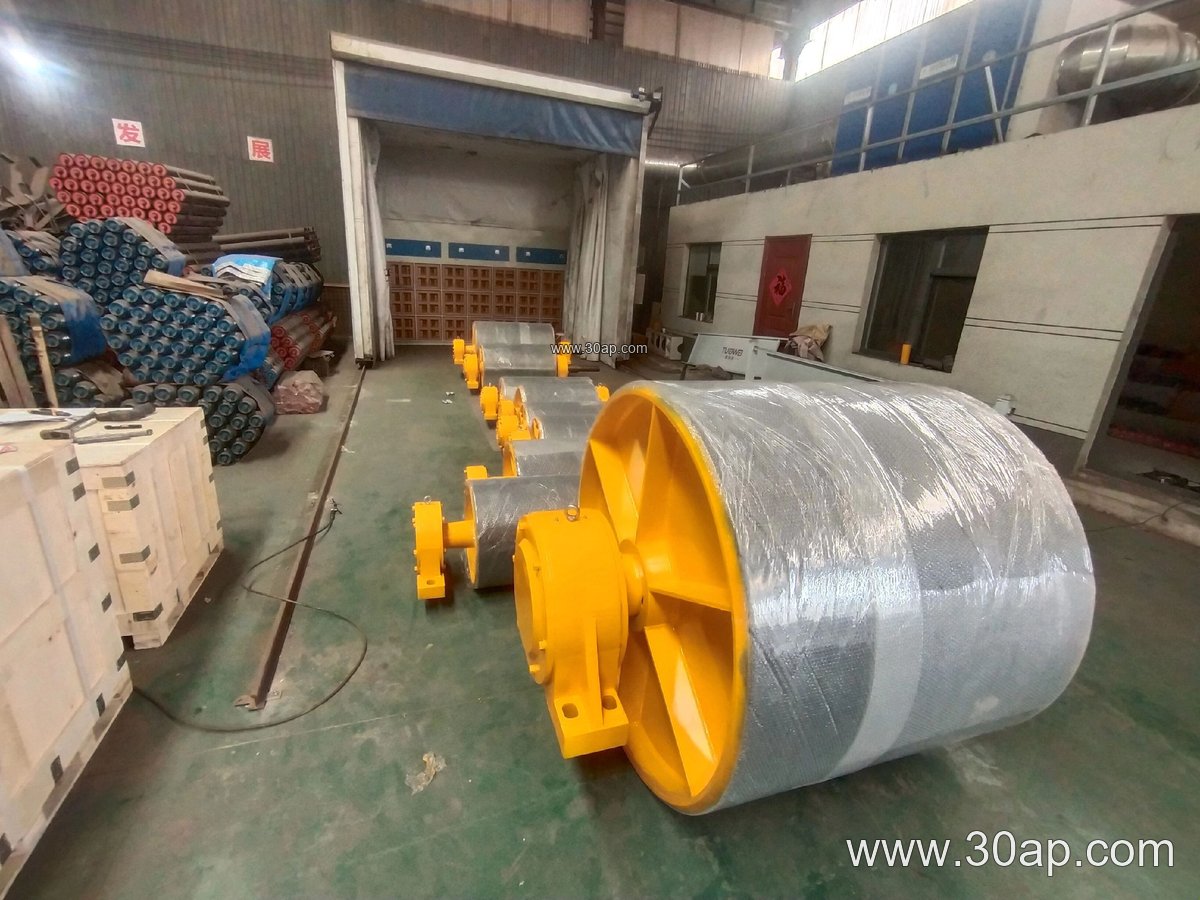
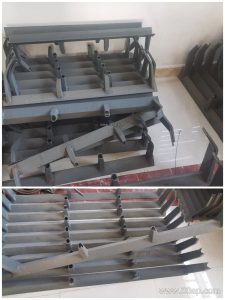
Frame interfaces matter just as much. The bearing housing footprint, bolt spacing and centre height must match the conveyor bracket, and the shaft extension has to accept the drive coupling or gearbox hollow shaft. A mismatch here is far more expensive to correct on site than at the drawing stage.
What to Confirm Before Ordering
Provide the belt width and type, the working tension and starting torque, the drum position, the required face width, the shaft diameter and bearing type, and the lagging pattern and thickness. State the environment, including dust, moisture, temperature and any fire or oil exposure. Ask for a dimensional drawing showing centre height, keyway and housing bolt pattern, and confirm the balancing grade and runout. For aggressive duties, ceramic lagging or diamond-groove rubber can extend grip life, while plain lagging may suit light applications.
Finally, plan for maintenance. Check lagging wear, bolt torque and bearing clearance at scheduled stops, and keep a spare drum for the most critical drive position. A well-specified drum, ordered with the full conveyor data in hand, will outlast several belts and keep the line running through the toughest shifts.