What a Non-Standard Conveyor Bracket Is
A non-standard conveyor bracket is a support component made to fit a conveyor frame that does not follow the usual catalog dimensions. Standard brackets cover common belt widths and mounting hole patterns, but a retrofit, a narrow transfer point, a rebuilt chute area, or a frame fabricated on site often needs a bracket that matches the existing steel rather than the other way around. The same item is also called a custom conveyor bracket or a made-to-order bracket, and it works together with the idler roller, the conveyor pulley and the conveyor belt to keep the belt line stable.
In a quarry, a cement plant or a power plant coal yard, the frame is rarely a clean copy of a drawing. Brackets may need a different beam length, an offset mounting face, or a reinforced base because the structure below has already been built.
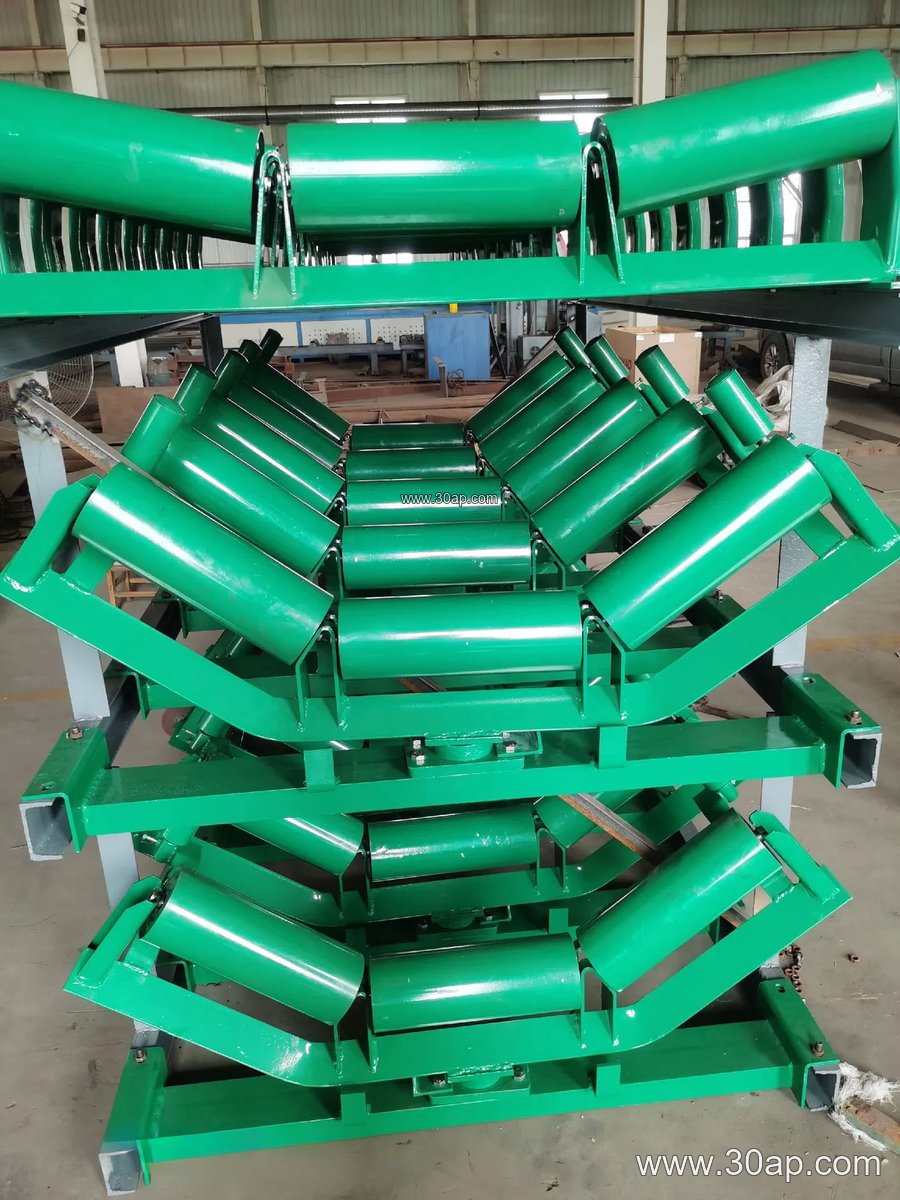
How the Bracket Is Built
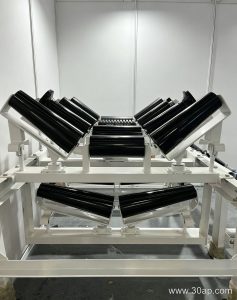
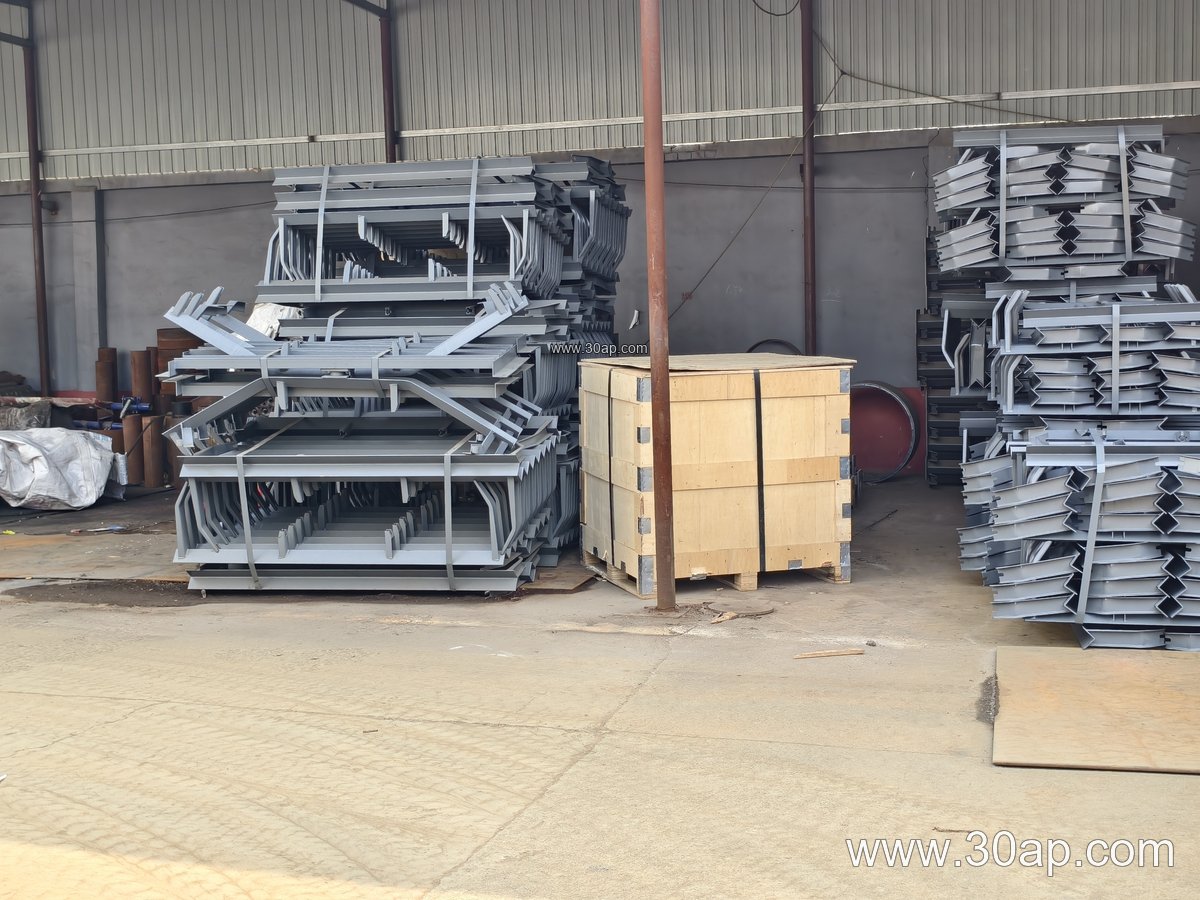
Most non-standard brackets are fabricated from angle steel, channel steel or folded steel plate. The choice depends on load and on how the bracket attaches to the main frame. A light upper bracket may use folded plate, while a heavy impact zone near a crusher discharge often uses channel or reinforced angle sections.
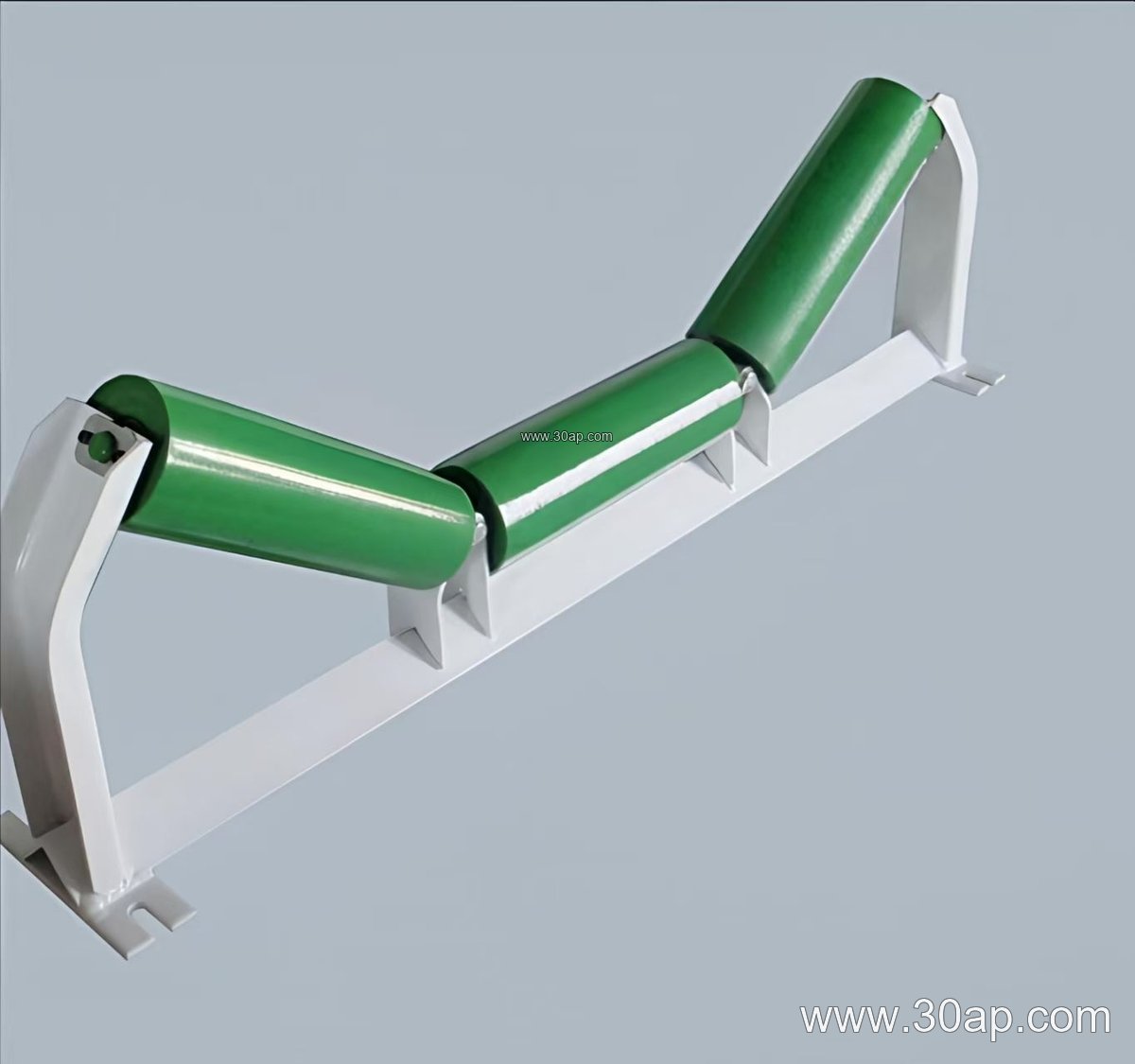
Key features usually include the following:
- Mounting holes positioned to match the existing frame, not a fixed catalog pattern
- Trough angle set to suit the belt and material, commonly 20, 30, 35 or 45 degrees
- Roller seat spacing matched to the chosen roller diameter, such as Ø89, Ø108, Ø133, Ø159 or Ø194
- Optional height adjustment for belt tracking and transition zones
- Reinforcement plates or gussets where the bracket carries impact or a long span
Because the frame is custom, the hole pitch and crossbeam length change with belt width and trough angle. A bracket for B800 at 35 degrees is not the same part as one for B1200 at 45 degrees, and the drawing should state the actual frame interface.
Where It Fits on the Conveyor
The bracket type follows its position. Upper trough brackets carry the loaded side of the belt. Return brackets support the empty side, and a V-shaped return bracket helps center the belt on the way back. Transition brackets sit between the tail pulley area and the first full trough set, where the belt changes shape. Impact brackets are used below a loading point, and self-aligning brackets are placed where the belt tends to wander.
In a coal washing plant or a limestone crushing line, a custom transition bracket is often the practical answer when the existing frame sits close to a conveyor pulley and a standard bracket will not clear the structure. On a stockyard belt carrying abrasive ore, a reinforced non-standard bracket under the impact zone can extend the service life of both the roller and the frame.
Matching the Bracket to Belt and Roller
The bracket does not work alone. Belt width, trough angle and roller diameter are chosen together, and the bracket must accept that combination. A typical reference set might look like this:
- B650, 30 degrees, Ø89 roller
- B800, 35 degrees, Ø108 roller
- B1000, 35 degrees, Ø133 roller
- B1200, 45 degrees, Ø133 or Ø159 roller
- B1400, 45 degrees, Ø159 roller
These are common examples, not fixed rules. One belt width can accept more than one trough angle or roller size depending on load, belt stiffness and transition length. For a heavy-duty mining conveyor carrying large lump ore, the bracket and roller should be sized for impact and belt support, not copied from a lighter line. On a long overland run with a steel cord conveyor belt, the bracket spacing and frame stiffness matter as much as the bracket shape.
What Buyers Should Confirm
A clear inquiry saves rework. Before ordering a non-standard conveyor bracket, confirm the frame attachment dimensions, the required trough angle, the roller diameter and the belt width. State whether the bracket is fixed or adjustable, and whether it is for the carrying side, the return side or a transition point.
Also confirm the material and surface treatment, the expected load, and whether the bracket must fit around an existing conveyor pulley or chute. For dusty or wet conditions, mention the environment so the fabrication and coating suit the site. A bracket drawing with hole positions and beam length is more useful than a photo alone.
Finally, keep spare brackets for the points that wear fastest, such as impact and transition locations. A small stock of custom brackets reduces downtime when a frame is damaged in a crusher or transfer area.