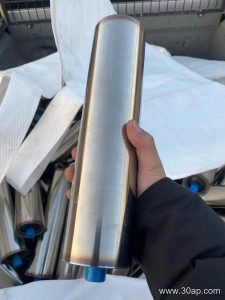
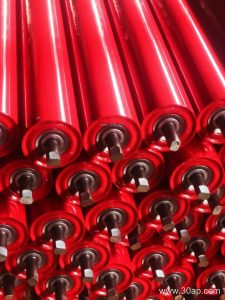
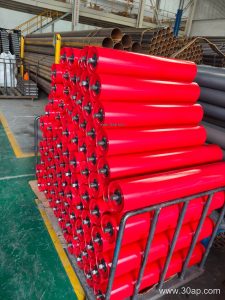
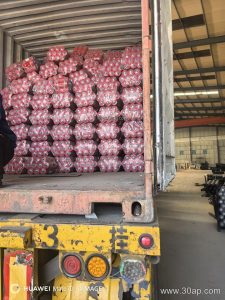
What a Herringbone Grooved Lagged Pulley Does
A herringbone grooved lagged pulley is a conveyor pulley whose rubber lagging carries a V-shaped groove pattern to improve grip and steer the belt. It is often called a chevron grooved lagged pulley, and the two names describe the same component. The herringbone pattern is not decoration: the grooves open toward the belt edges and help evacuate water, fines, and slurry that would otherwise sit between the lagging and the belt cover.
On a drive pulley, this surface form raises friction between the pulley and the conveyor belt, which matters when the belt carries heavy bulk material or works on an incline. The groove geometry also helps reduce slip in wet or dusty conditions without relying on an aggressive, fully plain rubber surface. Because the pattern is directional, the pulley must be mounted with the correct rotation so the herringbone points away from the belt travel direction.
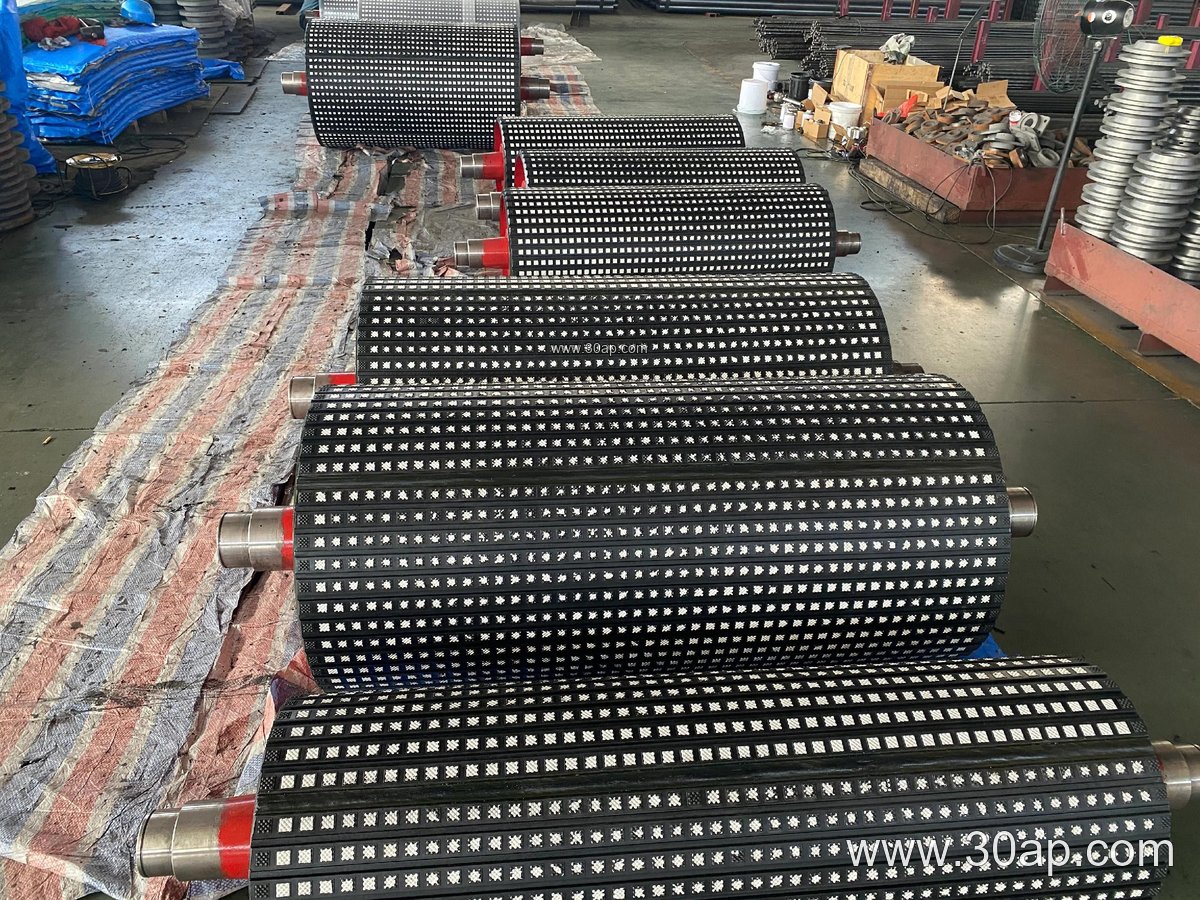
Construction and Surface Details
The pulley body is usually a welded steel drum with end discs and a shaft, machined for balance and concentricity. Lagging is applied either as hot-vulcanized rubber, cold-bonded rubber, or cast rubber, and the herringbone grooves are cut or molded into the rubber. Common lagging thicknesses are 8, 10, 12, 15, and 20 mm, selected according to belt tension, duty, and the need for wear allowance.
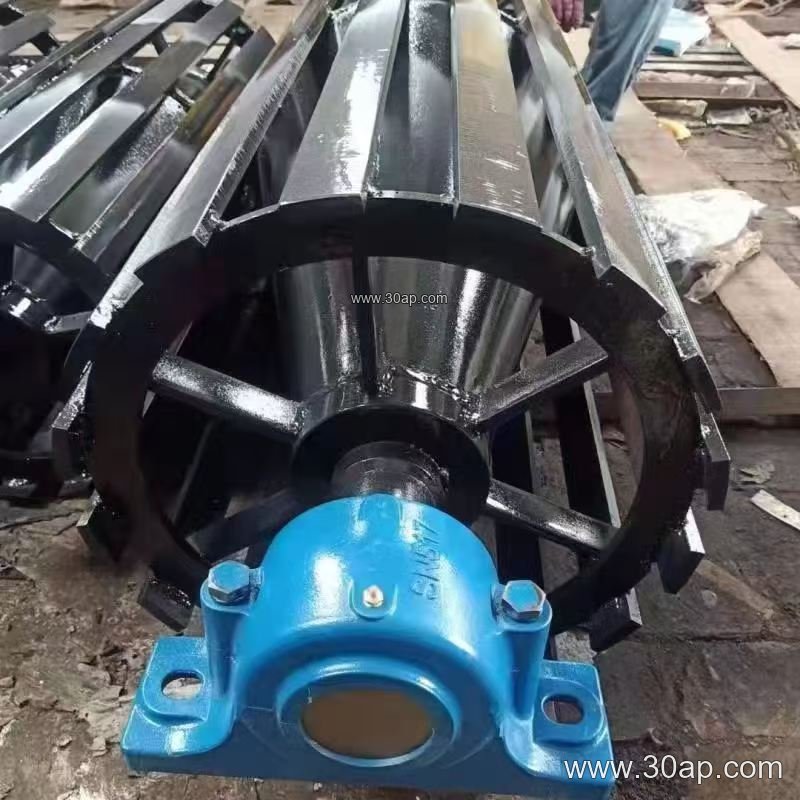
Typical sizes are expressed as belt width times pulley diameter, such as B800 × Ø500 or B1200 × Ø1000. The drum face width is normally wider than the belt, for example about 950 mm for a B800 belt and about 1400 mm for a B1200 belt. Shaft diameters are not fixed by belt width alone; they are determined by torque, bearing load, and the conveyor bracket arrangement. Common shaft sizes include Ø80, Ø100, Ø120, and Ø140, but the final value should come from the pulley design calculation.
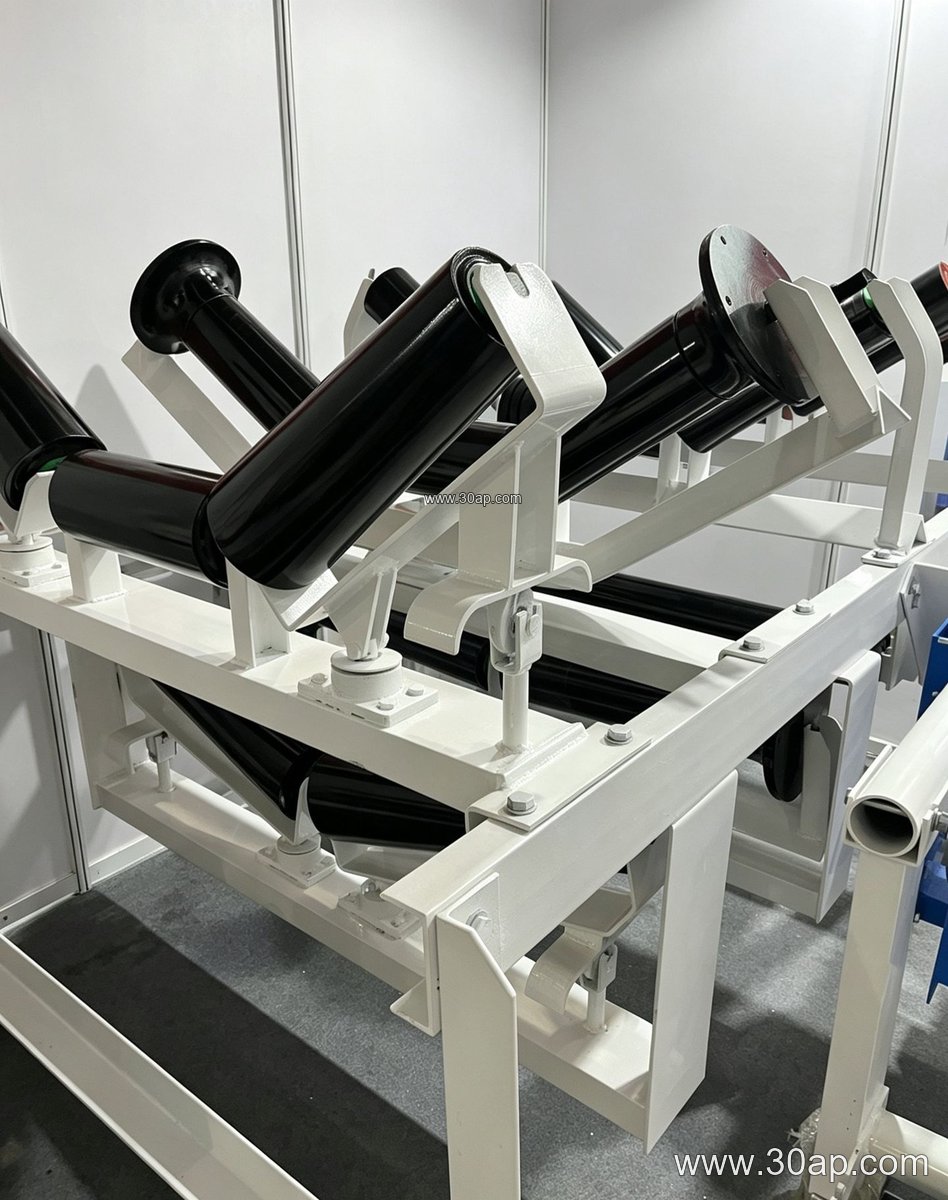
Common Reference Ranges
| Parameter | Typical Range |
|---|---|
| Belt width | B400 to B2400 |
| Pulley diameter | Ø200 to Ø1800 |
| Lagging thickness | 8 to 20 mm |
| Shaft diameter | Ø50 to Ø200 |
| Surface form | Herringbone grooved lagging |
These are reference ranges, not universal specifications. A herringbone grooved lagged pulley for a small aggregate line and one for an iron ore terminal can look very different in diameter, lagging thickness, and shaft size.
Where It Fits in a Conveyor
This pulley is most often used as a drive pulley at the head of a conveyor, where torque must be transferred to the belt. It can also appear as a tail pulley or a bend pulley when extra traction or belt steering is needed. In a coal mining conveyor or a power plant coal handling system, the herringbone grooves help shed coal dust and moisture. In a quarry conveyor or a cement plant clinker line, the same surface form helps maintain grip under abrasive, dusty conditions.
It is not a replacement for a plain drive pulley in every case. A very clean, dry application may do well with a plain or diamond-lagged surface. A herringbone grooved lagged pulley is chosen when wet, dirty, or inclined operation makes belt slip a real risk. For comparison, a bend pulley usually carries lower tension and may use a simpler lagging or no lagging at all; the drive pulley, by contrast, needs the best traction surface the design allows.
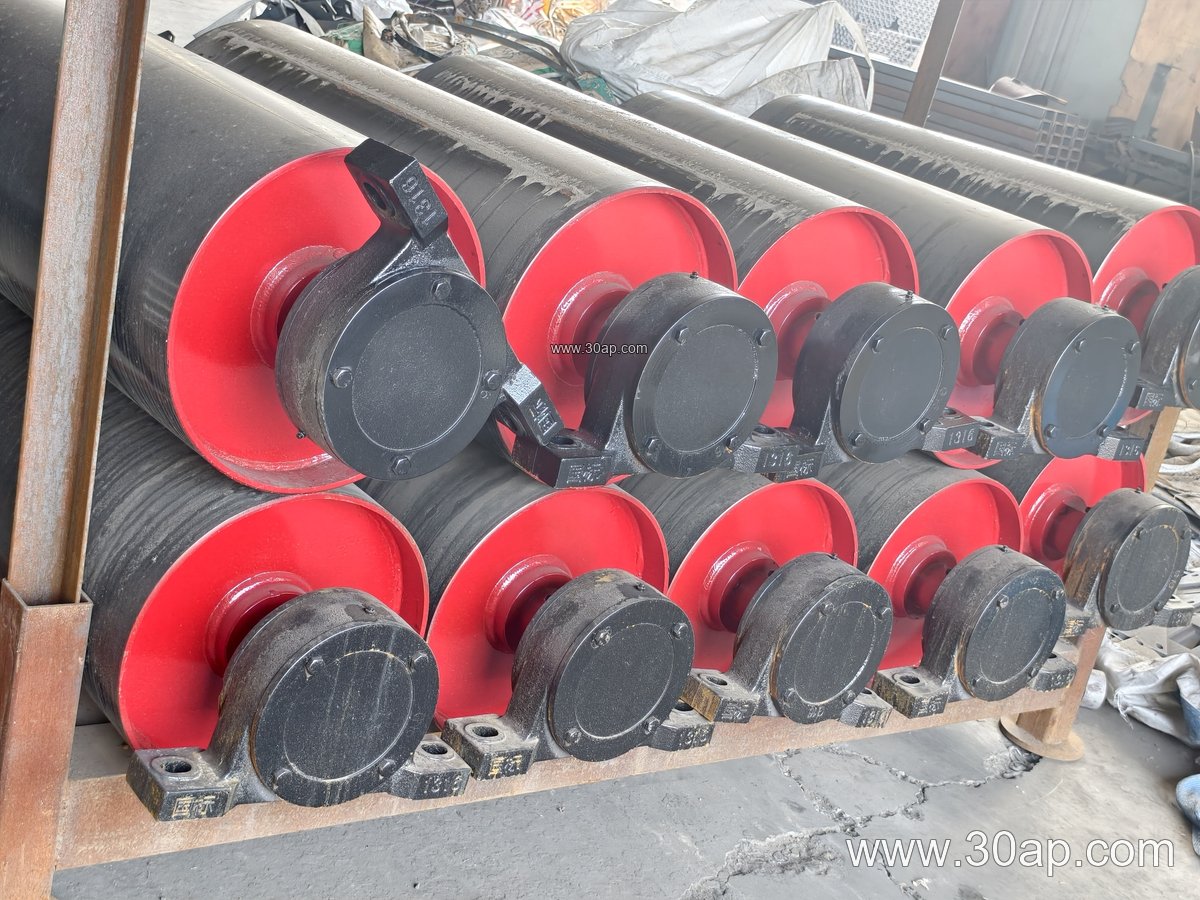
Buyer Checklist
- Confirm the pulley role: drive, tail, or bend. The required traction and load differ.
- Match belt width to drum face width, and confirm the pulley diameter with the belt manufacturer’s minimum pulley recommendation.
- Specify lagging thickness and rubber grade for the environment, such as abrasion resistant or flame retardant where relevant.
- Check the herringbone direction against the intended rotation before installation.
- Review shaft diameter, bearing size, and conveyor bracket dimensions together, not from belt width alone.
For the belt itself, a rubber conveyor belt with a fabric core or steel cord construction may call for different pulley diameters. A heavy-duty mining conveyor belt or a high abrasion resistant conveyor belt often runs with a larger drive pulley to reduce bending stress. The pulley and the belt should be selected as a pair, not as separate items.
Maintenance Notes
Inspect the herringbone grooves for packed material, cuts, and rubber wear. Worn grooves reduce water evacuation and traction, so re-lagging may be needed before the pulley slips. Keep the belt cleaner and the pulley scraper working; a clean lagging surface lasts longer. Check bearing temperature and shaft alignment during routine stops, and verify that the conveyor bracket bolts remain tight. A herringbone grooved lagged pulley is a durable component, but it still depends on correct alignment, tension, and belt tracking to deliver its best service life.