What a Skirted Conveyor Belt Is
A skirted conveyor belt is a fabric or steel-reinforced belt fitted with raised rubber or elastomer side walls, often called skirts, that run along both edges. These skirts contain loose material on the carrying surface, so a bulk material conveyor belt can handle more load per unit of width without spillage on the return run or at transfer points. The product is also described as a sidewall belt or a belt with integral edge skirts, and these names refer to the same construction rather than to a different belt family.
The skirt is usually bonded or vulcanized to the belt edge during manufacture. On some designs the skirt is a separate strip fixed with mechanical fasteners, but the vulcanized version is more common where dust control and long service life matter. The belt itself may be an EP conveyor belt, an NN conveyor belt, or a steel cord conveyor belt, depending on tension and impact requirements.
Construction and Working Principle
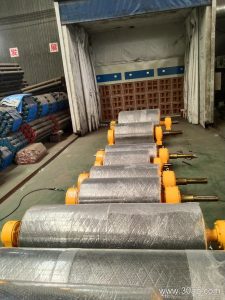
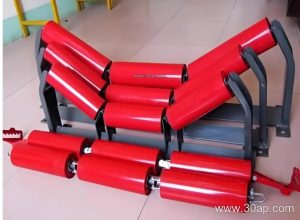
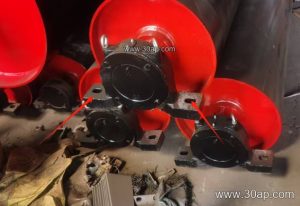
The core provides tensile strength, while the top cover protects against abrasion and the bottom cover runs over idler rollers. The skirt height is matched to the material profile and the troughing angle. In a typical transfer section, the belt runs over a conveyor pulley at the head and tail, and the skirted section is supported by idler rollers or a flat slider bed.
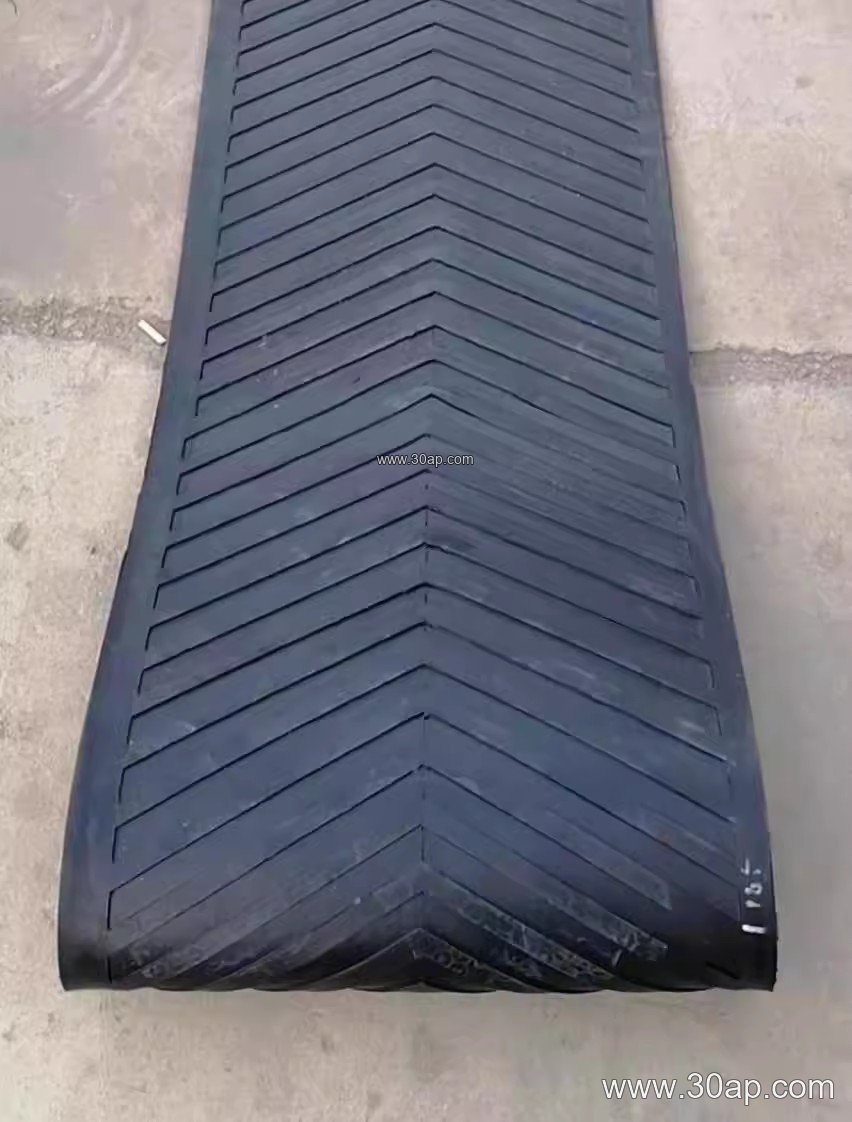
- Skirt height commonly ranges from about 40 mm to 200 mm, with taller skirts used for steep inclines.
- Cover compounds can be abrasion resistant, heat resistant, oil resistant, or flame retardant for underground coal mining conveyor belts.
- Fabric cores are common in EP and NN constructions, while steel cord designs suit long, high-tension routes.
A corrugated sidewall conveyor belt is a related variant with folded side walls that allow tighter transition curves and steeper angles. It is not a replacement for the flat skirted type in every duty, since the corrugated profile changes the pulley and support requirements.
Where It Fits in a Plant
Skirted belts are common in cement plants, power plants, quarries, sand and gravel operations, and mineral processing lines where dust and spillage are concerns. A quarry conveyor belt or aggregate conveyor belt with edge skirts keeps crushed stone centered during loading. In a coal mining conveyor belt system, the skirted design helps control fines at the crusher discharge. The same principle applies to an ore conveyor belt handling iron ore or copper ore, and to a bulk material conveyor belt in a port or ship loading facility.
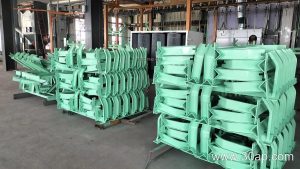
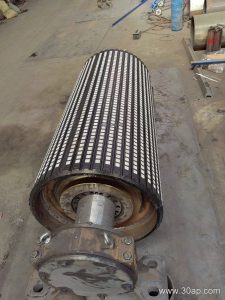
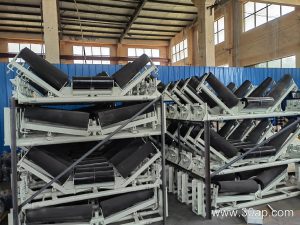
Because the skirt adds stiffness, the belt needs careful alignment at the head pulley and tail pulley. A conveyor bracket that holds the idler roller frame should be set so the skirt does not rub. The conveyor pulley diameter is chosen from the belt thickness and tension rating rather than from belt width alone, and a wider belt does not automatically require a larger shaft.
Common Specifications and Selection Notes
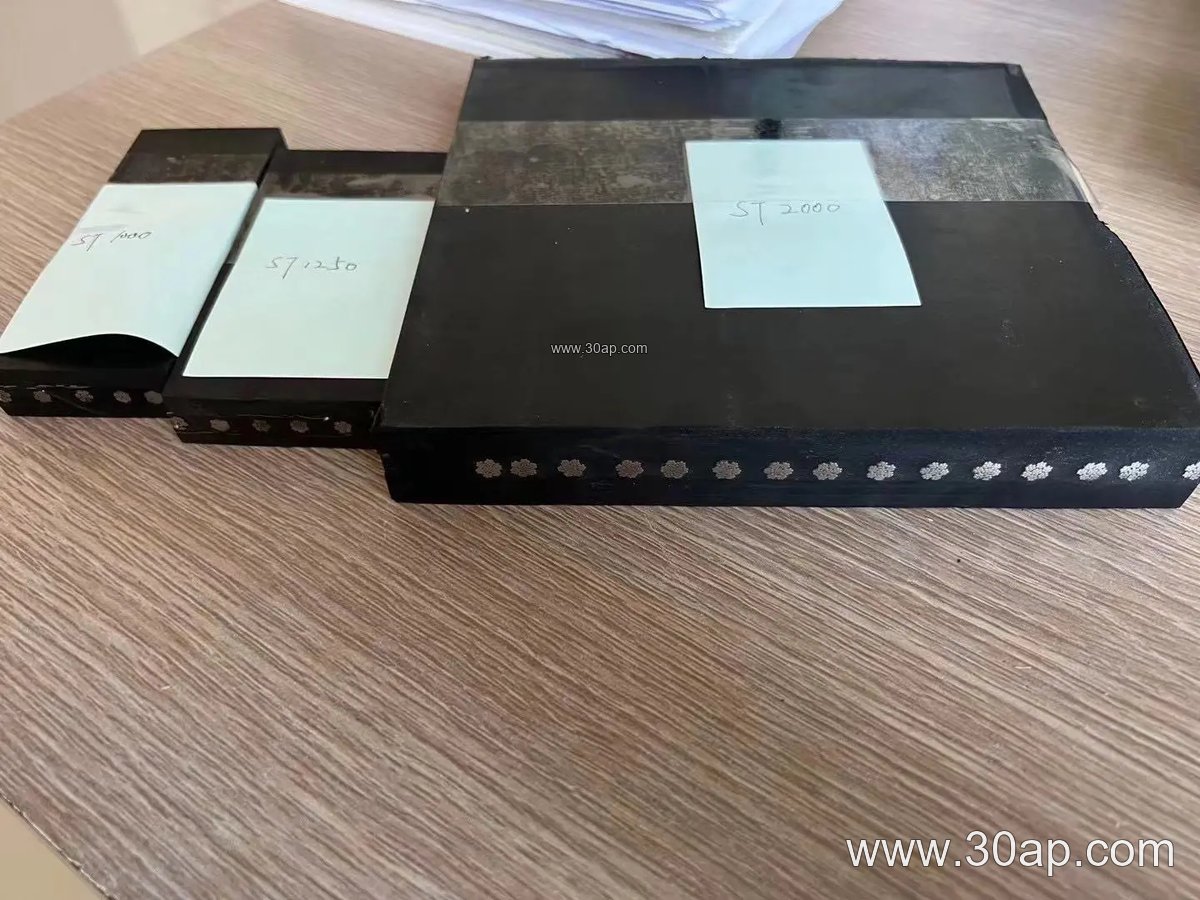
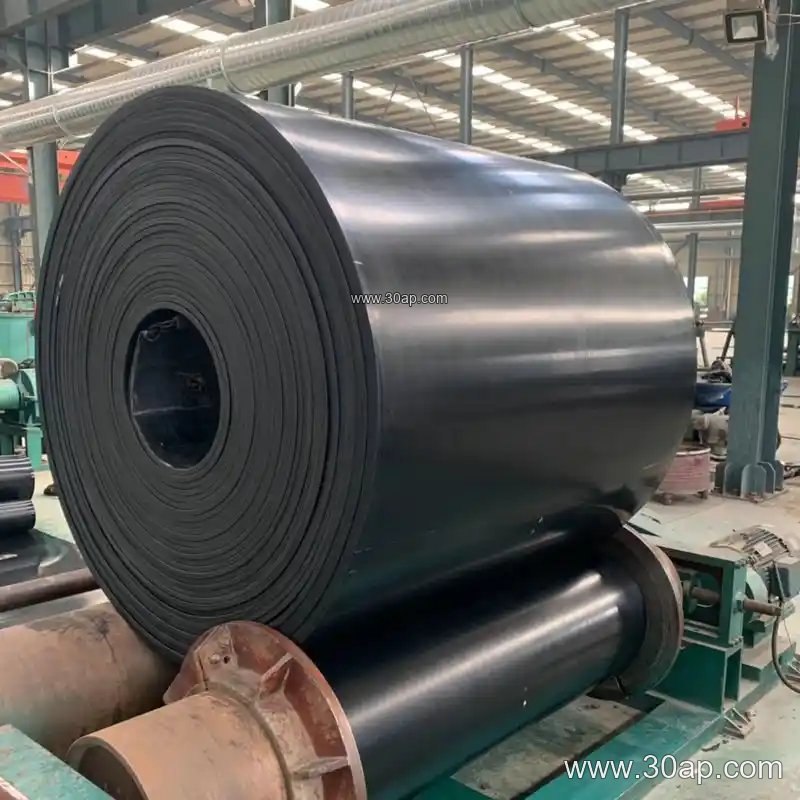
Buyers often compare fabric-core grades such as EP200, EP400, EP630, or EP1000, and nylon grades such as NN200 or NN300. For heavy-duty mining conveyor belts, steel cord grades like ST1250 or ST2000 may be used. The table below shows representative values for reference only; actual supply depends on the manufacturer and the design duty.
| Property | Typical reference range |
|---|---|
| Belt width | B500, B650, B800, B1000, B1200, B1400, B1600 |
| Fabric plies | 2 to 6 layers |
| Cover thickness | 3+1.5 mm, 4+2 mm, 5+2 mm, 6+2 mm |
| Skirt height | 40 mm to 200 mm, by design |
| Strength grades | EP200 to EP2000, NN100 to NN400 |
Selection should consider material lump size, moisture, temperature, and the transition length. A heat resistant conveyor belt is needed near kilns or clinker coolers, while a flame retardant conveyor belt is usual in underground coal mining. For oily scrap or recycled material, an oil resistant grade helps protect the cover.
Installation and Maintenance Pointers
Check skirt bonding at each shutdown, since a lifted edge can catch on a conveyor pulley or an idler roller. Keep the belt centered and confirm that the skirt clears the support structure. Tension should follow the belt maker’s data; over-tensioning shortens splice life. For a long route, a steel cord conveyor belt with skirts may need a larger tail pulley and a reinforced conveyor bracket to carry the extra edge load. Spare skirts and cover repair kits are worth keeping on site in dusty plants such as a cement plant or a coal handling station.
For more information on matching a skirted conveyor belt to your conveyor pulley, idler roller, and frame layout, contact the belt supplier with the route drawing and material data. Related belt options include rubber conveyor belt, fabric core conveyor belt, multi-ply fabric core conveyor belt, chevron conveyor belt, pipe conveyor belt, endless conveyor belt, and anti-static conveyor belt, each chosen for a specific duty rather than as a direct swap.