What a Conveyor Bracket Does on a Belt System
A conveyor bracket is the structural interface between the idler roller and the conveyor frame. It holds each roller at the correct height, angle, and spacing so the conveyor belt keeps a stable profile from loading point to discharge. In a quarry, a cement plant, or a power plant coal yard, the bracket is easy to overlook, yet it decides whether the belt tracks cleanly or drifts against the frame. It also carries a share of the vibration and impact that arrive with every lump of rock, clinker, or ore.
The same component is often called a conveyor idler bracket or roller support bracket, and those names describe the same product. Drive pulleys, tail pulleys, and bend pulleys are separate assemblies with their own support structures; they are not bracket subtypes and should not be confused with this item.
How the Bracket Is Built
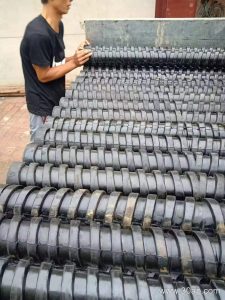
Most brackets are fabricated from angle steel, channel steel, or folded steel plate. The choice depends on load, belt width, and the environment. A light bracket on a small aggregate line may use thin folded plate, while a heavy-duty mining conveyor bracket in an iron ore plant usually needs a stiffer channel section and reinforced mounting slots.
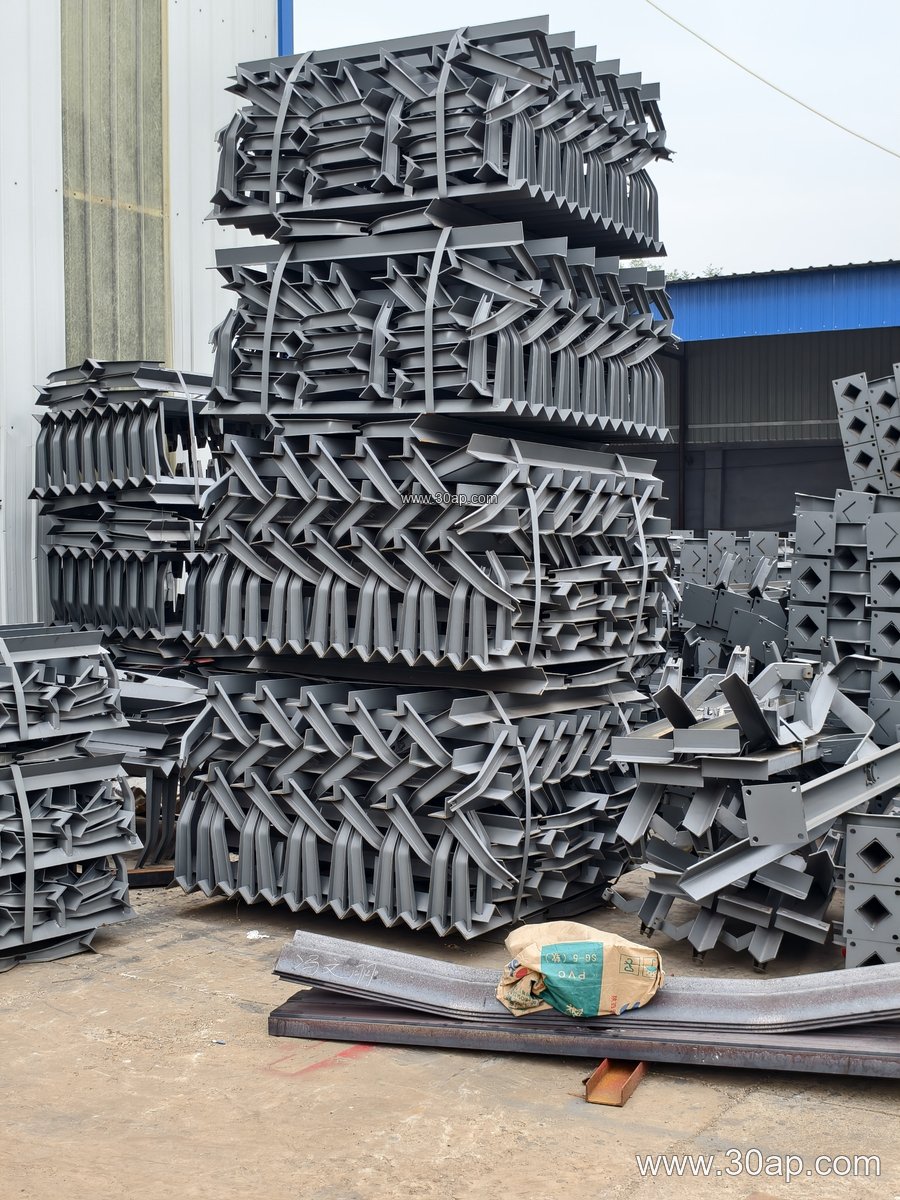
Typical features include:
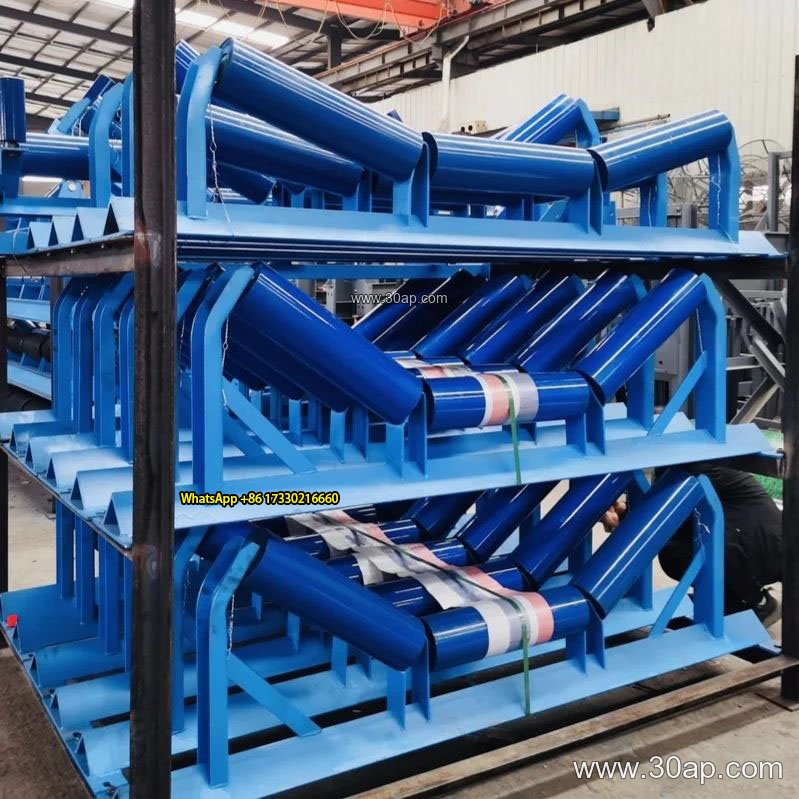
- Slotted or drilled mounting holes for roller shafts
- Fixed or adjustable troughing angle positions
- Welded or bolted connection to the main frame
- Reinforcing ribs at high-load points
- Paint, galvanizing, or other surface treatment for damp or dusty sites
The bracket must match the roller diameter and the belt width, but it is not tied to a single combination. A B800 frame can be arranged at 30 degrees or 35 degrees with different roller diameters, and a B1200 system may use 35 degrees or 45 degrees depending on material surcharge and belt speed. The mounting hole spacing and crossbeam length change with belt width and trough angle, so these dimensions are normally confirmed by design rather than taken from a single table.
Common Bracket Types and Where They Sit
Troughing brackets support the carrying side and set the trough angle. Transition brackets sit near the pulleys, where the belt changes from flat to troughed. Return brackets hold the return rollers, and V-shaped return brackets help center the belt on the lower run. Impact brackets are placed under loading chutes in a crusher or screen feed point, where the belt receives sharp shock. Self-aligning and forward-leaning brackets are used where tracking needs correction. Hanging brackets suit structures where the frame is suspended rather than floor-mounted.
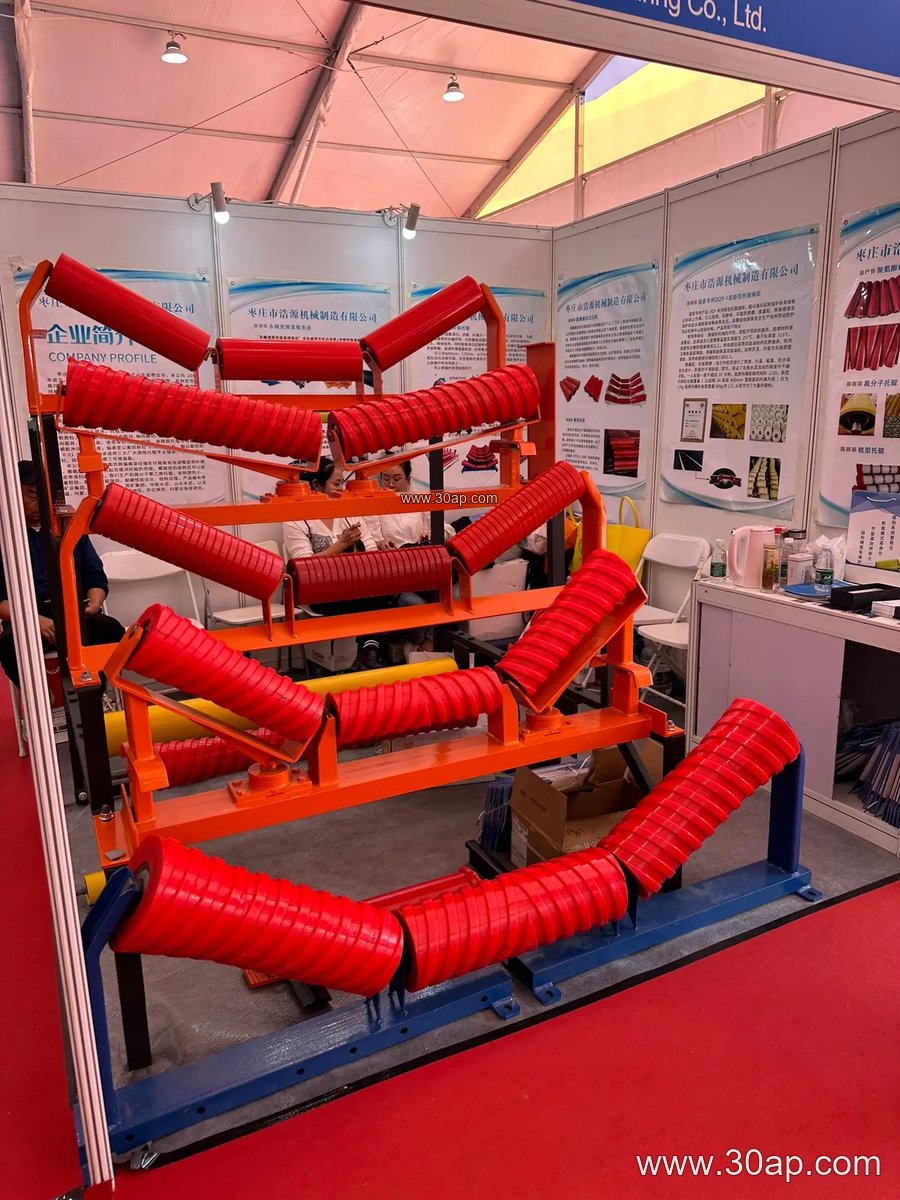
Adjustable brackets are useful during commissioning and where material conditions change. They allow the trough angle to be set within a range such as 20, 30, 35, or 45 degrees. Forward-leaning brackets are usually set at about 1.5 to 2 degrees to encourage belt centering. Fixed brackets are simpler and cheaper but leave less room for adjustment after installation.
Matching Bracket, Roller, and Belt
Bracket selection starts with the belt and the load. A wide, heavy belt carrying abrasive rock needs a stronger frame and larger rollers, while a smaller line may use lighter components. The table below shows reference combinations that are common in design work; they are examples, not fixed rules.
| Belt width | Trough angle | Roller diameter | Typical bracket use |
|---|---|---|---|
| B650 | 30 degrees | 89 mm | Light aggregate or sand line |
| B800 | 35 degrees | 108 mm | General quarry and cement service |
| B1000 | 35 degrees | 133 mm | Coal handling, power plant |
| B1200 | 45 degrees | 133 mm | Heavy bulk material, iron ore |
| B1400 | 35 degrees | 159 mm | High-capacity main haulage |
| B1600 | 45 degrees | 159 mm | Large port or mine conveyor |
| B1800 | 35 degrees | 194 mm | Extra-wide bulk handling |
The belt itself also affects bracket choice. An abrasion resistant conveyor belt used on a crusher discharge puts more vibration into the frame than a smooth EP conveyor belt on a clean product line. A flame retardant conveyor belt in an underground coal mining conveyor may require brackets with specific clearance for fire safety and inspection. A heavy-duty mining conveyor belt with steel cord reinforcement needs a stiffer support frame than a multi-ply fabric core conveyor belt on a shorter run.
Installation and Maintenance Notes
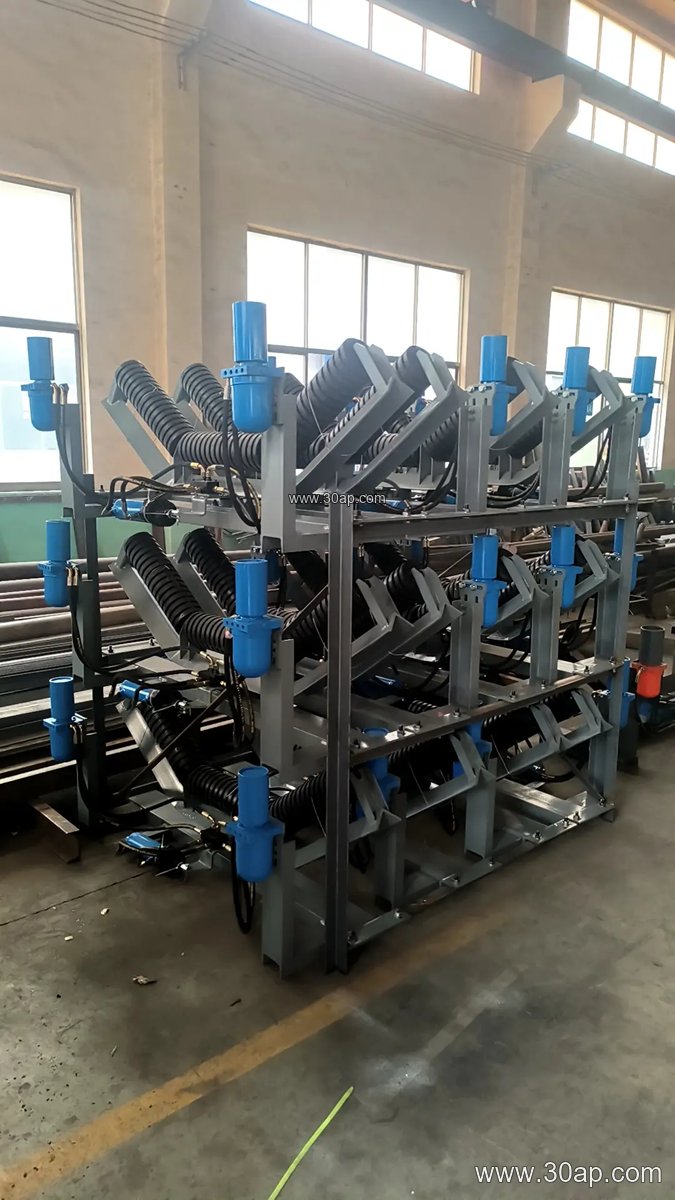
Alignment matters more than many buyers expect. Brackets should be set square to the belt centerline and at a consistent height along the frame. A single high or low bracket can cause the belt to train to one side. On site, check that mounting bolts are tight, that slots are not worn oval, and that the bracket has not deformed under impact. In dusty plants, clean the mounting area so the roller sits flat.
Spare parts planning should include the bracket type, belt width, trough angle, and roller diameter. Keeping a few adjustable brackets on hand helps when a conveyor is modified or when a new material grade is introduced. For more on related components, see the roller and pulley pages at conveyor bracket and the belt guide at conveyor belt.
What Buyers Should Confirm Before Ordering
- The belt width and the required trough angle range
- The roller diameter and shaft end type
- Fixed or adjustable design, and the adjustment range
- Frame connection method and hole spacing
- Material thickness and surface treatment for the site environment
- Whether the bracket is for carrying, return, impact, or transition service
Clear specification at the inquiry stage avoids mismatches on site. A conveyor bracket that fits the roller, the frame, and the belt load will keep a conveyor running straighter and longer in any quarry, coal preparation plant, or cement kiln line.