What a Three-Roll Idler Set Does on a Belt Conveyor
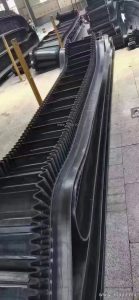
A three-roll idler set is the troughing assembly that supports the carrying side of a conveyor belt. It consists of three idler rollers mounted in a frame, with one center roll running roughly flat and two side rolls angled upward. Together they form the trough that keeps bulk material centered as it travels from the loading point to the discharge. In a quarry, a limestone mine, or a cement plant, this assembly is one of the most repeated components along the line, so its condition directly affects belt tracking, power draw, and spillage.
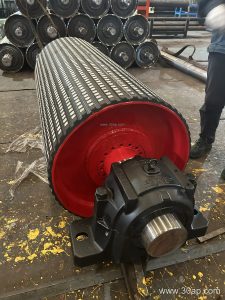
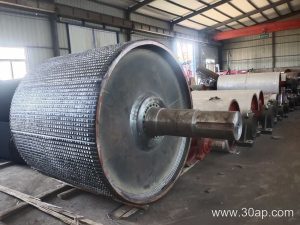
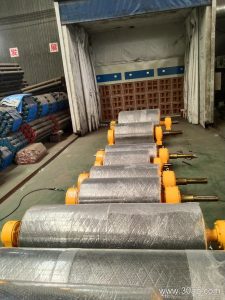
The same assembly is also called a three-roller troughing idler set or a three-piece carrying idler set. Those names describe the same product. A drive pulley, a tail pulley, and a bend pulley are different components entirely and are not interchangeable with this idler group.
How the Assembly Is Built
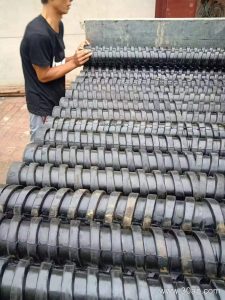
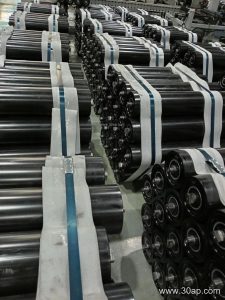
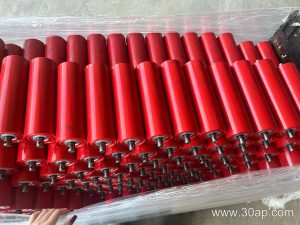
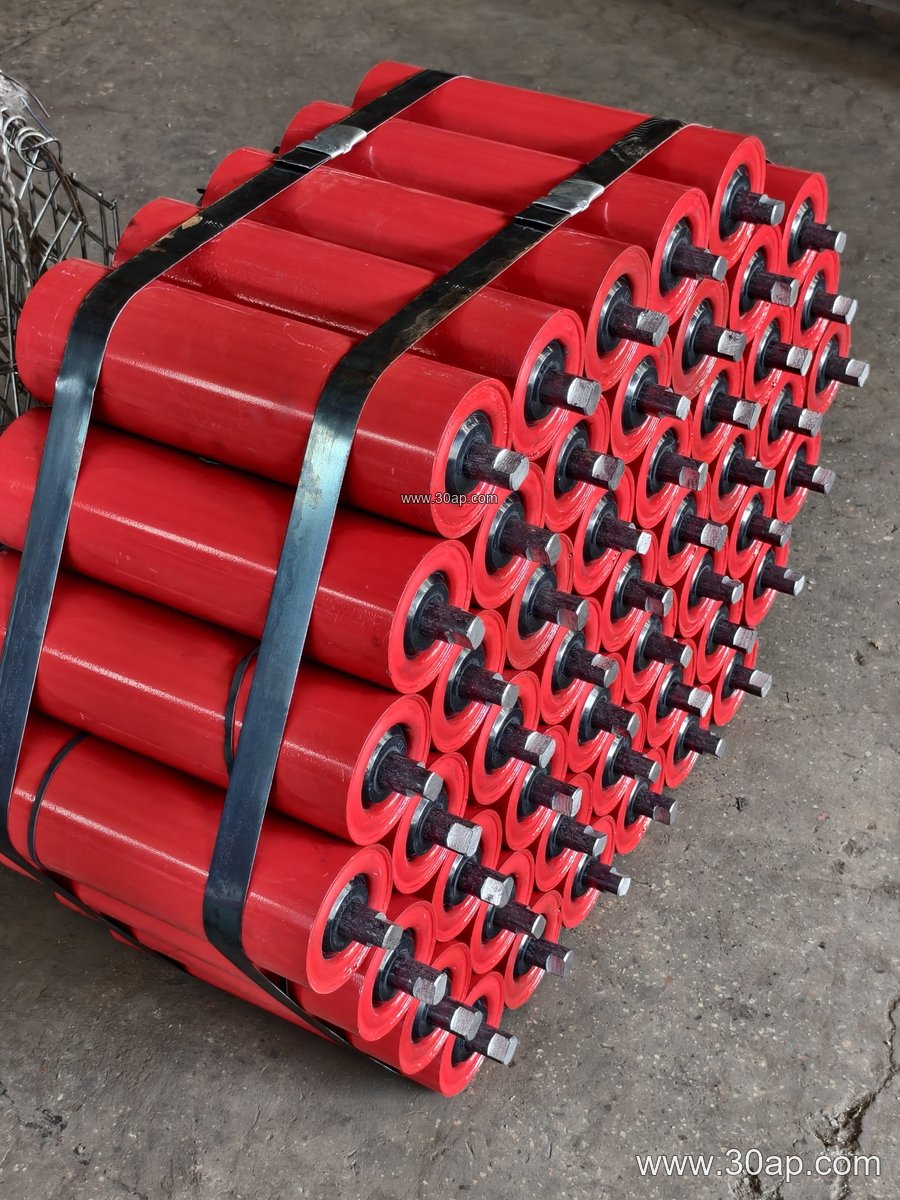
Each roll usually has a steel tube shell, a shaft, and sealed bearings at both ends. The side rolls sit in brackets that set the trough angle, while the center roll is often mounted with a small forward tilt of about 1.5 to 2 degrees to help the belt self-center. Roll surfaces may be plain steel, nylon, ceramic, or rubber rings, depending on whether the priority is wear life, material build-up resistance, or impact absorption.
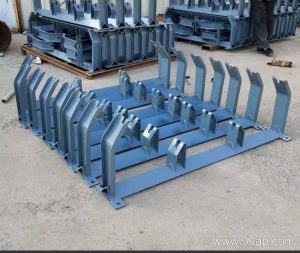
Common roll diameters include Ø89, Ø108, Ø127, Ø133, Ø159, and Ø178. Bearing sizes such as 6204, 6205, 6305, 6306, 6308, and 6310 appear across the range, but no single bearing is tied to one roll diameter. The frame, sometimes called a conveyor bracket set, must match the belt width and the chosen trough angle.
Typical Sizes and Reference Data
The table below gives common examples only. Side roll and center roll lengths can differ, and final dimensions are set by the conveyor design.
- B500 belt width: three-roll idler roll length around 200 mm
- B650 belt width: three-roll idler roll length around 250 mm
- B800 belt width: three-roll idler roll length around 315 mm
- B1000 belt width: three-roll idler roll length around 380 mm
- B1200 belt width: three-roll idler roll length around 465 mm
- B1400 belt width: three-roll idler roll length around 530 mm
- B1600 belt width: three-roll idler roll length around 600 mm
- B1800 belt width: three-roll idler roll length around 670 mm
- B2000 belt width: three-roll idler roll length around 750 mm
Trough angles are commonly 20, 30, 35, or 45 degrees. A deeper trough suits fine, free-flowing material, while a shallower angle may be preferred where the belt is stiff or the load is lumpy. The choice should follow the conveyor design rather than a fixed rule.
Where These Idler Groups Fit
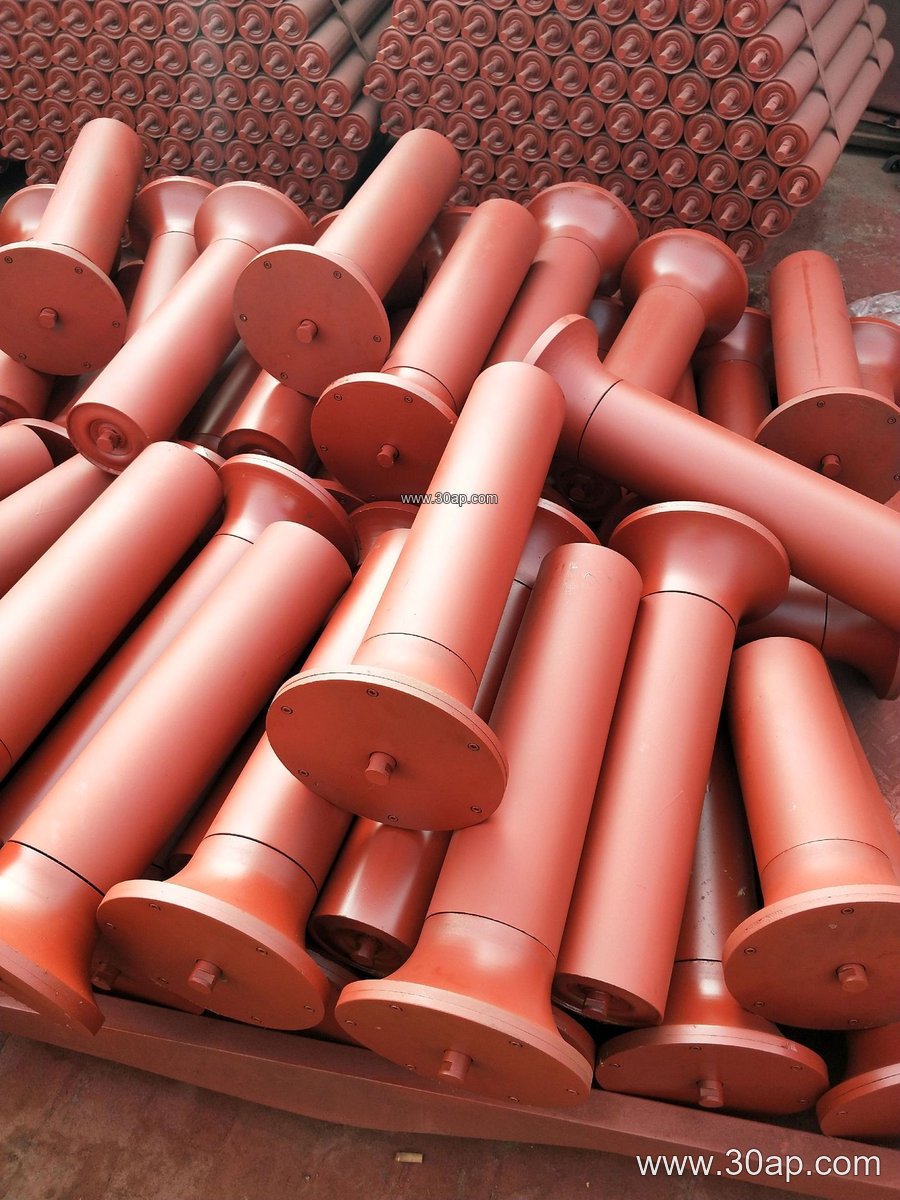
Three-roll carrying sets are standard on the loaded run of a conveyor belt in sand and aggregate lines, coal handling systems at power plants, and crushing and screening circuits. A cement plant uses them on clinker and raw meal routes; a port terminal uses them on ship loading and stockyard conveyors. In dusty or wet conditions, sealed bearings and smooth roll surfaces help reduce material wrap and premature seizure.
The belt itself matters too. A heavy-duty mining conveyor belt or an abrasion resistant conveyor belt may run at higher tension, so the idler set must be rated for the load. Where product contamination is a concern, a food grade conveyor belt may be paired with clean, well-sealed rolls.
Buyer Checklist Before Ordering
Start with belt width, trough angle, and the required roll diameter. Confirm the frame fixing dimensions and the distance between mounting holes, because a set that does not fit the conveyor bracket cannot be installed. Ask about bearing type, seal design, and shell thickness, and state the operating environment, whether that is a wet wash plant, a dusty coal yard, or a hot clinker line. For impact zones near a crusher discharge, a impact idler or rubber-ring buffer roll may be a better fit than a standard three-roll carrying set, and that is a design comparison rather than a replacement.
Finally, plan spares. Keeping a few complete sets and a supply of individual idler rollers on site shortens downtime when a roll seizes or a shell wears through. Matching the replacement to the original trough angle and roll length keeps the belt profile stable and avoids unnecessary tracking problems.