What a Ceramic Lagged Bend Pulley Does
In a belt conveyor system, the bend pulley changes the belt’s direction without driving it. When that pulley is covered with ceramic lagging, the result is a ceramic lagged bend pulley—a routing component built for grip, wear life, and belt protection. It is not a drive pulley and not a tail pulley; its job is to guide the return strand or redirect the belt at a modest wrap angle, often near a tensioning station or before the belt enters a critical zone.
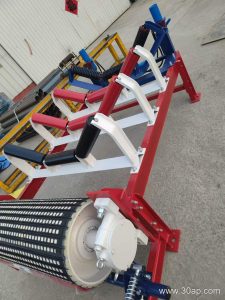
Ceramic lagging, also called ceramic rubber lagging, consists of small ceramic tiles embedded in a rubber matrix. The tiles provide a hard, abrasion-resistant surface, while the rubber absorbs shock and maintains flexibility. This combination is especially useful where the belt carries abrasive bulk material and the pulley face sees continuous contact. In a quarry, a limestone mine, or a sand and aggregate line, fine grit can migrate onto the pulley and accelerate wear on plain steel. A ceramic lagged bend pulley helps resist that wear while keeping friction predictable.
Construction and Surface Details
The pulley body is typically a welded steel drum with machined end discs and a shaft sized by torque and load. The ceramic lagging is bonded to the drum face, and the tile pattern may be flat, diamond, or grooved depending on the design. Lagging thickness commonly ranges from 8 mm to 20 mm, with 10 mm, 12 mm, and 15 mm being frequent choices. The pulley face width usually exceeds the belt width to allow for belt tracking; for example, a B800 belt often runs on a pulley face around 950 mm, and a B1200 belt may use a face near 1400 mm. These are reference relationships, not fixed rules—final dimensions depend on conveyor design.
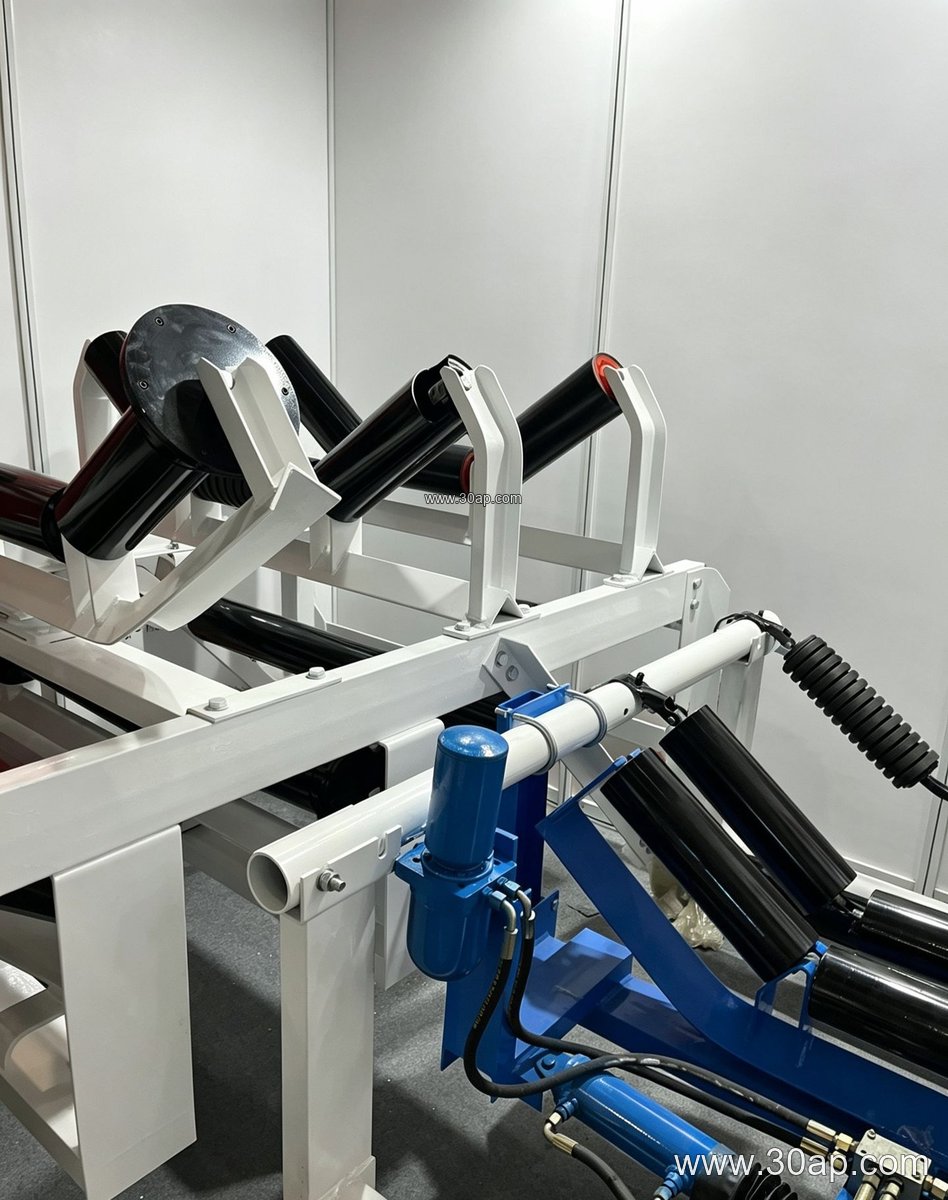
Shaft diameters are determined by the torque and radial load, not by belt width alone. Common shaft sizes include Ø80, Ø100, Ø120, Ø140, and Ø160, but a smaller or larger shaft may be correct for a given duty. A ceramic lagged bend pulley with a Ø630 drum and a 12 mm lagging thickness might serve a medium-duty aggregate conveyor, while a Ø1000 drum with 15 mm lagging could appear in a heavier stone crushing circuit. The belt itself—whether an EP conveyor belt, a steel cord conveyor belt, or a flame retardant conveyor belt—influences the pulley’s required friction and crown profile.
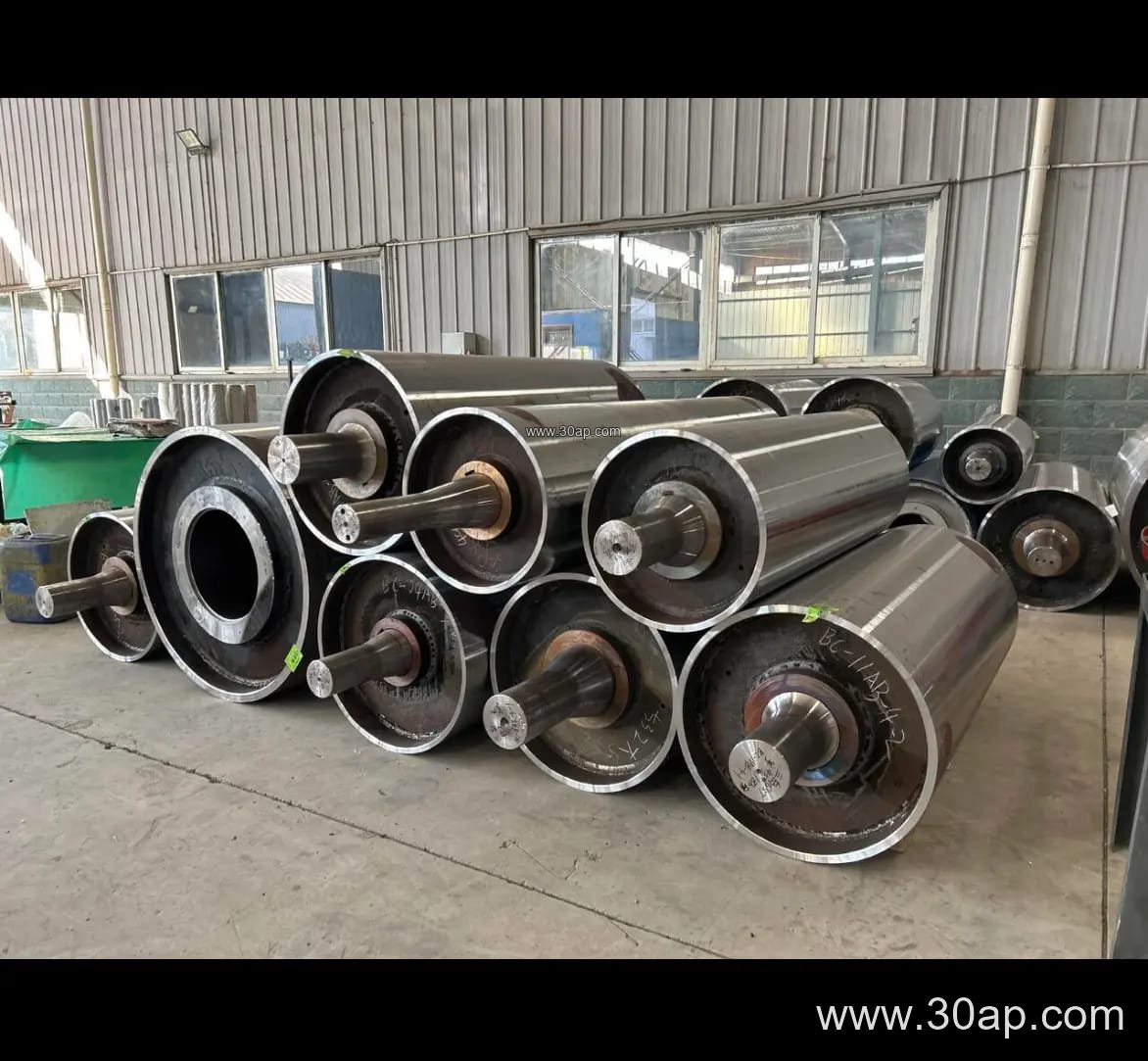
Where It Fits in the Conveyor Layout
A bend pulley is often placed where the belt must turn around an obstruction, enter a take-up zone, or align with a transfer point. In a coal mining conveyor, a ceramic lagged bend pulley may be used on the return side to maintain belt tension and reduce slip near the take-up. In a cement plant, it can help route the belt around a clinker cooler or a silo feed point. In a power plant coal handling system, the same pulley type may appear ahead of a tripper or a transfer tower.
It is important not to confuse this component with a drive pulley or a tail pulley. A drive pulley transmits power and usually has its own lagging specification; a tail pulley redirects the belt at the loading end. A bend pulley only changes direction. For comparison, a wing pulley is sometimes used in similar positions to shed sticky material, but it does not offer the same ceramic wear surface. The ceramic lagged bend pulley is chosen when abrasion resistance and consistent friction matter more than self-cleaning.
Buyer Checklist
- Confirm the belt width and the required pulley face width; common combinations include B650 with a 750 mm face, B1000 with a 1150 mm face, and B1400 with a 1600 mm face.
- Specify the drum diameter based on belt thickness and minimum bend radius; do not assume one diameter fits every belt width.
- State the lagging thickness and pattern—8 mm, 10 mm, 12 mm, 15 mm, or 20 mm—and whether flat or diamond ceramic tiles are preferred.
- Provide the shaft diameter required by the torque calculation, along with bearing centers and keyway details.
- Match the pulley to the conveyor belt type: an abrasion resistant conveyor belt may need a harder lagging surface, while a heat resistant conveyor belt may require a different rubber compound in the lagging.
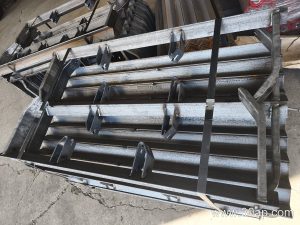
- Check compatibility with the conveyor bracket and idler roller layout so the pulley fits without shimming or frame modification.
For any conveyor handling abrasive bulk material—whether in an iron ore terminal, a copper ore concentrator, or a fertilizer granulation plant—the ceramic lagged bend pulley is a practical way to extend pulley life and protect the belt. Buyers should treat catalog sizes as starting points and confirm all dimensions against the actual conveyor design. A well-specified pulley will keep the belt tracking smoothly and reduce maintenance downtime.