What a Self-Aligning Idler Does
A self-aligning idler is a specially designed conveyor roller that automatically corrects belt misalignment. Also called a training idler or self-training idler, it uses the belt’s own movement to pivot slightly and steer the belt back to center. This reduces edge damage, spillage, and premature wear on the conveyor belt and other components. In mining, coal preparation plants, cement works, power station coal yards, and aggregate operations, a self-aligning idler is often installed at critical points where misalignment is likely.
How It Is Built
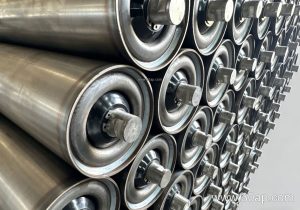
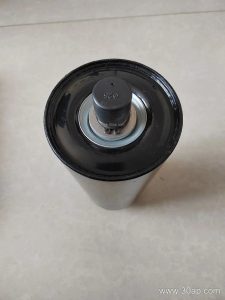
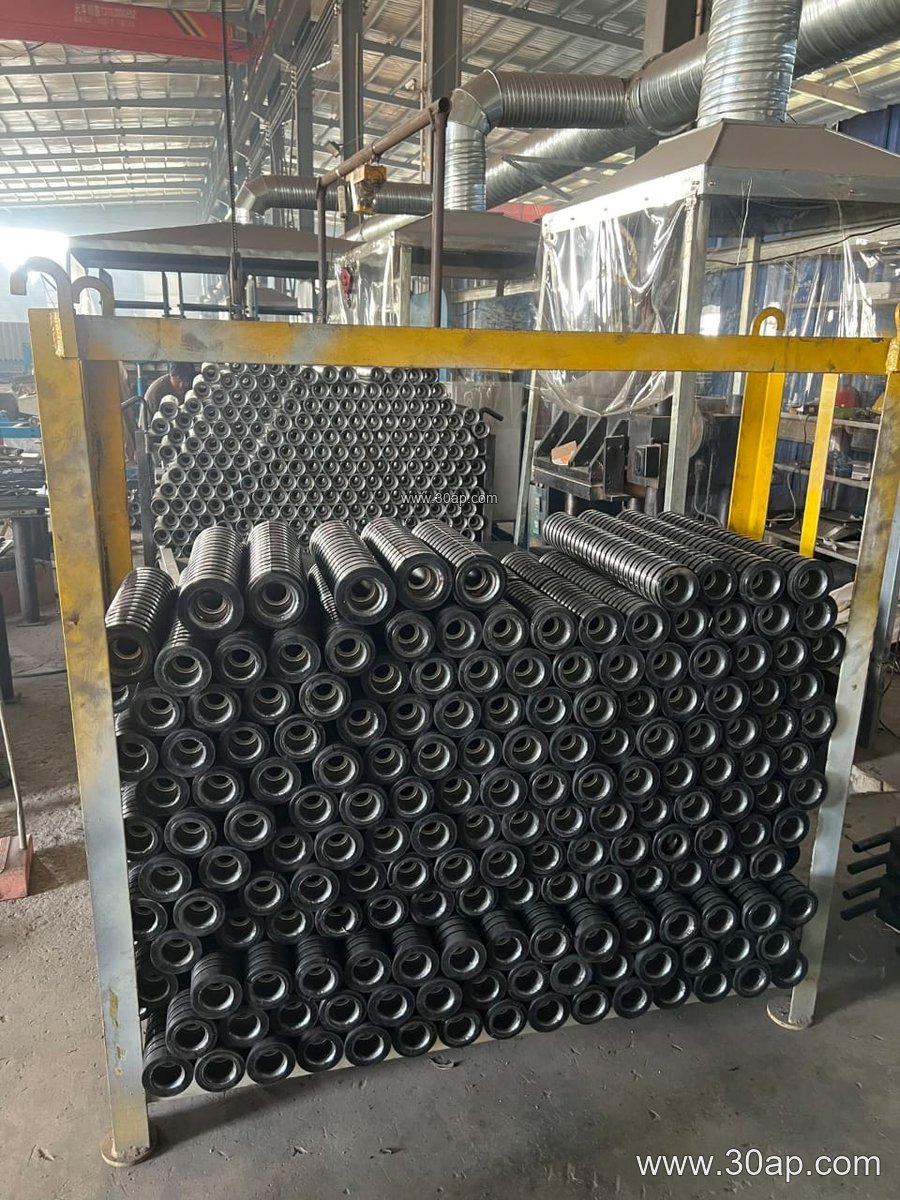
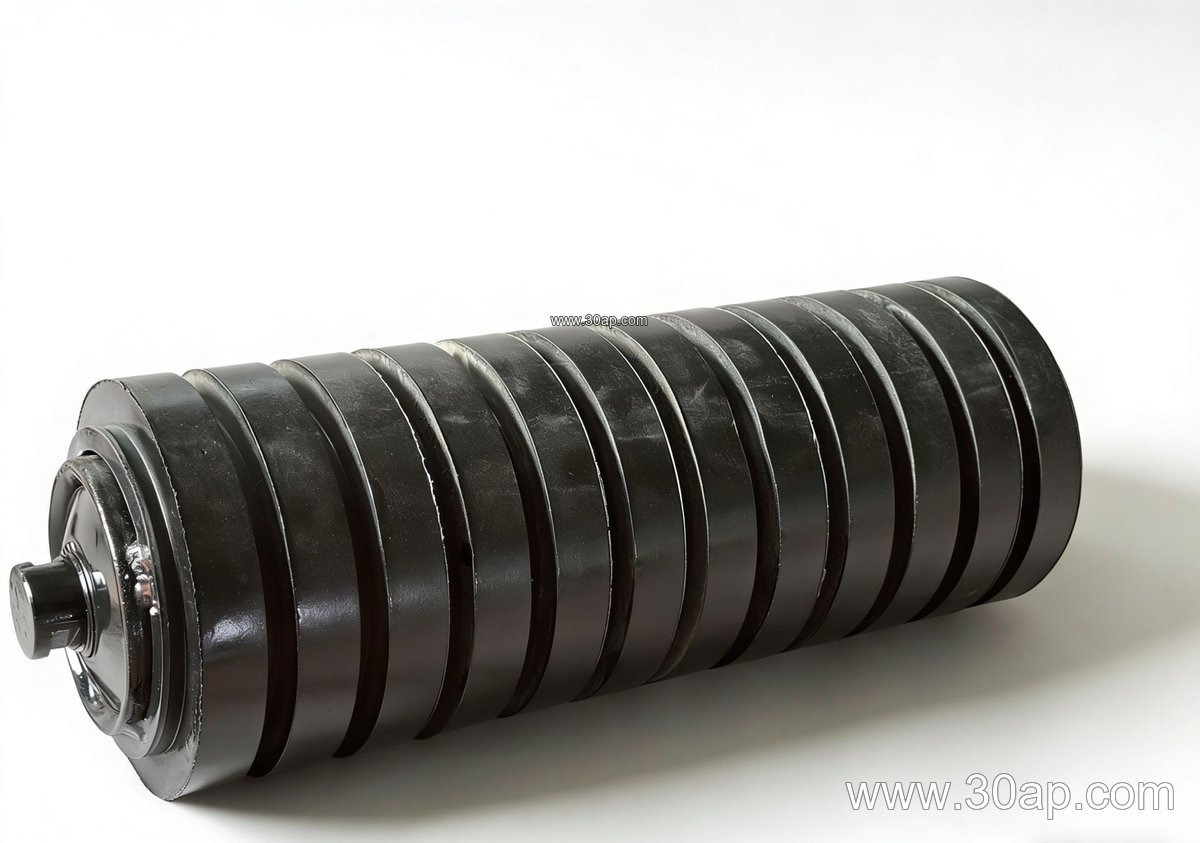
Most self-aligning idlers are built around a sturdy frame that pivots vertically or horizontally. The roller itself may be a single roll or a two- or three-roll set, depending on the belt width and load. Common roller diameters include Ø89, Ø108, Ø127, Ø133, and Ø159, with bearing sizes such as 6204, 6205, 6305, 6306, and 6308. The roller surface can be steel, nylon, ceramic, or rubber-covered. A small forward tilt of about 1.5 to 2 degrees is often used to encourage the belt to center. The pivot mechanism may include friction discs or conical ends that respond to belt edge contact. Seals and bearing housings are designed to keep out dust and water, which is important in quarry and underground mining environments.
Where It Fits on the Conveyor
A self-aligning idler is typically placed on the carrying side after the feed point, before the head pulley, and on long straight sections where the belt tends to wander. It can also be used on the return side, sometimes in a V-return or flat-return arrangement. It is not a substitute for a drive pulley, tail pulley, or bend pulley; those are different components with distinct roles. For comparison, a transition idler helps support the belt as it changes from troughed to flat, while a self-aligning idler focuses on lateral tracking. In a coal mining conveyor or a cement plant, proper tracking protects the rubber conveyor belt and reduces downtime.
Common Applications
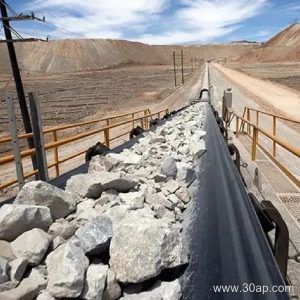
Self-aligning idlers are found in many bulk material handling systems. In a quarry or sand and gravel line, they help keep an EP conveyor belt or NN conveyor belt centered on the structure. In a power plant coal handling system, they work alongside a flame retardant conveyor belt to prevent rubbing against the frame. In a steel plant or port terminal, a heavy-duty mining conveyor belt benefits from training idlers at transfer points. Other industries include fertilizer plants, grain handling, and tunnel muck removal. The idler roller itself must match the belt width and load, so selection is always project-specific.
Key Parameters to Consider
Buyers should check belt width, roller diameter, bearing type, and mounting dimensions. The table below gives common reference values; these are examples, not fixed combinations.
| Parameter | Common Examples |
|---|---|
| Belt width (B) | B500, B650, B800, B1000, B1200, B1400, B1600 |
| Roller diameter | Ø63, Ø76, Ø89, Ø102, Ø108, Ø127, Ø133, Ø159, Ø178 |
| Bearing | 6204, 6205, 6305, 6306, 6308, 6310 |
| Roller length (three-roll trough, example) | B500 about 200 mm, B800 about 315 mm, B1200 about 465 mm, B1600 about 600 mm |
| Trough angle | 20°, 30°, 35°, 45° |
| Forward tilt | about 1.5° to 2° |
Note that roller length varies with belt width, trough angle, and idler arrangement. A 1200mm wide conveyor belt does not automatically dictate a single shaft diameter; the design load and frame must be considered.
Buyer Checklist
- Confirm the belt width and the idler set configuration (single, two-roll, or three-roll).
- Check the roller diameter and bearing size against the conveyor frame and load.
- Specify the roller surface: steel, nylon, ceramic, or rubber disc, depending on abrasion and material buildup.
- Verify the pivot mechanism and seal type for dusty or wet conditions.
- Ensure the self-aligning idler is compatible with the existing conveyor bracket and pulley arrangement.
- For extreme conditions, consider a heat resistant conveyor belt or oil resistant conveyor belt in the same system, but keep the idler selection separate.
A well-chosen self-aligning idler reduces belt edge damage and keeps the conveyor belt running true. It is a small component with a large effect on reliability in mining, quarry, cement, and power plant conveyors.