What a Stainless Steel Pulley Does on a Conveyor
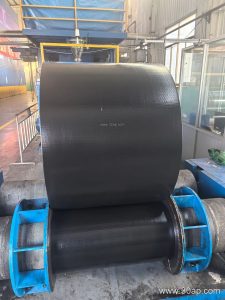
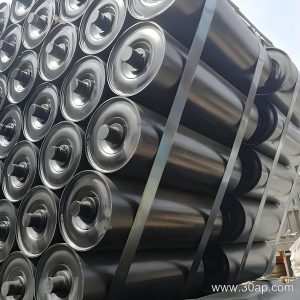
A stainless steel pulley is a rotating drum that supports and drives the conveyor belt in a bulk material handling line. It is made from stainless steel rather than carbon steel, which makes it a sensible choice where moisture, dust, washdown, or mildly corrosive material is present. The pulley turns with the belt, transfers torque at the drive end, and keeps belt tension steady at the tail or take-up position. In a quarry or a sand and gravel plant, a stainless steel pulley may sit in a wet screening area where ordinary painted steel would soon show rust. In a fertilizer or grain silo, the same component helps keep the belt tracking cleanly without contaminating the product stream.
This component is one part of the wider conveyor assembly, working alongside the conveyor belt, idler roller, conveyor bracket, and frame. Each part has its own job, and the pulley is the point where belt motion is generated or redirected.
How the Pulley Is Built
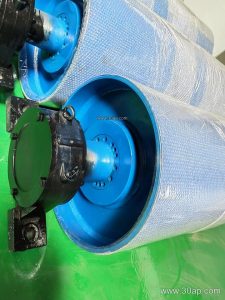
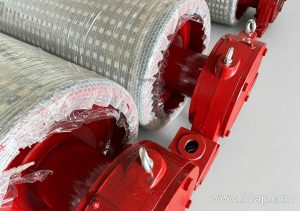
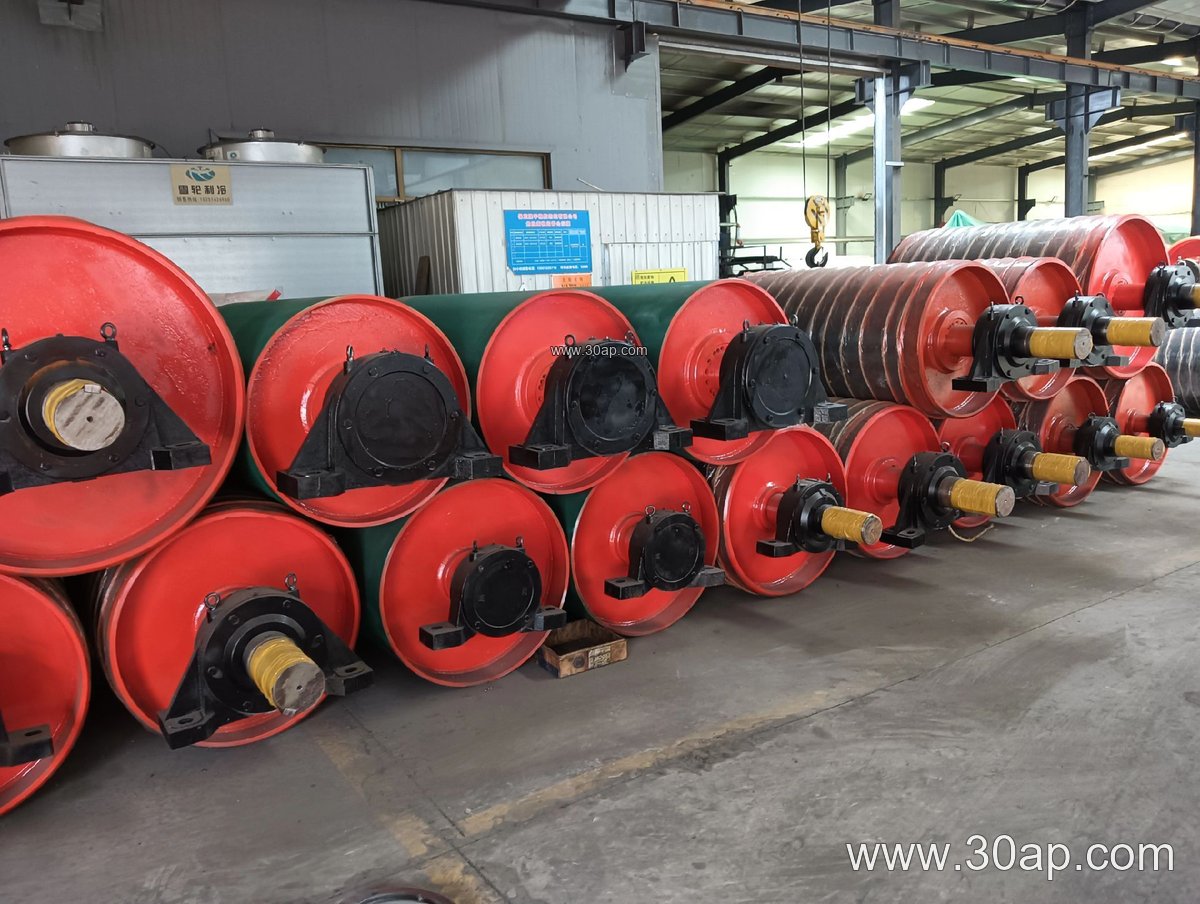
A stainless steel pulley usually consists of a cylindrical shell, two end discs, a shaft, and a hub or bearing arrangement. The shell can be seamless tube or rolled and welded plate, depending on diameter and load. End discs are welded to the shell and machined to keep the drum concentric with the shaft. The shaft passes through the hubs and is supported by bearings in the conveyor bracket or bearing housings.
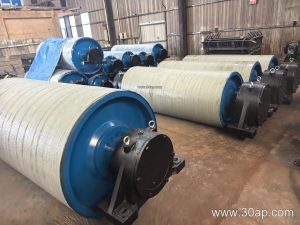
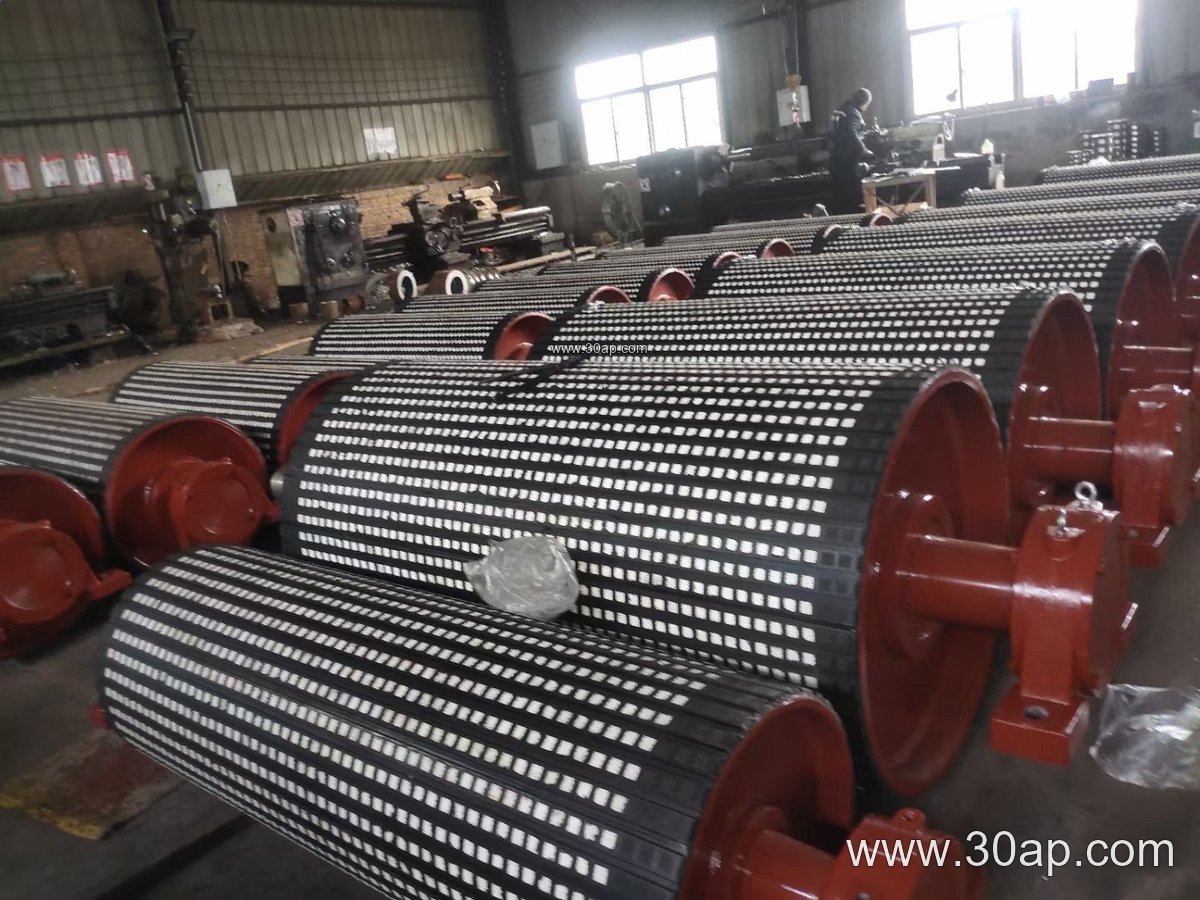
Surface finish matters. A plain, smooth shell is common for light duty and for applications where material build-up is unlikely. Where grip is needed, the shell may be covered with rubber lagging, and the pattern can be plain, diamond, or herringbone. On a stainless steel pulley, lagging is often cold-bonded or vulcanized, and the surface may be grooved to shed water. Common lagging thicknesses are 8, 10, 12, 15, and 20 mm, chosen according to belt speed, load, and the amount of slip the drive can tolerate.
Typical Reference Dimensions
The values below are common reference points, not fixed rules. Diameter and shaft size are always confirmed by torque and load calculations.
| Belt width | Approximate pulley face width | Example diameter pairing |
|---|---|---|
| B400 | about 500 mm | Ø200 to Ø315 |
| B500 | about 600 mm | Ø250 to Ø400 |
| B650 | about 750 mm | Ø315 to Ø500 |
| B800 | about 950 mm | Ø400 to Ø630 |
| B1000 | about 1150 mm | Ø500 to Ø800 |
| B1200 | about 1400 mm | Ø630 to Ø1000 |
| B1400 | about 1600 mm | Ø800 to Ø1250 |
Shaft diameters commonly run from Ø50 up to Ø200 mm or more, again depending on the calculated torque and bearing selection. A B1200 × Ø1000 drive pulley and a B800 × Ø500 tail pulley are both realistic combinations, but no single belt width should be tied to one diameter.
Where It Fits in the Line
Position determines the role. A drive pulley, often at the head, transmits power to the belt. A tail pulley at the loading end sets the return path and can be fitted with a self-cleaning wing profile in sticky material. Bend and take-up pulleys guide the belt through changes in direction and maintain tension. These are different duties, and the hardware is not interchangeable between them.
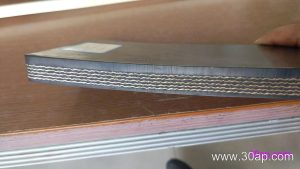
Stainless steel pulleys are used in coal washing plants, power station coal handling, port bulk terminals, cement plants, and food or chemical lines where washdown is routine. They pair naturally with a rubber conveyor belt, an EP conveyor belt, or a steel cord conveyor belt, and with the idler roller set that carries the belt along the run. In a crusher discharge line, a heavy-duty conveyor belt under high impact load needs a properly sized pulley and a stable conveyor bracket to keep alignment.
What Buyers Should Confirm
- Belt width and the required face width, plus the belt type, such as an abrasion resistant conveyor belt or a heat resistant conveyor belt.
- Duty position: drive, tail, bend, or take-up, and the resulting torque and tension.
- Shell material grade and wall thickness, and whether the stainless grade suits the local moisture or chemical exposure.
- Lagging pattern and thickness, if grip or water shedding is needed.
- Shaft diameter, bearing type, and sealing arrangement for dusty or wet service.
- Balancing and runout requirements for higher belt speeds.
Maintenance is mostly about bearings, lagging wear, and alignment. Check for belt mistracking, listen for bearing noise, and inspect lagging for glazing or chunking. A stainless shell resists corrosion, but the bearings and seals still need the right protection in a washdown or dusty environment.
For a full conveyor package, the pulley should be selected together with the belt, idler roller, and frame details rather than in isolation. That approach keeps the drive, tension, and tracking behavior consistent across the whole line.