What the Vertical Guide Roller Does
A vertical guide roller is a small-diameter idler mounted on a vertical axis, usually at the edges of a conveyor frame, to keep the belt from drifting sideways. Unlike the carrying idlers that support the loaded belt or the return idlers under the empty strand, this roller stands upright and contacts the belt edge only when tracking begins to wander. In a quarry, a coal preparation plant or an ore transfer station, a few of these rollers at critical points can prevent edge damage and spillage without adding much structure to the conveyor.
Because the roller spins on a vertical shaft, it presents a smooth rotating face to the belt edge. When the belt touches it, friction is low and the edge is guided back rather than abraded. This is why the part is often grouped with alignment accessories rather than with the main carrying idler set.
Construction and Typical Dimensions
The body is commonly a steel tube with a sealed bearing at each end of a short shaft, or a single bearing block at the base with a cap on top. Roller surfaces may be plain steel, nylon, or covered with a rubber sleeve where edge contact is frequent. Sealing matters in dusty service, so buyers should ask about bearing protection rather than assuming a standard grease fill is enough.
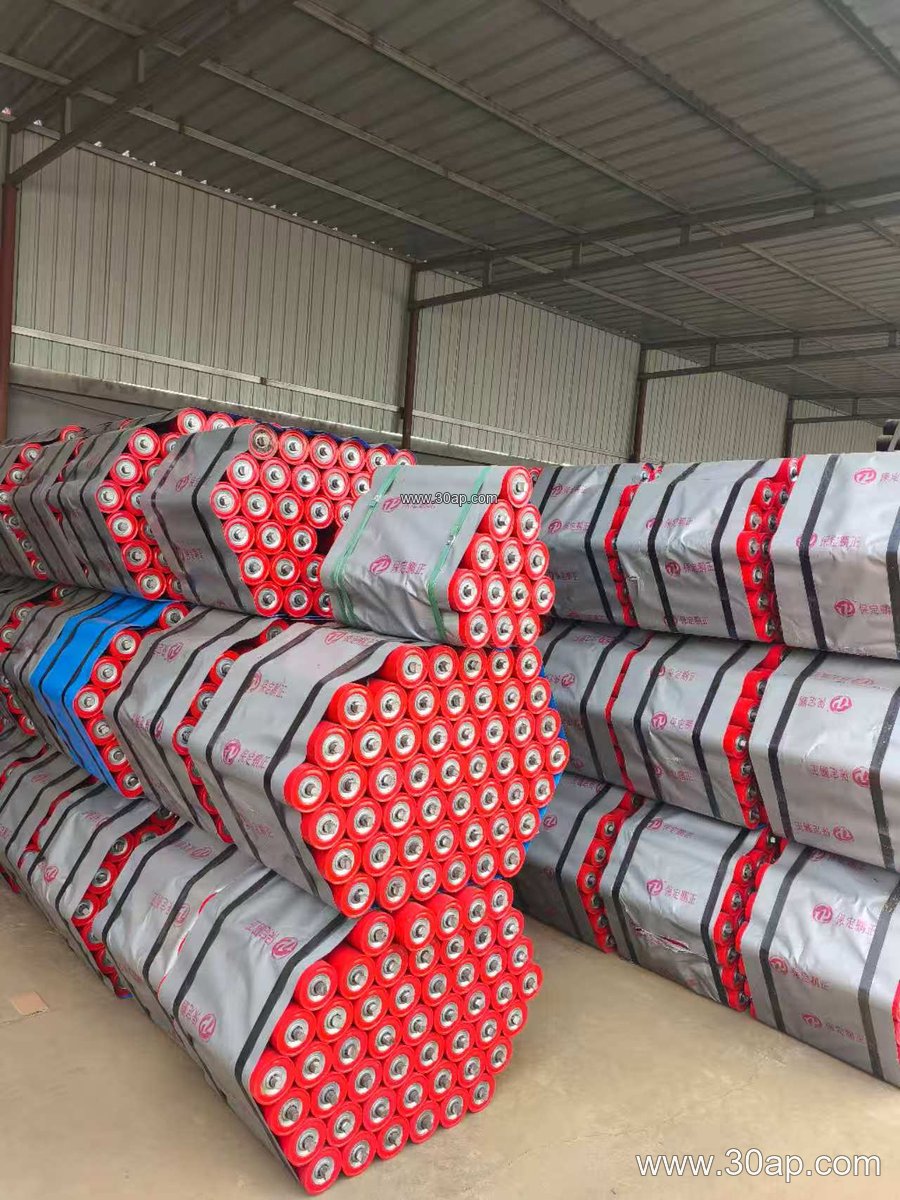
Guide rollers are usually smaller than carrying idlers. Common outside diameters sit in the range of Ø63 to Ø108 mm, while lengths are short, often 100 to 200 mm, because the roller only needs to cover the belt edge zone. The shaft and mounting bracket are matched to the frame, not to the belt width alone. The table below gives reference values that appear in general catalogues; final dimensions follow the conveyor design.
| Item | Common reference range |
|---|---|
| Outside diameter | Ø63, Ø76, Ø89, Ø102, Ø108 mm |
| Roller length | 100 to 200 mm, depending on edge clearance |
| Bearing | 6204, 6205, 6305 (selection by load and shaft) |
| Surface | Steel tube, nylon, rubber sleeve |
| Mounting | Vertical shaft with bracket or welded base |
No single diameter is tied to one belt width. A B800 conveyor and a B1400 conveyor may both use the same guide roller size if the frame and edge gap allow it, while a heavily loaded ST1600 or EP1000 belt on a wide frame may call for a larger shaft and bracket instead.
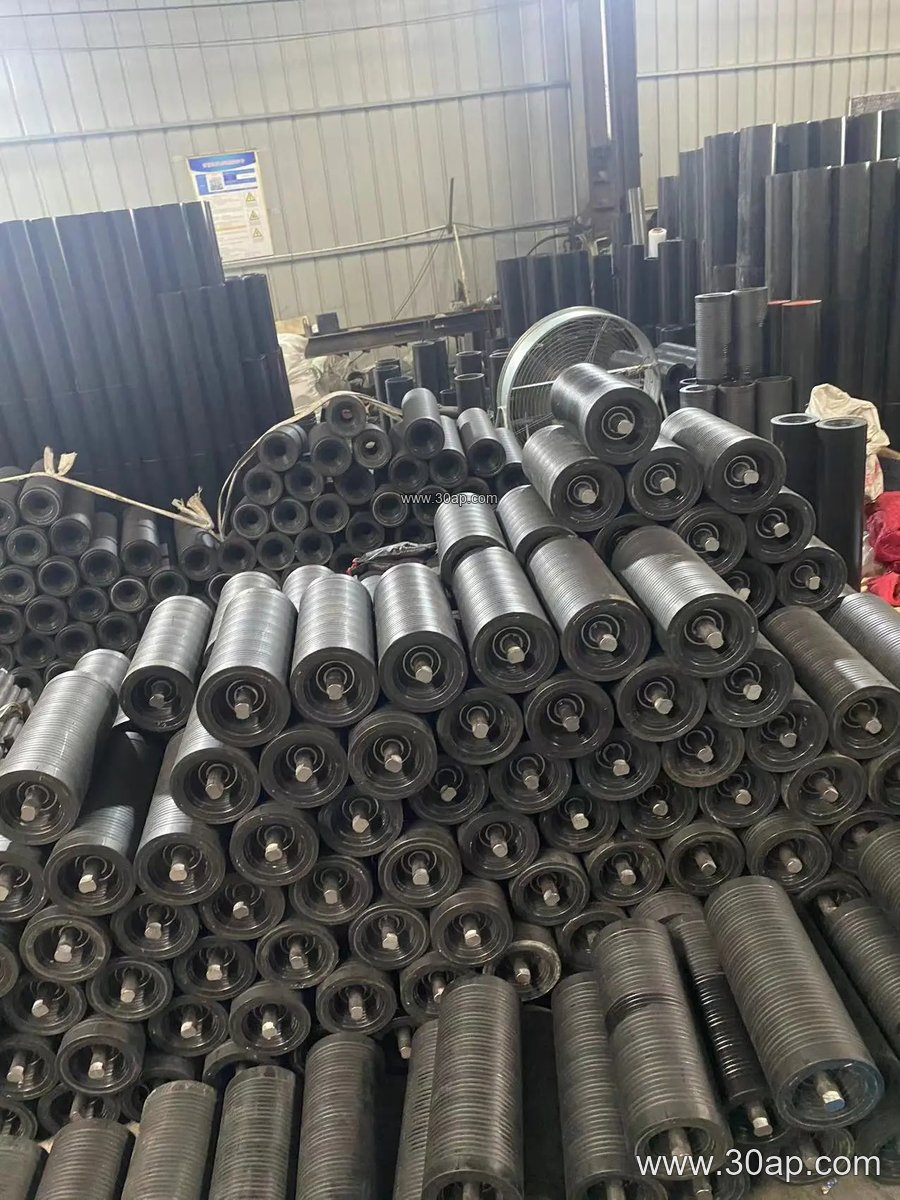
Where It Fits on the Conveyor
The usual locations are just before the head pulley, after the tail pulley, and along sections where the belt passes a loading point or a curve. In a limestone mine or a cement plant raw-material line, the belt can shift after a transfer chute loads it off-centre; a pair of vertical guide rollers on both edges limits that movement before it reaches the next pulley. On a ship loading conveyor at a port, they are often fitted near the boom hinge where the belt changes direction.
They are not a substitute for a self-aligning idler set or for correct pulley alignment. A vertical guide roller is a edge-control device; if the whole belt is mistracking because of a skewed conveyor pulley or uneven loading, the guide roller will wear quickly and may mask the real cause. Maintenance teams should check belt splice squareness, frame level and idler alignment first, then use guide rollers as a final trim.
Selection Points for Buyers
- Confirm the mounting style: bolt-on bracket, welded base, or adjustable slide, and check that the conveyor bracket matches the frame hole pattern.
- Match the roller surface to the belt edge. A rubber-sleeved roller suits abrasive dust, while a nylon or steel face may be enough on a clean aggregate line.
- Check the shaft diameter and bearing size against the expected side load, especially on wide belts such as 1800mm or 2000mm where edge forces can be higher.
- Ask for sealed, dust-protected bearings for coal mining, coke plants or power plant coal handling, where fine dust shortens bearing life.
- Keep a small stock of common sizes so a damaged guide roller does not stop a shift.
A well-chosen vertical guide roller is a low-cost part with a clear job: protect the belt edge, reduce spillage, and keep the belt centred between the carrying and return runs. Buyers who treat it as part of the whole tracking system, alongside the conveyor pulley, idler roller and conveyor bracket, get more reliable service than those who pick it by diameter alone.