What a Welded Pulley Is
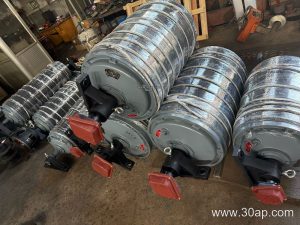
A welded pulley is a conveyor pulley whose shell, end discs and hub assembly are joined by welding rather than by casting or bolting. In a belt conveyor, this component supports the belt, transmits drive force or redirects belt travel. Because the structure is fabricated from rolled steel plate and machined hubs, the welded pulley can be produced in a wide range of diameters and face widths to suit different conveyor duties. Buyers often meet it as a conveyor pulley, a drum pulley or simply a belt pulley, but the welded construction is the defining feature.
Welded pulleys appear at several positions along a conveyor. A drive pulley at the head transmits torque into the belt, a tail pulley returns the belt at the loading end, and a bend pulley changes belt direction where space is limited. These positions are not interchangeable in function, and each welded pulley must be specified for its own duty.
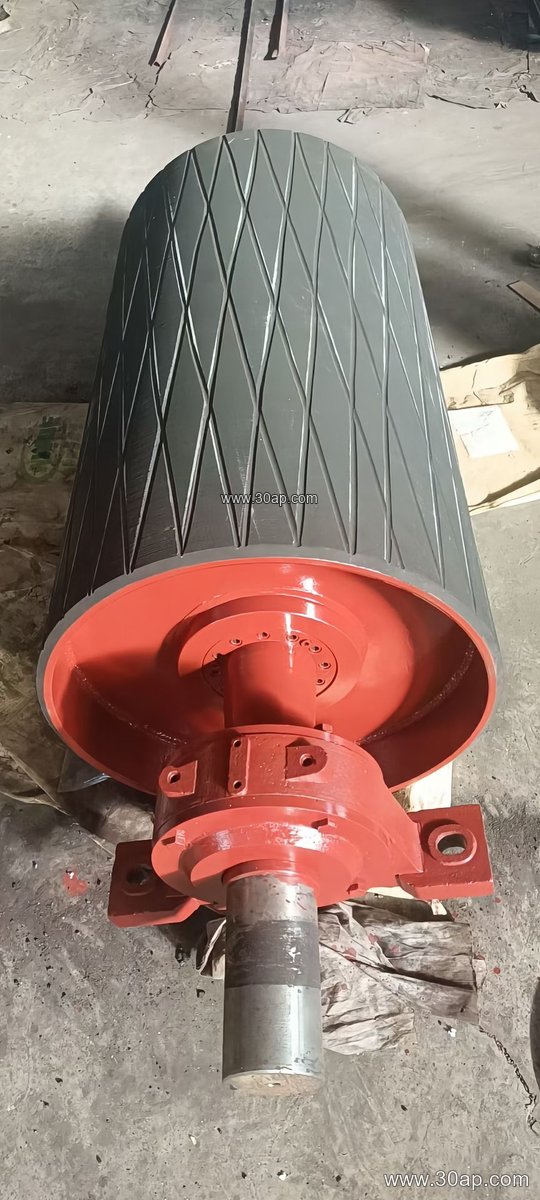
How the Welded Pulley Is Built
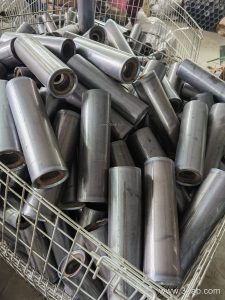
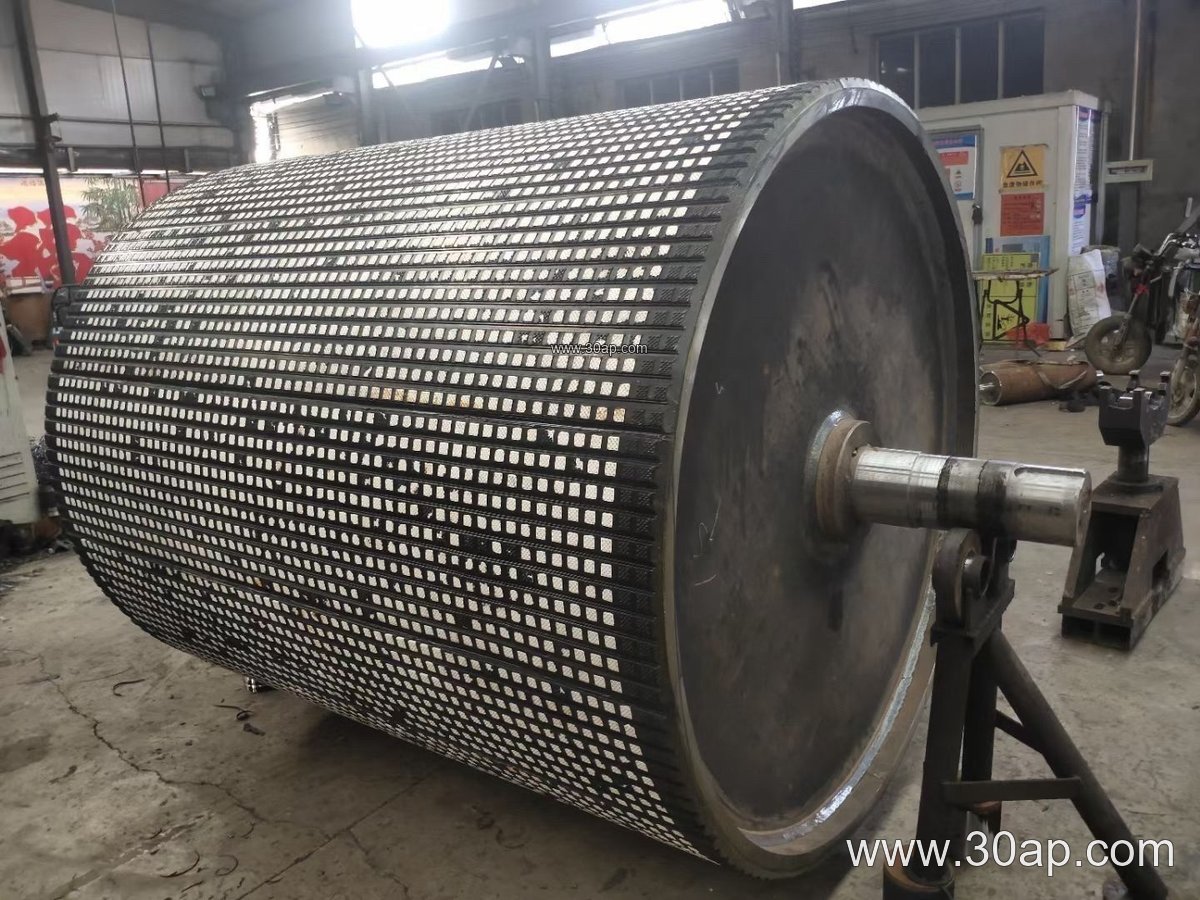
Production usually starts with a rolled steel shell, to which end discs are welded. The shaft passes through machined hubs that are welded to the end discs, and the whole assembly is then stress-relieved and machined so the shell runs true. The result is a rigid drum that resists bending under belt tension. Surface treatment follows: a plain finish, cast rubber, cold-bonded rubber, hot-vulcanized rubber, diamond grooving, herringbone grooving or ceramic lagging may be applied depending on grip and wear requirements.
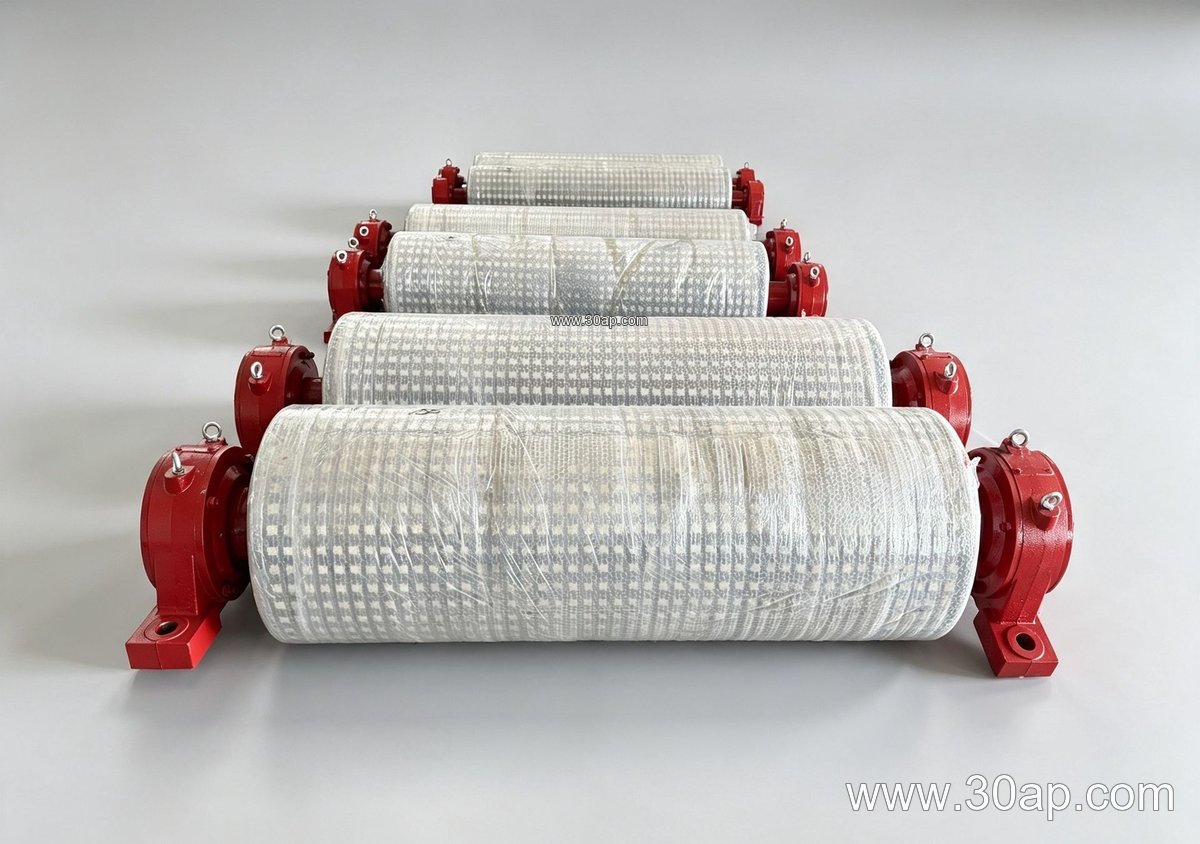
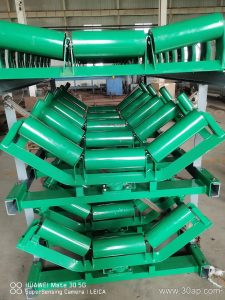
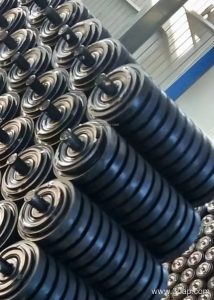
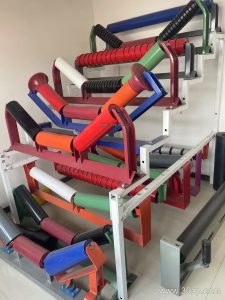
A related item in the same conveyor line is the idler roller, which supports the belt along the carrying and return runs. While the idler roller turns freely on its own bearings, the welded pulley is normally mounted on bearings at the ends of its shaft and may be coupled to a gearbox.
Common Applications
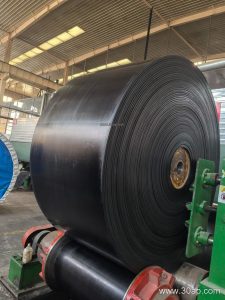
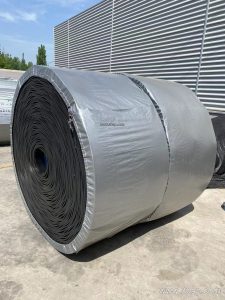
Welded pulleys are found in bulk handling across many industries. In a quarry or aggregate line, they move crushed stone on an aggregate conveyor belt. In a coal preparation plant or a power plant coal yard, they handle coal on a flame retardant conveyor belt. Cement plants use them on clinker and raw meal circuits, while a port bulk terminal may rely on them for ship loading. In each case the pulley must match the conveyor belt width and the belt’s tension rating.
For heavy-duty mining conveyor belt duty, a welded pulley with a thick shell and rubber lagging is often chosen to resist abrasion and improve traction. Where the belt carries hot material, a heat resistant conveyor belt may run over a pulley fitted with heat-tolerant lagging. In cold climates, a cold resistant conveyor belt and a pulley with suitable bearing lubrication help keep the system running.
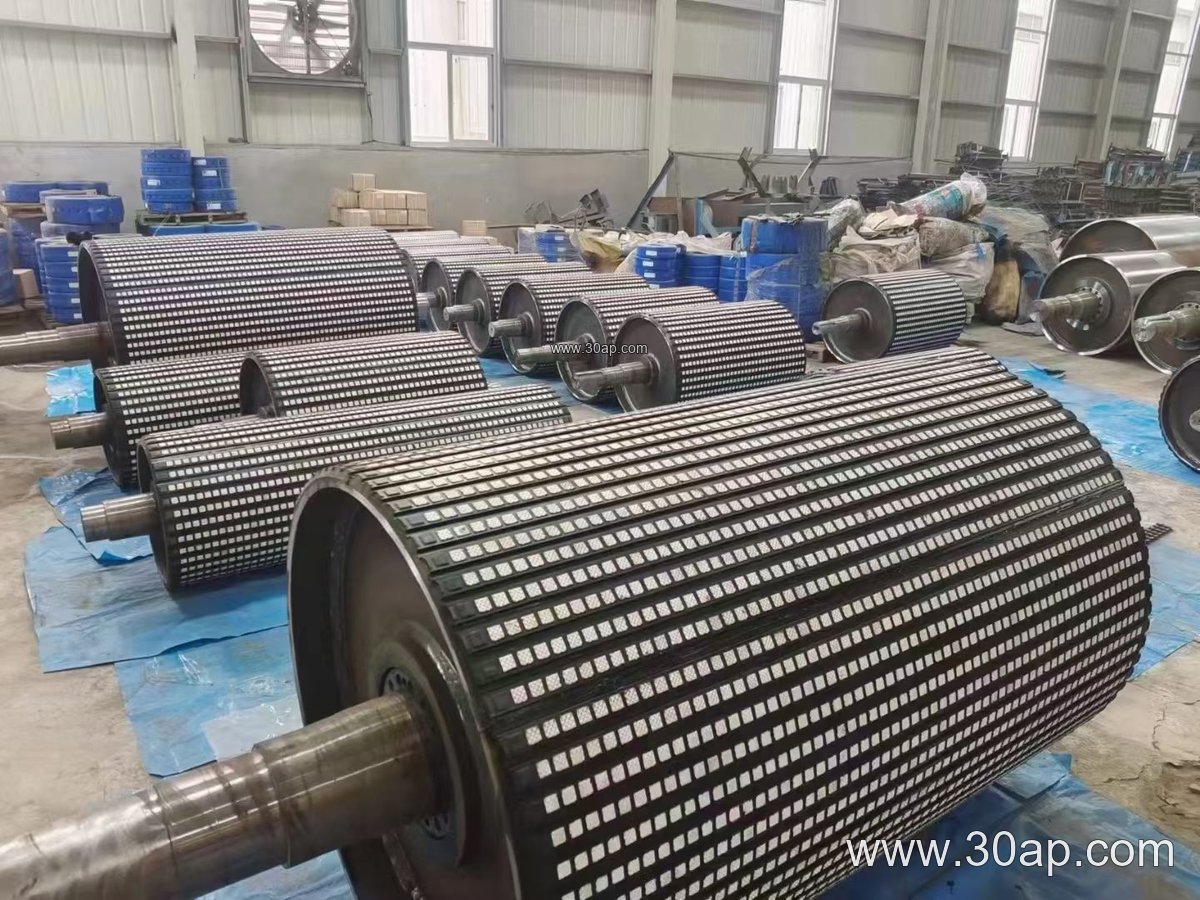
Dimensions and Surface Options
Sizes are selected by design, not by a fixed rule. The table below shows common reference dimensions; actual values depend on belt tension, shaft load and conveyor layout.
- Belt width range commonly handled: B400, B500, B650, B800, B1000, B1200, B1400, B1600, B1800, B2000
- Pulley diameter range commonly produced: Ø200, Ø250, Ø315, Ø400, Ø500, Ø630, Ø800, Ø1000, Ø1250
- Shaft diameter range: Ø50, Ø60, Ø70, Ø80, Ø90, Ø100, Ø120, Ø140, Ø160
- Lagging thickness options: 8 mm, 10 mm, 12 mm, 15 mm, 20 mm
- Face width is usually slightly greater than belt width; for example, B800 may use a face of about 950 mm, and B1200 about 1400 mm
A combination such as B800 x Ø500 or B1200 x Ø1000 indicates a pulley sized for that belt and duty, but it is not the only valid pairing. Shaft diameter must be calculated from torque and load, never taken directly from belt width.
What Buyers Should Check
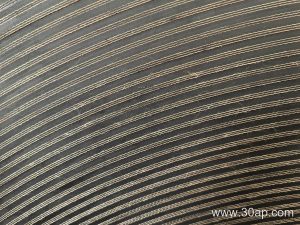
Before ordering a welded pulley, confirm the belt width and the belt type, since a multi-ply fabric core conveyor belt and a steel cord conveyor belt place different loads on the drum. Check whether the position is drive, tail or bend, and specify the lagging surface that suits the material. Ask for the weld inspection method and the balancing grade, and confirm the bearing type and shaft diameter against the conveyor bracket and drive arrangement. A clear drawing showing face width, diameter, shaft end and keyway avoids costly mismatches.
Maintenance matters too. Worn lagging reduces grip and can allow belt slip, so inspect the surface periodically and check that the welded joints remain sound. Keeping the pulley aligned with the conveyor bracket and the idler roller frame helps extend belt life. For more information on matching a welded pulley to your belt, visit conveyor-pulley.com or check our conveyor pulley range alongside our conveyor belt and idler roller pages.