What a Heavy-Duty Steel Conveyor Bracket Does on the Line
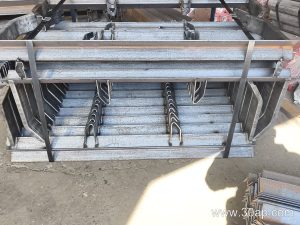
A Heavy-Duty Steel Conveyor Bracket is the structural support that carries idler rollers and holds a conveyor belt in its correct trough shape. On a quarry conveyor or a crusher conveyor, the bracket is often the part that takes the worst of the impact, dust and vibration. It sits under the belt, transfers load into the conveyor frame, and keeps the rollers at a consistent angle so material stays centered during transport.
The bracket is not a single universal part. It is a family of supports that includes troughing brackets, return brackets, transition brackets, impact brackets and self-aligning brackets. Each position on the conveyor calls for a different geometry, and the steel gauge is chosen to suit the load rather than a single standard size.
How the Bracket Is Built
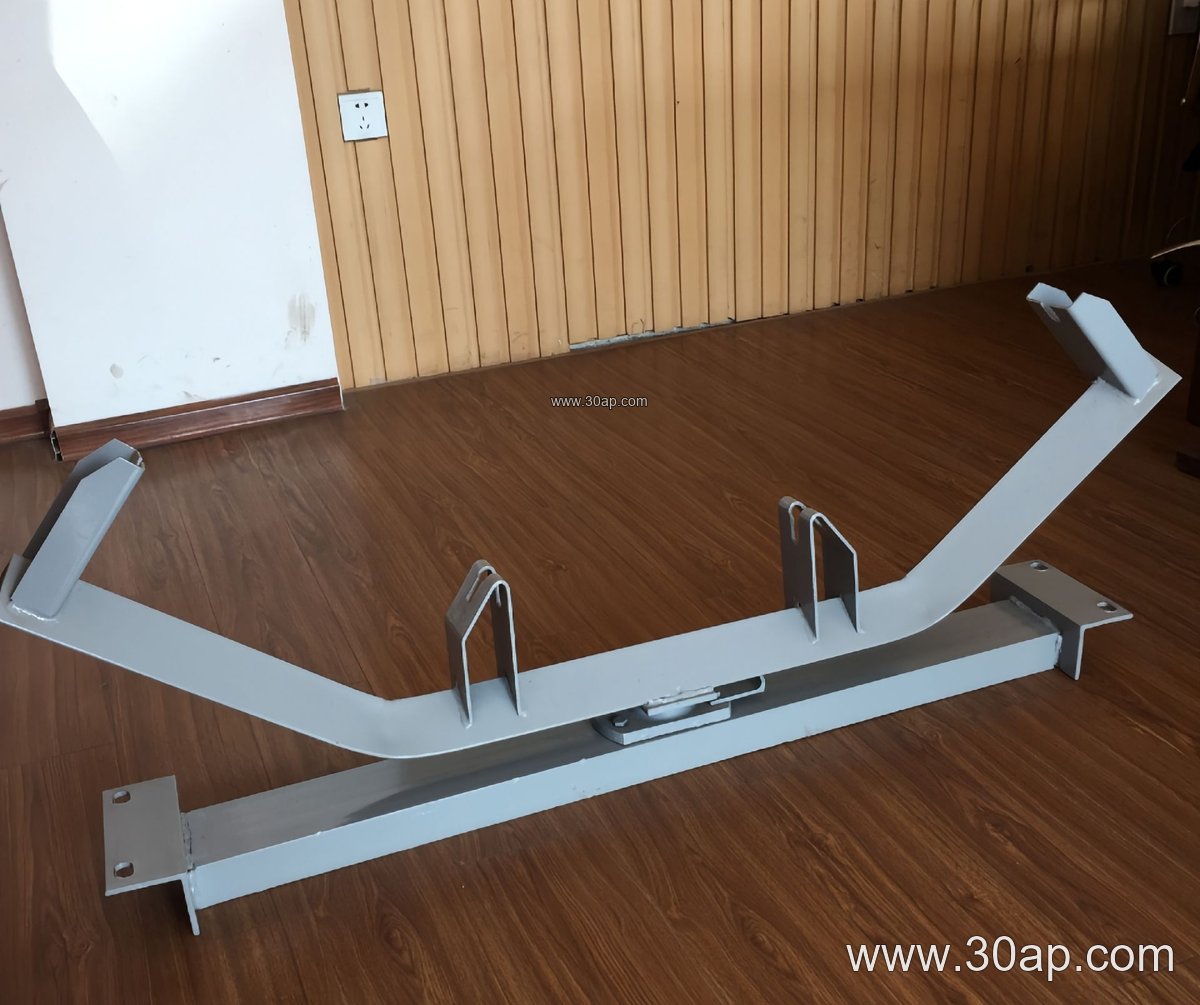
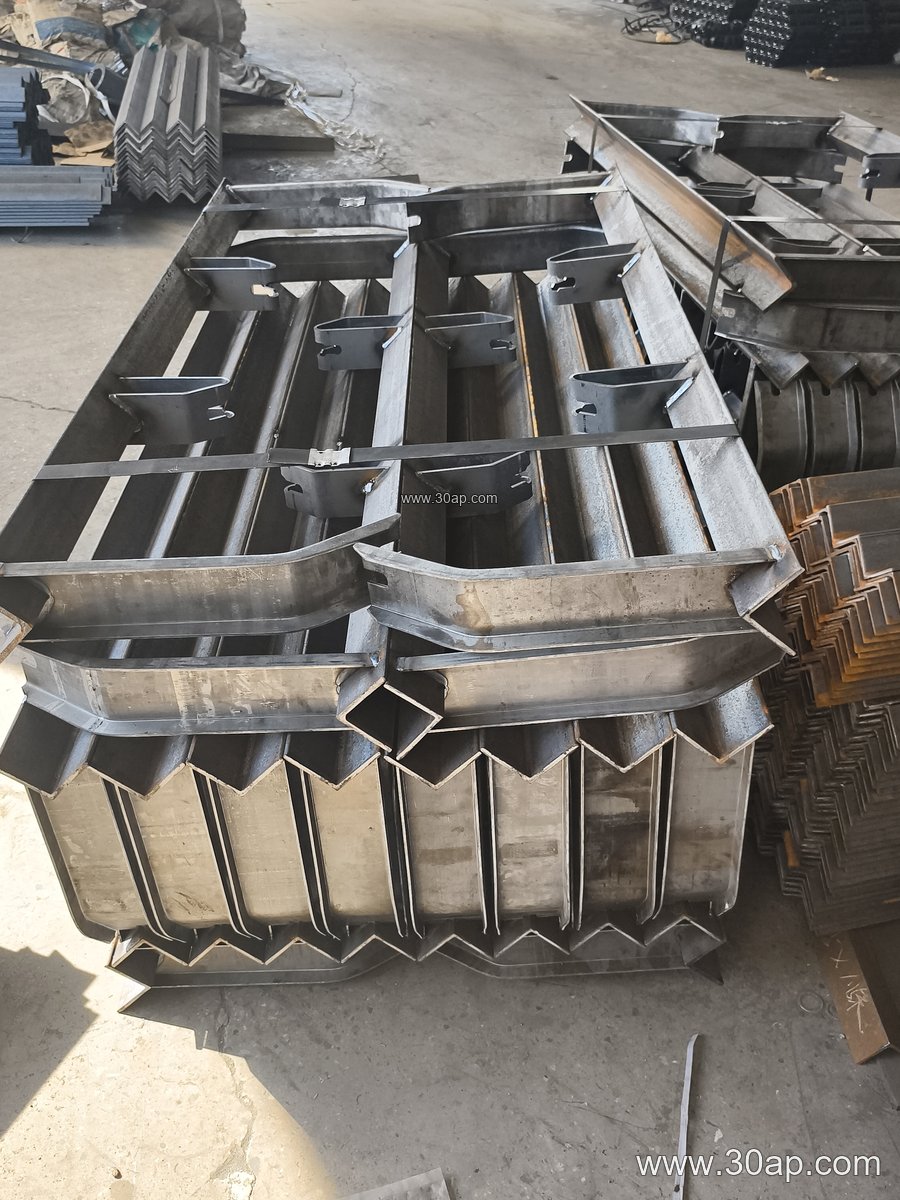
Most heavy-duty steel brackets are fabricated from angle steel, channel steel or folded steel plate. A typical troughing bracket has a base beam, two or three inclined roller seats, and mounting holes that align with the conveyor frame. Welds are usually continuous along the load path, and corners are reinforced where the roller seats meet the base. A durable finish, such as hot-dip galvanizing or a heavy paint system, helps the bracket survive wet washing and abrasive dust.
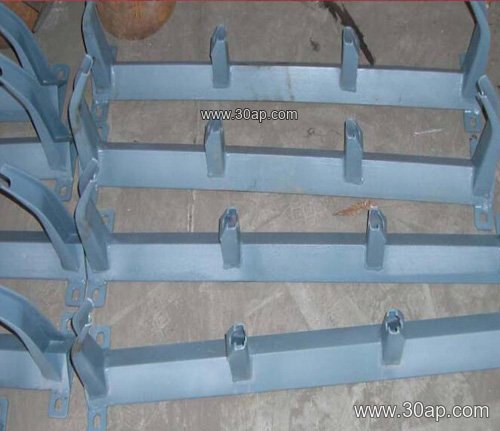
Folded plate designs are common where weight matters, while channel and angle sections are used when stiffness is the priority. The bracket must also match the roller shaft ends, so the seat design and hole spacing follow the idler roller specification.
Where Heavy-Duty Steel Conveyor Brackets Are Used
These brackets are found in bulk handling operations that run long shifts and handle sharp or heavy material. In a stone crushing line, impact brackets support rollers beneath the crusher discharge. In a coal handling plant, flame retardant conveyor belt and anti-static conveyor belt grades are often paired with sturdy troughing brackets to keep the belt tracking. In a cement plant, heat resistant conveyor belt sections near the kiln need brackets that hold alignment under thermal movement.
Other common locations include iron ore stockyards, power plant coal yards, port ship loading systems and aggregate plants. In each case, the bracket is selected for the belt width, the trough angle and the roller diameter, not for a generic frame size.
Matching Bracket, Belt and Roller
Belt width and trough angle are the first design inputs. Common belt widths include B500, B650, B800, B1000, B1200, B1400, B1600, B1800, B2000, B2200. Trough angles of 20, 30, 35 and 45 degrees are widely used, and a transition bracket is often needed where the belt changes from flat to troughed. Roller diameters such as Ø89, Ø108, Ø133, Ø159 and Ø194 are selected with the belt speed and load in mind. A B800 belt with a 35 degree trough and Ø108 rollers is a typical arrangement, while a B1200 line may use a 45 degree trough and Ø133 rollers. These are examples, not fixed pairings.
| Parameter | Common Range | Notes |
|---|---|---|
| Belt width | B500 to B2200 | Bracket length follows belt width |
| Trough angle | 20°, 30°, 35°, 45° | Adjustable brackets can change angle |
| Roller diameter | Ø89 to Ø194 | Seat design must match shaft ends |
| Material | Angle, channel, folded plate | Gauge chosen by load |
The belt itself also influences bracket choice. A heavy-duty conveyor belt or high abrasion resistant conveyor belt used on an ore conveyor belt line creates higher loads than a lighter fabric core belt. Where a steel cord conveyor belt is used on a long overland route, the bracket spacing and stiffness must be checked against the belt tension and sag limits.
Fixed, Adjustable and Self-Aligning Versions
A fixed troughing bracket is simple and rigid, ideal for stable alignments. An adjustable bracket allows the trough angle to be fine-tuned on site, which is useful during commissioning. A self-aligning bracket works with training rollers to correct belt drift, and is often seen on quarry conveyor belt and aggregate conveyor belt systems where material loading is uneven. A V-shaped return bracket supports the belt on the return side and helps shed stray material.
Buyer Checklist
- Confirm belt width, trough angle and roller diameter before ordering.
- State the mounting hole pattern and frame beam spacing required.
- Ask for the steel section and finish, since galvanized and painted brackets suit different environments.
- Check whether impact or transition positions need a reinforced bracket.
- Consider spare brackets for high-wear points such as crusher discharges and transfer chutes.
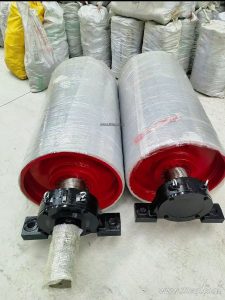
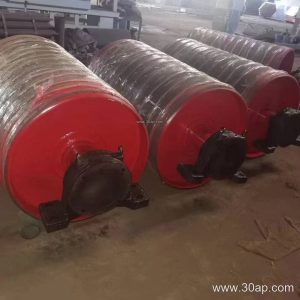
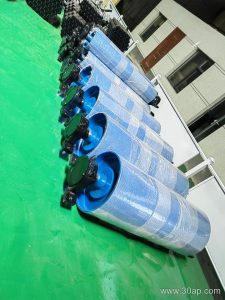
A well-chosen Heavy-Duty Steel Conveyor Bracket keeps idler rollers aligned, protects the belt edge and reduces downtime. Buyers who match the bracket to the belt, roller and site conditions get a support that lasts through years of abrasive duty. For related components such as conveyor pulley, idler roller and conveyor bracket assemblies, work with a supplier who can confirm dimensions against your frame drawings.