What a Belt Conveyor Pulley Does
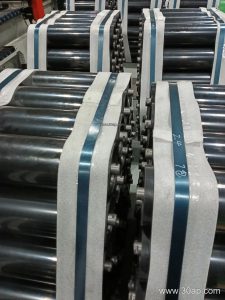
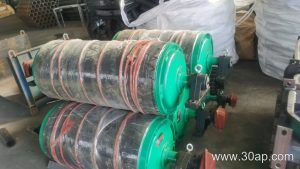
A belt conveyor pulley is the rotating drum that carries and drives the conveyor belt at the ends of a conveyor frame. While the belt does the moving, this component transfers motion and tension into the belt through friction and wrap. In a limestone quarry or an aggregate line, a single head pulley may pull several hundred meters of belt, so the drum, shaft, bearings, and lagging must all work as one assembly. Buyers often use the shorter name conveyor pulley, but the function is the same: to keep the belt tracking, tensioned, and moving at the designed speed.
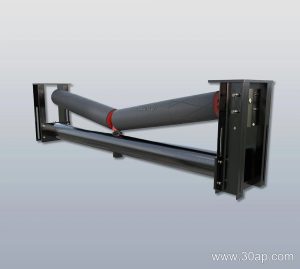
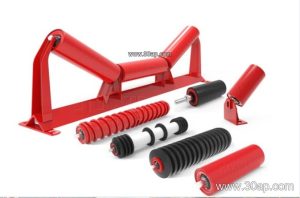
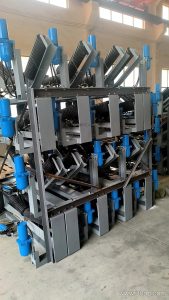
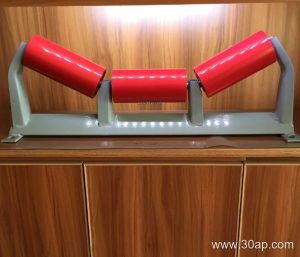
Related parts such as the idler roller, conveyor bracket, and the belt itself are selected together with the drum. In practice, a mismatch between belt stiffness and drum diameter shows up as belt slip, edge wear, or premature splice failure.
Construction Details That Matter
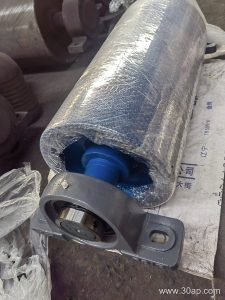
Most industrial drums are built from a rolled steel shell welded to end discs, with a through shaft or stub shafts pressed and keyed into place. The shell surface may be plain, or covered with rubber, ceramic, or a combination. Plain face works for light duty and low tension. Rubber lagging improves grip on the drive pulley, while ceramic lagging is chosen where abrasive dust and wet conditions shorten rubber life.
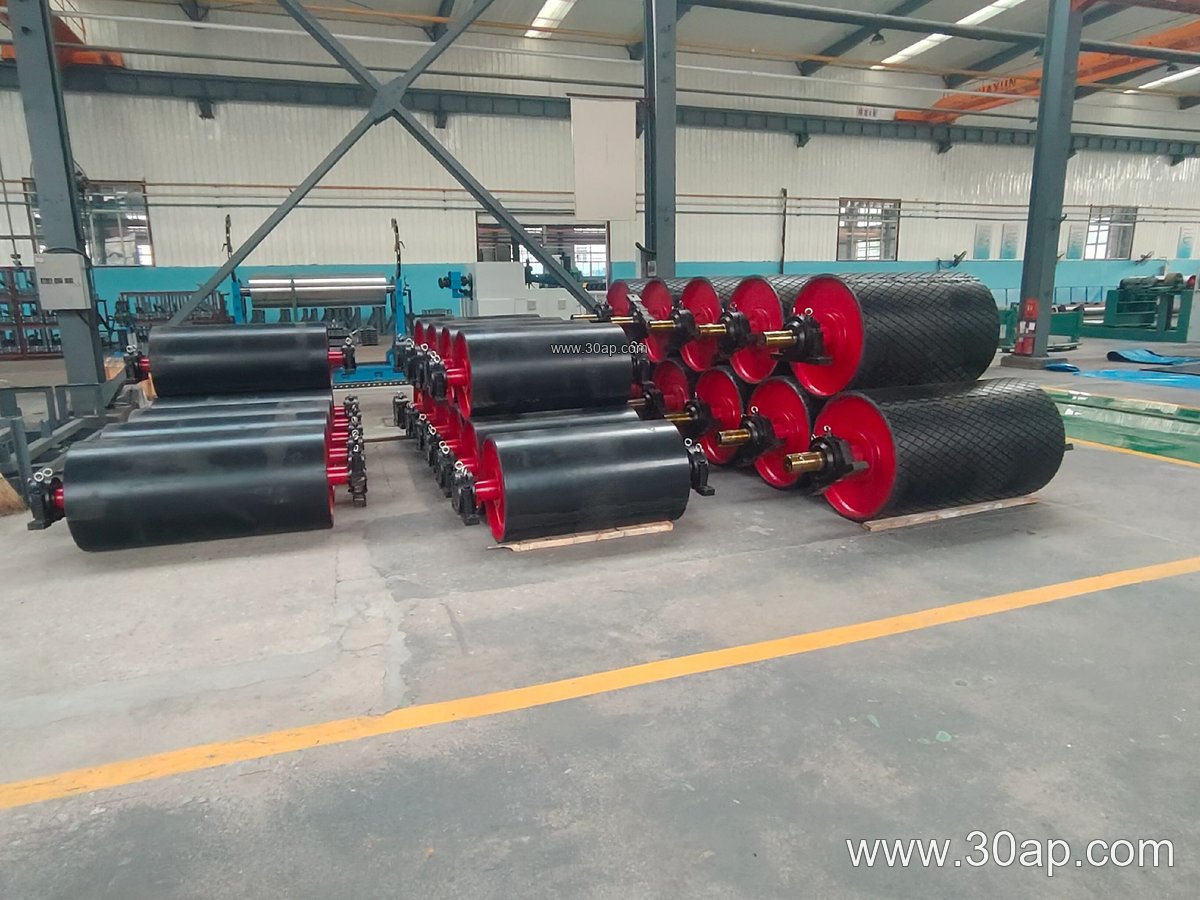
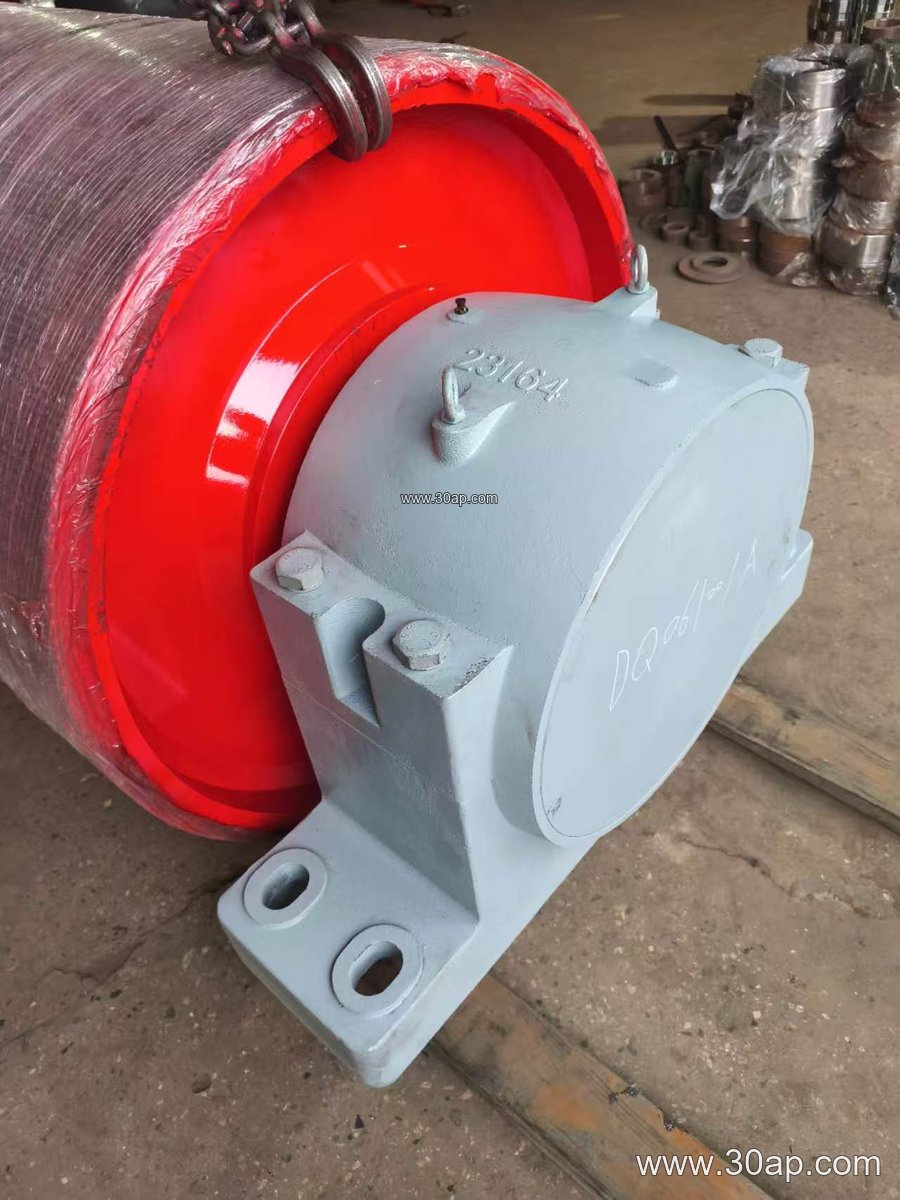
Key variables in a quotation include shell diameter, face width, shaft diameter, bearing type, and lagging. Face width is usually a little wider than the belt, for example a B800 belt often runs on a drum with about 950 mm face. Diameter is not fixed by belt width: a B1200 system might use a Ø1000 drive pulley, but a shorter conveyor with lower tension could use a smaller drum. Shaft size is set by torque and load, not by belt width alone, so a supplier should calculate it rather than copy a table value.
Common reference combinations
The figures below are typical reference points only. Final dimensions follow the conveyor design and the belt tension calculation.
- B500 belt, drum face around 600 mm, diameter options Ø250 to Ø400
- B800 belt, drum face around 950 mm, diameter options Ø400 to Ø630
- B1200 belt, drum face around 1400 mm, diameter options Ø630 to Ø1000
- B1600 belt, drum face around 1800 mm, diameter options Ø800 to Ø1250
- B2000 belt, drum face around 2200 mm, diameter options Ø1000 to Ø1600
Drive, Tail, and Bend Positions Are Not the Same
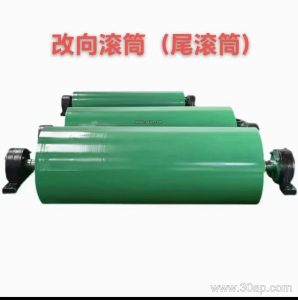
The head or drive pulley is the one connected to the gearbox and motor, and it usually carries the highest tension and the most lagging wear. The tail pulley sits at the loading end and often needs a self-cleaning or wing design to shed spillage. A bend pulley changes belt direction and is not a substitute for either of them. A tension pulley takes up slack, and a snub pulley increases wrap angle on the drive drum. Each position has different load and wear profiles, so a buyer should specify the duty rather than order a generic drum for every location.
In coal mining and power plant coal handling, flame retardant conveyor belt and anti-static belt grades are often required, and the drum bearings need protection from fine dust. In cement plants, heat resistant conveyor belt grades may run close to clinker, and the pulley lagging should tolerate warm surfaces.
Matching the Belt and the Drum
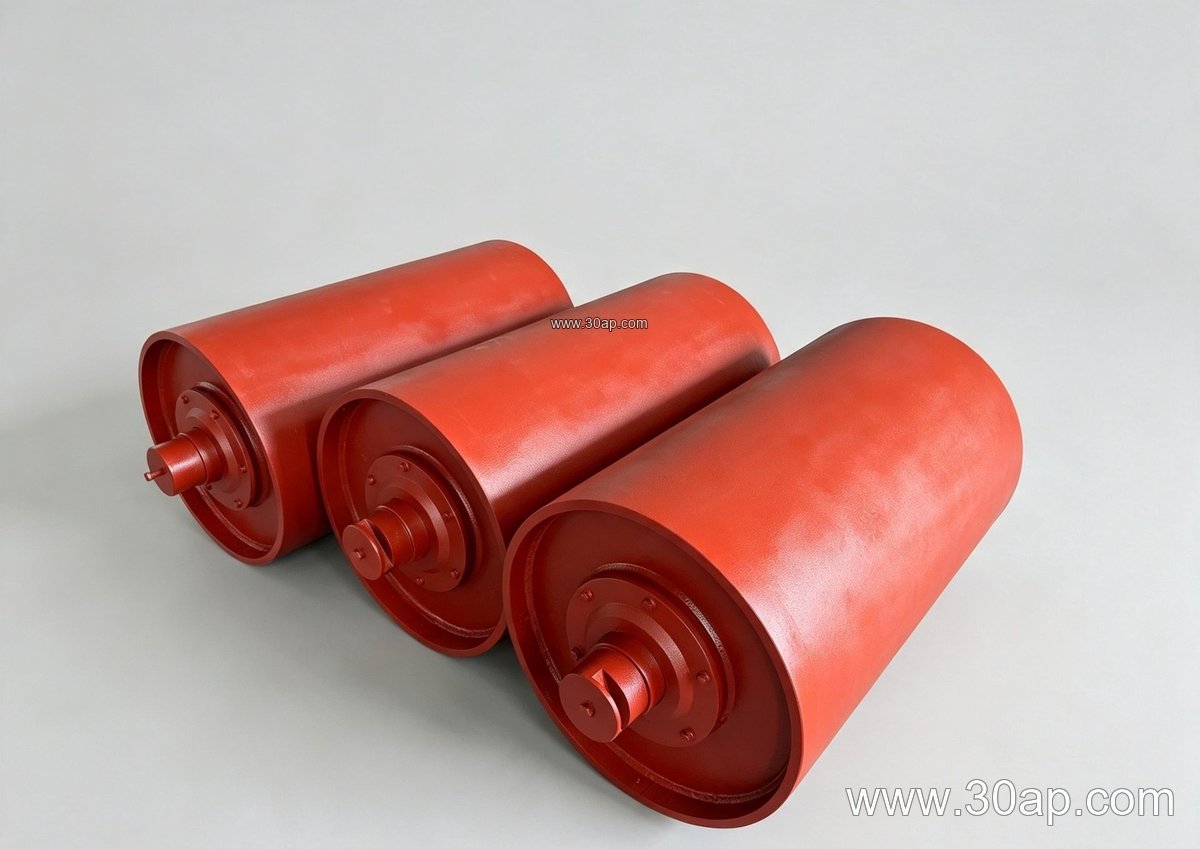
Belt construction influences drum choice. A heavy steel cord conveyor belt needs a larger diameter to limit bending stress in the cords, while a fabric core conveyor belt such as an EP conveyor belt or NN conveyor belt can often run on smaller drums. Multi-ply fabric core belt and high strength belt grades also call for attention to splice length and drum face width.
Special belts add constraints. A chevron conveyor belt or corrugated sidewall belt may need a larger drum to avoid cleat interference. A pipe conveyor belt has its own geometry and should be matched by the conveyor designer, not by guesswork. For abrasive ore, a high abrasion resistant belt paired with ceramic lagging can extend service life, while an oil resistant belt or heat resistant belt may be needed in recycling and foundry work.
What Buyers Should Check
- Drum position and duty: drive, tail, bend, tension, or snub
- Belt width and type, including whether it is a quarry conveyor belt, crusher conveyor belt, or underground mining conveyor belt
- Required diameter and face width, confirmed against belt tension
- Shaft diameter, bearing size, and keyway details from the conveyor frame
- Lagging form and thickness, such as 8, 10, 12, 15, or 20 mm rubber or ceramic
- Balancing, runout, and welding quality expected for the operating speed
At www.beltconveyorpulley.com, buyers can review typical drum configurations and compare options before requesting a drawing. A second reference point for belt and idler data can be found at www.beltconveyorpulley.com/conveyor-belt.
Maintenance is mostly about inspection. Check lagging wear, bolt tightness, bearing temperature, and belt tracking at each shutdown. Keep the area around the drum clear of buildup, because packed material under the belt can lift it off the drum and reduce grip. Re-lagging or replacing a worn drum early is usually less costly than repairing a damaged belt or a stalled conveyor.