What Rubber Pulley Lagging Does on a Conveyor
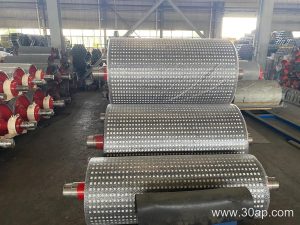
Rubber pulley lagging is the rubber layer bonded to the shell of a conveyor pulley to raise friction between the drum and the conveyor belt. Without it, a bare steel shell can slip under load, especially when the belt is wet, dusty, or carrying abrasive bulk material. The lagging also cushions the belt, spreads contact pressure, and protects the pulley shell from wear. In a quarry, a cement plant, or a power plant coal yard, this relatively small component often decides whether a conveyor starts smoothly or slips on the drive pulley.
The product is also called rubber drum lagging or pulley rubber covering. These names describe the same item; they are not different pulley types. Drive, tail, and bend pulleys each use lagging for different reasons, and the position on the conveyor changes what the rubber is expected to do.
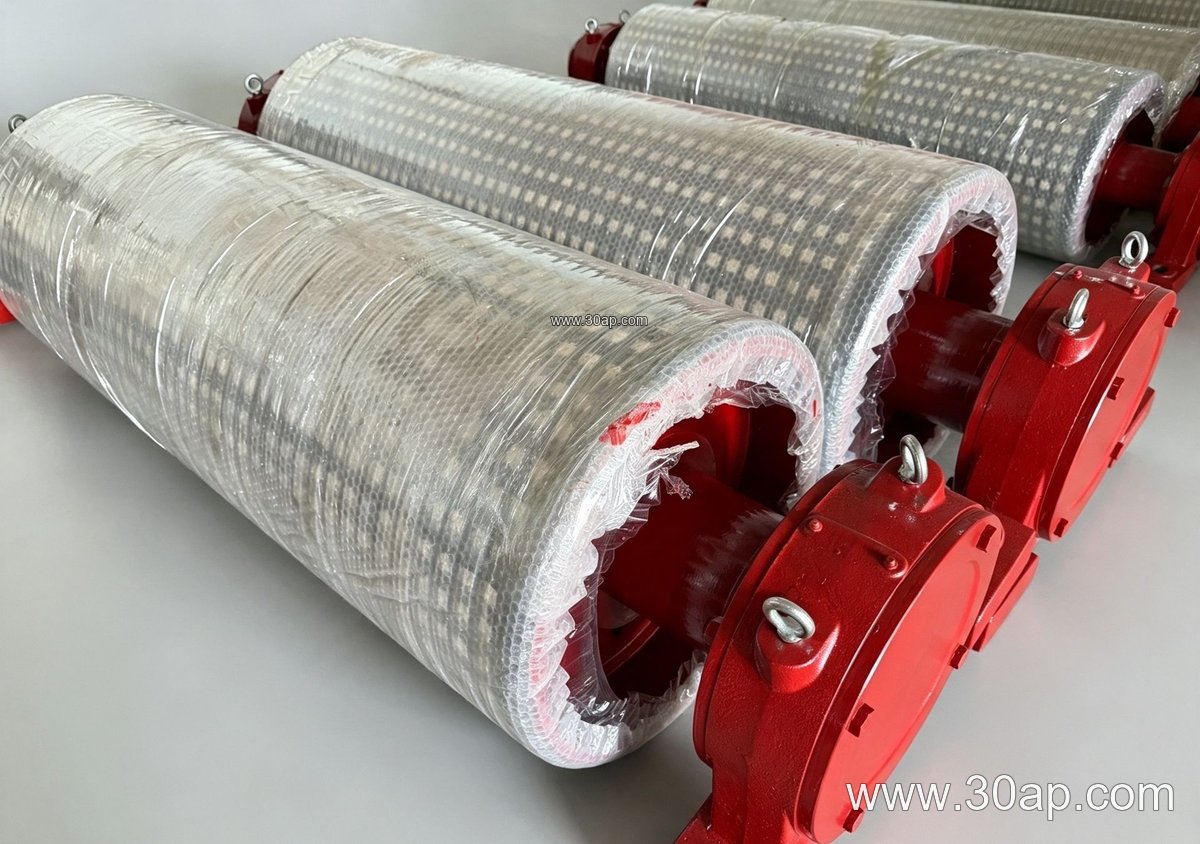
How the Lagging Is Built and Fitted
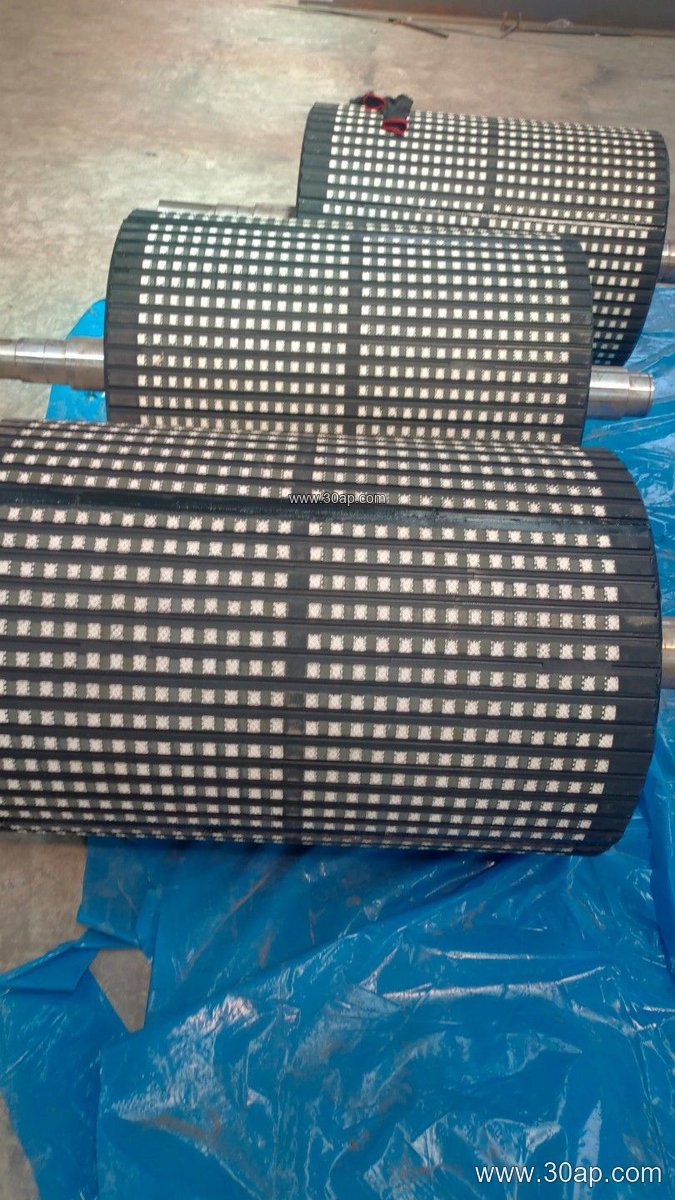
Most rubber pulley lagging combines a wear-resistant rubber compound with a bonding system. The rubber may be supplied as pre-cured sheets with a flexible backing, or as uncured rubber that is applied and then vulcanized in place. Common surface forms include plain, diamond, and herringbone patterns; ceramic tiles embedded in rubber are used where extra grip and cut resistance are needed. Thickness commonly ranges from 8 mm to 20 mm, with 10 mm and 12 mm often seen on medium-duty pulleys.
Fitting methods differ. Cold-bonded lagging uses an adhesive and is convenient for maintenance work. Hot vulcanized lagging forms a stronger bond and is preferred for high-torque drive pulleys. Bolt-on strips are another option where replacement speed matters. Whichever method is used, the pulley shell must be clean, dry, and correctly prepared, because poor adhesion leads to edge lifting and early failure.
Where It Is Used
Rubber lagging appears on head pulleys, tail pulleys, tension pulleys, and snub pulleys across many bulk handling sites. In a limestone mine or aggregate plant, it helps a conveyor belt keep grip when crushed rock and water are present. In a coal washing plant, flame retardant grades are often requested for underground and enclosed areas. Cement plants use lagging on clinker and raw material conveyors, while ports apply it on ship loading lines where belts run at high tension.
The choice of surface pattern matters. Diamond lagging sheds water well and suits pulleys that see wet conditions. Herringbone patterns can help center the belt and reduce drift. Plain rubber is adequate for light duty and clean material. On the tail pulley, lagging mainly protects the shell from abrasive fines; on the drive pulley, friction is the priority.
Matching Lagging to Pulley and Belt
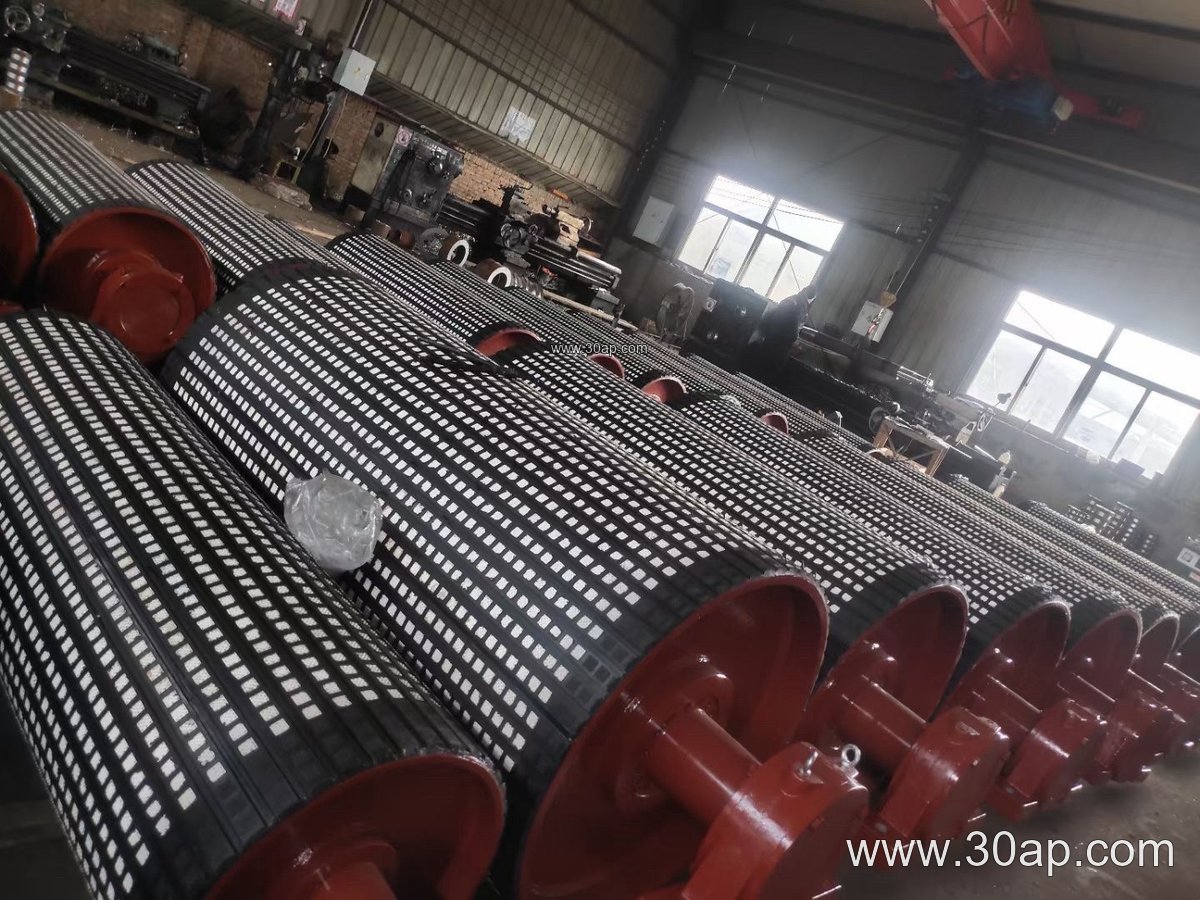
Buyers should think in combinations, not single numbers. A B800 pulley with a Ø500 shell and 10 mm diamond lagging is a common arrangement, and a B1200 drive pulley at Ø1000 with 12 mm rubber is equally reasonable. The drum face width is usually slightly greater than the belt width, for example about 950 mm for B800 and about 1400 mm for B1200. Shaft diameter is set by torque and load, not by belt width alone, so a B1000 conveyor may use different shaft sizes depending on duty.
| Parameter | Typical Reference | Notes |
|---|---|---|
| Belt width | B650, B800, B1000, B1200, B1400 | Face width usually exceeds belt width |
| Pulley diameter | Ø315, Ø400, Ø500, Ø630, Ø800, Ø1000 | Selected by belt tension and wrap angle |
| Lagging thickness | 8, 10, 12, 15, 20 mm | Thicker rubber for high impact or slip risk |
| Surface form | Plain, diamond, herringbone, ceramic | Depends on wetness and grip demand |
| Shaft diameter | Ø80, Ø100, Ø120, Ø140, Ø160 | Determined by design load |
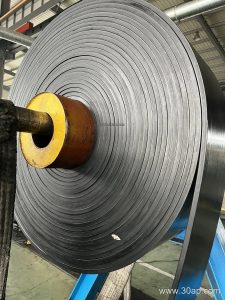
Lagging should also suit the belt it contacts. A heavy-duty mining conveyor belt with a thick cover tolerates more pressure than a thin fabric core belt. Where an EP conveyor belt or steel cord conveyor belt runs at high tension, the drive pulley lagging must resist both slip and heat build-up. Sites using an abrasion resistant conveyor belt in a crusher line often pair it with tougher pulley rubber to balance wear life.
Buyer Checklist and Maintenance Pointers
- Confirm pulley role: drive, tail, bend, or tension. Each has different friction and wear demands.
- State belt width, pulley diameter, and shaft size so the supplier can match face width and bonding method.
- Choose surface pattern for the actual conditions, not by habit.
- Check rubber hardness, thickness, and adhesion quality before installation.
- Inspect for edge lifting, grooves, and embedded material during routine shutdowns.
Well-chosen rubber pulley lagging extends pulley life and keeps the conveyor belt tracking steadily. For more conveyor components, visit mstbelt.com to review pulley, roller, and belt options together.