What a Five-Roll Idler Bracket Does
A five-roll idler bracket is the support frame that carries five idler rollers under a conveyor belt, typically arranged as a center roll with two pairs of side rolls. This arrangement gives the belt a deeper, more gradual trough than a conventional three-roll set. In a quarry, a cement plant, or a power plant coal yard, the result is better belt guidance and less spillage on wide, heavily loaded lines. The five-roll idler bracket is a distinct bracket subtype; it is not a substitute for a drive pulley, a tail pulley, or a bend pulley, each of which performs a different job in the conveyor layout.
The bracket may also be called a five-roller troughing bracket or a five-roll troughing frame. These are equivalent names for the same product. Other bracket types, such as a two-roll V-return bracket or a single-roll flat return bracket, serve other positions on the conveyor and should not be treated as interchangeable with this one.
How the Bracket Is Built
Most five-roll idler brackets are fabricated from angle steel, channel steel, or folded steel plate. The crossbeam carries five mounting positions, and the side arms are set at the trough angle required by the conveyor design. The frame is usually bolted to the conveyor stringer rather than welded in place, so it can be replaced during maintenance.
Typical build details include:
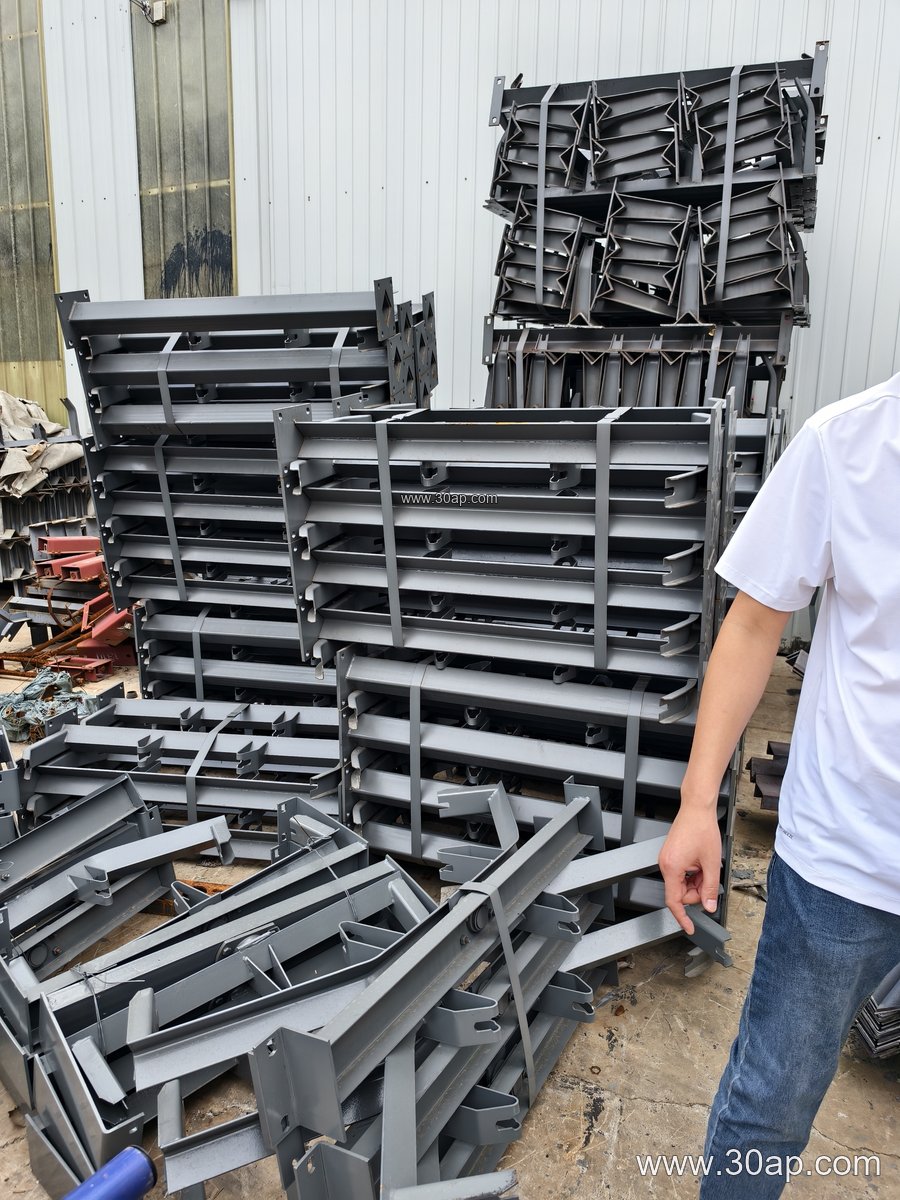
- Center roll seat positioned on the crossbeam centerline
- Two inner side arms and two outer side arms, each with its own mounting slot
- Hole spacing and crossbeam length that follow belt width and trough angle rather than a single fixed value
- Optional adjustable arms that allow the trough angle to be changed within a working range
Because the belt rests on five rolls, the transition from flat to troughed is smoother than with a three-roll set. This matters when the conveyor carries a heavy-duty mining conveyor belt or a thick abrasion resistant conveyor belt that resists bending.
Common Configurations and Reference Dimensions
The table below shows reference combinations that appear in general design work. They are examples, not mandatory matches, and actual hole spacing and beam length are set by the conveyor design.
| Belt width | Trough angle | Roller diameter | Typical use |
|---|---|---|---|
| B650 | 30 degrees | Ø89 | Light aggregate and sand lines |
| B800 | 35 degrees | Ø108 | Crushing and screening circuits |
| B1000 | 35 degrees | Ø108 | Cement plant raw material handling |
| B1200 | 45 degrees | Ø133 | Power plant coal conveying |
| B1400 | 45 degrees | Ø159 | Iron ore and heavy bulk material |
| B1600 to B2000 | 35 to 45 degrees | Ø159 to Ø194 | Port loading and large transfer stations |
Trough angles of 20, 30, 35, and 45 degrees are common. A fixed bracket holds one angle; an adjustable five-roll idler bracket can be set between these values on site. Forward tilt of about 1.5 to 2 degrees is sometimes used on training brackets, but it is a separate design choice from the five-roll troughing function.
Where It Fits on the Conveyor
This bracket belongs to the carrying side, in the same family as the three-roll troughing bracket, the transition bracket, and the impact bracket. It is chosen when the belt is wide, the load is heavy, or the material contains large lumps that would otherwise push a three-roll trough out of shape. In a limestone mine or a tunnel spoil line, the deeper cradle helps keep the belt centered and reduces edge damage. In a steel plant sinter line, the extra roll contact spreads the load over more idler roller surfaces.
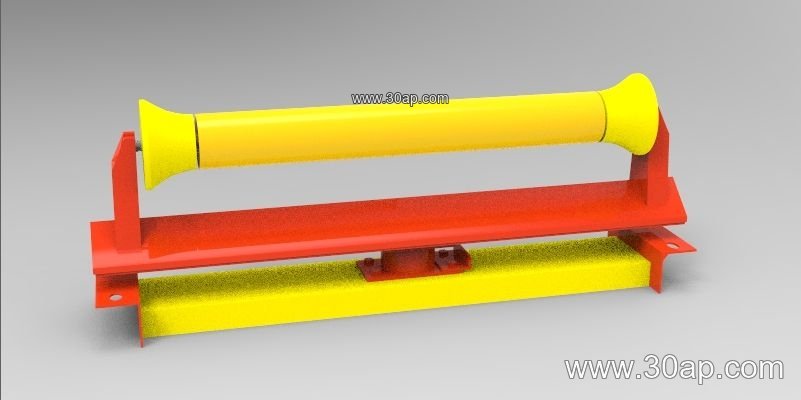
The bracket works together with the conveyor belt, the idler roller set, and the conveyor pulley at the head and tail. It does not replace any of them. A drive pulley pulls the belt; a tail or bend pulley changes its direction; the five-roll bracket only supports the loaded strand.
Buyer Checklist
Before ordering, confirm the belt width, the required trough angle, the roller diameter, and the mounting hole pattern on the existing stringer. Ask whether the frame is fixed or adjustable, and check the material and finish against the site conditions. In a coal washing plant, a flame retardant conveyor belt may be specified, and the bracket should be compatible with the roller fittings used there. In a food or fertilizer plant, a food grade conveyor belt or an oil resistant conveyor belt may call for a cleaner frame design.
Also confirm the roller spacing and the number of rolls per bracket, because a five-roll frame is not the same as a three-roll frame with two extra rolls added later. For very wide belts, such as 1800mm or 2000mm, the crossbeam stiffness and the support spacing deserve close attention. For more conveyor bracket options, visit conveyor-bracket.com and compare frame styles before finalizing the order.
Installation and Maintenance Notes
Align the bracket square to the conveyor centerline and tighten the mounting bolts evenly so the frame does not twist. Check that all five rolls turn freely after installation. During routine inspection, look for worn roller seats, bent side arms, and loose bolts. A bracket that has shifted will often show up as belt misalignment or as uneven wear on one edge of the conveyor belt. Replacing a damaged five-roll idler bracket early is usually cheaper than repairing the belt edge or the idler roller set it supports.